
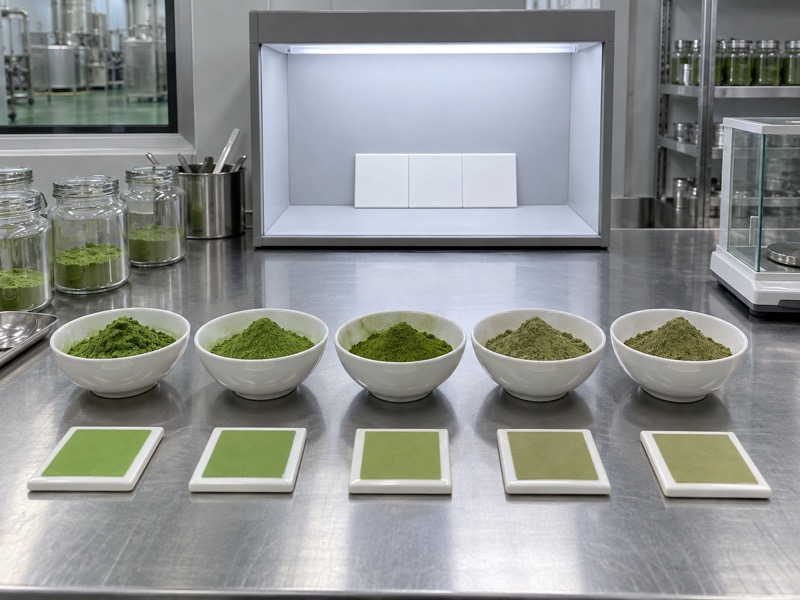
Matcha green color is the visible result of tea material, processing, concentration, and viewing conditions. Buyers often receive sample photos that look vivid but tell little about how powder will appear in a latte or dessert. Compare physical samples under controlled light, then test them in the intended application. That method is more reliable than judging a screen image because lighting, dilution, heat, and storage all change perceived green.
Contents: 1 · 2 · 3 · 4 · 5 · 6 · 7 · 8 · 9 · 10
1. What does matcha green color actually indicate?
A clue with limits
Tea leaf pigments contribute to green appearance, while drying, grinding, oxygen exposure, and storage can alter what a buyer sees. A vivid powder may be compatible with good material and handling, but color alone cannot confirm identity, flavor, safety, or suitability for a particular drink. A buyer should treat matcha green color as one measured or observed quality attribute among several. Even a well-controlled powder can look pale when dispersed into opaque milk.
Define the target product. A culinary bakery ingredient may need a different acceptable green than a chilled clear-water drink. Write down which finished matrix, dose, processing condition, and shelf window will determine acceptance. If the brand wants a bright green latte, approve the appearance of a prepared latte, not only a dry powder photo. Record taste and texture beside color so a visually vivid but harsh powder does not win by default.
| Observation | What it can suggest | What it cannot prove |
|---|---|---|
| Dry powder hue | Lot appearance under stated light | Finished drink color |
| Latte hue | Fit in one milk recipe | Identity or safety |
| Color after storage | Stability under tested conditions | Universal shelf life |
2. Why can two matcha lots look different?
Follow the chain
Leaf material, shading practice, harvest, drying, milling, blending, and storage can all affect powder appearance. Differences also arise after delivery: one sample may have been opened repeatedly while another stayed sealed. A photograph can add apparent differences through exposure, white balance, screen settings, and background. Before calling one lot inferior, compare sealed, lot-linked samples at the same age and preparation condition. Ask the supplier which differences are expected within its product specification.
Control the comparison. Use the same sample mass, dish depth, light source, white background, and viewing angle. Photograph both in a single frame if visual records are needed. Record opening date and storage. If a difference matters commercially, prepare both powders at the same dose in the actual recipe. A small dry-powder difference may disappear in a milk beverage, while a flavor or texture difference may remain. That is the point of an application trial.
3. How should color be assessed consistently?
Set a viewing method
For routine buying, a simple controlled setup beats casual inspection at a desk. Use a stable light source and neutral background, avoid mixed daylight and warm lamps, and examine a fixed powder depth in identical vessels. Compare a retained approved sample beside the new lot. If an instrument method is used, specify the sample preparation, container, illumination, measurement geometry, and reporting method so supplier and buyer can compare results. An unexplained color number is not a usable acceptance criterion.
Test both states. Observe dry powder and a prepared application sample. Record powder dose, base, temperature, mixing process, and time after preparation. For a drink, assess whether sediment changes perceived hue; for ice cream, use a consistent serving temperature. Set tolerance from several acceptable lots and finished products, not a single photograph. Archive reference images only as supporting records, since monitors and compression can shift green.
| Method control | Practical requirement | Failure it avoids |
|---|---|---|
| Lighting | One defined source | Warm or blue color cast |
| Sample preparation | Fixed mass and vessel | Depth-dependent appearance |
| Reference | Retained approved lot | Memory-based comparison |
4. When is bright green a misleading buying signal?
Look past the swatch
A bright photo may owe more to lighting or editing than to powder. Strong green in a dry sample also does not guarantee a balanced latte after sweetener and milk, or stable color after heating. Screen unusually vivid samples with normal identity, ingredient, and quality checks. If a supplied product is a matcha blend with other color-bearing ingredients, evaluate it under the correct ingredient description and labeling rules. Do not assume every green powder is pure matcha.
Buy the application result. Run blind sensory comparison alongside color assessment. Record bitterness, aroma, particle feel, and effective dose. A powder that reaches the target shade only at a bitter or uneconomic dose does not meet the brief. Equally, a slightly less vivid dry powder may hold a better finished appearance through the expected service period. A credible purchase decision links visual performance to flavor, documentation, cost, and process fit.
5. How do heat, pH, oxygen, and light affect green?
Challenge the real process
Tea pigments are sensitive to conditions encountered in food production. Heat exposure, acidic formulations, oxygen, and light can shift appearance, but the size and timing of a change depend on the full matrix and package. A hot latte, an acidified beverage, and a frozen dessert should have separate color trials. Measure or record process temperature, pH where relevant, mixing exposure, and packaging rather than assigning a single “safe” rule for all matcha applications.
Watch the timeline. Compare a sample before processing, immediately after, and at scheduled storage points. Include a retained control and consistent viewing conditions. If color declines during a hot hold, changing powder may help less than reducing unnecessary exposure within a validated process. If it changes after filling, review package light transmission and oxygen management. Any new processing route must still meet product safety requirements; visual preservation cannot override a validated control step.
| Stress factor | Where to test | Record beside color |
|---|---|---|
| Heat | Before and after process | Time and temperature |
| Acidic matrix | Finished formula | Measured pH |
| Light and oxygen | Packed storage | Pack type and exposure |
6. What should a supplier color specification contain?
Make the agreement reproducible
A specification should identify the matcha product and lot, sample condition, color evaluation method, and agreed acceptance range or approved reference. “Bright green” alone invites disputes. If the buyer uses an instrument, align preparation and measurement protocols with the supplier. If the decision is visual, keep a sealed reference sample and describe the light, background, and container. State who reviews a borderline lot and what additional test determines acceptance.
File the evidence. Request traceability, packaging details, storage guidance, and quality documents required by the destination market. Record how long samples can be held after opening before comparison, since oxidation can confound an inspection. Set change-notification expectations for material sourcing or processing changes that may affect appearance. A color specification works best when paired with a finished-product test; it should not replace identity, safety, flavor, and performance requirements.
For a rejected lot, ask both sides to test sealed retains using the agreed method before negotiating a credit or replacement. Sample handling can create a false disagreement. Record who collected the sample, when it was opened, and whether the container was exposed to light. Those details give quality teams a fair basis for resolving a disputed shipment.
7. How does color behave in drinks and desserts?
Matrix changes the view
The same matcha can appear darker in water than in milk because dispersed droplets and proteins scatter light. A frozen dessert looks different again when air, fat, and ice structure enter the picture. Concentration matters too; a high dose may deepen green while adding bitterness and cost. Compare powders in the planned recipe at a fixed dose, then adjust dose only if taste and economics allow. Keep sample vessel, temperature, and lighting consistent during comparison.
Sample after the process. For a ready-to-drink product, inspect after filling and at timed storage points. For bakery, check the finished baked item rather than raw batter. For ice cream, compare packed samples after a consistent tempering interval. A color target should belong to the sellable product, with dry powder checks used to monitor incoming material. This prevents a visually appealing powder from masking a process problem that occurs later.
| Application | Color-changing condition | Acceptance sample |
|---|---|---|
| Milk latte | Base opacity and ice melt | Finished served cup |
| Bakery | Heat and browning | Baked unit |
| Frozen dessert | Air and fat scattering | Tempered packed unit |
8. How can teams investigate a dull green product?
Locate the loss point
Begin with a retained sample of the incoming powder and a retained acceptable finished product. Compare them with current material under the agreed light. If powder has changed, investigate lot, package seal, storage, and supplier records. If powder looks comparable but product is dull, review dose, mixing, heat history, pH, base substitution, and time in a clear package. Record exactly when appearance diverges along the process.
Change one factor. A hypothetical investigation might remake a drink with the current powder and original milk base. If color returns, the base change may explain the shift. If it remains dull, compare the approved powder retain at the same dose. Avoid correcting an unknown defect by adding more powder: that can raise bitterness and cost while leaving the underlying exposure untouched. Hold suspect commercial lots according to the site’s quality procedure until a qualified release decision is made.
9. What tradeoffs shape cost and grade selection?
Value the sellable result
Higher powder price may be justified when a lower dose reaches the required finished color and flavor, but the arithmetic must include effective dose. Compare candidates at equal recipe mass first, then compare each at its acceptable formula. Include rejects or extra process controls if one lot is variable. For a product packed in an opaque container, visual color may carry less commercial weight than aroma and taste; a transparent cup makes color more visible. The brief should reflect the actual channel.
Keep grade claims in check. Supplier grade labels are useful for organizing samples but not a universal ranking. Ask for lot consistency and supply capacity at the quality level the application needs. A bakery may prefer a powder that withstands its process rather than the brightest dry sample. Pricing discussions should follow application trials and document review, not substitute for them.
If two powders meet the visual target, consider their working range. One may remain acceptable across a small dose variation, while another changes shade sharply when a dispenser runs slightly high or low. A wider acceptable range can reduce rejects in a fast café operation. Test that claim with deliberately varied doses; do not assume it from a supplier sheet.
| Cost input | Compare on | Why |
|---|---|---|
| Powder quote | Cost per accepted unit | Dose can differ |
| Lot variation | Rejects or adjustments | Consistency has value |
| Packaging | Color at sale | Exposure changes outcome |
10. What color checks belong in a launch plan?
Make color observable and actionable
Approve a physical reference powder and finished-product sample. Write the viewing method, application formula, sampling stage, and acceptable tolerance from pilot evidence. Quality staff should check incoming lots and finished units under comparable conditions. Production should record heat, hold time, and pack details associated with color shifts. Assign a review path for deviations so nobody quietly adjusts the powder dose to hide a process problem.
Recheck through storage. Schedule packed samples under intended and defined challenge conditions, alongside sensory and safety evaluation. Use the handling points in our matcha storage guide, and link each sample to a powder lot and batch record. A buyer can then decide whether matcha green color remains fit for the product’s shelf or service window and whether the selected grade earns its cost. For general guidance on food product labeling and claims in the U.S., consult the FDA food labeling guide for the actual sales market.
Reference: Matcha Color: What It Says About Quality & Freshness. Used as topic context; the buying and testing framework here is original.
FAQ
Q1: Is brighter matcha always better quality?
No. Judge flavor, identity, safety documentation, and finished-product performance alongside color.
Q2: Can photos reliably show matcha color?
Photos help record a comparison, but lighting, camera settings, and screens can shift green. Use physical samples under controlled light.
Q3: Why does a latte look paler than dry powder?
Milk scatters light and dilutes the suspended tea. Compare powders in the same milk recipe at a fixed dose.
Q4: Can a dull green batch be corrected by adding more powder?
Only after identifying the cause and retesting taste and cost. More powder may conceal a process defect poorly.
Q5: What should buyers ask for beyond a color sample?
Request lot identity, specifications, relevant quality documents, storage guidance, and an application sample.