
For a buyer asking how to store matcha, the answer begins before a pouch is opened. Powdered tea has a large exposed surface area, so oxygen, moisture, light, and heat can change its color and aroma during supply and use. A warehouse procedure should match pack size to consumption, protect sealed lots, and control opened packs at the production station. Incoming and retained samples give the quality team a baseline for judging change, rather than relying on a generic shelf-life promise.
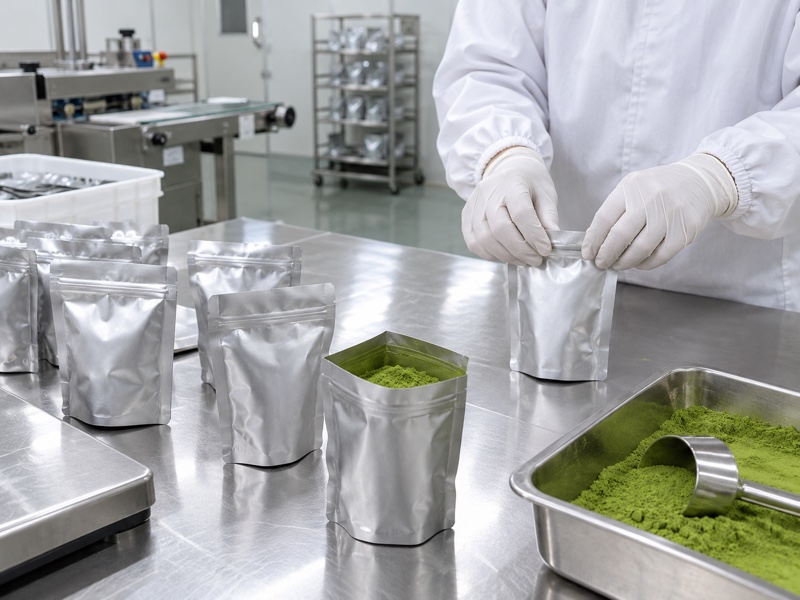
For: ingredient buyers, warehouse teams, and food manufacturers. Decision: which packaging and handling procedure protects the lot through actual use.
Contents: 1 · 2 · 3 · 4 · 5 · 6 · 7 · 8 · 9 · 10
1. What causes matcha quality to decline?
Track exposure, not calendar age alone
Matcha is a fine tea powder with a large surface area relative to leaf tea. Contact with air, moisture, light, and heat can change its aroma, appearance, and handling properties. A bright green powder may become duller, clump, or develop stale notes, but visual change alone cannot establish safety or remaining shelf life. Follow the exposure: a sealed pack in a controlled storeroom and an open pack beside a warm mixer experience different conditions, even if they share the same printed date.
The product’s formulation and pack also matter. A pure matcha powder, a sweetened latte blend, and a premix with milk ingredients have different ingredient risks and labels. This guide addresses matcha powder; blends need their own specifications. Identify the supplier’s supported storage conditions and shelf-life basis, then map the route from delivery through production. Record where cartons sit during unloading, whether packs face sunlight, how long a pouch remains open, and whether scoops return moisture to the powder. Those observations show where a practical change may protect quality more than a new date label.
| Exposure | What may change | Control to test |
|---|---|---|
| Oxygen and light | Aroma and color | Barrier pack and protected storage |
| Moisture | Caking and handling | Seal integrity and dry tools |
| Heat | Faster sensory change | Monitored storage location |
2. How should incoming lots be checked?
Establish a baseline at receipt
Inspect shipping cartons and primary packs for punctures, failed seals, water marks, and unexpected temperature exposure where that is relevant. Match the lot, product code, quantity, and date information against the purchase order and supplier documents. Open only under control: sampling should follow the site’s hygiene procedure so the inspection does not contaminate the material. Keep a retained sample in an approved pack and record when it was taken.
Compare the incoming lot with an agreed reference for aroma, color, flow, and dispersion in a standard application. A photograph under consistent light can help document a difference, but a calibrated color method may be useful when color tolerance is tight. Review the lot’s specification and applicable quality results before release. If documents are missing or a seal is damaged, place material on hold under the site’s quality procedure rather than quietly using it. Record warehouse arrival and storage location so an investigation can identify which pallets shared an exposure. The baseline is valuable later: a complaint about brown color can be checked against the sample taken at receipt, not only a supplier marketing photo.
3. Which package format fits the use rate?
Choose a pack that will be used promptly
A large bag may lower price per kilogram while increasing the time that powder is exposed after opening. Compare planned weekly consumption with the supplier’s pack sizes and the site’s validated open-pack handling period. Do the usage math: a plant using 2 kg each week gains little from a single 20 kg pouch if it cannot protect the remainder reliably. This is a planning example, not a universal pack-size rule. An inner bag, tamper-evident closure, or smaller sealed units can simplify control.
Ask what the primary packaging is made of and what barrier performance the supplier has qualified. An opaque pack can limit light exposure; its seal and oxygen barrier still need to meet the product’s needs. Check whether the pouch can be resealed effectively after partial use or whether transfer to a designated food-grade container is required. Any transfer container needs cleaning, labeling, and lot traceability. Store bulk cartons so pack seals are not crushed or rubbed during picking. The right format balances price, waste, labor, warehouse space, and the ability to finish an opened unit within the site’s approved period.
| Pack option | Operational benefit | Check before choosing |
|---|---|---|
| Smaller sealed pouches | Shorter open exposure | Cost and packaging waste |
| Large bulk bag | Fewer units to handle | Use rate and resealing method |
| Lined rigid container | Repeated access | Cleaning and lot control |
4. What should warehouse conditions control?
Write conditions that staff can monitor
Use the temperature, humidity, and light limits supported by the supplier and the site’s own validation. Keep cartons in a dry, clean location away from direct sunlight, steam lines, warm equipment, and strong odors. Check the shelf, not just the room: a pallet beside a loading door may face swings that a sensor on the opposite wall never records. Map conditions where material actually sits, including staging areas.
Specify how measurements are taken, where sensors are placed, who reviews alerts, and what happens after an excursion. A data logger is useful only if someone can act on its record. Avoid opening a cold carton in a humid warm space without considering condensation. Keep packs off the floor according to site practice and inspect for pest or water damage. Strong-smelling materials should not share a poorly controlled space with tea. If the warehouse stores several matcha grades, separate locations and clear labels reduce picking errors as well as quality risk. A practical storage SOP names the acceptable location, monitoring method, excursion response, and owner.
5. How should opened matcha be handled?
Reduce time and contamination at the point of use
Mark the opening date, lot, and operator according to the site’s traceability procedure. Use a clean, dry scoop dedicated to the ingredient and close the pack immediately after weighing. A scoop left on a wet bench can introduce moisture; an unmarked transfer tub can lose its lot identity. Time the open cycle: if operators repeatedly leave a pouch open through a full shift, a smaller dispensing container or preportioned units may work better than another reminder sign.
Keep the open pack away from heat, steam, cleaning spray, and direct light. If powder is transferred, the new container should be suitable for food contact, easy to clean, fully labeled, and included in sanitation records. Define whether leftover powder can return to the main pack; uncontrolled returns can carry moisture or another ingredient. Record the approved open-pack period based on supplier guidance and site testing, not a guessed number of days. At the end of each shift, verify seal condition and lot record. These steps protect color and flavor while also supporting food safety and recall traceability.
| Open-pack step | Record or control | Failure it prevents |
|---|---|---|
| Opening | Date, lot, responsible area | Unknown exposure time |
| Dosing | Dry dedicated tool | Moisture and cross-contact |
| Closing | Seal and storage location | Air and light exposure |
6. When does refrigeration help or hurt?
Manage condensation before changing temperature
Cold storage may slow quality change for some sealed matcha packs, but refrigeration creates a moisture problem if a cold pouch is opened in warm humid air. Follow the supplier’s instructions for the specific pack. Plan the warm-up: if a sealed pouch moves from a refrigerator to a production room, allow it to reach room conditions while still sealed, according to a documented procedure, before opening. This can reduce condensation on the powder and inner pack.
A refrigerator used for ingredients needs monitoring, cleanliness, odor control, and a place for the lot to acclimate. Frequent cycling of one large pouch in and out of cold storage can be harder to manage than using small sealed units. Freezing may be considered for some unopened products if a supplier supports it, but thawing and package integrity require validation. Do not assume cold storage extends the printed shelf life. Compare sealed packs held under the proposed condition with control packs using the site’s sensory and quality checks. The correct answer depends on packaging, local climate, use rate, and the actual manufacturing workflow.
7. How should inventory be rotated?
Make the lot visible through consumption
Use a documented rotation rule, commonly first-expiring-first-out when expiry dates are supported, and keep every case tied to its lot. A new delivery should not obscure older acceptable stock at the back of a rack. Trace the scoop to the lot: once a pouch reaches a production station, its code must still appear in the batch record. This lets quality identify which finished products used an affected ingredient.
Separate released, held, rejected, and opened material physically or through a reliable inventory system. Check the remaining shelf life before allocating a lot to a slow-moving customer order. A pack close to its date may be unsuitable for a product with a long planned shelf period, even if the ingredient is still within its own date at manufacture. Review returned or partially used packs under an explicit policy. Do not reset an opening date by moving powder into a fresh container. Cycle counts should include open units as well as sealed cartons, since those units often account for unrecorded waste. The rotation system should support a mock trace from supplier lot to finished batch.
8. Which tests reveal storage damage?
Use a defined comparison method
Sensory and color checks are useful when they compare like with like. Prepare a standard water slurry or target application using the same dose, water or base, temperature, vessel, and lighting. Compare with a retained approved sample, then record aroma, flavor, color, clumps, and sediment. Keep the method fixed: a stronger dose can make a faded lot look acceptable, masking the storage question. Check for visible moisture or pack damage before opening.
Moisture content or water activity may be relevant where the product specification and quality program call for them. Microbiological or contaminant testing should follow the site’s risk plan and applicable market requirements; no taste test can replace it. If a lot appears stale, place it on hold and investigate receiving records, warehouse logs, opening history, and supplier information. Do not use a single photograph as proof of oxidation or safety. A trend across retained samples and documented conditions offers a firmer basis. Record the decision to release, rework where permitted, or reject, with responsible signoff.
| Check | Standardize | Decision supported |
|---|---|---|
| Color and aroma | Dose, light, reference lot | Sensory acceptance |
| Dispersion | Liquid and mixing cycle | Application performance |
| Lab test | Approved method and sample plan | Specification compliance |
9. What belongs in supplier agreements?
Specify the pack and evidence
A purchase agreement should identify product grade, ingredient identity, pack material, net weight, seal format, lot marking, shelf-life basis, storage conditions, and transport requirements. Request a product specification and lot documents that fit the destination market. Write change triggers: if a supplier changes pouch liner, grinding method, source, or grade, the buyer may need to recheck storage and application performance. A generic promise of “fresh matcha” cannot replace measurable acceptance criteria.
Agree how transit damage, temperature excursions, and short-dated deliveries will be reported and handled. Ask for the evidence behind unopened shelf life and any guidance for opened packs. Those two periods are different. If the supplier recommends refrigeration, ask how sealed packs should be acclimated before opening. Purchasing should compare offers using usable product, not only nominal price. A lower price with oversized packs may create write-offs; a higher price with fit-for-use units may lower waste. Record who owns incoming checks and who approves exceptions so production is not forced to interpret a sales brochure during a delivery dispute.
| Agreement item | Evidence | Receiver action |
|---|---|---|
| Pack and seal | Approved specification | Inspect on receipt |
| Shelf life | Supplier support | Check remaining life |
| Change notice | Written process | Trigger requalification |
10. How should teams validate a storage SOP?
Trial the procedure in the real warehouse
Choose one representative lot and follow it from receipt to the last production use. Record pack condition, location and environmental readings, opening dates, resealing quality, and actual time at the work station. Take planned samples using the same application method and compare them with an approved retained sample. Find the weak handoff: a sound warehouse plan can fail when a pouch waits open beside a hot drink line or moves unmarked into a small tub.
Set acceptance criteria before the trial: sensory limits, pack integrity, traceability, and any required specification tests. Include operators from receiving, storage, production, and quality in the review. If the open-pack period or packaging does not work, change one control and repeat the check. Document corrective actions and training, then audit them during routine work. The best way to store matcha in bulk is the procedure that protects the actual lot until it is used, with evidence for both sealed and opened phases. Next, compare two pack sizes against your weekly use rate and inspect a retained sample at each handoff. For consumer storage context, see the reference below; use your supplier’s data and site validation for commercial limits.
Reference: “How to Store Matcha So It Stays Fresh: Spilling the Tea” — Matchaful. It provides consumer storage context; bulk handling controls here are framed for site validation.
FAQ
Q1: How to store matcha after opening a bulk pack?
Reseal promptly, use dry dedicated tools, label the opening date and lot, and follow a validated open-pack period.
Q2: Should matcha be refrigerated?
Follow the supplier’s pack guidance and manage condensation before opening a cold pouch.
Q3: Can matcha be frozen?
Only if the supplier supports the sealed pack and the site validates thawing and package integrity.
Q4: What does oxidized matcha look like?
It may appear duller and smell stale, but compare a retained sample and run required quality checks.
Q5: How should a buyer set shelf life?
Use supplier evidence, actual packaging and conditions, and product-specific validation rather than appearance alone.