
A golden matcha cup can taste balanced at pour yet leave turmeric grit and concentrated tea in the last sip. Hot milk, iced milk, and bulk premix each disperse powders differently. Hot and iced recipes need separate dispersion and dilution checks during normal service.
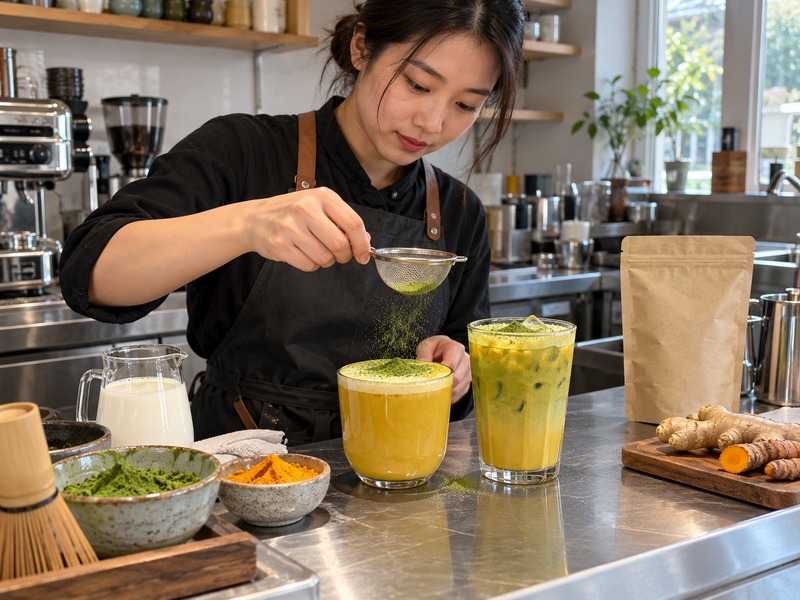
Search-intent reference: Golden Matcha Latte (2 Ways!).
1. What is matcha golden milk on a café menu?
A golden milk menu item needs a defined flavor promise because matcha and turmeric can compete. Some guests expect tea, others expect warming spice. Set the lead flavor, sweetness, cup size, milk base, and service temperature. A recipe card should describe the visible color honestly; turmeric can shift matcha green toward olive. Operations can then train one repeatable build rather than letting each barista correct color and spice by instinct.
Tea-spice menu promise
Tea-spice lead: Matcha golden milk pairs powdered green tea with turmeric and usually warm milk or a plant based alternative. It can be served hot or iced, but the two formats expose different sweetness and sediment. Define whether the drink leads with tea, spice, or a balanced blend. A beverage buyer should specify cup size, milk choice, sweetness range, color expectation, and whether foam or a topping is part of the standard build. An olive yellow cup may be honest to the ingredients; a bright green marketing image could create the wrong expectation.
2. Which matcha, turmeric, and milk should be selected?
Powders that smell pleasant alone may behave poorly in milk. Matcha brings tea bitterness and fine suspended particles, while turmeric brings earthy flavor and staining. Milk fat or plant milk stabilizers change mouthfeel. Request ingredient and safety specifications from both powder suppliers, then evaluate complete cups. If the chain serves several milk choices, test the highest volume choices before adding an option that needs its own formula.
Turmeric and milk specifications
Turmeric specification: Culinary matcha can suit a milk drink when its tea note survives turmeric, ginger, and sweetener. Turmeric quality affects color and earthy flavor; ask for a food grade specification, lot trace, and microbiological documentation. Milk or plant milk changes body, protein behavior, and allergen declaration. Test the finished cup with the exact brands in the supply chain. Spice blends may contain cinnamon, ginger, pepper, or sugar, and their proportions should be written rather than left to staff judgment. Avoid choosing powders solely by dry color in a jar.
| Menu choice | Decision | Effect |
|---|---|---|
| Service | Hot or iced | Needs separate dilution |
| Milk | Dairy or plant | Body and allergens |
| Flavor lead | Tea or spice | Dose target |
3. How should a matcha golden milk formula be balanced?
Use a measured base formula before exploring flavor variations. Too little liquid in the initial paste leaves lumps; too much liquid in the cup dilutes both tea and spice. Sweetener can soften bitterness but should not conceal a poor powder choice. Record the milk volume that actually enters the cup after foam loss or ice displacement. A staff shorthand such as “one scoop” should be linked to grams from the approved batch.
Gram-based cup formula
Measured cup dose: A starting hot cup might use 240–280 mL milk, 1–2 g matcha, and about 0.3–0.7 g turmeric, with sweetener adjusted to the menu target. These quantities are trial points, not fixed nutrition or safety advice. Too much turmeric can mute tea and leave a gritty finish; too much matcha can make the drink bitter. Compare one variable at a time and taste at serving temperature. For iced service, account for ice dilution and colder flavor perception. Record all powders in grams, even if baristas use a preweighed sachet.
4. What mixing sequence prevents powder sediment?
A barista needs a sequence that works within ticket time. Dry powder poured onto finished foam can remain as a dusty surface, while powder whisked into a small liquid portion spreads more evenly. Decide whether the café uses a whisk, shaker, blender, or premix. Test the worst case at the end of a shift when pitchers and tools have been used repeatedly. Cleaning time belongs in the operating plan.
Powder wetting sequence
Cold dispersion: Pre disperse matcha and turmeric in a small amount of suitable liquid before adding the rest of the milk. Warm liquid can wet powders quickly, while cold service may need more vigorous mixing or a dedicated shaker. Sift clumpy powders and keep utensils dry. Heat milk within the café’s approved equipment range rather than boiling it casually, then combine and serve promptly. If a premix is used, test segregation during storage; the light and dense powders may not dispense at the same ratio from the top and bottom of a container.
| Ingredient | Illustrative hot cup | Check |
|---|---|---|
| Milk | 240–280 mL | Body and heat |
| Matcha | 1–2 g | Tea note |
| Turmeric | 0.3–0.7 g | Earthiness and sediment |
5. How can stores make hot and iced versions consistently?
Hot and iced cups are separate service problems. A warm drink can show spice aroma, while cold milk can make powder dispersion and sweetness harder to judge. Ice size and fill line affect dilution. Train a common gram dose but keep distinct liquid and mixing instructions for each version. If a powdered premix is distributed to stores, test portions drawn from the top and bottom of a stored pouch for the same flavor.
Hot and iced recipe cards
Ice dilution: A hot recipe should name milk temperature, powder dose, cup size, and foam target. An iced recipe needs a separate water balance because melted ice changes strength during pickup. Preweighed single serve packets can reduce dose variation but add packaging cost. If stores use bulk jars, provide a gram scoop check and an end of jar test for settling. Train baristas to identify the drink’s intended muted green gold color so they do not add extra powder merely to match an unrealistic promotional image.
6. Which sensory and visual checks should staff use?
Check the drink at the moment of sale and near the end of drinking. Matcha and spice particles may settle, leaving a weak top and concentrated bottom. Cup color should be compared under store lighting, not a retouched image. Taste for a balanced tea note, turmeric warmth, and manageable sweetness. A visible ring on the cup or gritty last sip is a useful defect description for troubleshooting.
Last-sip release check
Last-sip sediment: A saleable cup smells of tea and warm spice without raw powder at the bottom. Check appearance at pour and after the normal handoff delay. Stir and taste the final sip during validation; sediment often reveals itself only there. Compare hot and iced cups for bitterness, sweetness, mouthfeel, and color. If the drink looks gray, inspect spice dose, powder grade, milk color, and temperature. If it tastes flat, check sweetener and dilution before increasing costly matcha.
| Cup check | Method | Issue |
|---|---|---|
| Powder | Inspect last sip | Sediment |
| Color | Compare under counter light | Gray tone |
| Iced cup | Time to pickup | Dilution |
7. How should a beverage buyer calculate cost per cup?
The cost sheet should include both powders and the actual milk choice. An alternative milk charge may be justified by its purchase cost, waste, and pack format. Include syrup, cup, lid, stirrer, premix pack, and barista time. Powders dosed by eye can push cost and flavor in different directions. Sample several routine cups and weigh the remaining premix to find overuse before changing the selling price.
Cost per served cup
Milk-option margin: Cost a standard cup from actual grams of matcha, turmeric, other spices, milk, sweetener, cup, and lid. Add labor for premixing and cleaning if the drink uses an extra vessel. Plant milk may carry a different price and a different declared allergen profile, so price that option explicitly. Track remake rate from clumps or wrong powder dose. A prepared spice mix can save service time but may create inventory write offs if demand is low. Compare cost at realistic weekly volume and accepted cups.
8. How should a golden milk premix be stored?
A dry tea and spice blend is a different inventory item from a prepared syrup or milk beverage. Humidity can clump powders, while liquid mixing adds microbiological and holding questions. Use sealed containers and traceable dates for each state. If the team wants a ready to use concentrate, develop and validate it as its own product. Do not transfer the shelf date printed on matcha powder to a milk based mix.
Dry premix and liquid hold
Premix segregation: Keep dry powders sealed, cool, and protected from humidity, light, and odors. A premixed dry blend needs its own mixing, packing, and hold check to confirm uniform distribution. Liquid concentrate changes the food safety and shelf life problem; it cannot borrow the dry powder date. For hot drinks, make to order within the café’s normal dairy or plant milk controls. For iced drinks, use clean ice and the approved cold holding route. Document when opened containers or mixed syrups must be discarded.
| Cost line | Unit | Variable |
|---|---|---|
| Tea and spice | Grams per cup | Overdose |
| Milk | mL per cup | Option price |
| Service | Time and pack | Remake |
9. Which label and safety checks apply to this drink?
Menu claims should describe ingredients and taste. Health promises about turmeric or matcha need qualified evidence and review in each market. Dairy, soy, oat, or nuts may appear depending on the milk and spice blend. Record the exact brands used in trials, because a substitute can change allergen wording and dispersion. Store teams need a current recipe card that matches the customer facing menu and online ordering options.
Caffeine and allergen wording
Caffeine wording: Review milk, soy, oat, nut, and spice allergen or cross contact statements according to the chosen ingredients. A claim that the drink treats inflammation or improves health needs market specific evidence and regulatory review; a simple flavor description is safer. Matcha contains caffeine, so avoid presenting the beverage as caffeine free. Ingredient files should identify matcha and turmeric lots, premix formula, and any sweetener. Menu boards and online ordering should display the same build and option names that staff actually serve.
10. What should a multi-store pilot resolve?
A pilot across store conditions should reveal whether training is enough. Have ordinary baristas make hot and iced cups during a busy period. Measure powder dose, service time, lumps, sediment, and remake count. Test the cup after a typical guest carry time. Compare sensory results from different milk choices without changing the powder on the fly. A buying decision should follow repeatable cups, not one polished launch photograph.
Peak-hour beverage pilot
Peak-hour cups: Trial the beverage in both hot and iced formats with routine baristas. Give them normal equipment, a peak hour line, and the intended powder pack. Measure preparation time, dose variation, sediment after a typical handoff, and customer facing appearance. Test a cup made from the last portion of a bulk premix to reveal segregation. Approve a grade and formula once tea flavor, spice balance, cleaning effort, margin, and training instructions hold across more than one store condition.
| Record | Purpose | Owner |
|---|---|---|
| Powder specification | Lot and quality | Purchasing |
| Recipe card | Dose and order | Operations |
| Menu proof | Claims and allergens | Quality |
Send Matcha Village the milk base, hot and iced cup sizes, target matcha dose, and photographs of any sediment. Request a powder grade that tastes clear beside the approved turmeric blend, then test both cups after a normal guest carry time. Procurement should compare last-sip grit, service time, premix uniformity, and cup margin before fixing the grade and pack format.
FAQ
Q1: Does golden milk contain turmeric? In this menu concept, turmeric supplies the golden spice character alongside matcha.
Q2: Can it be served iced? Yes, with a separate mixing and dilution trial for cold milk and ice.
Q3: Why does powder settle? Matcha and spice particles may remain suspended rather than dissolve; dispersion and serving time matter.
Q4: Is the drink caffeine free? Matcha contains caffeine, so do not describe a matcha version as caffeine free.
Q5: Can cafés make a dry premix? Yes, after checking dose uniformity, clumping, storage, and the full ingredient declaration.