
A matcha avocado smoothie can leave the blender pale green and reach pickup with a brown ring or watery layer. Fruit ripeness, usable flesh weight, blend heat, and handoff time move faster than a menu photograph suggests. Use avocado receiving checks and a weighed cup formula, then inspect the drink at pickup.
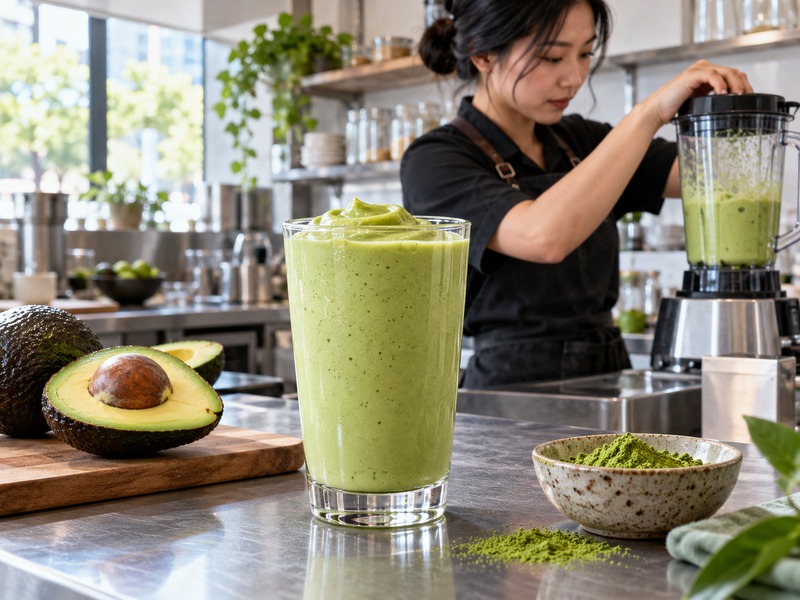
Search-intent reference: Vanilla Matcha Avocado Smoothie.
1. What makes a matcha avocado smoothie sellable in a café?
A smoothie needs a clear service brief before a buyer compares powders. Name the cup volume, target pour weight, thickness, sweetness, and handoff time. The avocado brings creaminess, but it also changes color and usable yield across deliveries. A café recipe cannot depend on finding one perfectly ripe fruit for each order. Define how a staff member recognizes acceptable flesh and what happens when a delivery fails that standard.
Counter cup and delivery brief
Ripeness at service: A matcha avocado smoothie should taste of tea and fresh avocado without becoming heavy, grassy, or oily. Set a serving size, sweetness target, thickness, and whether the drink uses dairy, plant milk, or water. Decide if it is made to order, sent to a delivery customer, or prepared as a bottled product. Those are different production routes. A cup that tastes good immediately may brown or separate before pickup. Menu photos should show a color and fill level staff can reproduce from normal fruit, not one selected ripe avocado under studio lighting.
2. Which avocado, matcha, and liquid should buyers select?
Avocado buying involves both produce quality and labor. A case price hides peel, pit, bruising, and fruit discarded before ripening. The liquid base sets flavor and allergen status, while matcha contributes the tea cue. Compare powders in the intended milk and fruit blend at the same dose. If the tea is invisible, check sweetener and vanilla before raising powder so far that the drink turns harsh.
Avocado ripeness and powder
Usable flesh: Avocados vary by cultivar, ripeness, size, and usable flesh. A hard fruit may blend into lumps; an overripe fruit may bring brown marks and off flavor. Define receiving and ripeness criteria, then weigh accepted flesh rather than pricing by whole fruit count. Matcha should be tested in the full fat and liquid system because avocado softens bitterness and can mute tea aroma. A culinary grade may work, but grainy particles will show in a pale smoothie. Select milk or plant milk by taste, body, and allergen needs, with supplier specifications on file.
| Channel | Sellable unit | Validation |
|---|---|---|
| Counter | Standard cup and fill | Handoff color |
| Delivery | Sealed cup | Separation and spill |
| Bottled product | Separate process brief | Shelf life program |
3. How should the matcha avocado smoothie formula be balanced?
The formula should make the blender’s job possible without sacrificing texture. Ice and liquid are not interchangeable: ice adds cold mass and melt, while liquid changes pourability immediately. Avocado fat can make a low sugar drink seem richer, though a flat flavor still needs a considered sweetener or acid trial. Weigh each component and write a target finished mass. Compare cups after pickup time, not just after the blade stops.
Fruit-to-liquid formula
Fruit-to-liquid ratio: An illustrative bench build for a medium café cup uses around 50–70 g avocado flesh, 160–200 g milk or plant milk, 40–70 g ice, 1–2 g matcha, and sweetener adjusted to taste. These are screening ranges, not a validated menu formula. Weigh the finished cup and test after the normal handoff delay. More avocado can add body but also raise cost and dull tea; more ice can make the drink thinner after melting. If vanilla or citrus is proposed, test it as a separate variable because flavor and color can change.
4. What blending sequence protects color and texture?
Blender loading order can create powder clumps or leave avocado stuck under the blade. Choose a sequence that works with the actual jar geometry and batch size. Staff should scrape at a named point if the trial requires it. A temperature check can expose long blending that warms the cup. If extra liquid is needed every busy shift, the recipe or equipment is wrong for that store. Correct the specification rather than treating improvisation as skill.
Blender loading endpoint
Blender scrape point: Portion avocado flesh into clean containers under the kitchen’s food safety plan. A small premix of matcha and liquid can reduce dry clumps before the main blend. Add liquid, avocado, powder, sweetener, and ice in a sequence that the chosen blender handles reliably. Blend to a smooth endpoint, then transfer promptly. Long blending warms the drink and may speed visible color change. Scrape the jar if powder sticks above the liquid line. Do not add extra liquid casually when the motor strains; correct the measured formulation or equipment choice.
| Input | Illustrative range | Measure |
|---|---|---|
| Avocado flesh | 50–70 g | Usable yield |
| Milk or plant milk | 160–200 g | Flavor and allergen |
| Matcha | 1–2 g | Tea note |
5. How can a chain repeat the smoothie across stores?
Multi-store production needs controls that fit a rush. Training should cover fruit selection, usable gram weight, powder dose, lid fit, and the maximum time between blend and handoff. Preportioned avocado can speed service but introduces preparation and holding questions. Check the recipe with a lower powered approved blender and a near-full freezer station. A single successful demonstration with premium equipment is not a rollout test.
Store-level portion control
Late-shift warmth: Across stores, fruit ripeness and operator technique will vary more than a printed recipe suggests. Train a usable flesh weight and a visual ripeness standard. Preweighed fruit portions may reduce speed and waste, but only if their chilled handling is controlled. Test the weakest approved blender at peak load. Record the cup fill, base temperature, and blend time from routine staff. If delivery is offered, use a separate test for lid seal, travel time, ice melt, and separation rather than relying on the counter service standard.
6. Which checks define an acceptable finished drink?
Quality release for a smoothie combines visual and sensory checks. The cup should remain uniformly green enough to match the menu, with no fibrous pieces or powder spots. A drink that immediately separates can signal a formula or process problem. Taste for avocado richness and tea recognition without an oily finish. A few cups from different fruit lots reveal more than repeated samples from one avocado. Define a realistic reject standard that staff can apply quickly.
Pickup color and texture
Brown-ring check: A passing drink has a consistent pale green tone, no avocado fibers or matcha specks, and a clear tea flavor without raw bitterness. It should pour and drink at the planned thickness. Check immediately and after a realistic pickup interval. A brown ring, watery layer, or oily mouthfeel should be recorded as a specific defect. Compare cups made with fruit from different deliveries. If color fades, inspect ripeness, holding time, light, and blending heat before increasing matcha. A stronger powder dose may worsen flavor without solving oxidation.
| Control | Record | Reject signal |
|---|---|---|
| Blend | Time and temperature | Warm thinning |
| Cup | Fill mass and texture | Underportion |
| Hold | Color and separation | Brown ring |
7. How should a buyer calculate cost and usable yield?
Avocado is usually the hardest cost line to predict. Record purchased mass, accepted flesh, and the number of cups made from a case. Add matcha, milk, ice, sweetener, cup, lid, staff time, and remakes. A small reduction in fruit waste may matter more than negotiating powder price. Compare a made to order cup and a delivery cup using their own packaging and loss assumptions. Margin should come from observed yield.
Usable-flesh economics
Fruit case yield: Price the drink using accepted avocado flesh, not the purchase weight of whole fruit. Track peel, pit, bruised sections, and overripe rejects. Add milk, matcha, ice, sweetener, cup, lid, straw, labor, and cleaning time. Matcha grams per cup are small, while fruit yield can move unit cost sharply. Use observed usable yield from several normal deliveries rather than an ideal specimen. Delivery may add spill or remake costs. Compare margin only among formulations that pass flavor and color checks at handoff.
8. How should ingredients and finished drinks be held?
Storage controls should follow each ingredient’s state. Whole fruit ripens; cut flesh browns; powder can pick up moisture; blended smoothie melts and separates. The kitchen needs separate labels or records for prepared flesh and finished drinks. A bottled smoothie is a different product with a different validation burden. Do not assign its shelf date using a short café handoff trial. Delivery tests should include the worst normal travel time and pack orientation.
Cut-fruit and cup handling
Cut-flesh clock: Whole avocados and prepared flesh need different handling rules. Store fruit according to supplier advice and ripeness stage; prepared flesh needs a documented cold handling and discard window. Matcha should remain sealed, dry, and protected from odors and light. A blended smoothie is perishable and should be served promptly under the café’s food safety plan. If the business wants a bottled product, it needs a separate formulation, process, packaging, and shelf life program. No made to order cup test can validate a multi day bottle date.
| Cost line | Basis | Loss |
|---|---|---|
| Avocado | Accepted flesh grams | Peel and rejects |
| Tea and liquid | Actual grams per cup | Overdose |
| Service | Pack and labor | Remakes |
9. Which food safety and menu records are needed?
Foodservice documents connect ingredients to the menu claim. Record the exact milk or plant beverage, any added protein ingredient, sweetener, avocado receiving lot, and matcha lot. Review all allergens before calling an option suitable for a restricted diet. Staff should have a written fruit rejection guide and sanitation routine for the blender. Claims about energy or wellness require market review; a flavor description can stay within observed product qualities.
Milk and produce records
Milk choice declaration: Review milk, soy, oat, nuts, and any protein or topping ingredients for the exact menu build. A “dairy free” option needs its own equipment and cross contact assessment. Matcha contains caffeine, so avoid caffeine free language. Do not imply that avocado or matcha treats a health condition. The recipe card should identify fruit preparation, gram weights, blend sequence, and an acceptable color range. Link purchased matcha lots and produce deliveries to store records so a complaint can be investigated without guessing which inputs were used.
10. What should a café pilot prove before rollout?
A pilot should expose normal variation. Use avocados near both ends of the accepted ripeness band, different operators, and the planned cup and lid. Measure yield and cup color after a real pickup interval. Run enough orders to see whether fruit preparation delays service. The buyer should approve a powder only after a repeatable cup passes taste, appearance, handling, and cost checks at normal pace.
Rush-hour fruit pilot
Two-lot fruit trial: Pilot with ordinary baristas during a normal rush. Include fruit from several ripeness stages inside the receiving standard, not only ideal fruit. Measure usable flesh, prep time, blend time, cup weight, remakes, and appearance after pickup or delivery. Have the quality reviewer taste a cup made late in the shift when equipment is warm. Approve the powder grade and fruit specification when the drink stays smooth, visibly green, flavorful, and profitable across those conditions. Provide the supplier with the exact liquid base and observed dispersion notes.
| Record | Content | Use |
|---|---|---|
| Fruit intake | Ripeness and delivery lot | Receiving |
| Recipe card | Weights and sequence | Training |
| Menu proof | Allergens and claims | Release |
For matcha samples, give Matcha Village the exact milk base, avocado flesh dose, blender type, and target pickup delay. Compare grades using accepted fruit from more than one delivery, and send photos of powder specks or color change at handoff. Order the powder that stays flavorful and smooth at the planned dose; separately lock a produce standard based on usable flesh yield.
FAQ
Q1: How much avocado belongs in a smoothie? Use a weighed bench range, then adjust for cup size, thickness, fruit yield, and cost.
Q2: Can matcha replace avocado? No. Matcha adds tea flavor and color; avocado supplies fat and body.
Q3: Why does the drink turn brown? Fruit ripeness, air exposure, blending heat, and holding time can affect appearance.
Q4: Can a café bottle the same recipe? Bottling needs a separate process, pack, safety, and shelf life program.
Q5: Should staff measure by scoop? A scoop can speed service after its dose is checked against grams and fruit variation.