
Matcha fat bombs may set cleanly in a test refrigerator yet soften in packing, leave oil on a carton, or taste waxy at serving temperature. The fat system and cold route matter as much as tea dose. Set piece weight, shaping temperature, texture, and pack criteria without treating the retail name as a nutrition claim.
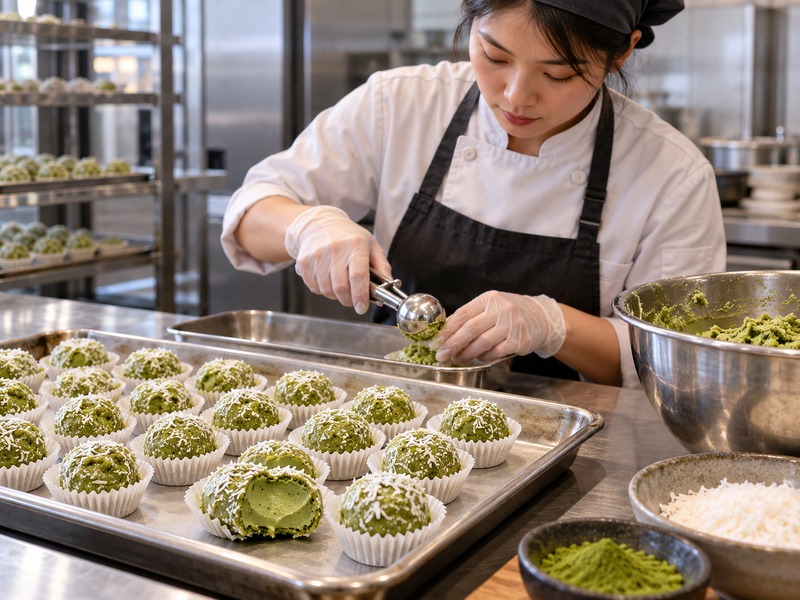
Search-intent reference: Matcha Cheesecake Fat Bombs.
1. What are matcha fat bombs as a sellable snack?
The retail name describes a style of small, high fat confection, but it does not define ingredients or nutrient values. A brand should choose the format and serving size before writing packaging. Cream cheese, coconut butter, and nut butter can each yield a different bite and storage requirement. Decide whether the piece is chilled, frozen, or sold under another validated route. That choice controls formula development and distribution cost.
Piece format and cold route
Texture at handoff: “Fat bomb” is a retail term for a small, fat rich snack, often chilled and lightly sweetened. It is not a standardized nutrition category. A food brand should decide whether its product is a cream cheese bite, coconut based piece, nut butter confection, or another formula. Define piece mass, serving count, eating texture, and sale channel. A recipe that firms in a home refrigerator may smear in a warehouse or become hard and waxy when served very cold. The product brief should name a realistic storage route before anyone promises convenience or a dietary benefit.
2. Which fats, matcha, and sweeteners fit the brief?
Fat source selection sets the product’s behavior in the hand and mouth. Cream cheese carries water and tang; coconut oil can soften rapidly; nut butter may separate if the emulsion is weak. Matcha powder should be screened in the complete base because fat and sweetener change its perceived bitterness. Ask suppliers for current ingredient statements and specifications. A package claim cannot be built on a home recipe’s macro estimate.
Fat base and tea grade
Fat-system choice: Choose the fat system for flavor, set behavior, and safety. Cream cheese gives tang and water; coconut oil changes firmness sharply with temperature; nut butter contributes solids and allergens. Matcha needs to disperse smoothly in the chosen fat or dairy base and remain visible without a bitter dust coating. Sweetener selection affects taste, texture, cost, and labeling. Some high intensity or bulk sweeteners have market specific rules. Ask each supplier for ingredient statements and lot documents. Test substitutes in finished pieces rather than assuming all powdered sweeteners behave alike.
| Format | Selling condition | Main risk |
|---|---|---|
| Cream cheese bite | Validated chilled route | Microbial and texture |
| Coconut fat piece | Defined cool route | Softening |
| Nut butter bite | Allergen controlled route | Oil separation |
3. How should a matcha fat bomb formula be built?
A production formula should use weights and an explicit basis for percentages. Identify the base fat or dairy mass, then record matcha, sweetener, flavoring, and coating separately. A high powder dose may create a dry, bitter center. A large coating pickup can change nutrition and cost after the core formula is finished. Keep trial pieces at the intended serving temperature long enough to judge set and mouthfeel. Do not infer commercial shelf life from a firm piece after one night in a refrigerator.
Weighed core and coating
Base mass definition: An illustrative cream cheese bench base could use 100 parts cream cheese, 20–35 parts coconut butter or nut butter, a measured sweetener level, and matcha near 1–2% of total mix. This is a screening concept, not a tested nutrition formula. The water and fat balance determines whether the piece scoops, sets, and survives packing. If a dairy free version is planned, formulate it separately rather than replacing cream cheese gram for gram. Weigh every ingredient and calculate yield from accepted finished pieces, including any coating pickup.
4. What mixing and shaping sequence prevents defects?
The process should avoid warm pockets and uneven powder distribution. Sift matcha, make a small uniform paste, then mix into the full mass under controlled temperature. Weigh portions before coating or molding. Record how long the mass can remain on the shaping table before softening. Staff need a clear route for returning product to cold storage without repeated warming. Coating should be applied with a measured method so each pack has similar composition.
Powder paste and shaping
Matcha paste: Bring ingredients into a controlled working range set by the kitchen’s food safety plan. Disperse sifted matcha in a small portion of softened base before it enters the full batch; dry powder added late can leave bitter green pockets. Mix until uniform without warming the mass so much that fat separates. Chill as needed for deposition, then portion by weight. If pieces are rolled in coconut or tea powder, measure coating pickup and inspect whether loose dust falls into the pack. Return the product to controlled storage promptly.
| Input | Illustrative bench basis | Check |
|---|---|---|
| Cream cheese | 100 parts | Water and tang |
| Fat or nut base | 20–35 parts | Set texture |
| Matcha | 1–2% total mix | Bitterness and color |
5. How can a producer scale pieces consistently?
Scaling changes both temperature and labor. A larger mixer may warm the mass, and hand rolling can become a bottleneck. Test depositors or molds against the actual formula; a very firm chilled mass may not release cleanly. Weigh pieces across the run and inspect green color from center to edge. Record rejects caused by smearing, cracking, or uneven coating. Those defects belong in yield and cost, not in an informal rework pile.
Depositor temperature window
Depositor temperature: Hand rolling can produce attractive pieces with hidden weight variation. A depositor, mold, or weighed scoop should be tested against the chosen texture. Check pieces from the beginning and end of each batch as product temperature shifts. Measure dimensions, weight, coating coverage, and reject rate. A formula that needs constant freezer rescue may not suit the intended line. Keep lot identity through mixing, shaping, chilling, and packing. Staff should have a clear stop rule for softening, fat separation, or an off temperature product.
6. Which checks define an acceptable finished bite?
A good piece should look and taste consistent throughout its proposed sale period. Check mass, shape, green color, surface oil, bite firmness, and matcha distribution. Use a cut sample to identify dry powder pockets. A chilled product can taste muted directly from storage, so taste at the intended eating temperature. Document defects with photographs under consistent light. A brand should reject pieces that stain the pack with oil even if flavor is acceptable.
Cut-piece quality release
Surface-oil reject: A saleable bite has a uniform tea color, clean flavor, consistent piece mass, and a texture that softens pleasantly at the intended eating temperature. Inspect for white fat bloom, oily surfaces, cracks, weeping, and loose coating in the pack. Taste after the planned hold, not just after mixing. If pieces feel waxy, examine the fat blend and service temperature before adding sweetener. If the green looks dull, check powder age and light exposure. Cut a sample to verify that matcha is dispersed through the center rather than confined to the surface.
| Checkpoint | Measure | Reject signal |
|---|---|---|
| Mix | Uniform green center | Powder pockets |
| Deposit | Piece mass | Variation |
| Pack | Surface and coating | Oil or dust |
7. How should a brand calculate cost and yield?
Costing by theoretical mix weight hides losses. Measure mass left in the bowl, depositor, and coating station, then divide spend by accepted packed pieces. Include cold storage, insulated shipping if used, and the specific retail carton. Cream cheese can be inexpensive per kilogram but bring a more demanding chilled route. A specialty sweetener may raise ingredient cost and require claim review. Compare commercial options using the same accepted serving weight.
Cost per accepted bite
Accepted-piece cost: Calculate cost per accepted piece from the actual batch yield. Include cream cheese or alternative fat, nut or coconut ingredients, matcha, sweetener, coatings, pack, cold chain, labor, and rejected pieces. A higher matcha grade may add less cost than a high loss rate during shaping. Weigh leftover mass in the mixer and depositor. Compare a single serve pack with a multi piece carton using separate packaging and labor assumptions. Price claims or specialty ingredients only after their documentation and extra control costs are known.
8. How should matcha fat bombs be packed and held?
The finished food determines storage requirements. A cream cheese piece is perishable and needs controlled chilling; an oil rich piece may soften or bloom under warmth. The pack should protect shape without trapping unwanted moisture. Run a hold study through the actual warehouse and store route. Monitor texture, color, oil marks, odor pickup, and microbiological criteria under the producer’s plan. A frozen route needs a separate thaw instruction and package test.
Chilled or frozen pack trial
Chilled pack test: Storage depends on the exact formulation. A cream cheese version is a perishable dairy food that needs validated chilled handling; a coconut fat version may set and melt differently. Test the real pack for crushing, oil marks, condensation, odor transfer, and color change along the intended route. Do not borrow a shelf life from the reference recipe or from a dry matcha pouch. Record when the shelf clock begins and how opened cartons are handled. A frozen option requires its own thaw and serving study before sale.
| Cost line | Measure | Loss |
|---|---|---|
| Base fats | Actual grams per piece | Mixer residue |
| Matcha and coating | Actual pickup | Overdose |
| Cold pack | Materials and handling | Damaged units |
9. Which nutrition, safety, and label checks apply?
Nutrition and dietary words on packaging carry a verification burden. A “fat bomb” name does not prove a product is low carb, keto, sugar free, or suitable for any medical diet. Calculate nutrients from the finalized bill of materials and verify them as required in each market. Review milk, coconut, nuts, and other allergens for the exact formula. Batch records should identify supplier lots, processing time, portion weights, cooling, and release.
Nutrition claim and allergen file
Dietary-claim review: Review milk, coconut, tree nuts, soy, and other ingredients against the final formula and the target market’s allergen rules. A “keto,” “low carb,” or “sugar free” claim needs verified nutrition calculations, applicable testing, and local regulatory review. Do not copy the reference page’s calorie or macronutrient figures to a commercial formula; they describe a different recipe and serving size. Batch records should connect every pack with incoming lots, mixing settings, shaping weight checks, cold storage, and release decision. A menu can describe tea flavor and ingredients without promising a health outcome.
10. What should a production pilot settle before launch?
A pilot should follow the normal factory route from receiving through packed inventory. Make enough units to see heat buildup in the mixer and drift in deposit weight. Hold finished pieces under the proposed conditions, then inspect at the end rather than only at packing. Measure accepted yield and real labor minutes. Approve the powder grade when tea flavor, green appearance, texture, cold handling, and margin remain consistent across the run.
Normal-volume confection pilot
End-of-batch check: Pilot on the intended mixer, depositor or shaping table, chiller, and pack line. Make enough pieces to observe temperature drift and worker variation. Measure accepted yield, coating loss, pack appearance, and texture at the end of the proposed hold. Compare two matcha levels while keeping the fat system stable. Ask the quality lead to review allergens, nutrition claim plans, and storage evidence before approving packaging. A powder order should follow the formula that performs at normal volume, with an agreed supplier specification.
| Document | Content | Decision |
|---|---|---|
| Ingredient files | Allergens and lots | Receiving |
| Nutrition work | Verified formula and serving | Claim review |
| Hold study | Pack and temperature | Shelf life |
Give Matcha Village the chosen fat or dairy base, matcha percentage, shaping temperature, and cut-piece photographs when comparing powder grades. Ask for a lot specification and test flavor after the planned chilled hold. Purchasing should sign off only when accepted-piece yield, surface oil, pack appearance, and allergen documents meet the product brief. Review any dietary claim separately from the tea order.
FAQ
Q1: Are fat bombs a regulated nutrition category? No single formula or nutrient level follows from the name; verify any label claim separately.
Q2: Can a cream cheese version be shelf stable? Do not assume so. Validate chilled handling and shelf life for the exact finished product.
Q3: How should matcha enter the mix? Sift and pre disperse it in a small amount of base before full mixing.
Q4: Can pieces be frozen for distribution? Only after freeze, thaw, texture, pack, and safety trials for the actual formula.
Q5: Can the brand claim a piece is keto? Only after formula based nutrition verification and review under target market rules.