
Matcha ginger is a tea drink that pairs powdered green tea with ginger’s sharp, warm flavor. The combination can be lively, but ginger can also overwhelm the tea or leave fibrous sediment in the last sip. A café has to decide whether it is selling a hot latte, an iced refresher or a prepared concentrate. Cuzen Matcha’s ginger matcha latte illustrates one consumer format. The following checks help an operator make a drink that tastes and looks consistent across staff, shifts and ingredient lots.
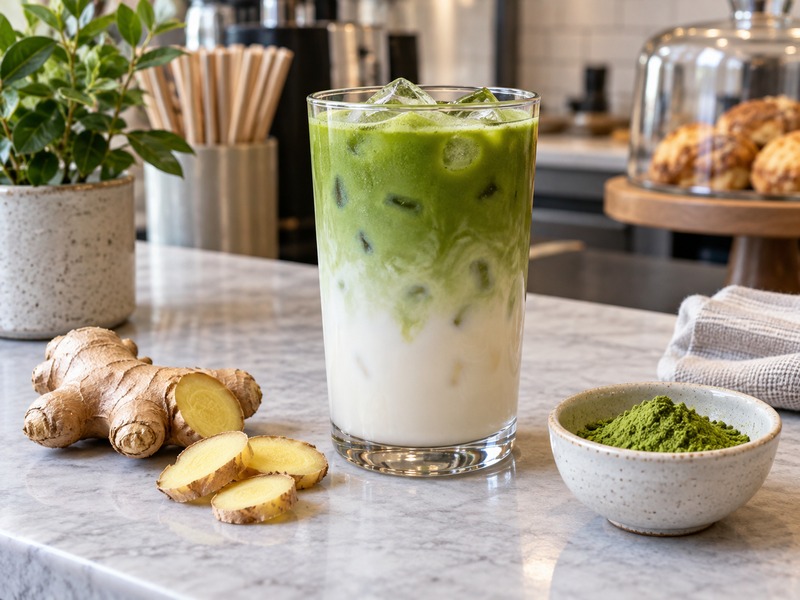
For: café operators, beverage developers and tea buyers. Decision: how to deliver a clear matcha note alongside measured ginger heat without slowing service.
1. What experience should a matcha ginger drink deliver?
Define the order before the formula
Hot and iced versions emphasize different aspects of ginger. Heat lifts aroma in a hot cup, while a cold drink may show more sharpness and sweetness contrast. Milk softens both ginger and tea; a clear water-based drink leaves them exposed. Choose one lead format and write its intended cup size, sweetness, serving temperature and expected drinking time. A seasonal special may tolerate a longer assembly than a core morning beverage. A bottled product calls for a separate formulation and safety program.
Taste past the first sip. Ask tasters to judge tea clarity, ginger heat, sweetness, texture and finish after gentle stirring and again when the drink is nearly gone. A bright ginger opening can be attractive but should not leave the last third tasting like thin sweet tea. Set a target in ordinary words: for example, matcha first, mild ginger warmth after swallowing, no fibrous bite. Then decide which observable defects will trigger a remake.
| Format | Likely advantage | First risk to test |
|---|---|---|
| Hot milk latte | Soft, familiar texture | Ginger heat fades in dairy |
| Iced milk latte | Visual appeal | Separation and ice dilution |
| Clear refresher | Sharper tea and ginger | Harsh finish |
2. Which ginger ingredient fits the station?
Compare fresh and prepared sources
Fresh ginger juice brings a recognizable bite but varies with root condition, extraction and storage. A syrup is faster to portion and may provide predictable sweetness, though the ginger character can be muted. A powder is compact but may leave residue and behave differently in cold water. Choose candidates based on the intended drink and operation, then compare them at equal perceived ginger intensity rather than equal spoon volume. Record supplier and lot for every trial.
Separate heat from sugar. A sweet ginger syrup changes two variables at once. If the tea disappears, the cause may be excess sugar rather than too much ginger. When possible, run a small matrix with ginger level and sweetness level varied independently. If using fresh juice, establish food-safe preparation, filtration, chilling and discard rules within the café’s existing program. Do not borrow a household recipe’s storage advice for a multi-site operation.
| Ginger route | Control to write down | Likely service issue |
|---|---|---|
| Fresh juice | Yield and chilled hold | Variable heat |
| Syrup | Ginger and sugar per dose | Excess sweetness |
| Powder | Rehydration and residue | Grit or settling |
3. How should the matcha be chosen?
Test against ginger, not in plain water
Ginger’s pungency can mask a delicate matcha, while a rough powder can make a clear drink too bitter. Prepare candidate teas at the same mass per serving in the final beverage. Taste blind if possible, both immediately and after the normal customer interval. Inspect dry powder for clumps, but make the purchase decision on the drink’s flavor, appearance and ease of dispersion. A candidate that needs a higher dose to show through ginger may cost more per cup despite a lower price per kilogram.
Document the approved lot. Ask the tea supplier for a product specification, pack size, lot traceability, storage guidance and documents required by your purchasing policy. Keep a retained sample and a standard drink made from it. When a new lot arrives, compare it in the matcha ginger formula, not only as a whisked tea. A small difference in tea aroma may become larger after the ginger ingredient and milk are added.
4. What mixing order prevents clumps and fibers?
Prepare two smooth components
Matcha is a suspended powder; dry tea thrown into milk or a ginger syrup can form specks. First disperse a measured dose in a small amount of water using a whisk or approved frother. Prepare ginger separately, filtering fresh juice if fibers are unacceptable in the chosen cup. Then combine the components in a documented order. If milk is used, check whether adding acidic ginger juice before the milk changes its appearance. A clear refresher should be observed in a transparent cup so hidden particles are easy to see.
Try the fast route. A process that works with two bowls and five minutes may not survive a morning rush. Time the exact number of scoops, pours, tool rinses and hand movements. Test whether a short-held tea concentrate retains even dose after re-mixing, and set a maximum hold from trial evidence. Do not call matcha “dissolved”; visible settling is possible even when it has been dispersed properly.
| Mixing defect | Check | Corrective trial |
|---|---|---|
| Green dry dots | Tea pre-dispersion | Measured tea shot |
| Ginger strands | Juice filtration | Finer screen |
| Uneven cup color | Pour and stirring order | Fixed assembly sequence |
5. How should sweetness and acidity be set?
Use a small controlled tasting grid
Ginger can seem hotter when sweetness is low, and tea bitterness may increase when an acidic ingredient is added. Keep matcha and ginger fixed while testing two sweetness levels. If the drink includes lemon or another acid, vary that in a separate round. Blind tasters should identify whether the drink still tastes like matcha, not simply pick the sweetest sample. Record ingredient brand and mass; a syrup change can alter both sweetness and aroma. Taste with the intended ice or hot-water dilution.
Watch the finish. An appealing opening can conceal a sugary tail or a dry, peppery aftertaste. Ask tasters to pause before scoring the finish. If the drink becomes harsh, first inspect tea dose, ginger intensity and acid level; adding sugar is not the only correction. If it becomes dull, reduce a masking ingredient before increasing matcha. The final recipe should explain why each component is present.
6. Which milk or base preserves both flavors?
Evaluate the whole drink
Dairy, oat and other plant drinks bring different sweetness, fat and aroma. An oat drink can supply natural cereal notes that pair well with ginger but cover subtle tea. Some plant drinks foam or separate differently in hot service. Compare only options the business can stock reliably, using equal finished drink volumes and the same tea and ginger doses. If a supplier changes a milk formula, recheck the beverage; a small sweetness change can alter the balance.
Include water quality. A clear matcha ginger drink exposes the taste of its water. For milk drinks, water still affects the concentrated matcha shot. Use the café’s normal filtered supply during trials and note any unusual mineral or off-flavor issues. Test hot and iced formats separately; a base that feels rich when warm may seem thick or sweet when cold. The choice should match the menu promise and service equipment.
| Base | Potential fit | Test point |
|---|---|---|
| Dairy milk | Rounded, familiar latte | Ginger visibility |
| Oat drink | Creamy plant option | Added sweetness |
| Water and ice | Light refresher | Tea bitterness |
7. Can the drink be made quickly during service?
Build a station recipe
Write the matcha mass, dispersion water, ginger dose, base volume, sweetener, ice or heating step and pour order. Then make drinks with ordinary staff equipment, not a development-lab setup. Count tool cleaning and restocking as part of service time. A dedicated ginger bottle may reduce steps, but it needs a label and controlled holding period. A ready tea concentrate can save time only if dose and quality remain consistent through its approved hold.
Test at rush pace. Have staff prepare a series of drinks while another person records fill level, appearance and the amount of leftover concentrate. Compare the first and final cups. If speed comes at the cost of powder clumps or uneven ginger, simplify the recipe or change the tool. A slow specialty drink can still be viable if its price and menu placement account for the work; the decision should be deliberate.
8. What holding and food-safety checks apply?
Keep café and packaged drinks separate
Fresh ginger juice, milk and tea concentrate each have different handling needs. Establish preparation times, chilling requirements, container labels and discard rules under the business’s food-safety plan. A hot beverage made to order is not evidence that a bottled matcha ginger latte is stable or safe. Bottled drinks need product-specific process, microbiological and shelf-life review under the applicable rules. Do not set a long hold because a home recipe says its syrup keeps in the refrigerator.
Observe quality as well as safety. Store components under the intended conditions, then compare flavor, color, sediment and aroma at the proposed end of hold. Ginger heat may seem sharper as other aromas fade. A tea concentrate can settle, giving later customers a different dose. Define a re-mix method and a discard threshold. When the result cannot be reproduced, shorten the hold or move to single-serve preparation.
| Held component | Quality observation | Control decision |
|---|---|---|
| Tea shot | Settling and aroma | Re-mix or make fresh |
| Ginger source | Heat and odor | Lot and discard rule |
| Finished latte | Separation and temperature | Made-to-order limit |
9. How should buyers calculate cost and continuity?
Cost the sale cup
Include the actual grams of matcha, ginger yield or syrup dose, milk or base, cup, lid, ice and process loss. A fresh-juice route can look inexpensive by ingredient price yet need extra labor and discard. A syrup may be more expensive per liter but faster and steadier to portion. Compare cost at the accepted flavor level, not at equal raw-ingredient dose. Keep records of which ginger and tea lots produced the approved sample.
Plan a second source carefully. Ask suppliers about lead time, minimum order, pack size and notification of recipe or lot changes. A new ginger syrup with a different sugar concentration is a new beverage trial. If the menu names an origin or claims a particular ingredient status, obtain supporting documents before launch. Practical continuity is worth more than a promising sample that cannot be reordered.
10. What pilot makes the menu decision clear?
Simulate the real day
Prepare the drink in its final cup with the chosen lid, straw and ice. Make several servings at quiet and rush pace. Taste at handoff and after the expected customer interval. Record tea presence, ginger heat, sweetness, sediment, temperature and appearance. Have more than one barista make the recipe from written instructions. If they produce noticeably different cups, the method needs more precision or fewer steps. A photograph of a layered drink is useful for training, but taste through the full cup remains the release test.
Approve with conditions. Specify the matcha lot and dose, ginger ingredient and dose, base, assembly, component holds and remake triggers. If the drink is offered hot and iced, sign off on both separately. The next useful action is a small service pilot with real staff and ordinary cups, followed by a cost check using the measured waste. That evidence supports a seasonal launch far better than a single pleasant test sip.
Reference: Ginger matcha latte is a consumer recipe reference. This article’s operating checks are independent recommendations.
FAQ
Q1: Can matcha ginger be served without milk? Yes. A clear base makes both flavors more exposed, so re-balance sweetness and bitterness.
Q2: Is fresh ginger always better than syrup? No. Fresh juice and syrup differ in labor, variability, sweetness and holding requirements; compare finished drinks.
Q3: Should tea and ginger be mixed into one concentrate? Only after testing dispersion, dose consistency, quality and the approved hold.
Q4: Why are green specks appearing? Check matcha pre-dispersion and mixing order before increasing agitation or changing the powder.
Q5: Can a café recipe be bottled for retail? A bottled product requires its own formulation, process, packaging and safety validation.