
Banana pudding matcha can bring a familiar dessert flavor to a tea menu, but the phrase describes several products. It might be a chilled pudding layered with matcha, a matcha latte topped with banana cream, or a packaged dessert cup. Each needs a different recipe and holding plan. This guide helps café operators, dessert chains and food manufacturers define the product, select tea and banana inputs, test texture and appearance, and price a saleable portion. The target is a dessert customers can enjoy after the first photograph and staff can reproduce on a busy shift.
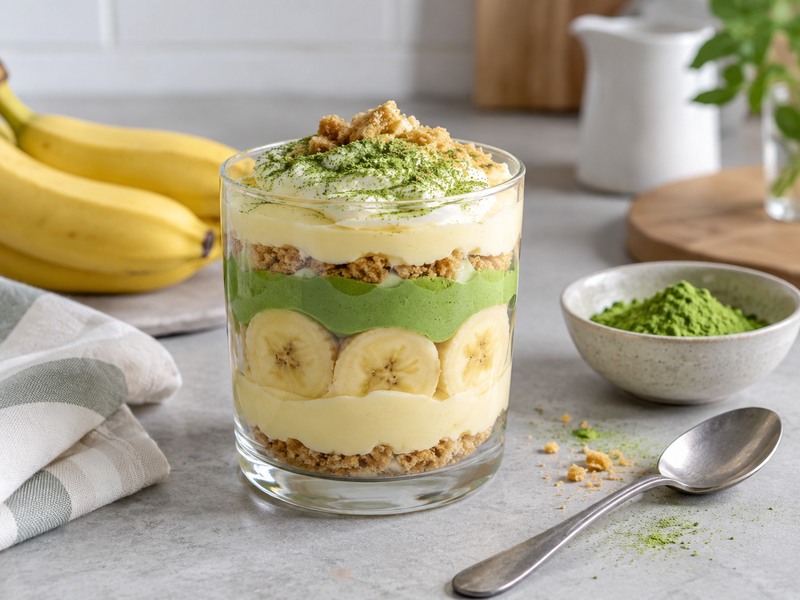
1. What product does “banana pudding matcha” describe?
Start with the eating or drinking experience. A spoonable pudding should hold its shape and offer a clear tea flavor within or between layers. A drink topped with banana-pudding cream needs a straw or spoon plan and a topping that survives handoff. A retail cup must remain safe and acceptable through its stated life. Write one product sentence before sampling: what the customer receives, how it is served and which flavor leads. Without that sentence, procurement may quote banana puree for one concept while the kitchen develops a fresh-fruit layered dessert.
Which daypart and channel fit the idea?
A café may sell a smaller dessert alongside coffee in the afternoon. A bakery can use a chilled display, provided its cold holding and production schedule work. A beverage chain might offer a limited drink with banana cream. Retail distribution asks for manufacturing and shelf-life evidence beyond café service. Test the concept at its intended price and portion size. A large serving that tastes good in a sample cup may become too sweet, too heavy or too expensive for everyday sale.
| Product format | Customer tool | Main development concern |
|---|---|---|
| Spoonable layered cup | Spoon | Texture and layer balance |
| Topped matcha drink | Straw or spoon | Topping hold and drinkability |
| Packaged dessert | Spoon | Validated cold chain and shelf life |
2. Which banana ingredient should a buyer choose?
Fresh slices offer recognizable fruit but brown and soften after cutting. Puree gives more uniform mixing yet changes pudding texture and may have its own sugar or acid. Banana flavor can support a formulated topping but does not provide fruit pieces. Frozen fruit can reduce some procurement variation while adding thawing and handling steps. Choose based on the intended product and label. Ask for ingredient statements, ripeness or solids information where relevant, storage instructions and pack size. Then test in the complete dessert, because banana flavor grows or fades differently beside matcha and dairy.
How should banana variation be controlled?
If the kitchen uses fresh fruit, define ripeness, slice thickness, preparation time and discard rule. A vague “one banana per cup” produces variable weight and sweetness. If puree is used, specify brand, SKU, fruit content and opened-pack handling. Test a second lot and compare flavor and color. A supplier may change puree consistency as fruit sources change; this can alter pudding set. Retain the approved fruit sample or a documented sensory reference. For a chain, preportioned components may reduce store labor if their packaging cost fits the margin.
3. Which matcha survives a sweet pudding base?
Cream, milk and banana can hide delicate tea. Choose a powder that remains identifiable at a dose that does not make the dessert bitter or expensive. Taste pure matcha in water to screen basic quality, then test it in the pudding or drink layer. A bright powder may look good in a photograph yet disappear in the spoon. Another may taste clear but leave a coarse mouthfeel. Record tea dose per portion, not only powder price per kilogram. Ask for specifications and lot consistency if the dessert will be sold across stores.
How should tea samples be compared?
Make coded mini batches with the same banana, dairy or plant base, sugar and preparation method. Taste a complete spoon that includes every layer, then taste each component separately. Record tea aroma, bitterness, color, texture and aftertaste after cold holding. A second trial should use the actual store tools and batch size. If one powder needs more grams to show through cream, compare its finished portion cost. Request a second production lot before approval and check whether the supplier will notify changes that may affect flavor or color.
| Matcha test | Observe | Decision supported |
|---|---|---|
| Full spoon tasting | Tea recognition through banana | Dose and grade |
| Cold hold | Color and aroma later | Shelf display fit |
| Texture | Grit or clumps | Dispersion method |
| Second lot | Sensory drift | Purchase specification |
4. How should a pudding layer be formulated?
The formula depends on whether the base is custard, starch-thickened pudding, dairy cream or a plant-based system. Each uses different processing and allergen controls. Develop texture with the manufacturing or kitchen team using the actual ingredients and equipment. Matcha should disperse evenly rather than appear as dry spots. Decide whether tea is in the entire base, a separate layer or a topping; each changes flavor per spoon and visual impact. A layer that looks generous from the side may be thin when eaten with the banana and biscuit components.
What should a bench trial record?
Record ingredient weights, mixing order, process settings, fill weight and texture at several times during cooling and holding. Check whether matcha settles or creates a darker band. Taste the top, middle and bottom of a cup. If biscuits or wafers are included, note how quickly they soften and whether that texture is desired. Repeat at the proposed production batch size. A kitchen bowl that sets well does not prove a filled retail cup will behave the same after packing and transport.
5. How can layers stay attractive without compromising taste?
Layer order affects both appearance and eating experience. Banana at the bottom may be hidden, while a large fruit layer on top can brown. A matcha layer beside cream may create a strong green-white contrast but a weak tea taste after the cup is stirred. Define what the dessert should look like at handoff and after normal movement. Test with the actual cup, lid and spoon. Customers will not eat it in perfectly horizontal layers; evaluate mixed bites. A good layered dessert remains coherent when its components meet.
What should a transport test include?
Carry sealed cups over a realistic route and inspect smearing, leaks, fruit discoloration and liquid separation. Taste after travel. If a topping collapses or biscuits turn soggy sooner than expected, change the assembly or package. For delivery, a separate topping pack may protect crunch but adds labor and waste. Do not promise a layered presentation that cannot survive the service channel. Set an acceptable appearance range using real pilot photographs rather than a studio image with a freshly filled cup.
| Component | Failure after travel | Possible trial |
|---|---|---|
| Banana slices | Browning or slipping | Change placement or fruit form |
| Matcha layer | Smearing or settling | Adjust viscosity and fill order |
| Biscuit | Unwanted softness | Separate pack or timing |
| Cream topping | Collapse | Test formulation and headspace |
6. What cold-holding rules are needed?
Banana pudding and cream-based drinks can be time- and temperature-sensitive. The operator must set controls for its exact formula, process and service route under a suitable food safety plan. Do not borrow a home recipe’s “keeps for days” statement. A café should define preparation batches, refrigerated storage, display time and discard rules. A packaged manufacturer needs process and shelf-life validation for the finished cup. A banana puree supplier’s shelf life does not transfer to a mixed dessert. Quality teams should retain coded pilot samples and review them through the proposed life.
Which quality changes should be tracked?
Monitor flavor, fruit color, liquid separation, texture, biscuit softening and package integrity alongside food safety checks. Examine the final serving period, not only day one. If staff prepare cups in advance, date them according to the approved procedure and avoid topping up old batches. Delivery partners need a cold-chain plan that preserves the product until handoff. If the concept cannot hold its intended quality, shorten the sales window or adjust the format before scaling it. A short, honest window can still support a café special.
7. Which claims and allergens require review?
Pudding bases can contain milk, eggs, wheat, soy or nuts depending on the formula. A plant-based version requires every component, including biscuits, toppings and flavor carriers, to support the claim. Do not assume banana makes the dessert “healthy” or that matcha justifies a functional claim. Nutrition and caffeine statements need calculation or testing for the actual portion. For U.S. sales, the FDA allergen guidance can guide review; other markets have their own requirements. Tie the final label or menu statement to a locked formula.
How should the menu describe it?
Tell customers whether they are ordering a spoonable dessert or a drink. State the main ingredients plainly and identify any banana flavor versus real fruit if that difference shapes the promise. Avoid implying a traditional tea ceremony or a particular origin without evidence. If the dessert contains caffeine from matcha, staff should be able to say so without inventing an exact amount. A clear description reduces mistaken orders and helps people choose a portion that fits their appetite and preferences.
| Copy topic | Evidence to check | Owner |
|---|---|---|
| Real banana | Recipe and ingredient statement | Product |
| Dairy-free | All components and handling | Quality |
| Matcha origin | Supplier records | Procurement |
| Shelf life | Finished-product study | Quality |
8. How should portions and cost be controlled?
Cost the complete saleable cup: matcha, banana, pudding base, biscuit, topping, cup, lid, spoon, labor and expected waste. A generous topping may look inexpensive per batch but create overportioning when staff pipe it by eye. Define fill weights for each layer and audit the result during a pilot. Fresh fruit trim and short cold-hold windows can raise waste at low-volume stores. Compare a smaller portion with the intended price point; a compact dessert may preserve tea flavor and reduce discard. Do not cut matcha until the customer promise has been retested.
Which pilot figures matter?
Track preparation time, actual ingredient yield, unsold cups, remakes, transit failures and repeat orders. Calculate margin at real store sales volumes, not only at central-kitchen scale. If a store needs to make a batch of twenty to sell five, production scheduling is part of the problem. Separate the costs of a fresh seasonal special from a permanent item. A limited run may be profitable with a higher price and small batches even when a broad chain rollout would leave too much refrigerated inventory.
| Portion control | Measure | Why it matters |
|---|---|---|
| Pudding layer | Filled weight | Texture and cost |
| Banana | Prepared fruit weight | Flavor and waste |
| Matcha | Grams per cup | Tea identity and cost |
| Topping | Weighed dose | Appearance and margin |
9. What should an OEM or central kitchen prove?
The partner needs experience with the specific chilled dessert or beverage format, not only with matcha powder. Send a brief stating portion, recipe target, ingredient restrictions, pack, channel, storage route and forecast. Ask for a pilot made on representative equipment, with process records and retained samples. The bulk matcha input can be specified separately, but the finished dessert’s safety and shelf life belong to the processor’s validation. Clarify which party controls formula changes, labels and incoming ingredient approval.
What belongs in the approval package?
Keep component specifications, allergen declarations, finished-product specification, process plan, sensory reference, packaging test, label and shelf-life evidence together. Confirm lot coding from tea and banana inputs through finished cups. Taste units from early and late in a production run to check layering and fill weight. If a supplier proposes a different banana puree for cost, repeat texture and flavor checks before accepting it. A controlled approval package makes repeat orders more reliable than a photograph and a verbal recipe.
10. When is banana pudding matcha ready to sell?
The product is ready when target customers recognize both banana and matcha, the portion holds its intended texture through service, food safety controls are documented and the price covers realistic waste. Test with ordinary staff, actual cups and the intended route. Record specific feedback instead of a broad score: “tea is hidden,” “banana browns” and “wafer is soggy” call for different fixes. A small pilot can establish demand after the quality and safety requirements are met. If the concept only works when eaten immediately, sell it that way rather than promising long holding.
What should procurement do next?
Lock component SKUs and a written recipe, then request commercial samples and change-notification terms. Compare a second tea and banana lot before a large order. Retain a reference cup specification with fill weights and photographs at handoff and after normal travel. The menu should describe exactly what the guest receives. A dependable dessert comes from matching the creative idea to preparation, cold holding and the real economics of each cup.
Frequently asked questions
Q1: Can fresh banana be used in advance-made cups? It can be trialed, but browning, texture and food safety must be evaluated over the planned hold.
Q2: Can a culinary matcha work in pudding? Yes, if finished flavor, color, mouthfeel and documents meet the target.
Q3: Does a café drink need the same formula as a spoonable dessert? No. Texture, serving tools and holding differ.
Q4: Can biscuits be packed inside every cup? Test their softening and the desired texture through service and delivery.
Q5: What must a packaged version prove? It needs process-specific safety, stability, label and packaging evidence for its stated life.