
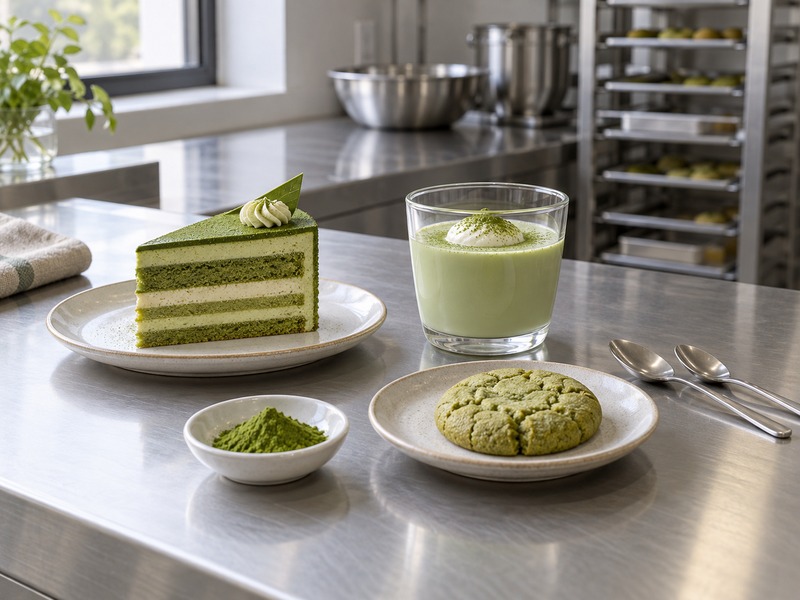
A matcha dessert is a sweet product in which powdered green tea contributes recognizable flavor, color or both. That broad name covers cakes, chilled cups, cookies and frozen treats, but a business cannot develop all of them as one recipe. Just One Cookbook’s matcha recipe collection shows the range of consumer possibilities. A café or food brand should choose a specific format that fits its equipment, selling window and customers, then test tea performance in the finished product. A green item that looks compelling online but tastes mostly of sugar will not earn repeat orders.
For: café owners, bakery developers, dessert brands and tea buyers. Decision: which matcha dessert format is worth developing and what evidence supports launch.
1. Which dessert format fits the business?
Start with the operating model
A bakery with ovens and trained staff can handle cakes and cookies; a café with limited back-of-house space may prefer assembled chilled cups; a manufacturer may need a frozen or ambient product with different validation. List the equipment, labor, service peak, storage and distribution constraints before choosing a trend-led recipe. Then decide whether the item is a permanent line, seasonal special or limited trial. Each has a different acceptable development and inventory cost.
Choose a lead product. Select one format with a clear customer occasion and an honest matcha role. A small slice eaten with coffee has different sweetness and portion needs from a take-home gift box. Write a short product brief: format, price band, serving size, flavor target and expected sale period. That brief prevents development from drifting into a beautiful but impractical concept.
| Format | Operational fit | First risk |
|---|---|---|
| Cookie or cake | Bakery equipment | Tea after baking |
| Chilled cup | Café display | Hold and condensation |
| Frozen dessert | Batch production | Flavor at serving temperature |
| Chocolate item | Gifting | Bloom and light |
2. What should matcha contribute to the eating experience?
Decide whether tea leads
Matcha can be the lead flavor, a counterpoint to dairy or fruit, or a visual accent. Those are different product promises. If the menu says “matcha cake,” a customer should be able to identify tea in a normal bite. If matcha is only a dusting on a strawberry dessert, describe the combination accurately. Define the expected first impression, mid-palate and finish, including acceptable bitterness. Taste the full sale portion rather than a bare component.
Watch sweet masking. Sugar and white chocolate can soften rough tea notes but also erase the ingredient that justifies the product name. Start with a plain version, then add toppings one at a time. Ask tasters what they perceive without telling them the concept. If they say “sweet cream” and cannot find tea, either adjust formula or use a less tea-forward name.
3. Which matcha should be screened?
Test in the selected format
A delicate drinking powder may vanish in a baked brownie. A stronger powder may work in a sweet cookie but taste harsh in a plain chilled mousse. Request identified samples and trial them at equal measured doses in the lead dessert. Assess flavor, color, grit and appearance after the full process and intended hold. A dry-powder photograph and a marketing grade are useful prompts for sampling, not purchase evidence.
Keep the buying file. Record supplier SKU, lot, specification, pack size, storage guidance and required food-safety documents. Retain a sample of the approved tea and a finished-product sensory description. If a new lot changes color or flavor, recheck it in the dessert before production. Price the powder by the dose that achieves the accepted eating quality.
| Tea trial | Test moment | Decision |
|---|---|---|
| Fresh product | After full process | Initial fit |
| Held product | End of intended sale | Flavor retention |
| Complete portion | With toppings | Tea visibility |
| New lot | Against approved standard | Continuity |
4. How much matcha is needed?
Build a measured dose ladder
State grams per kilogram of finished mix or per sale unit, with the denominator clear. Make several levels while holding the base, process and portion constant. Taste blind at the actual serving temperature. A cold mousse can mute aroma; a hot cake can make tea seem stronger than it will after cooling. Identify the first dose that delivers recognizable tea and the point where bitterness or powdery texture becomes distracting. Those boundaries define a working range for the specific product.
Check color separately. A greener sample is not automatically tastier. If the desired appearance demands a dose that tastes harsh, adjust the format, process or tea rather than pushing powder indefinitely. Record the cost of each accepted dose and the tea consumed in trim or rejects. A trial that ignores saleable yield underprices the concept.
5. Which flavors support rather than hide tea?
Limit the number of competing notes
Dairy, white chocolate, citrus, berries, sesame and red bean can all pair with matcha in different formats. A long ingredient list may make the dessert harder to recognize and harder to produce. Start with one main partner. Taste the matcha base plain, then in the finished assembly. Record whether the partner clarifies tea, adds contrast or masks it. A berry topping may make a chilled cup look vivid while adding moisture and acid that change the hold behavior.
Design for the whole bite. A layered dessert can offer separate spoonfuls of cream, fruit and tea. Test whether customers naturally combine the layers or eat them in sequence. A well-balanced spoon built by a developer may not match the guest’s first bite. If a menu photo shows a thick green layer, make sure the sold portion contains a similar ratio throughout normal production.
| Flavor partner | Potential benefit | Check |
|---|---|---|
| Dairy | Rounds bitterness | Tea remains clear |
| Citrus | Bright contrast | Acid and color |
| Fruit | Sweet-tart interest | Moisture migration |
| Chocolate | Richness | Tea masking |
6. What process can the team repeat?
Map the critical steps
For a cake, record dry preblend, batter mixing, pan fill, bake and cooling. For a chilled cup, record dispersion, heating or setting, filling and refrigeration. For frozen dessert, add freezing and serving temperature. Identify where tea can clump, settle, darken or become flat. Then write a method that ordinary staff can follow at normal pace. A prototype made with careful hand whisking may fail in a larger mixer or under a short service window.
Sample across the run. Compare early and late fills, center and edge slices, or top and bottom of a vessel. Matcha powder is suspended in many bases, so even distribution must be observed. Count cleaning and changeover time. A dessert that needs specialized care may still be viable at a premium price, but operations should know the labor before a menu date is announced.
7. How should appearance be controlled?
Photograph the actual sale item
Green color can shift with heat, light, base ingredients and time. Take fixed-light photos at production, pack-out and the proposed end of sale. Compare the surface and cut interior where relevant. A brown baked crust may be acceptable with a green crumb; a dull chilled surface may be less appealing in a clear display cup. Set a realistic visual range instead of expecting every lot to match a highly edited campaign image.
Treat packaging as part of appearance. Condensation, smears, loose dust and crushed toppings can make an otherwise sound dessert look old. Test the planned lid, liner and handling route. If a vivid color cannot be held in a transparent pack, consider a different pack or a shorter display period. Do not promise a bright green item on a product page if normal service produces a muted one.
| Visual defect | First check | Evidence |
|---|---|---|
| Brown surface | Heat and formula | Cut-face photo |
| Green specks | Tea dispersion | Mixing sample |
| Wet lid | Filling and cooling | Pack hold |
| Crushed topping | Transport | Open-pack test |
8. What holding and food-safety tests apply?
Validate the specific dessert
A chilled dairy cup, low-moisture cookie and frozen treat have different hazards and quality changes. Set preparation, storage and sale periods through the applicable product-specific safety program. Do not take a household recipe’s refrigerator advice as a commercial shelf-life result. Inspect flavor, texture, water release, color and packaging at the proposed sale age. A product can remain safe but become too dry or dull to sell; both standards matter.
Taste at service temperature. A frozen dessert may taste less sweet and aromatic at the point of service than it did in a liquid base. A chilled custard may thicken overnight. A cake may become firmer after wrapping. Hold a reference sample under controlled conditions and compare blind where possible. If the product requires finishing at the counter, include that work in the validation.
9. How should the menu line be costed?
Use saleable portions
Calculate matcha, base ingredients, toppings, packaging, labor, utilities and process loss per sellable portion. A cake tray’s edge trim and a chilled cup’s filling loss both matter. Compare tea powders at the dose needed for the flavor standard, not at equal grams. If the item requires a premium pack to preserve appearance, include it before setting a price. A low-volume special may tolerate higher hand work; a permanent line needs a repeatable margin.
Avoid a menu full of near copies. If the business already sells a matcha cake and matcha cookie, a third green baked good needs a distinct occasion or texture. Review existing products, customer feedback and sales before expanding. A new dessert should solve a gap, such as a chilled option for summer, rather than cannibalize the same purchase. Keep claims about origin, certification or health backed by appropriate evidence.
| Margin input | Pilot measure | Why it changes the choice |
|---|---|---|
| Tea | Grams per accepted portion | Real ingredient cost |
| Labor | Hands-on minutes | Staffing at rush |
| Waste | Trim and unsold units | Saleable yield |
| Pack | Cost and damage | Presentation and loss |
Make a simple menu comparison using the same expected number of weekly orders. A chilled cup may have less oven work but more refrigerator space and a shorter sale period. A cookie may travel well but compete with an existing bakery item. Include unsold stock at the end of a normal day; a dessert with an attractive gross margin can still lose money if half the batch must be discarded. Ask the operations team to identify the bottleneck before finalizing the concept.
10. What pilot supports a launch decision?
Make the final sale unit
Produce the lead dessert with normal equipment, staff, tea and pack. Measure portion weights, process time, yield and rejects. Taste at release and after the planned holding period. Ask tasters to judge tea clarity, sweetness, texture, appearance and value at the proposed price. Observe whether staff can reproduce the product without a developer hovering. If a key variable fails, revise it and repeat the focused test rather than changing the whole concept at once.
Approve a narrow standard. Record the exact format, tea SKU and dose, process, pack, holding conditions, visual range and retest triggers. The next useful step is a small sale trial of one clearly positioned matcha dessert. Its repeat orders and operational data will say more than a broad list of possible recipes, especially when staff time and unsold portions are measured honestly.
Reference: 26 Matcha Recipes You Must Try at Home appeared as the SERP example title; the linked recipe collection provides topic breadth. This menu framework is independent.
FAQ
Q1: Is any green sweet a matcha dessert? The product should contain matcha and describe its role honestly; color alone is a weak promise.
Q2: Which dessert format is easiest for a café? That depends on equipment, labor, storage and the selling window; test one lead format.
Q3: Can one matcha powder suit every dessert? It may, but each product needs its own dose, process and finished-product approval.
Q4: How is dessert shelf life set? Through the applicable product-specific safety and quality tests with final formula and pack.
Q5: What makes a new item worth adding? Distinct customer use, repeatable quality, clear tea flavor and a saleable margin.