
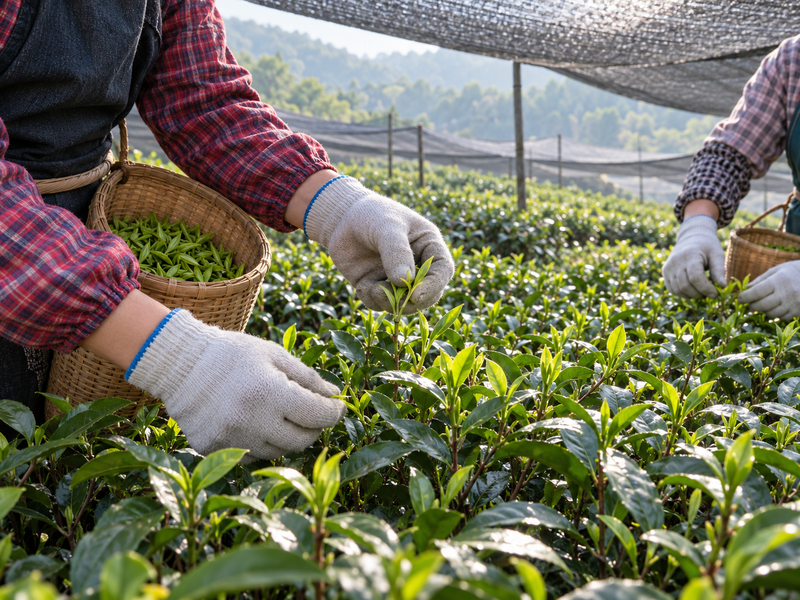
First-harvest matcha often carries a premium. A buyer should know which leaves were picked, when they were picked and how those batches reached the delivered powder. Harvest timing may affect flavor, but a label claim needs trace records and a blind cup test before it enters a retail pack.
Contents
- 1. What should the matcha first harvest specification actually cover?
- 2. Which powder performs in the buyer's product?
- 3. How should candidate formulas be compared?
- 4. Which preparation and lot checks prevent drift?
- 5. What does a blind tasting reveal?
- 6. How does the powder change after storage?
- 7. Which bulk or retail pack protects it?
- 8. Can the supplier repeat the pilot result?
- 9. Which claims need lot-linked evidence?
- 10. What belongs in the approval record?
1. What should the matcha first harvest specification actually cover?
Define the product before approving a sample
First harvest describes when leaf material was picked in a local growing cycle. It is not a universal taste grade. Ask what the supplier means by the term, which fields and dates it covers, and whether the finished powder contains only that material.
First harvest should be defined by a supplier's growing region and annual crop calendar. The phrase alone does not state cultivar, shading, milling date or how separate leaf lots were combined. Request a chain of records from field or grower group to finished powder. Then decide whether the buyer's customer will notice a sensory difference worth the premium. A claim that cannot be traced to the delivered lot should not go on a retail label.
For sourcing teams, the name on a sample bag must connect to a specification and an application. Do not let a loose grade adjective become the buying criterion.
2. Which powder performs in the buyer’s product?
Choose powder against the finished application
Define the application before paying a harvest premium. A delicate cup for straight drinking may justify a different sensory target from a sweet ice cream or cake. Compare a claimed first-harvest sample with a non-claimed control in the actual recipe.
Ask for a sample from the intended commercial lot and a control from a different picking period, both prepared blind. Use the same dose, water and time, then test the two leading samples in the actual product. Some panels may favor the claimed first-harvest tea in water yet find no meaningful advantage in a sweet drink. That result should inform the price decision. Do not pay for a claim before its sensory and commercial value is visible.
A matched sample set should include the supplier's proposed commercial lot or a clear statement of how the sample relates to future production.
For a related production decision, see our matcha tea leaf traceability guide.
| Candidate | Specific check | Keep if |
|---|---|---|
| Powder | Define the application before paying a harvest premium | Tea fits the finished application |
| Formula | Ask for harvest, processing and milling identifiers that connect the labeled powder lot to leaf batches | Dose stays practical |
| Tasting | Keep season, cultivar, shading and processing in view | Flavor remains clear |
3. How should candidate formulas be compared?
Change one variable at a time
Ask for harvest, processing and milling identifiers that connect the labeled powder lot to leaf batches. A single photo of tea plucking does not prove the identity of every carton in a delivery. Reconcile quantities as part of the trace exercise.
Use one coded first-harvest candidate and a suitable control at the same dose. Compare them in water before adding milk or sugar, then repeat the test in the actual commercial product. Keep all preparation variables fixed so a change in water temperature does not become a false grade difference. If the product is a sweet latte, a subtle advantage in water may have little buying value. Note both outcomes.
Write the control's source and batch beside every trial. That single habit stops an apparently better formula from being credited to an unnoticed base change.
4. Which preparation and lot checks prevent drift?
Write a method another operator can repeat
Taste coded cups made with the same water and dose. Compare aroma, umami, astringency and finish without telling panelists which sample has the premium claim. Reveal price and documentation only after notes are locked.
Pick one delivered carton and follow its code backward through milling, processing and leaf receipt. The supplier should show dates and quantities that make the claimed harvest plausible. Then follow the same code forward into a pilot finished product. If a bulk blend contains leaves from multiple pickings, the team needs exact composition and honest label wording. A trace route that only works for showcase samples is not ready for a commercial claim.
A simple lot code and a consistent preparation sheet let quality staff compare future shipments without repeating the original sales presentation.
| Process point | Specific check | Record |
|---|---|---|
| Preparation | Ask for harvest, processing and milling identifiers that connect the labeled powder lot to leaf batches | Tool and dose |
| Production | Taste coded cups made with the same water and dose | Start and end samples |
| Finished unit | Keep season, cultivar, shading and processing in view | Sensory result |
5. What does a blind tasting reveal?
Taste the portion a customer receives
Keep season, cultivar, shading and processing in view. First-harvest timing alone cannot predict the color or taste of every powder. A later-harvest lot processed carefully may fit a specific bakery application better.
A sensory note should describe aroma, umami, astringency and finish rather than 'spring freshness' unless the panel can identify that quality. Blind the samples before showing harvest dates or prices. If panelists disagree, repeat the close comparison another day. The purpose is to determine whether a claimed leaf source fits the product, not to prove that every first-harvest lot must taste better.
Invite purchasing and development to score separately before they reconcile results. A low quote cannot settle a sensory disagreement.
6. How does the powder change after storage?
Use the real shelf or counter conditions
Check the matcha after normal packaging and transport, not just a freshly milled sample. A high-quality powder can lose its advantage if light, oxygen or heat exposure changes aroma before the buyer opens it.
Compare the premium lot with the approved control after normal transport and storage. Prepare coded cups on the same day, under fixed light, and record both taste and color. A small fresh-lot advantage may narrow if the pack does not protect aroma. The solution may be a better barrier or smaller retail unit rather than another origin story. Keep the sealed reference for a future lot comparison.
A sealed retain of each candidate makes later color or aroma complaints easier to investigate. Store it under the same documented conditions.
| Observation | Specific check | Action |
|---|---|---|
| Storage | Check the matcha after normal packaging and transport, not just a freshly milled sample | Compare with control |
| Pack | Specify how the harvest claim will appear on the final package and who approves supporting evidence | Inspect opened unit |
| Customer portion | Keep season, cultivar, shading and processing in view | Taste again |
7. Which bulk or retail pack protects it?
Test the actual selling format
Specify how the harvest claim will appear on the final package and who approves supporting evidence. If a blend contains material from different pickings, avoid wording that suggests every component came from the first harvest.
The pack must protect the lot through the time it will actually sit in distribution. Test the premium powder after normal shipment in the proposed retail or bulk container. If a small opening lets aroma escape, smaller units may preserve the claimed sensory benefit. Check artwork before printing: 'first harvest' on the front panel needs support for the powder in that very pack, including any blending step.
Ask how packs will be opened and resealed by the actual operator. Bulk use can expose powder more often than a retail tasting suggests.
8. Can the supplier repeat the pilot result?
Measure yield and repeatability
A production trial should include enough powder to cover multiple batches, not a tiny showcase tin. Watch whether the supplier can reserve matching material, state expected lead time and give an agreed change notice.
A seasonal procurement plan should specify the quantity reserved, expected milling period, pack size and what happens if the crop falls short. Price per kilogram is only one line. Add the commercial loss from a delayed product launch or an artwork change when a replacement lot cannot support the same claim. Agree on the evidence package and notice period before committing packaging that says 'first harvest'.
The supplier's capacity claim should be tested against the specific grade and packaging format, not a company-wide tonnage number.
| Pilot measure | Specific check | Commercial use |
|---|---|---|
| Yield | A production trial should include enough powder to cover multiple batches, not a tiny showcase tin | Cost per saleable unit |
| Loss | Check the matcha after normal packaging and transport, not just a freshly milled sample | Set acceptance limit |
| Supply | ISO's matcha technical report defines the tea category but does not verify an individual harvest claim | Confirm lot evidence |
9. Which claims need lot-linked evidence?
Link claims and batches to documents
ISO's matcha technical report defines the tea category but does not verify an individual harvest claim. Request lot-linked records, product specifications and the supplier's own trace method. Run a backward trace from an actual delivered pack.
File a current specification, complete ingredient statement, lot-linked test results and origin support for any origin wording. Ask the supplier to explain how a material change will be communicated. The buyer should be able to connect a finished product batch back to the ingredient lot without relying on a salesperson's memory. Check the label for the actual sales market and the complete formula, including carriers and processing aids where relevant.
Records should show the material's actual identity and permitted ingredients. Brochures can support context but cannot replace a lot-linked document.
10. What belongs in the approval record?
Release against a written reference
Approve the tea on documented identity, sensory fit and availability together. File the sample, purchase specification and exact claim wording so the next season can be judged by the same standard.
Make the launch decision with a physical reference and a short written standard. State the approved formula, supplier code, acceptable sensory range, process limits, pack, selling window and person who can release a later lot. Keep a failed example too; it makes training more concrete than a perfect photograph alone. A small controlled launch can show whether operators and customers experience the product as the development team expected.
The release file should identify a fallback material and the conditions under which that fallback needs a new application trial.
| Release item | Specific check | Owner |
|---|---|---|
| Formula | Approve the tea on documented identity, sensory fit and availability together | Development |
| Supplier | ISO's matcha technical report defines the tea category but does not verify an individual harvest claim | Purchasing |
| Pack | Specify how the harvest claim will appear on the final package and who approves supporting evidence | Quality |
A final production check
For the first commercial shipment, pick one carton at random and request the chain from its powder code to harvest and processing dates. Prepare a blind cup beside the approved reference. If documents or sensory results fall outside the agreed range, hold the claim and investigate before the artwork leaves the printer. The goal is a premium product that can withstand an ordinary lot check, not a one-time showcase tasting.
Further reading
Use ISO/TR 21380:2022 on matcha identity for the tea category, then request harvest and lot records from the actual supplier. The report does not certify a particular shipment or harvest claim.
FAQ
Q1: What is matcha first harvest in a commercial product?
First harvest describes when leaf material was picked in a local growing cycle. It is not a universal taste grade.
Q2: How should a buyer compare matcha for this use?
Define the application before paying a harvest premium. A delicate cup for straight drinking may justify a different sensory target from a sweet ice cream or cake.
Q3: What usually causes the first quality failure?
Check the matcha after normal packaging and transport, not just a freshly milled sample. A high-quality powder can lose its advantage if light, oxygen or heat exposure changes aroma before the buyer opens it.
Q4: Which documents should the supplier provide?
ISO's matcha technical report defines the tea category but does not verify an individual harvest claim. Request lot-linked records, product specifications and the supplier's own trace method.
Q5: When should the formula be approved?
Approve the tea on documented identity, sensory fit and availability together. File the sample, purchase specification and exact claim wording so the next season can be judged by the same standard.