
A matcha factory China search often returns impressive production photographs and regional growth stories. Neither tells a buyer who made the offered grade or whether that site can supply a repeat order. Start with the seller, production addresses and a coded commercial sample. Then ask how leaf material, milling, release and export connect. The matcha supplier audit guide offers a useful record format for turning facility claims into decisions about one proposed SKU.
Contents
- 1. What exactly is the factory being asked to supply?
- 2. Is the seller also the manufacturer and exporter?
- 3. Which region claims apply to the offered lot?
- 4. What does this site actually do to the tea?
- 5. Can the factory support the chosen grade at volume?
- 6. How are hygiene, batch identity and release checked?
- 7. How should a buyer test the factory sample?
- 8. Which export documents need an owner?
- 9. What belongs in a comparable quotation?
- 10. When should the buyer approve the factory?
1. What exactly is the factory being asked to supply?
Fix the product brief before the tour
The same factory may offer raw matcha powder, flavored blends, latte premixes and packed consumer products. Specify the intended item, ingredient composition, use and pack before requesting a quote. A beverage brand should name its base recipe and mixing process. An importer should state whether it wants bulk powder for repacking or a finished retail pack. Those differences change equipment, document and labeling questions. A site tour is useful only when the host can show the route of the SKU you are considering.
Ask for a coded commercial sample. It should carry enough information to connect the pouch with a grade, lot or controlled trial. Request a draft specification and ask whether routine production will use the same sites and material inputs. If a seller sends its most attractive showcase powder while quoting another grade, stop the comparison until the identities match. Record hard requirements separately from preferences. This lets the factory explain where it can meet the brief, propose an alternative honestly or decline a configuration it does not normally make.

2. Is the seller also the manufacturer and exporter?
Put legal names next to physical sites
Ask for the entity that signs the quote, the site that mills powder, the site that packs it and the entity that prepares export paperwork. They may be one organization or several. A trading company can coordinate a sound supply chain, while a factory-direct seller can still outsource production steps. Review the relationships rather than treating either business model as proof of control. Ask who owns batch records and who can authorize a response to a quality complaint.
Match a certificate to an activity. A food-safety document may cover a packing plant but not a mill named in the product route. A group company certificate may not describe the proposed supplier. Record legal name, address, scope and current status for each claimed document. If the seller will not disclose a partner’s name, ask what masked evidence and contractual control it can provide. Your purchase file should explain who will answer technical questions after the shipment, not merely who answered the first sales inquiry.
| Role | Name to obtain | Decision it supports |
|---|---|---|
| Seller | Quotation entity | Contract |
| Miller | Production site | Process review |
| Packer | Sealing site | Label and trace |
| Exporter | Document issuer | Shipping plan |
3. Which region claims apply to the offered lot?
Keep a factory address distinct from leaf origin
The Chinese market includes several tea regions. Tongren’s local government describes a Guizhou chain involving tea cultivation, tencha processing and powder finishing, but that account does not establish the route of another supplier’s item. Ask where leaves were grown, where tencha was made, where powder was milled and where it was packed. A company based in Guizhou or Zhejiang might use material from more than one area. Neither fact is inherently problematic if the origin claim stays accurate.
Test the wording against a lot. If the brand plans to name a province, request the source definition and trace records for the coded sample and the proposed commercial grade. Ask whether blending across regions is allowed and what would happen if preferred material becomes scarce. A regional story may help customers understand a product, yet a finished-pack claim needs more precision than a news article. Keep the statement your team approves beside the specification and require notice before a source change that would affect it.
4. What does this site actually do to the tea?
Follow the process at the offered address
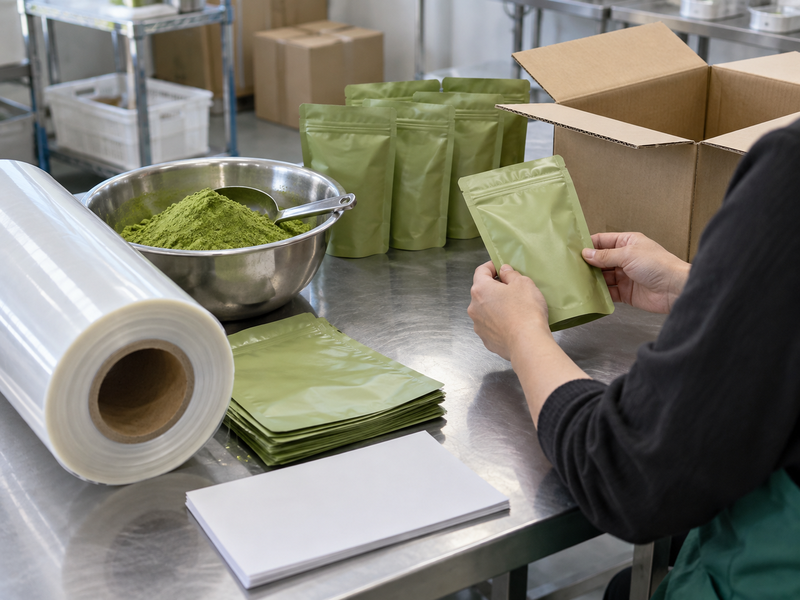
Ask what arrives at the factory: fresh leaves, dried tencha or finished powder. A milling site can be excellent without owning tea gardens, and a cultivation operation may use a separate packer. Have the host walk through receiving, material identification, refining, milling, any blending, testing and packing for the chosen SKU. Ask which stages are performed at partner sites and how lot codes survive transfer. Avoid inferring a complete chain from equipment photographs taken in several locations.
Request an ordinary run record. It should show input codes, date, equipment or line, output code and deviations relevant to that product. Quality can mask customer information while demonstrating how the route works. Ask what happens when a run stops or material fails an in-process check. A process diagram tells you what should happen; a batch record reveals what happened to one real lot. If the sample came from a pilot line, ask what will differ on the commercial line and whether a new approval sample is needed.
| Incoming material | Site question | Record |
|---|---|---|
| Fresh leaf | Where prepared as tencha? | Leaf intake |
| Tencha | Who made and accepted it? | Transfer and receipt |
| Powder | Who milled it? | Finished source lot |
| Blend inputs | Which materials combine? | Blend sheet |
5. Can the factory support the chosen grade at volume?
Ask about the bottleneck for your SKU
Public capacity figures can include many grades and products. Ask what quantity of the sampled grade is available now and what would need to be produced. Determine whether the limiting step is acceptable tea material, milling, quality review or packing. A factory may have spare equipment while the particular tencha stream for a premium grade is limited. Bring a realistic demand forecast, marked as a planning estimate rather than a purchase commitment, and ask for a response tied to your pack and expected cadence.
Run a growth scenario. If monthly demand rises, will the supplier use another leaf source, mill or packing line? Which of those changes affect the specification or origin statement? Ask how long it takes to confirm a repeat order and what notice you receive when material availability changes. A meaningful capacity answer names the grade and route. Avoid converting a media report about China’s output into an assurance about your next shipment. Supply reliability belongs in a written plan for the item you have actually tested.
6. How are hygiene, batch identity and release checked?
Review controls during a normal shift
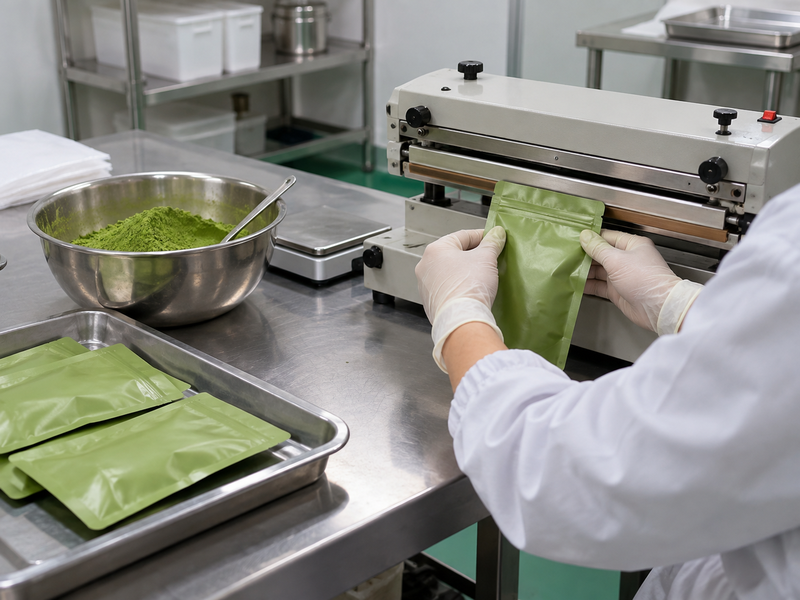
Ask how staff enter production, clean equipment, identify containers and protect open powder. Watch how the operation changes from one SKU to another. A factory making pure matcha and sweetened premixes needs a clear way to prevent ingredient and label mix-ups. Request a recent cleaning or line-release record and ask who signed it. Photographs of a tidy room show its appearance on one day; procedures and batch records show how the team works when visitors are absent.
Follow a finished carton backward. Can quality identify its milling run, tencha inputs, pack line and release decision? Ask where held material is stored and who may release it after a test result or deviation. A certificate of analysis should refer to a named lot with methods and units meaningful to the buyer’s specification. If testing is outsourced, ask who collects and reviews the sample. Your own quality team should choose the requirements for the destination and application, rather than accepting an impressive but irrelevant test list.
| Control | Evidence | Buyer question |
|---|---|---|
| Changeover | Cleaning sign-off | Who releases line? |
| Trace | Finished-to-input link | Can one lot be followed? |
| Testing | SKU-linked report | Which methods and units? |
| Hold | Status record | Who decides disposition? |
7. How should a buyer test the factory sample?
Recreate the customer’s application
Use the offered commercial grade in a controlled trial. A café should make its normal latte using actual milk, sweetener, equipment and service time. A bakery should put the powder through its real recipe and baking conditions. A brand selling straight tea should evaluate the cup its customers will prepare. Record powder dose, color, aroma, flavor, texture and handling. If the company already buys matcha, include the approved product as a blind-coded control.
Keep every sample identifiable. A tasting result without the source lot or trial code cannot be carried into a purchase order. If a supplier suggests a lower-price grade, test it separately instead of assuming it will perform the same. Ask for a later production-lot sample when the program will repeat. A factory might demonstrate strong equipment and still offer a powder unsuitable for your formulation. Application fit is one decision, while supplier quality and export readiness are separate decisions; all three should be recorded before routine buying.
8. Which export documents need an owner?
Rehearse the first shipment on paper
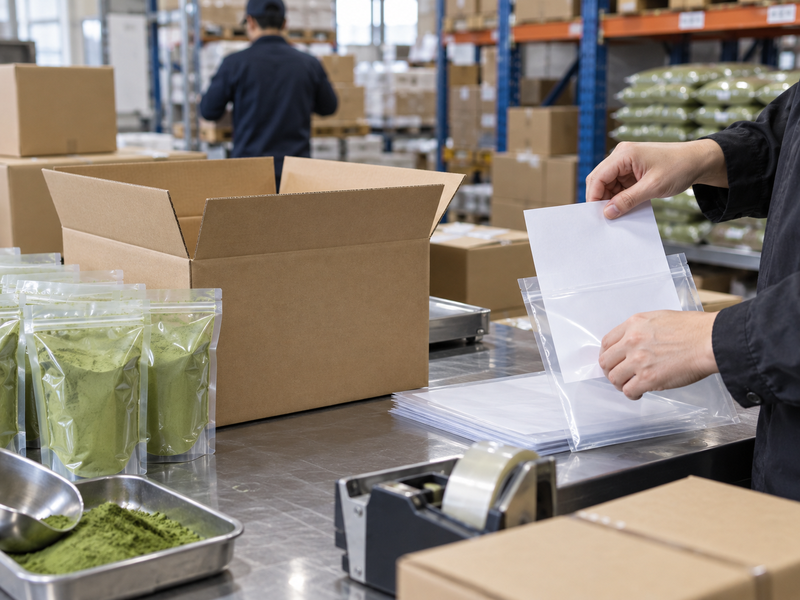
Name the seller, exporter, freight arranger and importer before promising a delivery date. Ask for a proposed document list tied to the actual SKU and destination. Your importer or qualified local adviser should confirm current entry and labeling requirements. Past exports to other markets show experience, not permission for every new route. Compare draft invoice description, packing list, product specification and sample label. Item and lot codes should align before goods leave the site.
Include the receiving team. Where will cartons arrive, who books the delivery and what information must appear on the shipment notice? If a contract packer or distributor receives bulk powder, it needs an origin-to-finished-pack trace. Ask who corrects a wrong product description or missing document while the shipment remains under the seller’s control. No supplier can guarantee clearance by pointing to a generic certificate folder. A practical export plan names documents, owners and timing for your specific transaction.
| Handoff | Responsible party | Check |
|---|---|---|
| Factory release | Quality | Lot status |
| Packing list | Seller/exporter | Codes and counts |
| Entry review | Importer | Current requirements |
| Receipt | Warehouse | Carton reconciliation |
9. What belongs in a comparable quotation?
Compare one product configuration
Request grade code, ingredient type, pack format, quantity, price, currency, validity period and agreed delivery point. Ask whether the offer covers stock on hand or future production. If artwork, testing or sampling has a separate charge, show it separately. Your finance team can then calculate delivered scenarios using its own freight and inventory assumptions. A bare price per kilogram does not let the business compare a bulk ingredient with a finished private-label pack.
Keep substitutions visible. A seller may propose another grade when a preferred source is tight. Put that option on a separate line with its own sample and specification. Do not let a price negotiation silently change the powder operations approved. Ask what events trigger a price review or change notice. A useful quote becomes part of the product record: the item named on it should match the sample, quality documents and packaging description. This makes order review faster and disputes easier to resolve.
10. When should the buyer approve the factory?
Close site, product and route questions
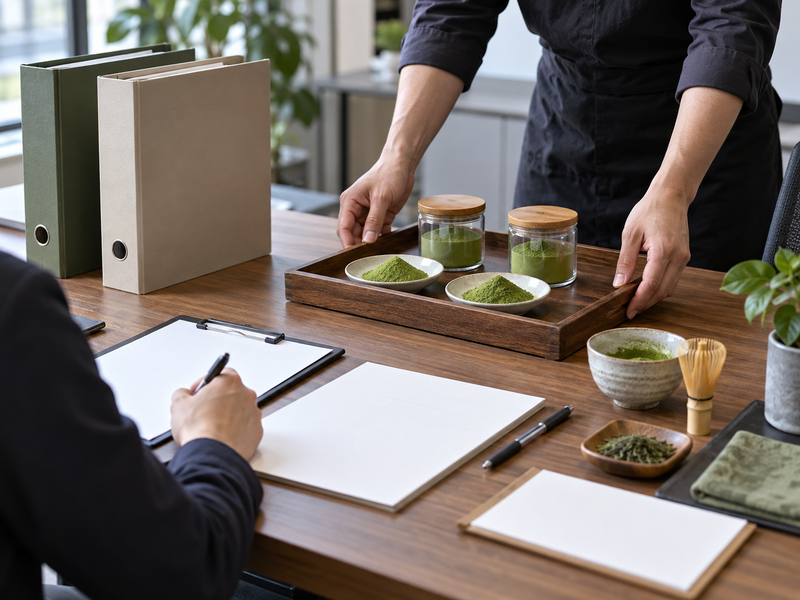
Approve the manufacturing route when the named sites, responsibilities and batch trail make sense. Approve the ingredient after a coded application trial and product-document review. Approve the commercial route after the current quote and export handoffs fit your destination. These decisions may finish on different dates. Keep a development trial status distinct from permission for routine supply. A buyer can be encouraged by a tour without declaring a factory approved before it has seen the relevant records.
Store the accepted configuration. Record SKU, sample code, material source boundaries, production and packing sites, specification, pack and change-notice rule. Matcha Village’s supplied company profile describes Chinese manufacturing, tea sourcing and export support, but a specific offer still requires its own evidence. Ask the same of any other China factory. The practical goal is simple: another colleague should be able to tell which powder may be ordered, from whom, for which use and under what conditions.
Before a standing order, request the contact route for an unexpected lot result or delayed shipment. A named factory quality contact and export coordinator can resolve different problems without routing every message through sales. Test those contact details during the first order, when a small correction is easier than a production interruption.
| Gate | Pass evidence | Owner |
|---|---|---|
| Site | Legal and physical map | Purchasing |
| Product | Coded trial and spec | Operations |
| Quality | Lot trace and release | Quality |
| Shipment | Offer and export plan | Logistics |
FAQ
Q1: Does a factory address prove where tea was grown? No. Ask for the lot’s source and processing route.
Q2: Can a trading company manage the sale? Yes, when responsibilities and access to production records are clear.
Q3: Does total factory capacity guarantee supply of one grade? No. Request availability for the specific SKU and pack.
Q4: Should a buyer trust a sales sample without a code? Request a production-linked or controlled trial sample before approval.
Q5: Who confirms import requirements? The buyer’s importer or qualified destination specialist should review the current route.
Final thought
A China factory decision becomes manageable when the team stops comparing headlines and starts comparing named products. Map the sites, trial the coded powder and rehearse the export handoff. Then place an order for the exact configuration you approved.