
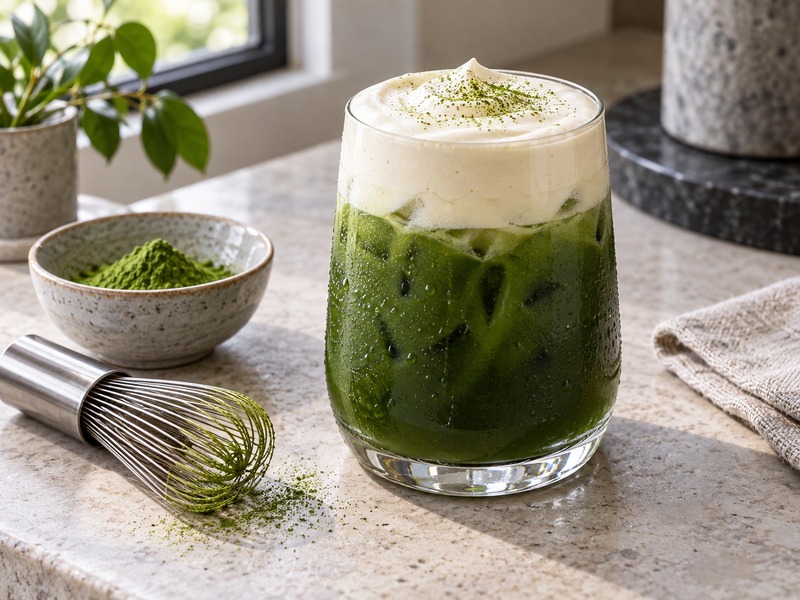
A matcha einspanner is an iced matcha drink finished with a soft cap of sweet whipped cream. The cream should sit on the tea long enough for a customer to see and drink the layers, then blend as the drink is sipped. That sounds simple until a café serves fifty glasses from different baristas: one cap sinks, another turns stiff, and a third mutes the tea completely. The useful development question is how to make the cream and matcha behave together during a normal service window. Hummingbird High’s layered recipe shows the drink’s home-scale architecture. A café needs its own formula, preparation standard and holding test.
For: café chains, beverage developers, ingredient buyers and foodservice distributors. Decision: whether a layered cream drink can meet your speed, taste and presentation targets at the intended selling price.
1. What makes an einspanner different from a matcha latte?
Keep the cream as a separate component
In a conventional iced matcha latte, milk and tea are mixed or layered for appearance but are meant to become one drink. An einspanner offers a separate, spoonable cream top. The first sip passes through the cream before reaching the tea. That sequence changes perceived sweetness, body and bitterness. If the cap disappears immediately, the drink becomes a rich latte. If it is whipped to a firm peak, it can block the sip and feel like dessert topping. The target is a soft, floating layer that yields as the cup tilts.
Write down the intended experience. Specify glass size, matcha base volume, cream weight, sweetness level and the time for which the layers should remain recognizable. Decide whether the drink is served with a straw, a sip lid or an open glass; each changes how the customer encounters the cream. Photograph an approved drink at handoff and after a short wait under actual store lighting. A beautiful studio photo is a poor service specification when the customer’s lid presses into the cap.
| Service format | What the guest experiences | First trial question |
|---|---|---|
| Open glass | Cream-first sip and visible layers | Does the cap stay soft and afloat? |
| Sip lid | Layer is partly compressed | Is there enough headspace? |
| Straw | Tea may be consumed before cream | Is the product still balanced? |
2. Which matcha should carry the tea flavor?
Test the powder in the finished glass
Cream and sugar soften some of matcha’s bitterness, but they can also erase its aroma. Evaluate candidate powders at the actual dose and dilution planned for service. Start with unsweetened matcha so the team can change sweetness independently. A pre-sweetened powder may be convenient, yet its sugar load makes the matcha-to-cream balance harder to control. Ask suppliers for lot specifications, color and sensory references, test results required by your buying program and realistic replenishment terms. Grade labels alone do not tell you how a powder tastes underneath sweet cream.
Compare side by side. Prepare each candidate with the same water, mixing method, ice and cream batch. Taste the tea alone, then the first cream-topped sip, then the nearly mixed final third. The cheapest powder may require a higher dose to remain noticeable; the brightest dry powder may look duller after hydration. Record the actual grams per serving and the accepted sensory description. A buyer can then compare cost per acceptable drink, rather than cost per kilogram of powder.
| Powder trait | Useful evidence | Why it matters here |
|---|---|---|
| Tea intensity | Blind tasting in finished drink | Cream can hide a weak base |
| Dispersion | Visible specks after mixing | Specks collect below a smooth cap |
| Color | Same-light photo at service | Layer contrast sells the format |
| Lot consistency | Retained sample comparison | Menu photos set expectations |
3. How should the matcha base be prepared?
Remove dry pockets before adding ice
Matcha is a suspended powder, not a tea leaf infusion that disappears into water. Sift if the selected powder forms clumps, then disperse it in a measured portion of water before adding it to the glass. Choose water temperature and mixing time through tasting; a hotter preparation may disperse quickly but can change the flavor and delay iced service. A small concentrated base is easier to standardize than a barista guessing powder and water directly over a full cup of ice. The exact ratio is a pilot variable, not a universal rule.
Build a station recipe. Record powder mass, water mass, mixing tool, agitation time and maximum interval before pouring. Test a single serving and a short batch prepared ahead for rush periods. If a batch settles, define whether it can be re-mixed without adding foam or whether it should be discarded. Check the bottom of the glass after the last sip for gritty sediment. A smooth cream top cannot compensate for chalky tea underneath. Use the same serving glass during trials because ice capacity and visible layer height change with its shape.
4. What texture keeps the cream afloat?
Whip to a flowable, soft cap
The reference recipe describes a pillowy Vienna-style cream that floats and does not melt into the tea immediately. Commercial kitchens should translate that description into a repeatable texture. Cream with too little air sinks or spreads into a thin film. Over-whipped cream piles above the rim, resists drinking and can look rough after a short hold. Sugar, dairy fat, any flavoring and the mixing tool all affect the result. A handheld frother, whisk and central-kitchen mixer may reach visibly different textures with the same formula.
Use a simple pour test. Spoon or pour a measured amount onto the approved base. Observe whether it forms a distinct layer without a hard edge, and check the first sip through the planned lid. Record cream temperature, whipping time, batch size and result after several minutes. If non-dairy cream is under consideration, run it as a separate formula with its own ingredient statement and stability check. Calling both versions “the same drink” because they look similar on day one hides operational differences.
| Cap defect | Likely variable to inspect | Practical next check |
|---|---|---|
| Sinks at once | Low viscosity or rough pouring | Compare cream texture and pour method |
| Stiff mound | Excess whipping | Reduce shear and check temperature |
| Grainy appearance | Fat separation | Review cream and mixing time |
| Rapid collapse | Formula or hold conditions | Re-test at realistic service interval |
5. How much sweetness belongs in each layer?
Keep the tea and cream adjustable
Sweetness placed in the cream reaches the tongue first; sweetness dissolved in the tea remains through the whole cup. That difference matters more than total sugar alone. A very sweet cap above an unsweetened, strong tea may create an enjoyable contrast for some guests but a jarring last third for others. A sweet matcha base with sweet cream can become flat and heavy. Work with a fixed matcha dose while adjusting sweetness in each component in separate small trials. Do not use vague instructions such as “sweeten to taste” for a multi-store menu item.
Taste the full drinking path. Recruit tasters who will drink the product as customers do, without stirring on instruction. Record the first sip, middle, and last third. Also taste with the intended straw or lid; packaging can bypass the cream and reverse the sequence. If a flavored syrup is added, decide whether it belongs in the base or cap before testing. That single placement choice can change both flavor and the clarity of the green-and-white layers. Procurement should calculate sugar and cream costs from the selected serving formula, not from a bench recipe that makes an unspecified yield.
6. How can staff assemble the drink quickly without losing layers?
Specify the order and contact point
The assembly route should be short enough for a busy station and precise enough that a new barista can repeat it. Pre-measure the tea base and cream with the tools that stores will actually use. Add ice and matcha in a fixed order, then place the cream gently onto the surface. Pouring from height can drive it through the tea; slowly spooning tiny portions may protect the look but slow the line. Trial both techniques under a timed service test. The best method is the one that keeps the intended layer while meeting the queue target.
Train against visible evidence. Give staff one approved photo, a measured recipe card and two examples of failed drinks. Time the full process from order to handoff, including rinsing tools. Watch for hidden steps such as re-whipping a cream batch or wiping a dripping glass. These costs appear only during a realistic rush simulation. If the cream is made centrally, define its receiving temperature, mixing instruction and permitted use window under the store’s food safety plan. Each store should be able to reject a batch that has separated or lost the approved texture.
| Station step | Control | Failure prevented |
|---|---|---|
| Measure matcha | Scale or validated scoop | Weak or bitter base |
| Disperse powder | Fixed liquid and mixing method | Dry clumps |
| Add ice | Standard fill line | Variable dilution |
| Place cream | Measured portion and pour height | Sunken or oversized cap |
7. What changes during holding and takeaway?
Test the actual customer journey
An einspanner continues to change after assembly. Ice melts, the tea dilutes and the cream slowly moves into the drink. Some movement is part of the experience, but the guest should still receive the product promised on the menu. Define a realistic interval from handoff to first sip and, for takeaway, a longer interval that includes transport. Test in the proposed cup and lid, not only in a photo glass. Check leakage, lid contact, condensation, cup temperature and whether cream sticks to the underside of the lid.
Set a service boundary. A café can mix the base on demand and hold the cream separately; it should not assume an assembled drink will survive a long delivery route. Any dairy or non-dairy cream plan needs the appropriate food safety and shelf-life validation for the final formula and local rules. These checks are the operator’s responsibility. Record when the visual layer fails, when taste loses balance and when the cap becomes unpleasant to sip. Those are different endpoints and may lead to different menu choices.
8. What should ingredient buyers ask a supplier?
Buy for the approved formula, not a grade label
A useful matcha specification includes the intended sensory profile, color reference, powder handling properties and the records your market requires. Request lot-linked documentation and ask how the supplier communicates changes in origin, blend or processing. For the cream, obtain ingredient statements and allergen information for every option under review. If the drink is sold across borders, confirm claim and labeling language with the relevant local specialist; an attractive supplier description does not replace market-specific review.
Run an incoming-lot check. Compare a new powder lot with a retained approved lot in water and in the finished einspanner. A small color shift can be visible because the white cap frames the tea beneath it. A change in tea strength may prompt staff to add extra powder by eye, undermining both cost and consistency. Set an escalation rule: isolate suspect stock, repeat the controlled drink test, then decide whether the lot can be accepted. This is more useful than a purchasing rule that says only “ceremonial grade.”
| Buying document | Decision it supports | Owner |
|---|---|---|
| Matcha specification | Sensory and visual acceptance | Buyer and developer |
| Lot analysis and traceability | Incoming release | Quality team |
| Cream ingredient statement | Allergen and label review | Regulatory team |
| Approved drink photo | Store consistency | Operations |
9. How should a café price this drink?
Include the losses from cream service
The ingredient cost of a layered drink is only one part of its margin. Cream left in a piping bag or pitcher, matcha spilled during mixing, failed caps and extra preparation time can all change cost per sold serving. Calculate the actual yield from a measured cream batch. Count drinks that need remaking during a timed shift trial. A larger glass may look more generous yet use more ice, tea and cream without earning a proportional menu price. The cup and lid may also cost more if the cap needs extra headspace.
Price from an accepted serving. Use the approved formula to calculate powder grams, cream grams, sweetener, cup and packaging per sellable drink. Add realistic waste and labor assumptions from a store trial. Compare that cost with the value of a standard latte on the same menu. An einspanner earns its place when the distinct cream-first experience is clear to guests and reproducible during service, not when a spreadsheet assumes perfect yield. Keep a smaller pilot menu if the store lacks the station capacity for the full format.
10. What would a responsible launch trial look like?
Move from bench taste to store conditions
Begin with two matcha candidates and one or two cream formulas. Use the same glass, ice and presentation for each comparison. Shortlist on full-cup taste and cap behavior, then run a timed store simulation with the selected option. Track preparation time, layer appearance, reject rate and the first-to-last-sip balance. Take photos at handoff and after the expected customer wait. A brief trial across more than one barista will reveal whether the method depends on one person’s touch.
Approve a written standard. The release sheet should list the powder lot, cream formula, ingredient weights, station method, pack, hold observations and rejection examples. Include a plan for new matcha lots and cream supplier changes. If the test fails, change one variable at a time rather than raising powder, sugar and cream together. The immediate next step is a small, measured pilot in the exact service format the café intends to sell. A larger purchase should follow a repeatable pilot result, not precede it.
Reference
Hummingbird High, “Creamy, Layered Matcha Einspanner” provides a home recipe and describes a soft Vienna-style cream over matcha. The commercial checks above are proposed development steps, not outcomes reported by that recipe.
FAQ
Q1: Can a matcha einspanner be made without dairy?
Yes, but a non-dairy cap needs its own texture, allergen and holding trial. It cannot be assumed to behave like whipped dairy cream.
Q2: Should the matcha base be sweetened?
Test sweetness in the base and cap separately, then taste the full drink from first sip to last.
Q3: Why does the cream sink?
Check cream viscosity, portion size and pour method before changing the matcha powder.
Q4: Can stores batch the matcha base?
Only after testing settling, remixing, flavor and permitted holding under the actual service plan.
Q5: What should a supplier sample include?
Ask for a powder sample, specification and lot-linked records relevant to the destination market, then test it in the approved drink.