
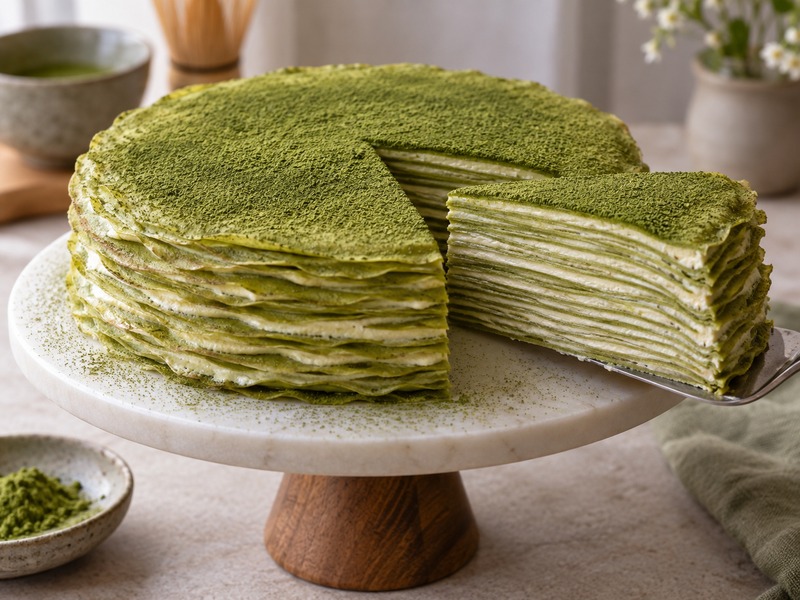
Matcha crepe cake stacks thin green crepes with cream to make a layered chilled dessert. Its clean cut face can look effortless, but each uneven crepe, thick cream band and poorly chilled slice is visible. Indulge With Mimi’s mille crepe cake uses many thin crepes and Chantilly cream in a home recipe. A bakery needs to decide how many saleable slices a real production shift can make, how the matcha tastes after chilling and how the cake travels without sliding.
This guide is for pastry teams, café chains and ingredient buyers. The source illustrates the layered concept; commercial batch, holding and safe-handling specifications require the bakery’s own validation.
1. What makes a good matcha crepe cake?
Judge the cut slice and the eating texture
A mille crepe cake should show thin, even layers and a cream proportion that binds without swallowing the crepes. The fork should pass through a chilled slice without dragging the whole stack sideways. Too-thick crepes make a chewy cake; too much cream can make it unstable and overly sweet. Define cake diameter, target height, slice size and a visual range for layer thickness. A photograph of one exceptionally clean slice is a useful aspiration, but a release standard must include ordinary acceptable variation.
Taste at the service temperature. Cream and matcha present differently after chilling than at the mixing bench. Evaluate the first bite, center layers and edge. Tea flavor should remain recognizable beside cream. Check after the expected display period, when cut edges may dry or absorb moisture. A beautiful cross section does not compensate for a rubbery stack or a cream that tastes only of sugar. Record both visual and sensory criteria before changing the number of layers.
| Product trait | Target | Failure |
|---|---|---|
| Crepes | Thin and flexible | Chewy or brittle |
| Cream | Even, supportive bands | Slips or overwhelms tea |
| Slice | Clean layered face | Smear or collapse |
2. Which matcha belongs in the batter?
Test through pan cooking and chilling
Matcha in crepe batter faces heat and is then eaten cold. Compare candidate powders at measured doses in the actual batter, cooked on the intended pan or machine. A delicate powder may disappear under cream; a strong one may taste rough at the dose needed for color. Dry-powder shade cannot predict the cooked crepe. Ask suppliers for lot-linked specifications, relevant safety records and samples representative of repeat supply.
Check the whole cake. Cooked crepe alone can taste tea-forward while the assembled dessert tastes bland. Make a small layered test cake with the chosen cream, then taste it after the intended rest. Calculate matcha cost per accepted slice, including batter and trim loss. A cheaper powder that requires more mass may change batter flow or create darker spots. Keep a cooked crepe and finished-slice reference so a later lot can be approved through the same process.
3. How should the batter be mixed and rested?
Remove clumps without making tough crepes
Matcha should be evenly dispersed before batter reaches the pan. Sifting it with dry ingredients or making a small slurry can help; test which route fits the mixer and batch size. Crepe batter also needs controlled hydration and flow. Overmixing can make the cooked layers tougher, while undispersed matcha leaves dark flecks. Record ingredient order, mixing time, rest conditions and batter temperature. A home bowl and a production vessel will not necessarily behave the same way.
Watch the batter through the run. The first crepe may be made from cooler batter than the last. Powder and other solids can settle during a long pan session. Stir or agitate only as needed under a defined method, then check crepes from the start, middle and end for thickness and color. Measure batter used per crepe. An operator who adds extra milk when the batter “looks thick” changes the tea dose and finished layer count unless the adjustment is documented and validated.
| Batter symptom | Possible cause | Next check |
|---|---|---|
| Green dots | Powder clumps | Premix method |
| Thick crepes | Batter flow or deposit | Portion and spread |
| Tough bite | Mixing or pan cook | Time and shear |
| Late-run drift | Settling or temperature | Sample across batch |
4. What pan process makes thin, repeatable layers?
Control deposit, heat and turn point
Thin crepes depend on a consistent batter portion and a quick, even spread. Pan temperature affects color and flexibility. A hot spot can brown one side while the center remains pale; a low surface can extend cooking and dry the crepe. Test the planned pan, griddle or crepe machine at production volume. Record deposit mass, spread method, cook time and acceptable diameter. A dedicated operator may improve consistency, but that labor must appear in the cost model.
Count saleable crepes. Some will tear, wrinkle or miss the required diameter. Track rejects at the beginning and later in the shift, when heat and operator fatigue change. Cool cooked crepes in a way that prevents sticking and excess surface moisture. Stack and store them according to a validated plan. The source recipe describes the labor involved in many layers; a commercial bakery should measure its own time rather than assuming one cake can be produced at the pace of ordinary sponge cake.
5. What cream balances the tea and supports the stack?
Set sweetness and structure together
Chantilly-style cream can give a light bite, but the filling needs enough structure to hold thin crepes without squeezing out. Test the selected cream at the actual layer thickness and serving temperature. Too little cream can leave a dry stack; too much can hide matcha and make slicing messy. A stabilized cream may travel better but changes ingredients, texture and label. Develop it as a deliberate formula, not a last-minute fix after a transport failure.
Taste after assembly. Cream sweetness can make tea seem weaker than it does in a plain crepe. Adjust matcha and sugar through separate controlled trials. If the team wants a stronger tea note, decide whether it belongs in the crepes, cream or a finishing dust. Adding it in all three places can create a bitter last bite and a cluttered appearance. Review dairy and any other allergens in the complete cake. A plant-based version needs its own structure and storage trial.
| Filling decision | Benefit | Risk |
|---|---|---|
| Light whipped cream | Delicate mouthfeel | Soft stacking |
| More structured cream | Cleaner slices | Heavier bite |
| Matcha cream | Stronger tea | Can obscure green crepe contrast |
6. How should the cake be assembled?
Build even layers with a measured spread
Place crepes in a repeatable order, spread a measured amount of cream and align edges before the next layer. A small error repeated many times becomes a leaning cake. Define a practical layer count and target height for the product, rather than copying a consumer recipe’s number as a badge of quality. The source example shows twenty-eight layers; another count may suit a commercial cake better if it yields a cleaner slice and acceptable labor cost. Record cream mass per layer and total finished weight.
Use a level check. Inspect the stack as it grows. If one side rises faster, correct the spread before the cake becomes impossible to square. Keep the work surface and cream at appropriate controlled temperatures under the bakery’s food safety plan. After assembly, the cake may need a rest so layers adhere before cutting. Test that rest in the real refrigerator and pack, not on an uncovered bench. A cake that looks straight at assembly may slide later if cream is too soft.
| Assembly point | Measure | Failure prevented |
|---|---|---|
| Crepe diameter | Approved range | Ragged sides |
| Cream per layer | Gram target | Sliding or dry stack |
| Alignment | Visual and level check | Leaning cake |
| Finished height | Range | Variable slice size |
7. How should the cake be chilled and sliced?
Treat slicing as a production step
The slice is the customer’s main view of a crepe cake. A soft cake cut too soon can smear cream across the layers. One chilled too firmly may resist the knife and drag. Test the chosen rest and slicing temperature with the actual cream formula. Use a defined knife and cleaning routine. Weigh saleable slices and inspect the first, middle and last cuts. Trim loss can be substantial if the outer edge is irregular or the cake shifts.
Check display behavior. A clean cut at the bakery may deteriorate in a case as edges dry or toppings bleed. Test in the proposed display package and after the expected sales window. The quality team must validate cold handling and shelf life for the complete dessert. A home recipe’s refrigeration advice is not a commercial standard. Give stores clear instructions for moving and cutting whole cakes if slicing is done on site.
8. What packaging protects many thin layers?
Support the cake without touching the cream face
A whole cake needs a firm board and a box that prevents sliding. A single slice needs a tray or insert that holds its triangular shape without smearing the cut face. Test transport vibration, stacking, condensation and temperature on real filled packs. Transparent packaging can show the layers but also shows every movement of cream. Choose the pack after a full route trial. An attractive display box that lets the cake slide is not a finished solution.
Inspect at arrival. Photograph slices before and after transport, then taste them. A cake can arrive upright while the layers have compressed or the bottom crepe has become soggy. If cafés receive whole cakes, test their unpacking and slicing steps as part of the route. Define whether a slightly shifted slice is saleable and what must be rejected. Use that evidence to choose between central slicing and store slicing; each has different labor and loss.
9. What should buyers and finance teams count?
Include labor and rejected layers
Ingredient cost includes matcha, batter components, cream and topping, but labor may be the largest differentiator from a conventional cake. Count time to mix, cook, cool, stack, chill, slice and pack. Record rejected crepes, trim, cream left in tools and slices lost during transport. Calculate cost per saleable slice at realistic shift output. A premium powder may contribute little if a sweet cream hides it; a better pan or portion tool may improve yield more than a cheaper tea.
Review supplier documents. Matcha suppliers should provide specifications, lot-linked analysis and traceability records required by the program. Dairy and other ingredient suppliers should support allergen and storage review. A change in cream composition or matcha lot can affect both taste and structure. Price from the approved formula and actual pilot yield, not an ideal cake with no torn crepes. A limited menu launch can test whether customers value the layered experience at the necessary price.
| Cost line | Pilot measure | Decision |
|---|---|---|
| Matcha | Grams per accepted cake | Ingredient value |
| Crepe labor | Minutes per saleable layer | Capacity |
| Assembly | Cream and time per cake | Process choice |
| Slice loss | Rejected or trimmed slices | Real margin |
10. What should a launch pilot prove?
Produce several cakes on the planned equipment
Shortlist matcha powders, then cook full batches of crepes with the chosen batter. Record thickness, diameter and rejects from across the run. Assemble several cakes with measured cream and compare cut slices after the intended chill. Send whole and sliced products through the actual distribution route. Check flavor, alignment, moisture, cut quality, pack condition and safe-handling records. One perfect test cake does not reveal the variation a bakery will see on a busy day.
Release a full production card. State ingredient lots, batter method, crepe deposit, pan profile, layer count, cream mass, chill and slicing checks, pack and reject examples. If a cake fails, diagnose the specific stage before changing the tea. The first purchase should support a controlled run with normal pastry staff. Expand when the production line can repeatedly make saleable slices that still taste of matcha after chilling and travel.
Reference
Indulge With Mimi, “Japanese Matcha Green Tea Mille Crepe Cake” is a home recipe showing thin matcha crepes and cream layers. Commercial controls above are proposed bakery tests.
FAQ
Q1: How many layers should a matcha crepe cake have?
Use the number that meets slice appearance, eating texture and production yield; a fixed count is not a quality guarantee.
Q2: Why does the cake slide when cut?
Check cream structure, layer thickness, alignment and chill before adding more matcha.
Q3: Can the crepes be made ahead?
Only with validated cooling, storage and handling for the exact batter and bakery process.
Q4: Should matcha be in the cream too?
Test whether it improves full-slice flavor without making the cake bitter or visually muddy.
Q5: What should be tested after a new tea lot?
Cooked crepe color, flavor, batter flow and the final chilled slice.