
Matcha daifuku is a filled rice-flour confection with a soft wrapper and a green tea component. Dessert chains and frozen-food brands need more than an attractive cut surface: wrapper thickness, filling weight, microbial control, and thaw behavior must stay repeatable. This guide gives a production brief and pilot checkpoints. Example percentages are trial starting points, not validated claims about a finished product.
Search-intent reference: “Matcha Mochi Strawberry Daifuku Recipe”. Its title reflects interest in fruit-filled mochi; the commercial analysis here is original.
1. What format should a matcha daifuku line make?
Choose the intended sales route
A chilled fresh piece, frozen thaw-and-serve piece, and ambient packaged sweet have different process demands. The concept must name serving weight, wrapper-to-filling ratio, target bite, display temperature, and expected distribution route. Fruit-filled pieces bring moisture and short holding concerns. Bean-paste fillings are easier to portion but may give a dense bite. Cream fillings create another temperature and allergen profile. Start at the counter: what will a customer see and feel after the product has spent its real time in display or transit?
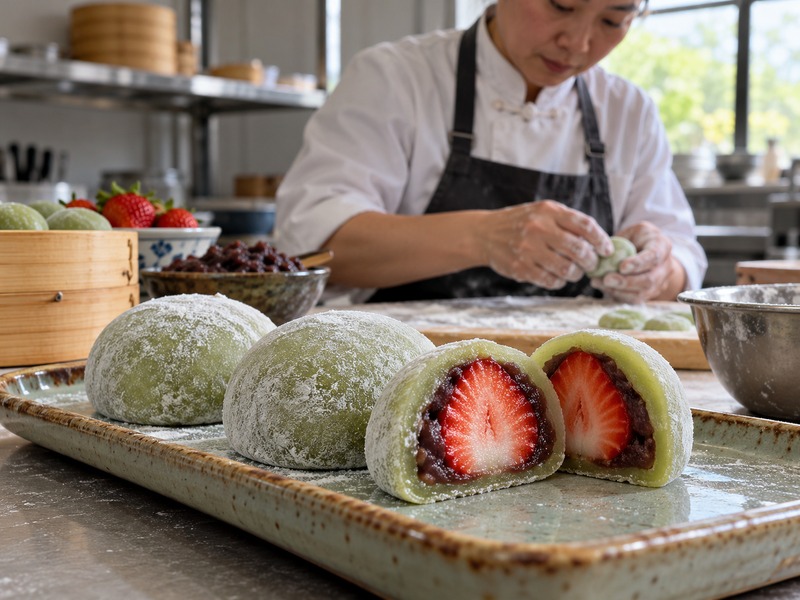
Cut a prototype through its center and record shell thickness at several points. An uneven shell can tear on one side and feel chewy on another. Define whether matcha belongs in the wrapper, filling, surface dust, or more than one component. Each location changes color, tea flavor, cost, and handling. A visible green shell can carry a modest tea level while a matcha cream may need a different flavor balance. Document the intended eating method because a large piece eaten in two bites needs a different filling distribution from a small single-bite unit.
2. Which matcha grade suits daifuku?
Test in the cooked and filled product
Rice dough and sweet filling can mute tea aroma, while surface dust gives an immediate stronger note. A culinary grade may be appropriate for wrapper dough if its color and bitterness suit the formula. A finer or more aromatic grade may matter for an unheated cream, though price needs checking against the finished unit. Ask for representative samples and compare them in the actual component, not only as a dry powder. Compare after handling: color can look different after cooking, chilling, freezing, and thawing.
Request a current specification, identity and origin information, ingredient statement, lot traceability, storage directions, and test records required for the destination market. Note whether matcha is dispersed smoothly in a cooked wrapper or leaves visible specks. Dry powder used for dusting needs its own application check: too much can taste bitter and transfer onto packs or hands. If a supplier offers several grades, run the same formula with each and score color, flavor, and cost per accepted piece. Matcha Village describes bulk matcha sourcing on its homepage; buyers should send their intended rice dessert application when requesting samples.
| Tea location | Main benefit | Key risk |
|---|---|---|
| Wrapper | Uniform green appearance | Color shift during cooking |
| Filling | Tea note at center | Uneven dispersion |
| Surface dust | Immediate aroma | Transfer and bitterness |
| Two components | Layered flavor | Higher cost and process steps |
3. How should the rice wrapper be specified?
Texture depends on solids and process
Glutinous rice flour, water, sugar, and sometimes starch form a flexible wrapper after cooking. The flour supplier’s particle and absorption behavior affect dough feel. Sugar changes sweetness, moisture behavior, and stickiness. A starch dusting aid can make forming easier, but excess dust leaves a dry mouthfeel and obscures green color. Develop a texture description that operators can use: supple enough to stretch around filling, firm enough to hold shape, and free from raw flour taste. Use a thickness target: a nice-looking piece can still have a heavy shell.
Set the cooking method before fixing water level. Steamed, heated, or continuous-cooked doughs can behave differently even with identical ingredients. Record time, temperature, batch size, and dough temperature at forming. If cooked wrapper waits too long, surface drying can cause seams and cracks. Keep portions covered under hygienic conditions and use a defined maximum queue from cooking through forming. A frozen program needs separate checks for toughness after thawing. Changes in sugar or starch should be judged after the full intended storage route, because a fresh warm dough can hide later firming.
4. Which fillings work with green tea?
Control moisture and deposit mass
Sweet red bean paste gives a familiar contrast with matcha. White bean paste offers a lighter color and lets tea stand out. Fruit adds fresh acidity but can leak juice into the wrapper. Cream brings a softer center and demands careful temperature management. The filling must hold a shape suitable for wrapping and remain acceptable after storage. Cut the piece: inspect center position, gaps, and any wet ring at the wrapper interface. A filling that tastes good by spoon may still be unsuitable for depositing.
Ask each filling supplier for solids or moisture information, ingredient and allergen declarations, microbiological controls, pack size, and storage advice. If the filling is made in-house, the same details belong in an internal specification. Portion by mass rather than a visual scoop. Test whether the shell can close with the planned deposit and whether filling leaks after gentle compression in a sales pack. Ingredient costs should be compared at equal finished piece weight. A high-water fruit filling can cause more rejects, so its cheap unit price may be misleading once yield and shelf-life constraints are counted.
For strawberry matcha daifuku, grade berries by diameter and condition before setting wrapper weight. An intact whole berry gives a centered cut and exposes less juicy surface than sliced fruit. Remove damaged berries; wash, drain, and dry accepted fruit under the site’s approved produce procedure. Visible water on the berry can wet the rice wrapper during forming. Cut fruit offers easier portion sizing but creates more exposed flesh, so test it as a separate filling design. If bean paste surrounds a strawberry, weigh that layer and check whether it keeps fruit away from the wrapper without making the piece too large. Close each seam promptly and cut samples from across the shift to inspect fruit position and any wet ring.
5. What pilot formula can start production trials?
Separate wrapper formula from piece assembly
The table gives an illustrative wrapper mixture before cooking, expressed as a percentage of its own total. It is a bench starting point only. Cooking loss, water uptake, and handling dust need measurement on the chosen equipment. Record the actual wrapper mass used per piece and a separate filling mass; otherwise a recipe may scale while the sold product drifts. Begin with one matcha level and one filling, then alter one variable per trial. Measure the finished unit: ingredient percentages cannot reveal an uneven wrap or a leaking seam.
After a small batch, measure dough yield, acceptable piece count, trim, and weight spread. A hand-formed pilot can identify structural limits before deposit equipment is chosen. Note whether the matcha enters the dry flour blend or a liquid premix, and include that liquid in the stated total. Taste fresh and after the intended holding condition. If the wrapper is too sticky, do not add dusting starch without recording it; surface dust affects eating quality, label composition, and cost. A commercial formula is the full assembly and process, not only a bowl of rice dough.
| Wrapper component | Illustrative mix % | Trial role |
|---|---|---|
| Glutinous rice flour | 35 | Elastic base |
| Water | 49 | Cooked texture |
| Sugar | 14 | Sweetness and moisture behavior |
| Matcha | 2 | Tea flavor and green color |
6. How can forming be made repeatable?
Use controlled portions and a clear seam rule
Weigh wrapper portions and fillings at the start of each batch. Flatten wrapper evenly, place filling in the center, stretch without tearing, and close with a clean seam. The exact hand motion or machine setting should be documented with photographs or short training footage. If dough sticks to hands or tooling, check temperature and dusting method before adding more flour to the formula. Inspect the seam: a closed surface after forming can open during chilling, freezing, or shipping.
Count tears, off-center fillings, underweight pieces, and excess dust separately. Those reject categories point to different causes. A forming machine may reduce weight variation but can shear fruit pieces or damage a delicate shell. Run real fillings through the proposed equipment rather than relying on water or dummy paste trials. For manual lines, rotation of workers and queue time affect consistency. Put batch and filling lot codes on production records. When a customer reports a leaking piece, the team should be able to identify the line, filling, and wrapper batch.
7. How should temperature and storage be managed?
Validate the chosen route for the finished filling
Fresh and frozen daifuku need different handling plans. Temperature control depends heavily on the filling, especially cream or cut fruit. Qualified food safety staff should set cooling, holding, transport, and display limits under local rules. A frozen piece needs a thaw protocol that prevents excessive condensation and delivers the target wrapper texture. Test the full route in its final pack. Do not borrow a shelf life: another mochi product may have different water activity, filling, process, or package protection.
Track wrapper firmness, surface wetness, green color, filling leakage, and microbial results during a product-specific study. Temperature cycling in distribution can create condensation and surface stickiness, so a constant freezer trial alone may miss transport issues. If customers will thaw pieces in stores, give them a clear procedure and verify the resulting eating quality. Keep labels aligned with the validated storage route. A product offered from a chilled case should not carry frozen-storage assumptions in procurement notes or marketing copy.
For fresh strawberry pieces, compare whole and cut fruit during a chilled, short-hold study. Check juice release, wrapper tackiness, cut appearance, and microbiological results at planned sale points. Set a sales window from those records rather than assigning a generic number of days. Freezing needs a separate trial because thawed fruit may release more liquid.
| Route | Main trial focus | Record |
|---|---|---|
| Fresh chilled | Filling safety and wrapper firming | Time-temperature log |
| Frozen distribution | Thaw texture and condensation | Cycle observations |
| Store thaw | Operator method and display window | Store trial sheet |
| Consumer pack | Leakage and label clarity | Pack inspection |
8. Which quality checks matter on every batch?
Connect raw materials with cut-piece checks
Incoming matcha needs identity, lot, packaging, and relevant quality-document checks. Rice flour and fillings need their own specifications. During production, record dough cook, portion weight, fill weight, seam quality, finished weight, and packaging integrity. Cut representative pieces at the start, middle, and end of a run. A single perfect sample from a line start does not cover drift after dough cools or filling warms. Use fixed criteria: “soft” and “green” need reference samples, photos, or a trained sensory description.
If a wrapper tears, examine dough temperature, thickness, stretching method, and filling size before changing flour. If green color fades, compare matcha lot, process heat, storage light, and package. A wet ring around filling points toward moisture migration or leakage. Track rejects by category and location. This lets operations improve the actual bottleneck rather than reducing matcha dose or filling weight in response to a vague complaint. Retained samples and photos can help only when they are labeled and stored under conditions relevant to the investigation.
| Defect | Possible source | Evidence to collect |
|---|---|---|
| Torn wrapper | Thickness, temperature, forming | Portion and queue records |
| Wet interface | Filling moisture | Cut-piece photos over time |
| Off-center core | Deposit and closing motion | Cross-section count |
| Dull green | Tea lot, heat, storage | Reference color comparison |
9. What package protects a daifuku piece?
Prevent compression and surface damage
Soft rice confections can deform under stacking. A tray cavity may protect shape but adds material cost and can collect condensation. Film needs to balance hygiene, moisture behavior, seal performance, and the visual presentation a retailer expects. Test the exact package on a full distribution simulation. Examine seam integrity, surface sticking, green transfer, and filling leaks after movement. Open the pack as a customer would: a wrapper that survives shipping but tears on film removal still creates a poor product.
Packaging choice also affects labeling space for allergens, storage directions, lot code, and date marking. If powder dust is used, check whether it marks the film or falls off into the cavity. A fruit-filled product may need a very different pack and sales window from bean paste. Compare shelf life only after the final package and process have been selected. A change to film, tray, or sealing temperature can alter results and should trigger a documented review. Recyclability goals matter, but they must be evaluated against food protection and actual local collection systems.
10. How can buyers source and cost the product?
Cost accepted pieces and specify the application
Cost a finished piece from actual wrapper mass, filling mass, dusting aid, packaging, labor, processing energy, storage, and rejected units. A filling with a lower purchase price may cost more if it causes leaks or shortens the usable sales window. Matcha cost depends on grams per accepted piece and the grade needed for the desired color after cooking and storage. Use saleable yield: total batch cost divided by accepted packed pieces is the figure a buyer can compare across designs.
Tell a tea supplier whether the powder goes into cooked wrapper, cold filling, or surface dust. Include target color, sensory profile, destination market, pack size, monthly volume, and required records. Test at least two representative lots in the complete dessert. Matcha Village can discuss bulk tea selection via its contact page. Agree how future grade or process changes will be communicated. The commercial decision should rest on cut-piece quality, validated handling, and a cost sheet that includes waste rather than a favorable powder quote alone.
| Cost driver | Measure | Decision use |
|---|---|---|
| Wrapper | Cooked mass per accepted piece | Thickness control |
| Filling | Deposit mass and leakage rejects | Center value |
| Matcha | Mass per piece and approved grade | Color and flavor cost |
| Distribution | Pack, storage, and returns | Route economics |
FAQ
Q1: Is matcha daifuku the same as ordinary mochi? Daifuku is a filled rice confection; matcha may flavor its wrapper, filling, or surface.
Q2: Which filling scales most easily? A stable, portionable paste often simplifies forming, but the chosen product must be tested on the actual line.
Q3: Can a fresh formula be frozen without changes? Only trials can establish thaw texture, condensation behavior, and filling stability.
Q4: Why does the wrapper tear? Check thickness, dough temperature, queue time, filling size, and forming method.
Q5: What should a matcha supplier know? State the tea’s component location, process heat, color target, market, volume, pack size, and documentation needs.