
Matcha cheese foam is a lightly whipped dairy topping that pairs cream cheese with matcha or sits above a matcha drink. A café chain needs it to pour, hold briefly, and taste consistent without hiding the tea underneath. This guide defines both builds, gives a measured trial formula, and covers dairy handling, cost, and service controls. Search-intent reference: Cream Cheese Foam Matcha Latte; the commercial formulation below is independently developed.
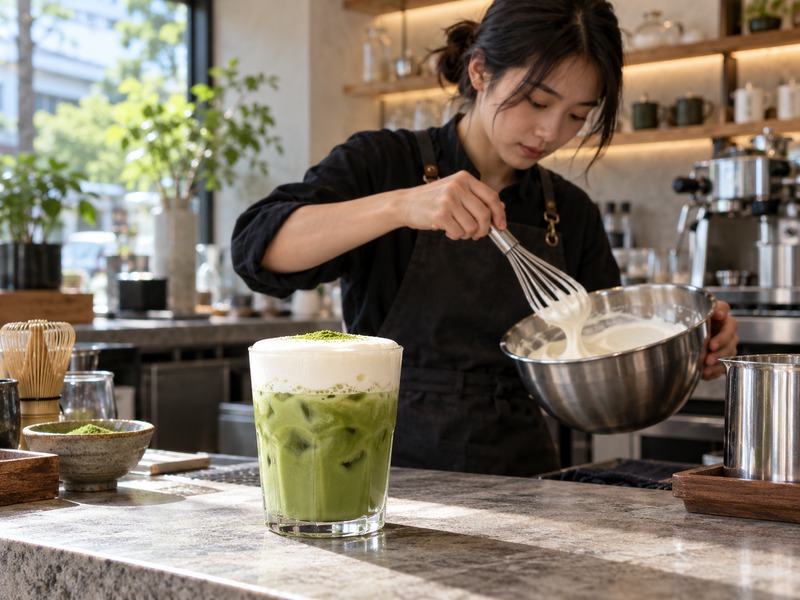
1. What does matcha cheese foam mean on a menu?
Decide where the tea goes
There are two legitimate builds. One colors and flavors the cream-cheese topping with matcha, then places it over a neutral tea or milk base. The other keeps the topping pale and pours it over a matcha latte. Some menus combine both, but that can raise powder cost and make bitterness excessive. State the architecture in the product brief. A customer looking for “matcha cheese foam” may expect tea in the topping, so menu wording and the finished cup should agree. Define whether the layers should remain visible or mix during drinking.
The target experience is a soft, pourable cap with light salt, mild tang, and a clean tea finish. It should not behave like a stiff cake frosting. A topping that sinks immediately has little visual value; one that sits as a thick block is awkward through a drinking lid. Specify cup size, topping weight, tea dose, sweetness, service temperature, and expected handoff delay. Test the cup through the lid or straw customers will actually use. Avoid calling the drink dairy-free unless a completely separate non-dairy formulation and cross-contact procedure are approved.
2. What starting formula makes a pourable cheese foam?
Use a weighed batch for a short trial
For a small bench batch, trial 75 g plain cream cheese, 150 g cold heavy cream, 75 g cold milk, 24 g sugar, 4 g matcha, and 1 g fine salt. This yields several topping portions depending on air incorporation and the chosen dose. The numbers are development quantities, not a validated production or hold specification. Whisk the matcha with a measured share of milk before combining so dry tea cannot hide in cream-cheese pockets. Taste the foam on a beverage, not only from a spoon. Sweetness and salt will read differently beside a tea base.
Record the exact products used because cream cheese and cream differ in fat, stabilizers, and tang. Set an initial topping weight per cup, then test whether it creates the intended flavor after a customer stirs. If the cap tastes too heavy, compare a lower cream-cheese share before adding more milk. If it runs down the cup wall, review whipping endpoint and product temperature. Adjust one factor per trial. A chain recipe should give weight tolerances and a visual endpoint rather than “whip until fluffy,” which two operators may interpret differently.
| Component | Trial amount | Role |
|---|---|---|
| Cream cheese | 75 g | Tang and body |
| Heavy cream | 150 g | Air and richness |
| Milk | 75 g | Pourable texture |
| Sugar | 24 g | Balance |
| Matcha and salt | 4 g; 1 g | Tea note and contrast |
3. Which matcha grade works in a dairy foam?
Judge dispersion and flavor in the topping
Dairy fat can soften tea bitterness while muting delicate aromas. Compare matcha candidates at the same dose in the complete foam, then taste the foam on the planned drink. Check color under normal service lighting, tea clarity after the dairy tang, and fine specks on the surface. A grade that performs in water may not give the same green in cream. Excessive powder can thicken the cap and create a dusty finish. Choose the dose that makes tea identifiable without turning the topping into a paste.
Request a lot-specific specification, ingredient and origin details, storage directions, pack format, and available documents required by the destination market. Matcha Village supplies tea powder for beverage development and can discuss samples through its supplier site. Keep a sealed reference of the approved tea lot where feasible. If a new lot changes the foam, compare the same dairy products, mixing time, and topping temperature before altering the recipe. A change in cream brand can mask or exaggerate what looks like a tea problem.
4. How do cream cheese, cream, and milk change texture?
Buy the dairy system as a set
Cream cheese gives body and tang, heavy cream carries air, and milk loosens the mixture for pouring. Fat percentage, salt level, stabilizers, and acidity vary between brands. A spreadable cream cheese may contain ingredients that change foam behavior compared with a block product. Taste and whip the exact commercial products proposed for rollout. Test the topping at the cold temperature used during service and after a realistic wait on the drink. If it separates or loses its cap, record whether temperature, overwhipping, or a product substitution preceded the problem.
Some operators want a plant-based version. That calls for a different formula and allergen review; swapping dairy cream for a plant product at equal weight rarely preserves the same texture. For a central kitchen or supplier-made premix, review dairy supply, pasteurization documentation, cold chain, and packaging. Keep the finished topping’s ingredient declaration tied to the exact brands in use. A cheaper cream may lower ingredient cost while increasing whip time or reducing saleable yield. Compare total service performance, not just the invoice price per liter.
| Material | Specification question | Failure to watch |
|---|---|---|
| Cream cheese | Block or spreadable; salt level? | Lumps or excessive tang |
| Heavy cream | Whipping performance? | Weak cap or overwhip |
| Milk | Fat and sweetness? | Thin foam |
| Plant alternative | Separate formula approved? | Separation or label error |
5. What mixing method prevents lumps and overwhipping?
Disperse tea and smooth cheese before aeration
Bring cream cheese to the preparation condition approved in the recipe, then beat it until smooth in a clean bowl. Whisk matcha with a small measured share of milk and combine that slurry with the cheese. Add sugar, salt, and remaining milk until even. Pour in cold cream and whip to a soft, pourable endpoint. The exact sequence may change with equipment, but all staff should follow one tested method. Scrape the bowl so matcha and cheese do not cling to the wall. Record mixer attachment, speed, batch weight, and time during trials.
A foam that looks thick in the bowl may still pour well once rested briefly; test it at the intended service moment. Overwhipping can make the topping stiff or grainy, while undermixing leaves liquid pockets. Use a spoon or controlled pour test on a cold reference drink to define the endpoint. A handheld frother, stand mixer, and commercial whipping machine give different air levels and must be validated separately. If a site changes equipment, train to the finished behavior rather than copying the old number of seconds. Keep tools cold and clean under the dairy handling plan.
6. Which drink base gives the foam a clear role?
Build a cup that balances layers
A plain iced matcha latte under pale cheese foam puts most tea in the base. Matcha-colored foam over unsweetened milk or black tea makes the topping the flavor focus. Both are viable, but they need different powder allocation and sweetness. Trial the full cup with measured base and topping weights. For an iced matcha latte, disperse powder in water before adding milk and ice, then pour foam gently on top. A base that is too sweet makes the cap taste flat; one that is too bitter may force the foam to carry too much sugar.
Check how the cup behaves after several sips. Customers may drink through the foam or stir it into the base. The blended drink should still taste balanced. If the foam contains matcha and the base does too, document total tea dose per cup and review caffeine communication under local rules. A citrus base can change dairy stability and needs a separate technical trial. For a chain, specify ice weight, cup fill, foam weight, and pour position. A well-made foam cannot compensate for a weak or inconsistent tea base.
| Build | Where matcha goes | Main check |
|---|---|---|
| Green foam over neutral base | Topping | Tea remains clear after mixing |
| Pale cheese foam over latte | Drink base | Foam does not bury tea |
| Tea in both layers | Base and topping | Total dose and bitterness |
7. Can matcha cheese foam be batched for a shift?
Set a safe hold through the food safety plan
A café may prepare a controlled batch for service, but fresh dairy topping needs a defined refrigerated hold and discard time. Set those limits through the operator’s food safety system using the final ingredients, process, container, and temperature. Label each batch with preparation time and ingredient lot codes. Use a covered food-grade vessel and clean dedicated utensils. Do not top up an old batch with new foam. Stirring after a long hold may restore appearance while leaving an unapproved safety history, so appearance is not a substitute for the discard rule.
Assess texture throughout the approved service window. The topping may thin, separate, or lose air even while held cold. Measure portion weight near the start and end of a batch because foam density can shift. For a packaged ready-to-use topping, involve a qualified dairy technologist; microbial validation, process selection, packaging, and distribution conditions differ from a café recipe. A dry powder system also needs reconstitution and shelf-life trials. Do not borrow hold claims from another brand’s dairy topping or an earlier formula.
8. How should a chain cost the topping per cup?
Count portion mass and real batch yield
Use supplier invoices and weighed ingredient quantities, then divide by the number of saleable foam portions. Air changes volume but not ingredient mass, so a large-looking cap can still carry a heavy cost if portions are not weighed. Add the cost of matcha, dairy, sugar, salt, cup, lid, prep labor, cleaning, and discarded foam. Test a few topping weights in the full beverage and choose the lightest one that meets the flavor and visual brief. A generous unmeasured pour can erase margin and hide the drink base.
Compare commercial pack sizes with actual turnover. A large cream-cheese tub may be cheaper per kilogram but create more opened-pack waste at a quiet outlet. Matcha pack size has the same issue. Run a cost sensitivity check using real dairy quotes and pilot waste, then price the complete drink. If a distributor supplies a prepared foam, include freight, cold-chain requirements, and the amount left in each pouch. The cost sheet should use the approved formula revision; a small change in cream or portion weight can shift both yield and margin.
| Input | Measure | Source |
|---|---|---|
| Matcha and dairy | Grams per batch | Approved formula |
| Foam portion | Grams per cup | Pilot serving log |
| Discarded foam | Grams per shift | Waste log |
| Labor and cleaning | Minutes per batch | Service trial |
9. Which safety and label checks are needed?
Protect a dairy topping from process drift
Approve cream cheese, cream, milk, matcha, and any sweetener from documented suppliers. Verify packaging condition, use dates, storage instructions, and lot codes at receiving. The topping contains milk allergens in its dairy form; shared pitchers, whisks, and pour bottles must follow the site’s allergen procedure. Set prep and service temperature controls within the local food safety plan. Train staff to reject a batch with unexpected odor, visible contamination, or a missed hold limit. Do not claim that sweetness, salt, or matcha preserves an unvalidated dairy mixture.
Menu and pack copy should describe the actual build. A drink with matcha only in the base should not imply the foam itself contains tea. If the topping uses plant substitutes, verify ingredient declarations and any dairy-free or vegan claim against the whole beverage and cross-contact controls. Nutrition and caffeine statements should use the final cup dose and local rules. A centrally produced or retail topping needs validated microbial and shelf-life work. Assign a person to approve changes in dairy brands or tea grade because those substitutions can alter both texture and label information.
10. What pilot shows the foam is ready for rollout?
Observe several operators under normal service
Start with one drink architecture, one cup, and one topping dose. Give staff a weighed batch card and show the pourable endpoint. Make batches with the actual mixers and cold storage used at the site. Record preparation time, topping density or portion weight, cups with lumps, sinking caps, wasted foam, and flavor at handoff. Taste the drink again after the likely delivery or queue delay. Ask tasters about tea clarity, dairy tang, salt, sweetness, and texture separately. If a cap fails, determine whether the recipe, temperature, or operator method caused it.
Close the pilot with an approved ingredient list, lots or approved equivalents, mix method, cold-hold rule, cup build, cost sheet, allergen statement, and training photo. Test another shift before expanding to more sites. If the business wants an OEM or ready-to-use version, provide a supplier with the target drink, planned market, approximate volume, and required pack format. Matcha Village can discuss tea grades for the topping or base through Matcha Village. Record a clear decision to launch, revise one factor, or stop.
| Gate | Evidence | Owner |
|---|---|---|
| Flavor and layering | Full-cup tasting | Product lead |
| Safe handling | Cold-hold and sanitation record | Quality lead |
| Cost and yield | Portion and waste log | Buyer |
Matcha cheese foam works when the tea location, dairy system, mixing endpoint, and topping weight are specified together. Pilot the complete drink with normal staff, then set a safe hold under the final process. Keep the label tied to the actual ingredients and cup build.
FAQ
- Q1: Must the foam itself contain matcha?
- No. Matcha may be in the topping, the drink base, or both. The menu should describe the actual build.
- Q2: Why does cheese foam sink?
- It may be too thin, too warm, or placed over a base that cannot support the chosen cap. Test the full cup.
- Q3: Can a plant product replace cream cheese?
- Yes, through a separate formula and claim review. Equal-weight substitution may not preserve texture.
- Q4: How long can a café hold the topping?
- There is no universal hold period. Set one through the site’s food safety process with the final ingredients and temperature.
- Q5: What should a supplier sample request include?
- Specify whether tea goes in the topping or base, cup size, destination market, volume range, and documentation needs.