
Matcha cupcakes are individual tea-flavored cakes, often topped with cream or buttercream. A bakery can get a bright green batter and still sell a dull, dry cake whose frosting hides the tea. Build the product around a controlled bake, a clear sensory target, and the holding conditions of the actual sales channel. The whipped-cream cupcake recipe from Wild Wild Whisk is a useful consumer reference for the format. Commercial approval also needs consistent deposit weight, batch yield, frosting stability, and a cost that survives normal waste.
1. What should a customer notice in a matcha cupcake?
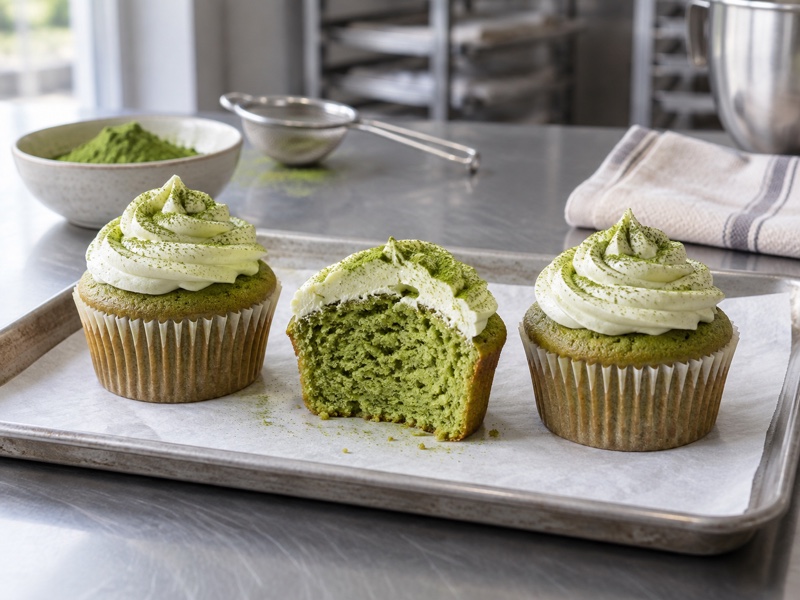
The cake should taste of tea before the customer reaches a mouthful of frosting. Decide whether the product should have a grassy, savory note or a mild tea finish under a sweet topping. Give tasters an unfrosted sample and a fully assembled one. If the unfrosted cake tastes clear but the finished cupcake does not, changing powder may be less effective than reducing frosting sweetness or weight. Record moistness, crumb tenderness, visible color, and aroma separately. A single score of “good” gives the bakery no way to diagnose a later complaint.
Test one cupcake at room temperature and one after the proposed display hold. Chilled buttercream or whipped topping can change the perceived sweetness and texture of the cake beneath it. Slice the center and edge; a domed top can look attractive while the lower crumb remains damp. Use a standard-light photograph for color comparison, since green tea looks different beneath warm case lamps and daylight. The approved product is the one guests actually receive, not the warm cake pulled from the oven.
| Target | Sample | Reject if |
|---|---|---|
| Tea flavor | Frosted and plain bites | Frosting masks tea |
| Crumb | Center and edge cut | Wet base or dry rim |
| Color | Fixed-light photo | Uneven gray-green patches |
| Portion | Weighed finished unit | Wide variation across tray |
2. Which matcha grade fits a baked cake?
Start with a pure culinary matcha and compare it with a second grade only if the baked result warrants it. Baking exposes powder to heat and wraps it in flour, sugar, fat, and topping. A costly drinking grade may not give a proportional benefit in this matrix. At the same time, an inexpensive powder that tastes harsh or fades after baking may force a higher dose. Ask suppliers for a specification and enough sample for several full trays. Dry powder aroma alone is not a reliable acceptance test.
Matcha Village lists culinary matcha as a starting point for bakery use. Treat that as a sampling direction, not an automatic approval. Bake candidate lots in the same base recipe, weigh batter consistently, and taste blind after the normal hold. Record any difference in dispersion or color at the bottom of the mixing bowl. If an ingredient buyer changes powder after launch, run a bridging bake beside a retained approved lot before releasing the replacement to production.
3. How should the bakery set a matcha dose?
Use baker’s percentages or another weight-based system tied to flour mass. Prepare low, middle, and high tea trials while preserving the total dry weight as closely as possible. More matcha may deepen color but can increase dryness or astringency. It can also shift cost. Make one control batch with no tea, because a change in oven or flour lot may otherwise look like a powder effect. Mix each trial in the same equipment at the same fill weight and rack position.
Taste after full cooling and again after the intended display interval. Check whether the tea flavor remains identifiable beneath the proposed topping. If a high dose produces a better green but an unpleasant finish, do not approve it for its photograph. A gentle powder at a measured dose may deliver a cleaner result. Keep notes on the actual bag and lot, not only the grade name. A scale, batch sheet, and coded samples give procurement and pastry staff a shared standard.
| Trial | Change | Keep fixed | Decision |
|---|---|---|---|
| Control | No matcha | Base and oven | Checks base quality |
| Low | Lower tea addition | Fill and topping | Tests visibility of flavor |
| Middle | Moderate addition | Fill and topping | Balances taste and cost |
| High | Higher addition | Fill and topping | Checks astringency limit |
4. What mixing method prevents streaks and dense crumb?
Sift or whisk matcha with the flour and other dry ingredients before adding liquid. Fine powder can form vivid pockets that remain inside a finished cake. Scrape the mixing bowl and inspect batter near the bottom before depositing. A large production mixer can leave unmixed material on the bowl wall even when the top looks uniform. Specify mixing speed and time, but also define the visual endpoint. If a batter depends on whipped air, excess mixing after flour enters may reduce its lift; adapt the sequence to that particular base.
Check the full batch
Check the first and last cups deposited from one batch. If color or batter density changes, material may be settling or the depositor may be compressing batter. A quick hand-stir between trays can help some systems but harm an aerated sponge, so test it. Record batter temperature and delay between mixing and baking. A shop that mixes a full morning batch while ovens run in waves needs evidence that the final tray bakes as well as the first.
5. How should pan fill and baking endpoint be controlled?
Define batter mass per paper liner and liner size. Cup volume alone varies with how staff scoop. Overfilled cups spread into mushrooms or bake with a wet center; underfilled cups look poor after topping and change selling weight. Measure a sample of deposited cups across the tray. Bake tests should include the planned oven load, not one tray in an empty oven. Rotate only if the production process can repeat the rotation every shift. Log oven setting, rack, elapsed time, and the actual endpoint used.
Look beyond a clean toothpick. Compare center spring, cut crumb, bottom moisture, and weight loss after full cooling. A toothpick can miss a gummy area or give a false wet signal from melted sugar. Cool on a rack where steam can escape, then taste after the same time customers will wait. If a recipe requires extra baking to avoid a wet base, check the deposit weight and liner design before drying out the whole cake. Matcha color will change with heat, so bake endpoint and shade must be judged together.
| Production variable | Record | Likely symptom when it drifts |
|---|---|---|
| Batter mass per liner | Sample weights | Uneven height and yield |
| Oven load | Trays and positions | Mixed browning |
| Bake endpoint | Crumb and temperature plan | Wet core or dry edges |
| Cooling | Rack and time | Damp liners |
6. Why does a cupcake lose its appealing green?
Powder lot, recipe acidity, heat exposure, and display light can all change perceived green. Compare photos of batter, just-cooled cake, and the cake after display. Keep the lighting and camera setting fixed. A visually dull cake might still taste excellent; decide whether the brand requires a particular shade or can sell a natural olive green. Avoid increasing tea only to chase a saturated photograph. The higher dose may bring bitterness and higher cost without solving color under warm lights.
The topping also frames color. White cream creates contrast, while a green frosting can make the crumb appear gray by comparison. A light dusting of dry matcha can look attractive at assembly but absorb moisture, clump, or develop dark spots later. Test the finished cupcake in its case or box. If the product is photographed for a menu, show a typical saleable unit rather than a specially edited shade. Customers notice the gap when the case looks different.
7. Which frosting supports tea flavor and shelf life?
Whipped cream offers a light contrast but needs careful cold handling and may lose shape. Buttercream gives more structural stability but can bury a delicate cake under fat and sugar. Cream cheese frosting brings tang, which can help some formulas and clash with others. Choose with the channel in mind. A café serving within hours can work with a softer swirl; an individually boxed cupcake traveling to a retailer has a different transport and display problem. Compare topping weight and height, not just recipe identity.
For US retail operations, handle dairy and egg components under an appropriate food safety plan. The FDA Food Code is the model reference for temperature-controlled retail food, while the FDA allergen page explains major allergens for labeled foods. Local rules and the exact frosting determine your requirements. Test the final packaged cupcake for smearing, condensation, and topping collapse. A topping that tastes excellent from a piping bag can fail after a short van trip.
| Frosting route | Benefit | Pilot risk |
|---|---|---|
| Whipped cream | Light mouthfeel | Cold hold and shape loss |
| Buttercream | Cleaner transport | Sweetness masks tea |
| Cream cheese | Tangy contrast | Allergen and refrigeration control |
8. How can a bakery evaluate display and pack life?
Set a proposed sales window, then test the actual case, box, or sealed pack. Check cake moisture, liner release, topping shape, tea aroma, and color at intervals. Do not transfer a storage estimate from a home recipe to a commercial product. A humid case can soften paper liners, while an open display can dry exposed cake. A clamshell may protect frosting from touch yet trap condensation. Keep an approved control from the same batch in a separate condition to show whether deterioration comes from the package or the cake itself.
Test the delivery route
When the cupcake is sold through a distributor, include transport vibration and receiving temperature in the test. Photograph a packed tray before shipment and after a realistic route. Count crushed swirls and scuffed liners, not only intact cakes. Shelf life needs sensory and, where appropriate, microbiological validation under your own food safety program. A single good-looking sample at the end of a week cannot establish a safe or desirable life for all lots.
9. Which numbers belong in the product cost sheet?
Calculate ingredient cost per baked and saleable cupcake. Include powder dose, frosting mass, liner, decoration, packaging, labor, rejects, and expired product. If a powder costs more per kilogram but produces recognizable tea flavor at a lower addition, it may improve the portion economics. Conversely, using a high grade beneath a heavy frosting may waste money. Track baked yield against deposited pieces, then count units that pass visual and weight standards. A tray with inconsistent domes may have more hidden cost than a small change in matcha price.
Use the same target weight for each pricing comparison. A larger cupcake can appear to justify a higher menu price while lowering portions per batch. Ask the sales channel what matters: cafés may value a striking single unit; a wholesale case needs pieces that stack and travel consistently. Include a realistic return or credit allowance when testing retailer distribution. The price should support the product guests actually see after holding, not the ideal tray from recipe development.
| Cost field | Unit to capture | Decision supported |
|---|---|---|
| Matcha | Grams per saleable cake | Grade comparison |
| Finished weight | Grams with frosting | Portion control |
| Packaging | Cost and damage rate | Channel choice |
| Waste | Rejected and unsold units | True gross margin |
10. What proves a matcha cupcake is ready for rollout?
Run at least one pilot at normal oven load with normal staff and the exact packaging or display path. Have staff execute from a batch sheet while development watches for ambiguous steps. Check first and last deposited cakes, center and edge trays, frosting at application and handoff, and sample flavor after the proposed hold. Keep a retained powder lot and a visual standard. If the pilot fails, change one variable and repeat only the relevant comparison; changing tea, frosting, and oven together leaves no clear explanation.
For sourcing, request baking samples and lot documentation from a supplier such as Matcha Village, then approve the powder only in your cupcake formula. Keep the roll-out gate simple: tea remains recognizable, crumb stays pleasant, color meets the brief, staff can repeat portioning, and margin survives the sales route. A bakery can introduce a seasonal cupcake quickly once those points are measured. The recipe then remains useful when a new staff member or a new powder lot arrives.
FAQ
Q1: Should matcha go in the cake or frosting? Test both, but taste the assembled cupcake. Tea in one component may be enough if the other does not mask it.
Q2: Can a latte premix replace pure matcha? Only after reformulation. Premixes can add sweeteners, dairy, and other ingredients.
Q3: Why are there dark green streaks? Dry powder pockets or uneven mixing are likely. Check the dry blend and bottom of the bowl.
Q4: Is whipped cream the safest default topping? No universal topping wins. Validate its cold holding, transport, and service in your operation.
Q5: Can the same powder serve lattes and cakes? It may, but approve its performance in each finished product separately.