
Starter kits often compete by showing the largest pile of accessories for the lowest price. That comparison misses the buyer’s real risk: a first cup that tastes wrong or tools that quickly become unusable. The best matcha starter kit gives a newcomer a workable recipe, sensible equipment, and a clear path to refills. Retail buyers can evaluate this without guessing. Select a beginner profile, make the advertised drink from a packed sample, then check the second and third uses. These ten checks separate helpful essentials from extras that merely fill a box.
Contents
- 1. What outcome does the new buyer expect?
- 2. Which pieces are genuine essentials?
- 3. How much powder is useful for practice?
- 4. Can the bowl and whisk forgive mistakes?
- 5. Do measurements make the recipe repeatable?
- 6. Which extras can wait until later?
- 7. How easy is the kit to clean and store?
- 8. What does the total cost really include?
- 9. Can the customer upgrade one piece?
- 10. What proves the kit is ready for retail?
1. What outcome does the new buyer expect?
Begin with their first drink
A new buyer may picture a bowl of straight matcha, a café-style iced latte, or simply a thoughtful gift. The right starter offer changes with that expectation. A latte-focused kit may need a powder that keeps its flavor in milk and instructions that explain how to make a concentrate. A water-only kit should help the user notice powder quality and whisking technique. Ask one plain question: what should the customer be able to make ten minutes after opening the box? Write the answer on the comparison sheet.
If the kit cannot do that, either change its contents or change its promise. This avoids calling a collection of tools “complete” when matcha is absent. For a retailer, the answer also guides shelf copy, product photography, and customer support; customers should not have to decode unfamiliar tool names before they buy.
2. Which pieces are genuine essentials?
Keep the working bundle small
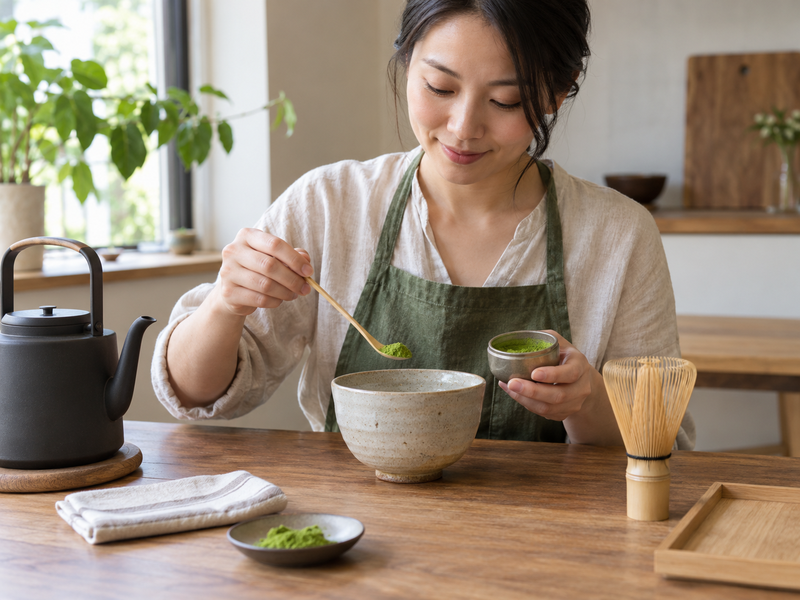
For whisked matcha, the customer needs powder, water, a vessel with room for movement, a whisk, a way to portion powder, and instructions. Everything else should be judged by a task it helps. A sifter can deal with clumps; a holder can give damp bamboo a drying place. A decorative tray may please gift buyers but does not make a cup. Remove an item and retry: if the drink and care routine remain easy, that item may belong in a higher-priced version rather than the base kit.
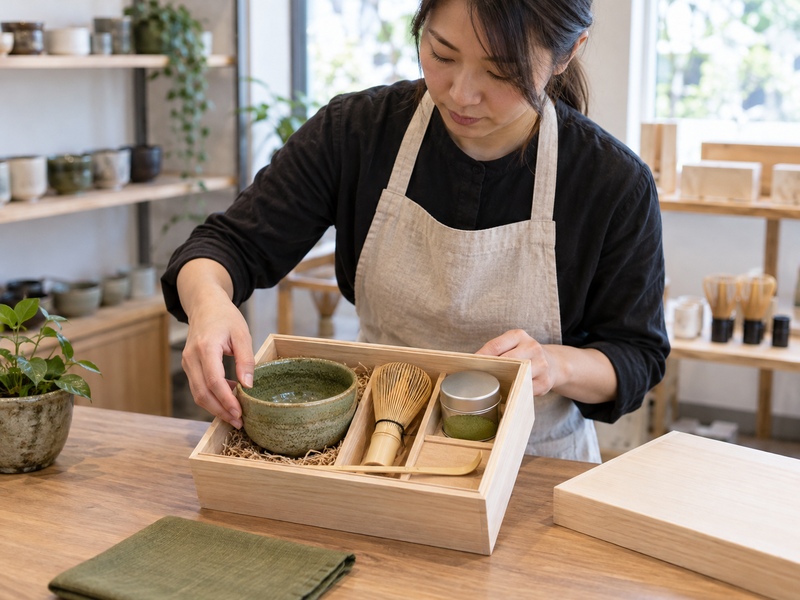
This is not a rule against beautiful objects. It is a way to keep a starter purchase honest and manageable. A retailer may choose two tiers: a compact working kit and a gift edition with presentation extras. The contents panel should make the difference obvious without forcing customers to compare tiny photographs.
| Item | Starter role | Test before inclusion |
|---|---|---|
| Bowl | Mixing space | Whisk clearance and stability |
| Whisk | Powder dispersion | Smooth tips and comfortable use |
| Powder | First-cup ingredient | Taste in printed recipe |
| Optional extras | Improve use or presentation | Remove-one-piece trial |
3. How much powder is useful for practice?
Give a learner room to improve
One sachet allows one attempt and may leave a beginner unsure whether an awkward cup came from the recipe or their technique. Too much powder in an unsuitable pack can be hard for a casual buyer to keep fresh. Choose an amount that supports several tries while fitting the kit’s expected pace of use. Open the pack during the test: can it be resealed, are handling directions clear, and does a scoop fit without scattering powder? Check the food label, lot details, and any destination-market requirements with the supplier.
Taste the included powder in the advertised recipe, not only in water if the product promises lattes. Matcha Village offers different matcha and blended products; a buyer should select one against the actual drink and request its specification. Do not let a vague quality word on the box stand in for taste, packaging, and traceability checks.
4. Can the bowl and whisk forgive mistakes?
Watch a first-time operator
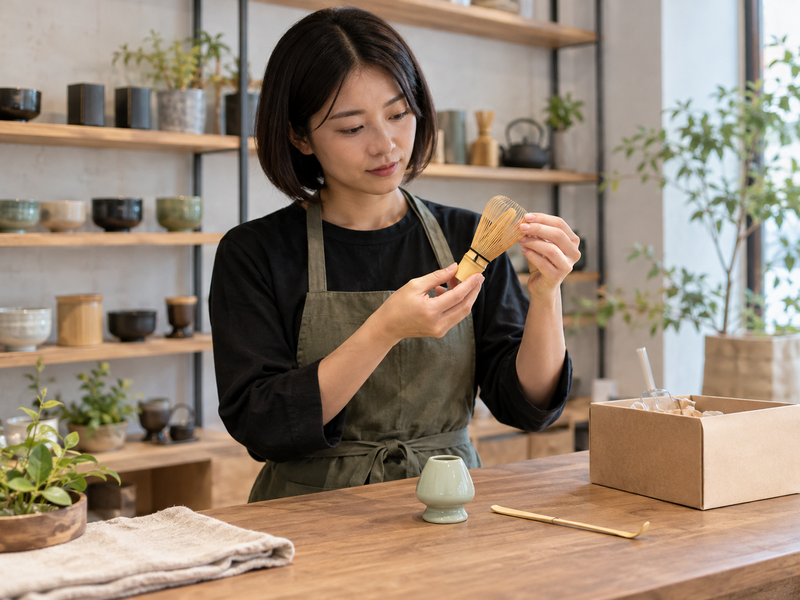
Beginners often use a larger movement than experienced whiskers. A crowded bowl can cause splashes and repeated strikes against ceramic. A very delicate whisk may look refined but suffer from rough first use. Put the paired tools in a new user’s hands and observe the recipe as printed. Notice the contact points: does the whisk hit the side, does the bowl rock, and can the user grip it comfortably when warm? Run the same test with a more experienced person to separate design friction from unfamiliarity.
Inspect whisk tines before and after several cups. If the kit contains a holder, verify that it fits the included whisk without bending its shape. A photograph of tools side by side cannot prove compatibility. Keep a production sample of the approved pair, and retest if the supplier changes either component.
| Beginner observation | Likely issue | Buyer response |
|---|---|---|
| Frequent wall strikes | Bowl too narrow or movement unclear | Test wider vessel and instructions |
| Splashing | Liquid depth or motion | Recheck recipe and bowl shape |
| Crushed whisk tips | Poor handling or fit | Improve guidance or component |
| Rocking bowl | Base or work surface | Test another bowl |
5. Do measurements make the recipe repeatable?
Give amounts a new user can follow
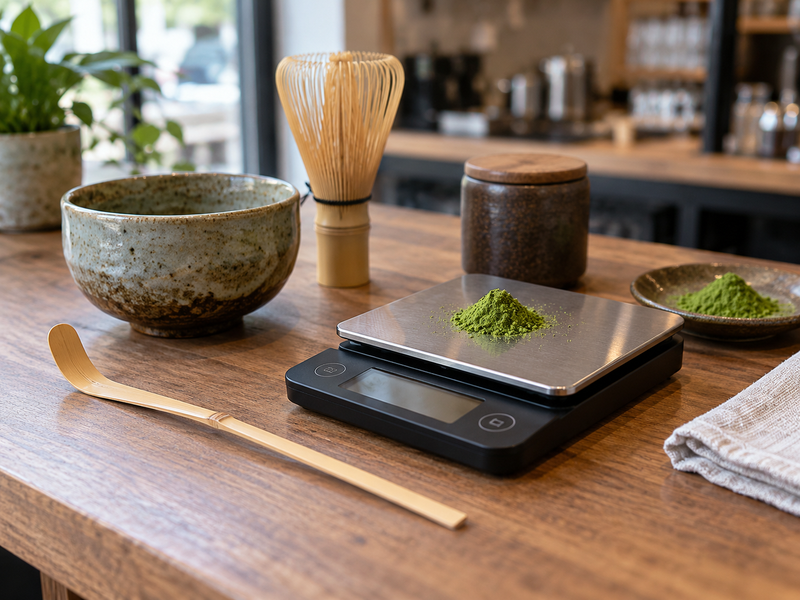
“Add a little matcha” is an instruction a beginner cannot reproduce. State the powder and liquid amounts for the first cup, then explain how to adjust strength. A bamboo scoop can transfer powder but does not measure a fixed weight, so the printed recipe should acknowledge approximation if that is the only tool included. A café training version should use a scale and a defined recipe. Read instructions beside the kit: can the user achieve every step with what is in the box and ordinary kitchen equipment?
If a video is offered by QR code, test the link but do not make it the only source for basic amounts. Printed instructions remain useful when a buyer is offline or the link changes. Clear measurements also help customer service troubleshoot: staff can ask what dose and water amount the user tried rather than guessing at the cause of a disappointing drink.
6. Which extras can wait until later?
Give upgrades a purpose
A sifter, dedicated whisk holder, precision scale, second bowl, or travel case can each be useful. They need not all sit in a first purchase. Identify the problem an extra solves and whether a beginner will meet that problem immediately. Price the upgrade separately: a modest base kit plus an optional sifter may serve more people than one expensive all-inclusive box. For a retailer, this creates a clear follow-up purchase without making the first sale feel incomplete.
A kit should still contain everything needed for its own advertised recipe; optional must never mean secretly necessary. The NeedMatcha buying guide distinguishes useful purchases from things buyers may skip. Apply that same question to each accessory in a sample: does it change preparation, care, or a valued gift experience enough to justify its space?
| Possible upgrade | Worth adding when | Can wait when |
|---|---|---|
| Sifter | Clumps affect the drink | Powder disperses well without it |
| Holder | User needs a drying place | Suitable open rack already exists |
| Scale | Precision matters | Approximate home recipe is enough |
| Travel case | Kit moves often | It stays on one kitchen shelf |
7. How easy is the kit to clean and store?
Look at the routine after the cup
The first use may be exciting; the cleanup decides whether the kit is used again. Ask a beginner to rinse the whisk, wash the bowl and any sifter, close the powder, and store everything as directed. Do not coach them. Watch what remains wet: a person may put the whisk back inside a sealed gift box because no other storage route is shown. Ask the supplier for material-specific care guidance and make the printed version concise. Avoid broad dishwasher claims unless they apply to the exact component.
Check how much shelf space the tools take after unboxing, since inserts often keep a display tidy but offer no practical home storage. A café training kit needs a different storage answer: tools should dry separately and be easy for the next shift to inspect. Make care a part of product approval rather than a line added after artwork is finished.
8. What does the total cost really include?
Compare what customers must still buy
Shelf price does not tell the full story. One kit includes a useful powder pack; another omits it. One has a replaceable whisk; another requires a whole new box when the whisk wears. Freight, breakage, and customer support also affect a retailer’s economics. Build a simple comparison with the same intended recipe and time horizon. Count missing pieces: if a cheaper kit needs a bowl, sifter, or measuring method that its instructions assume, add that cost before comparing. For wholesale, request case-pack details, damage policy, and component replacement prices.
Do not assign fictional savings or lifespan figures; use supplier quotes and pilot observations. If two options remain close, run a small sale and listen to questions buyers actually ask. Those costs can be more meaningful than a small difference in initial unit price.
| Cost area | Ask supplier | Check yourself |
|---|---|---|
| Included components | Exact bill of materials | Unbox production sample |
| Refill powder | Pack and price | Compare intended servings |
| Replacement whisk | SKU and lead time | Confirm fit |
| Delivery damage | Claim terms | Inspect shipped pilot |
9. Can the customer upgrade one piece?
Avoid a dead-end bundle
As confidence grows, a buyer may want a different bowl, a better whisk, or a powder suited to straight tea rather than lattes. A kit should allow that without making every original piece obsolete. Ask whether replacement whisks are sold separately and whether the bowl shape works with common tool sizes. Give customers a refill recommendation tied to the original recipe while allowing them to experiment. Consider the second sale: a clear upgrade path turns a starter kit into an introduction to the category.
It also helps a brand support customers honestly instead of selling a new complete box after a minor component wears. For cafés, compatible spare parts make training across locations easier. Record SKUs and any supplier notice period for design changes so the promised upgrade continues to fit the item on a customer’s shelf.

10. What proves the kit is ready for retail?
Use a small launch gate
Before a larger order, request a packed production sample with final labels, instructions, powder, and components. Have several beginners prepare the advertised cup, then complete the care routine. Inspect delivered samples for broken ceramic, compressed whisk tines, and food-pack damage. Compare everything against a signed contents list. Keep failures separate from taste preferences: an unreadable recipe or damaged whisk requires correction, while a color choice may vary by audience. Check market-specific food and material documents with the relevant supplier. A pilot sale can reveal repeated customer questions and returns.
Write down a pass decision for each area, retain an approved physical sample, and require reapproval when a functional component changes. The best matcha starter kit is one a customer can use now, maintain later, and understand without a salesperson beside them.
| Launch gate | Proof | If it fails |
|---|---|---|
| First cup | Beginner trial | Revise contents or directions |
| Packed delivery | Shipped sample | Improve insert or carton |
| Care | Uncoached cleanup | Simplify steps or add guidance |
| Continuity | Spare and refill plan | Negotiate supply terms |
A practical next step
Choose a starter kit by watching new users make and clean up their first cup. Compare core pieces, powder fit, clear measurements, delivery condition, and what happens when the initial powder runs out. A larger accessory count is worth paying for only when each addition solves a known problem. Ask suppliers for a packed production sample and a replacement list, then run a small pilot with the people who will actually buy or use the kit. Their questions will tell you where the final offer needs work.
FAQ
Q1: What makes a starter kit complete? It contains or clearly specifies everything needed for the drink advertised on its package.
Q2: Does a beginner need an expensive bowl? No fixed price proves suitability. Test stability, whisk room, cleaning, and the intended recipe.
Q3: Is a bamboo scoop precise? It transfers powder, but a scoopful varies; a scale supports more repeatable recipe work.
Q4: Which accessory is easiest to defer? A decorative extra can wait when it does not improve preparation, care, or a valued gift experience.
Q5: How can a retailer reduce returns? Test the final packed kit with beginners, make contents clear, and check shipped samples for damage.