
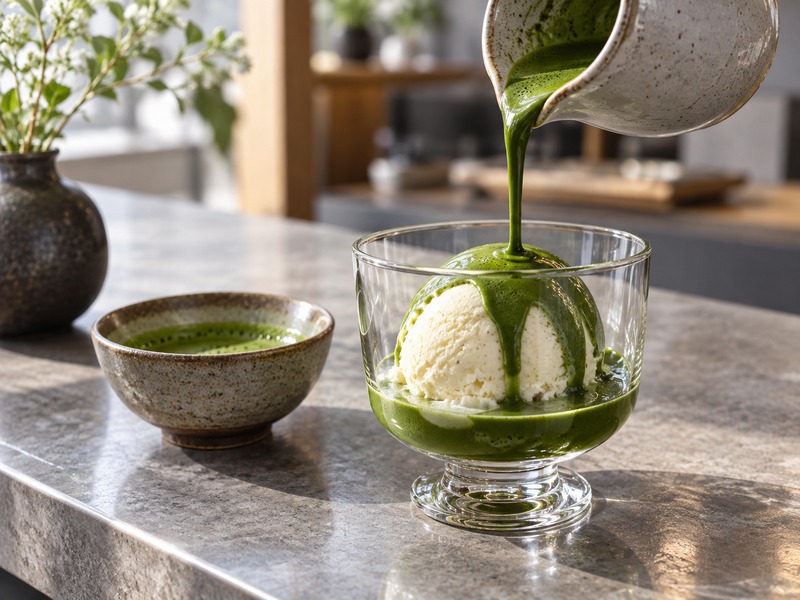
Matcha affogato serves a concentrated matcha shot over ice cream. It borrows the hot-over-cold contrast of an espresso affogato while offering green tea flavor. The product changes quickly once tea hits the scoop: too much water creates a thin pool, while a weak tea shot disappears into sweet cream. Naoki Matcha’s home affogato uses matcha, water and ice cream. A café needs a measured shot, a service sequence and a decision about how the dessert is meant to be eaten before it melts.
This guide is for café, dessert and foodservice teams. Any holding or food safety limits for the commercial product must be validated with its actual ingredients and route.
1. What experience should the guest get?
Make the pour part of the product
The appeal lies in contrast: warm or freshly prepared matcha, cold ice cream, a brief transition from firm scoop to creamy pool and a tea finish that balances sweetness. Decide whether staff pour the matcha at the table or before handoff. A table pour creates theater but needs a safe vessel and service capacity. A pre-poured cup is faster but may reach the guest partly melted. Write a target for the first spoonful and the last; both should taste intentional.
Describe the eating window. A guest should not need to race the dessert, yet an affogato is not designed for a long display case hold after assembly. Test in the actual bowl or glass at the expected table distance. Record ice cream shape, tea temperature, visible melt and flavor after several minutes. A tall glass may showcase the pour but make the bottom difficult to reach; a wide bowl makes spoon access easy but loses some visual drama. Choose the vessel after a service trial.
| Service style | Guest benefit | Main risk |
|---|---|---|
| Table pour | Visible contrast and aroma | Staff time and spill |
| Counter pour | Faster handoff | Melts before first spoon |
| Components separate | Better travel | Less immediate theater |
2. Which matcha works with ice cream?
Select for a sweet dairy setting
Ice cream softens bitterness and can hide delicate tea notes. Compare powders as measured concentrated shots, then pour them over the selected ice cream. A powder chosen for plain tea may cost more than its subtlety contributes in this dessert. Conversely, a rough powder can make the final melted pool unpleasant. Naoki Matcha recommends a versatile daily-drinking blend for its home version; a business should run its own sensory and cost comparison in the final serving.
Taste through the melt. The first spoonful may be mostly tea and cold ice cream, while the last is a mixed matcha cream. Both matter. Record matcha grams per serving and inspect whether powder settles at the bottom. A cheaper powder needing more mass may not save money. Ask the supplier for lot-linked specifications, relevant safety records and repeat samples. Keep an approved shot and finished-dessert reference so a later lot can be compared without guesswork.
3. How strong should the matcha shot be?
Control powder and water together
A matcha shot is a small, concentrated suspension. Its powder-to-water ratio affects flavor, viscosity and how quickly it melts the ice cream. Begin with several measured combinations and keep the ice cream portion fixed. A larger water volume can create a dramatic pour but dilute the dessert. A very thick shot may sit on top in a concentrated patch rather than flow through the scoop. The right amount is the smallest pour that gives the intended visual and full-spoon flavor.
Check the mixing tool. Dry powder added to a small liquid volume can clump. Sift if needed, then disperse with a suitable whisk or mixer. Inspect the vessel and dessert glass for green specks after pouring. Note shot temperature: hotter liquid melts ice cream faster and can mute the contrast before service; a cool shot changes the classic hot-cold experience. Choose the temperature by trial and document it. Do not leave baristas to adjust strength by eye based on scoop size.
| Shot variable | Too low | Too high |
|---|---|---|
| Matcha mass | Tea disappears | Bitter, gritty pool |
| Water volume | Shot may not flow | Dessert becomes watery |
| Temperature | Less contrast | Rapid melting |
4. Which ice cream makes the pairing work?
Choose for flavor and melt behavior
Vanilla is a useful baseline because it leaves room for matcha. Different ice creams vary in sweetness, fat, air content and how they soften under a warm shot. Compare candidates at the same scoop mass and freezer condition. A very sweet ice cream may make the tea seem weak; a dense one may resist melting and leave matcha pooled around it. Plant-based ice cream can be offered, but it requires its own texture, allergen and claim trial.
Control the scoop. Use a target weight rather than a casual number of scoops. A small scoop changes the tea-to-ice-cream ratio, while an oversized scoop makes the shot disappear. Test the freezer temperature and scoop method staff will use. If a store holds pre-scooped portions, have the quality team validate handling and check surface ice crystals and shape. The dessert should not need a garnish to cover an unattractive scoop or a poorly balanced base.
| Ice cream choice | Flavor effect | Operating check |
|---|---|---|
| Vanilla dairy | Neutral creamy base | Sweetness and allergens |
| Matcha ice cream | More tea intensity | Can become one-note |
| Plant-based vanilla | Alternative offer | Melt and label review |
5. What vessel and pour method should be used?
Design for spoon access and a clean table
A clear glass shows matcha running over the scoop, but it must be wide enough for a spoon and stable enough during a pour. A bowl offers more room and less spill risk. Test with the actual shot pitcher, scoop size and server movement. A narrow lip can direct the shot onto one side and leave dry ice cream elsewhere. A very wide vessel may spread the tea into a thin layer before it reaches the scoop.
Practice at service speed. Have several staff members prepare consecutive orders. Time scoop, shot, pour and handoff, including cleaning. Check drips on glass rims and saucers. If table pouring is part of the concept, train servers on where to set the shot vessel and how to avoid splashing a guest. Use a real tray and dining table in the pilot. The best vessel is the one that makes a clean, repeatable serving during an ordinary shift, not the one that photographs most dramatically once.
6. Which toppings add value?
Keep the tea-and-cream contrast clear
White chocolate, toasted nuts or fruit can add texture, but toppings also change the taste and allergen statement. A heavy syrup can mask tea and accelerate the melt. Begin with the plain affogato as a control. Add one topping at a measured dose, then taste the first and last spoonful. If the topping is chiefly for photography, ask whether it slows service or makes the product harder to eat.
Place toppings deliberately. A crisp wafer softens on contact with the tea pool; a fine matcha dusting can deliver a bitter first bite and green powder on the spoon. A topping served on the side may protect texture but add another component to wash and cost. Evaluate each option during a timed service. For a chain, fewer well-controlled components often produce a better repeatable dessert than a long garnish list that every store interprets differently.
7. Can matcha affogato be sold for takeaway?
Separate components until the customer is ready
An assembled affogato continues melting in transit. A standard sealed cup may arrive as a green milkshake with no contrast or ice cream shape. If takeaway matters, test a two-component pack: frozen dessert protected in one part and a matcha shot in another. Check leak resistance, safe temperature control and whether the customer can pour cleanly without instructions from staff. That format costs more and changes the product’s immediacy, so it needs a separate margin and user test.
Validate the route. The quality team should define handling for the frozen component and prepared matcha under the actual market rules. A home recipe’s five-minute preparation claim is not a shelf-life or delivery validation. Test the package after the longest expected journey. If the customer sees a partly melted scoop or separated shot, either revise the pack or limit the product to dine-in service. A delivery listing should show the product the guest will receive, not a freshly poured studio image.
| Channel | Practical format | Main validation |
|---|---|---|
| Dine-in | Fresh scoop and pour | Timing and service safety |
| Pickup | Separate shot and scoop | Short route and customer pour |
| Delivery | Protected components | Temperature and pack integrity |
8. What should ingredient buyers verify?
Link tea and ice cream specifications
Ask for matcha specification, lot-linked analysis and traceability records required by the buyer’s program. Ice cream suppliers should provide formulation, allergen, storage and handling information. If a plant-based version is offered, review its complete ingredient and cross-contact plan. Packaging suppliers must support the chosen hot or cold contact conditions. These documents help quality teams, but the final dessert still needs a service trial with the actual matcha and ice cream lots.
Keep changes visible. A new vanilla ice cream may be sweeter or melt faster; a new matcha lot may taste rougher. Require a finished-dessert comparison before approving substitutes. Retain accepted samples or records, including the actual scoop mass and shot. When a store reports a thin dessert, check portion, freezer condition and shot water before blaming the tea. The purchasing brief should name the experience, not just two ingredient categories.
| Input | Buyer evidence | Finished-dessert check |
|---|---|---|
| Matcha | Lot and sensory records | Shot and final-pool flavor |
| Ice cream | Formula and allergens | Melt and sweetness |
| Vessel | Service trial | Spoon and pour access |
| Takeaway pack | Contact and seal data | Travel performance |
9. What does an accepted affogato cost?
Count temperature-sensitive loss
Cost the matcha dose, ice cream scoop, water, garnish if used and vessel or takeaway pack. Add labor for scooping, whisking and any table service. During a trial, count scoops rejected for poor shape, shots remade for clumps and desserts lost because handoff was delayed. A lower-cost tea may not save money if its weak flavor requires more powder. A takeaway pack may double the number of components and increase cold-chain cost.
Price by channel. Dine-in service can include the value of a table pour, while pickup emphasizes convenience. Do not assume the same menu price and margin fit both. Test customer response to the actual portion and format. One carefully controlled size is easier to execute than several cup and scoop combinations. A dessert that is delightful when fresh but frequently melted by delivery should be limited to the channel where it works.
10. What should the launch pilot prove?
Test a complete service sequence
Shortlist matcha and ice cream candidates, then fix shot volume, scoop mass and vessel. Blind-taste the first and last spoonfuls. Have several staff members prepare repeated orders during a timed simulation. Record shot dispersion, pour cleanliness, scoop shape, melt after a table wait and any reject rate. If takeaway is planned, test it separately through the real route. Include a second ingredient lot if the product will remain on the menu.
Write a release card. State powder and water measures, shot temperature, ice cream specification, scoop weight, vessel, pour method, garnish and handling limits. Include an accepted photograph and a melted reject example. If the trial fails, change one variable at a time. Order for a limited launch before committing to a wider dessert program; the product should be judged on the spoonful guests actually receive.
Reference
Naoki Matcha, “Make matcha affogato at home effortlessly” shows the matcha-shot-over-ice-cream concept. The commercial service and handling checks above are proposed tests.
FAQ
Q1: Is a matcha affogato coffee-based?
No. It uses a matcha shot over ice cream in place of an espresso pour.
Q2: Should the matcha shot be hot?
Test temperature for the intended contrast and melting rate, then specify it on the card.
Q3: Can a plant-based ice cream be used?
Yes, after testing melt, flavor, allergens and the intended claim.
Q4: Is an assembled cup suitable for delivery?
Usually it needs a separate-component design and a validated route to preserve contrast.
Q5: What is the most useful buying comparison?
Taste candidate matcha powders with the selected ice cream at the actual serving dose.