
People searching for “matcha creme frappuccino” often want a cold, creamy, blended matcha drink. For a café developing its own menu, that search intent is a product brief, not a formula or a name to copy. Frappuccino is a Starbucks trademark; an independent operator should choose its own drink name and have counsel review any comparative wording. The practical work is to specify tea flavor, ice texture, sweetness, topping, service time, and ingredient sourcing, then test the full serving under ordinary café conditions.
For: café chains, beverage developers, and ingredient buyers. Decision: whether an independently branded frozen matcha drink can be made consistently, priced fairly, and described accurately.
Contents: 1 · 2 · 3 · 4 · 5 · 6 · 7 · 8 · 9 · 10
1. What is a matcha crème frappuccino style drink?
Translate the search into a category brief
The search term points to a sweet blended beverage with matcha, milk or a plant base, ice, and often a cream topping. Starbucks’ official product page describes its own branded beverage; it does not grant another café permission to use the mark or copy a proprietary formula. Use a generic working name: “frozen matcha crème” is enough for an internal R&D file until the brand approves a distinctive menu name.
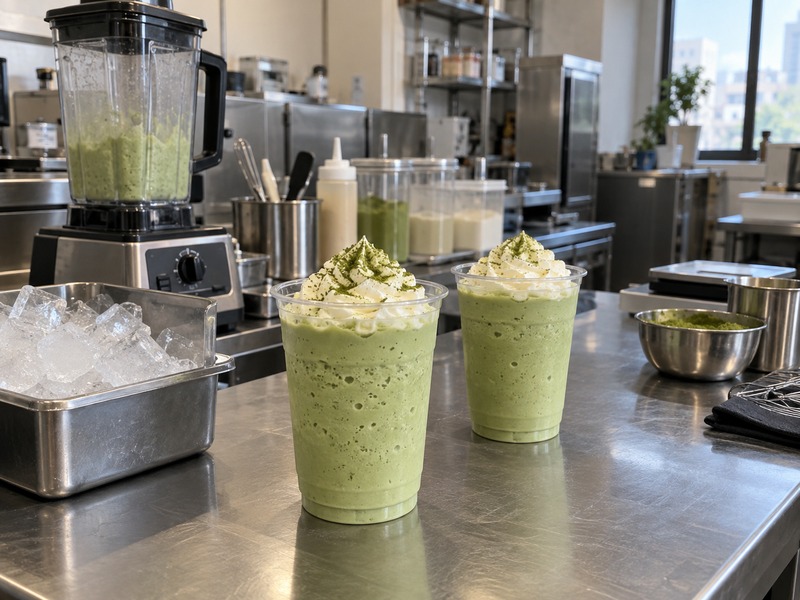
Define whether the proposed drink should be spoonable, sippable through a straw, or somewhere between. Name the target serving size, ice format, sweetness band, visible green tone, topping, and pickup time. The concept should be tested after a short service delay, because a perfect blender-cup texture can melt rapidly on a warm counter. A chain should also decide whether the same recipe must work with dairy and a plant option; those may need separate bases. The goal is a recognizable matcha profile inside a frozen dessert-like drink, not a superficial green color with no tea flavor.
| Concept field | Pilot question | Owner |
|---|---|---|
| Drink name | Is it distinct and approved? | Brand/legal |
| Matcha profile | Is tea perceptible after blending? | R&D |
| Frozen texture | Does it hold at pickup? | R&D/operations |
| Topping | Is it served every time? | Operations |
2. How should an unbranded frozen-drink brief be written?
Describe the customer experience
Start with the finished cup: appearance, sweetness, matcha intensity, particle feel, thickness, and melt behavior. Add the target vessel and straw or spoon so the team can test consumption rather than just blender output. Record the maximum acceptable wait between blend and handoff as an internal trial condition, then validate it in the intended stores. Keep recipe ownership clear: a consumer imitation recipe is search context, while the café’s formula should come from its own sensory and operating requirements.
The brief should include ingredient constraints, target market, allergen variants, cost range, equipment already on site, and whether a topping is optional or standard. If the chain wants a premix, define what the premix must do and which components stay at the station. Avoid specifying a competitor’s exact ingredient list or branded cup appearance. A useful request to suppliers says, for example, that matcha must remain identifiable after blending with the proposed milk and ice, and asks them to provide traceable samples for trials. The decision should be made against a reference cup produced by the buyer, not against a competitor’s trademarked product image.
3. Which matcha traits survive ice and dairy?
Taste the complete blend
Cold temperature and sweetness can mute aroma, while dairy or a plant base changes bitterness and mouthfeel. Compare tea lots in the complete frozen formula at a fixed dose, then adjust dose only after the base is stable. A bright dry powder may not keep the same color once dispersed in a pale, icy matrix. Look past the first sip: tea flavor should still be present as the drink melts and the topping blends in.
Run coded samples using the same ice mass, liquid base, sweetener, blender, and serving cup. Record color, aroma, bitterness, powderiness, and sediment after partial melt. If one tea needs substantially more grams to reach the target, its lower purchase price may not lower cost per accepted serving. Ask suppliers for lot codes, specification, storage guidance, and change notices. The pure matcha supply page can start the inquiry, but only product-specific trials can establish suitability. Do not infer that “ceremonial” or another grade name predicts performance in a sweet blended beverage.
| Matcha screen | Fixed condition | Observe |
|---|---|---|
| Fresh blend | Same ice and milk | Green tone and tea aroma |
| Partly melted cup | Same delay | Bitterness and sediment |
| Topping mixed in | Same topping mass | Tea masking |
| Second lot | Same recipe | Repeatability |
4. How do ice and solids set texture?
Measure the frozen phase
Ice size and mass influence blade contact, dilution, and the size of crystals left in the drink. Liquid volume determines how easily the blender starts and how quickly the cup thins. Sugar, milk solids, and other dissolved ingredients change body, but a recipe should not depend on guesswork about “one scoop of ice.” Weigh the batch during R&D: a fixed mass of ice and liquid gives a fair comparison between candidate bases.
Evaluate texture at pour, at handoff, and after a realistic consumption delay. Record whether the drink passes through the intended straw, whether large ice chips remain, and whether a watery layer forms. A too-thick sample may look appealing in a photograph but be difficult to drink; a thin sample may lose the frozen identity before pickup. Compare the first and last cups from a blender batch if the operation proposes making more than one serving at a time. Ice machines can produce different shapes at different sites, so the pilot should include the equipment that stores will use. Set an acceptable range, then train staff with a physical reference rather than a vague description of “creamy.”
5. Which ingredients support a stable blend?
Screen the base as a system
The liquid base might be dairy, an oat beverage, another plant drink, or a premixed powder. Each brings different solids, sweetness, flavor, and allergen implications. A stabilizing ingredient may help texture but also changes the label and purchasing file. Compare complete candidate systems rather than adding a gum to a weak recipe and assuming the problem is solved. Observe melt, not only pour: a blended drink should remain acceptable through the customer’s normal drinking window.
Ask suppliers for full ingredient statements, allergen information, nutrition data, storage instructions, and lot-linked specifications. Taste the base without matcha, then in the full drink; an apparently neutral base can leave a coating that dulls tea. If a premix is proposed, test it with the water, milk, ice, and blender available at a normal store. A formula developed on one high-powered machine may behave differently elsewhere. The matcha blends page can frame a custom ingredient discussion, but no generic premix document replaces a trial in the buyer’s equipment and target market.
| Base choice | Check in fresh cup | Check after hold |
|---|---|---|
| Dairy base | Creaminess and tea clarity | Melt and separation |
| Plant base | Flavor and foam | Graininess or thinning |
| Dry premix | Dispersion | Sediment and label fit |
| Custom blend | Recipe repeatability | Lot-to-lot consistency |
6. How should a line test the blending method?
Fix the process variables
Equipment model, blade design, batch size, loading order, and blend time all affect the cup. Write a standard method and run it with trained staff and new operators. Start each trial with the same ingredient temperatures and measured quantities. Watch the machine as well as the drink: a good texture is not scalable if staff must stop the blender repeatedly, scrape dry powder from a wall, or wash a sticky lid after every cup.
Record clumps, large ice pieces, foam, splash, fill accuracy, and cleanup time. Test one-serving and planned peak-period batch sizes separately. A double batch may not behave like two single batches; the blender can circulate ingredients differently. If the formula contains a cream topping, keep the topping step separate in the record so a defect in the base is not masked. Use an acceptance sheet with named conditions and rejected-cup reasons. A supplier demonstration made on different equipment can suggest an idea, but the café’s line trial decides whether the method belongs in the operating manual.
| Process variable | Keep fixed in comparison | Inspect |
|---|---|---|
| Load order | Ice, liquid, powder sequence | Wall clumps |
| Batch size | Servings per cycle | Texture uniformity |
| Blend cycle | Time and setting | Ice chips |
7. How can staff control serving time and waste?
Run a queue simulation
A frozen drink can tie up a blender, consume ice quickly, and lengthen cleaning between orders. Time the full sequence from ingredient retrieval to customer-ready cup, including topping and rinse. Repeat it during a realistic order cluster with ordinary staff. Count accepted servings: total ingredient used divided by cups sold is more informative than theoretical recipe cost when a thick base sticks in the jar or toppings are routinely over-portioned.
Record rejected cups, leftover blend, refill interruptions, and wash steps with a denominator such as cups attempted per shift. Do not turn one pilot’s timing into a universal labor-saving claim. A pre-portioned powder or frozen base may reduce measuring work but add pack waste or storage demands. Decide whether staff can adjust texture on site and which changes require R&D approval; uncontrolled extra milk may solve one blender jam while destroying the drink standard. Build a fallback plan for blender downtime or an ice-machine change. If the method needs a separate piece of equipment, include maintenance and training in the launch cost.
| Service observation | Denominator | Decision |
|---|---|---|
| Cycle time | Accepted cups in timed run | Station capacity |
| Rejected blend | Cups attempted | Method rework |
| Leftover base | Prepared batches | Portion plan |
| Cleaning time | Blend cycles | Equipment schedule |
8. What labeling and trademark issues need review?
Approve names before printing
Frappuccino is a Starbucks trademark. A café should not adopt it as its own menu name or imitate brand trade dress; counsel should review comparative advertising if the team plans to mention another brand. Keep the public name distinct, such as a house frozen matcha drink, and let the product stand on its own recipe. Check the whole message: cup graphics, menu photo, toppings, and social copy can create brand confusion even if a legal disclaimer sits elsewhere.
The ingredient statement and allergen response must match the signed formula, including milk, plant base, topping, sweeteners, and any premix. The FDA food-allergies page is a U.S. reference for major allergen labeling and cross-contact; market and food-service requirements still need local review. Avoid unsupported health or performance claims attached to matcha. If a packaged frozen base is sold separately, assess its own label and storage directions. Review photographs against normal service so the pictured cream cap and cup size match what customers pay for. Brand, regulatory, and operations should sign the same version before a menu board is printed.
9. How should buyers compare base systems and powders?
Price the accepted portion
An ingredient quote is not a drink cost. Compare matcha dose, base yield, ice and topping use, rejected batches, pack waste, freight, storage, and staff time. Ask each supplier for current specifications, lot codes, lead times, minimum order quantities, allergen files, and change-control contacts. Use one trial sheet: the same cup size and acceptance criteria should apply to every candidate, or price comparisons will be misleading.
Request a commercial-lot sample when the preferred system passes the initial screen. Repeat the blend in more than one store or on more than one machine type if the rollout will use both. A cheaper tea that needs a larger dose or leaves grit may cost more per acceptable cup. A custom premix may save steps but reduce flexibility when the café wants a plant variant. Decide which ingredient substitutions can be approved centrally and which need a full new trial. Retain a reference sample and a normal-service photograph alongside the written recipe so future lots can be compared fairly.
10. What makes a frozen drink ready for rollout?
Approve the cup and the station
A launch gate should combine sensory acceptance, frozen texture at handoff, melt behavior, operator cycle time, ingredient supply, allergen communication, cost per accepted serving, and an approved distinct name. Test the actual topping, straw, cup, and lid. Set stop rules before the pilot: repeated separation, uncertain allergen information, or an unworkable service sequence should pause the menu decision even if the first photograph looks excellent.
Record the winning recipe version, supplier lots, equipment settings, and acceptable texture range. Train staff with physical reference cups and a short defect guide. The Food52 reference below was access-restricted during this review, so no claim about its recipe is used here. The official Starbucks page linked above supplies only context for the branded search term. A café’s next action is to request coded matcha and base samples, run a timed shift trial, and have brand and regulatory reviewers approve the final menu wording. That produces a frozen matcha drink customers can recognize without borrowing another company’s identity.
Reference: Matcha Cream Frappe. Archived SERP title and URL; the page was access-restricted on 2026-10-10, so its contents could not be verified or used.
FAQ
Q1: Can a café use Frappuccino in its menu name?
It is a Starbucks trademark. Choose a distinct name and have counsel review any proposed comparison.
Q2: Does a higher matcha dose always improve flavor?
No. Test dose in the complete frozen base; excess tea can raise bitterness and residue.
Q3: What causes a blended matcha drink to separate?
Ice melt, base composition, mixing method, and holding conditions can all contribute. Diagnose with fixed trials.
Q4: How should plant-based variants be screened?
Test each base for taste, frozen texture, melt, allergens, and label accuracy as a separate formula.
Q5: What belongs in a supplier trial kit?
Include traceable samples, current specifications, ingredient and allergen files, storage guidance, and change contacts.