
Matcha cream cheese can work as a bagel spread, pastry filling or a ready-to-use café component. A pleasant sample made by hand may still fail when a larger batch streaks, releases moisture or arrives in a pack that slows service. This guide helps dairy dessert teams, cafés and ingredient buyers define the finished product, test repeatable mixing and specify the right matcha for that application. Matcha Village can supply matcha candidates and discuss formats; the food operator must approve the dairy formulation, safety controls and market claims for its own product.
Table of contents
- What should the finished cream cheese do?
- Which cream cheese base fits the application?
- How should matcha be evaluated in a dairy base?
- How can sweetness and acidity be compared fairly?
- What mixing method gives an even spread?
- How should a team inspect batch uniformity?
- Which pack format fits the sales route?
- How do you cost a usable unit?
- What should chilled holding and transport trials observe?
- What belongs in the final supplier and product brief?
1. What should the finished cream cheese do?
Define use before choosing the tea dose
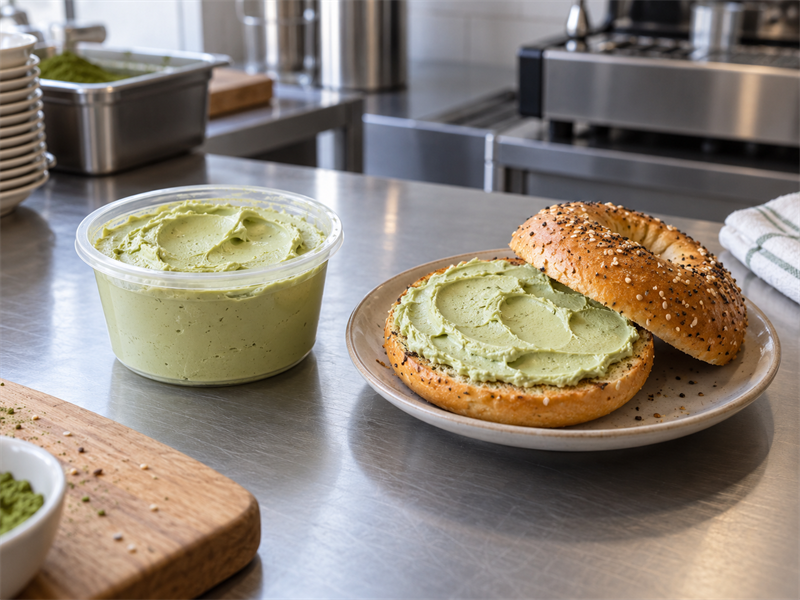
Decide whether the product must spread thinly on a bagel, hold inside a sandwich cookie or stay in a piped pastry. Each job asks for a different body. A soft breakfast spread may be awkward as a filling; a very firm filling can tear bread. Write a finished-product target that names the application, color, tea character, sweetness, portion size and serving temperature. Keep a photograph of an approved spread stroke and a tasting note alongside the formula so kitchen and buying teams discuss the same item.
Test the full bite. A sweet bagel, salty cracker or rich pastry can change how matcha tastes even when the spread is unchanged. Evaluate the plain cream cheese first, then with the intended carrier. If the brand sells a tub, assess how the surface looks after opening and how easily staff or customers scoop it. If the product is a factory-supplied ingredient, note the amount a café uses per serving and the work needed after opening. Those observations define what the supplier should help the buyer test.
2. Which cream cheese base fits the application?
Record the dairy component before trialing matcha
Choose an identified cream cheese or cream cheese-style base and record its product specification, supplier, lot and handling instructions. Fat, moisture, salt and stabilizer systems may vary among commercial bases and can affect spreading, mixing and visible free liquid. An unflavored base gives a clearer read on tea character than a sweetened or cultured-flavor variant. If the project uses a plant-based alternative, treat it as a separate formulation route with its own ingredient and allergen review.
Test the base at the temperature used in normal service, under the operation’s approved controls. A spread that looks smooth immediately after mixing may be firmer after chilling. Compare a small batch and a larger batch without changing matcha dose or sweetener. If the cream cheese itself changes during procurement, repeat the application trial; the old matcha decision does not prove a new base will behave the same way. The base specification is a purchasing document as well as a recipe input.
| Base route | What it may change | Trial observation |
|---|---|---|
| Plain dairy cream cheese | Neutral platform for matcha | Spreadability and tea clarity |
| Lower-fat dairy option | Body and water behavior | Free liquid and texture after holding |
| Sweetened base | Total sweetness | Whether matcha remains detectable |
| Plant-based alternative | Flavor, structure, allergens | Separate formula and label review |
3. How should matcha be evaluated in a dairy base?
Taste the actual spread, not dry powder
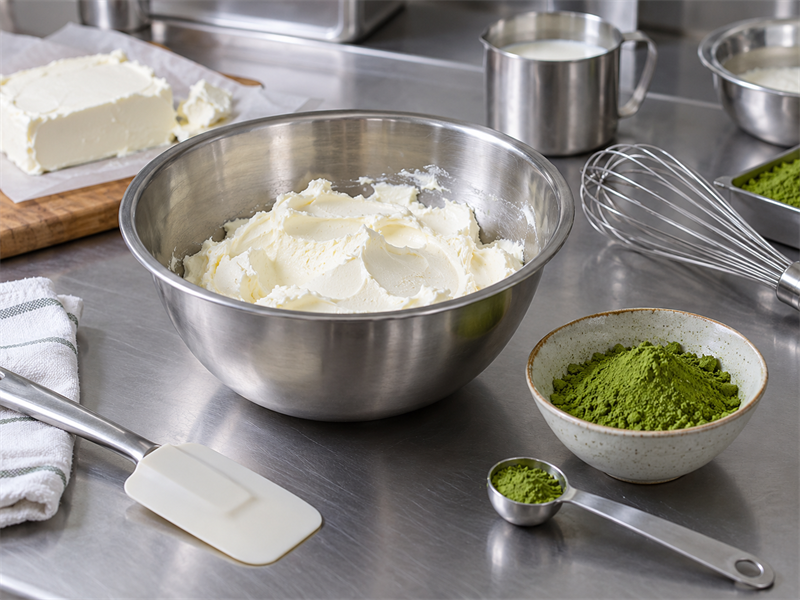
Request matcha candidates for a dairy spread with the planned tea dose, sweetener range, pack and market. Prepare coded samples using the same cream cheese lot and mixing method. Compare visible color, aroma, bitterness and how the tea sits alongside dairy tang. A bright powder in a sample bag may look muted after mixing; a pleasant tea in water may seem harsh in a rich spread. These are application questions that need side-by-side finished samples.
Judge the spread both plain and on the target food. A bagel may dilute the tea impression, while a sweet pastry could conceal an overly bitter sample. Let every coded test reach the same service condition before tasting. Record staff comments in specific terms, such as even green appearance or lingering astringency, rather than voting for the supplier name. Matcha Village can suggest culinary, premium or other candidates within its portfolio, but approval should identify the exact SKU that performs in the finished product.
4. How can sweetness and acidity be compared fairly?
Make one change per test batch
Sweetener and the dairy base both affect how a customer perceives matcha. Set a plain control, then test measured sweetener increments while holding the cream cheese and tea dose fixed. If a more acidic or less acidic base is being considered, test that separately. A spread that tastes balanced from a spoon can be too sweet in a pastry or too sharp on plain bread. Assess the complete serving and keep the application constant across samples.
Record the sweetener type and addition method. Liquid sweeteners can change body as well as sweetness; a dry ingredient may need more mixing to disappear evenly. Do not use the word “healthy” or a nutrition claim merely because a reference recipe uses it or a sweetener seems familiar. The business must assess the final formulation, label and market rules before making any claim. A product brief should state the desired taste and measurable ingredients, leaving promotional language to an approved review.
| Trial variable | Keep fixed | Decision supported |
|---|---|---|
| Sweetener level | Matcha, base, mixing | Acceptable tea and dairy balance |
| Sweetener type | Target sweetness and base | Texture and service behavior |
| Base acidity | Dose and sweetener | Whether tang helps the pairing |
| Carrier food | Portion mass | Real eating experience |
5. What mixing method gives an even spread?
Control addition order and scraping
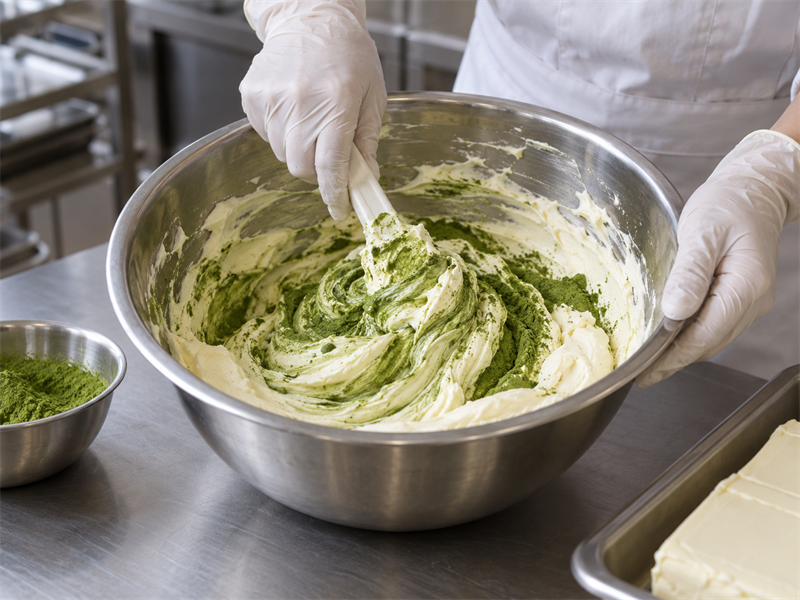
Tip matcha straight into a large mass of cold, stiff cream cheese and green pockets may remain. Trial a documented approach that suits the base: soften or work the cheese under approved handling conditions, disperse a weighed matcha portion in a small compatible phase if the formula allows it, then combine using a defined mixer and sequence. Avoid adding liquid solely to make a photograph look smooth; that change can alter product body. Record mixing time, batch mass and tool geometry.
Scrape the vessel at agreed points and check the wall and base for uncolored cream cheese. A hand-mixed bowl may look uniform while a larger mixer leaves material near the sides. Inspect a smear from the top, center and bottom before filling packs. If air incorporation makes the spread fluffy at the start but collapses after holding, document that effect. The goal is a method another trained operator can repeat. Dairy handling and time outside controlled storage belong to the operator’s validated food safety procedure.
6. How should a team inspect batch uniformity?
Sample across the mixing and filling run
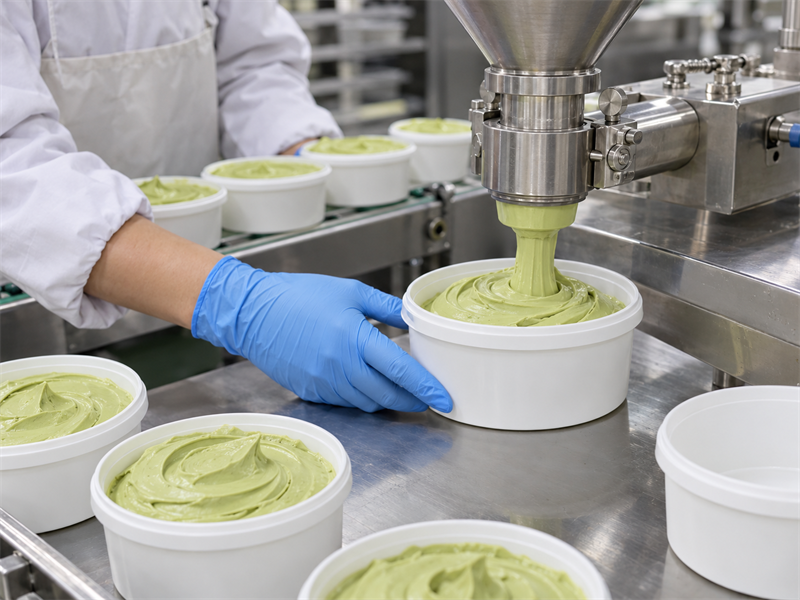
Set practical release checks for a finished batch: color, visible specks, spread texture, pack weight and sensory reference. Compare samples from several positions in the mixer and from early, middle and late packs. If the last tubs appear darker, tea distribution or filling method may be drifting. A single spoon from the surface cannot describe the whole run. Photograph smears under similar lighting and label samples with the batch record, not with an invented color score.
Keep the selected matcha sample code, cream cheese lot and formula revision linked. When a supplier lot changes, the buyer can compare the finished spread against an approved reference. That comparison should have defined acceptance and escalation steps, including who decides whether a batch needs rework or rejection. If the business uses a laboratory test, select it for the actual product and purpose; visual checks alone cannot prove microbiological safety. Matcha Village can provide lot information for its ingredient, while the dairy operator approves the finished batch.
| Checkpoint | Sample location | Action if outside target |
|---|---|---|
| Matcha dispersion | Vessel wall, center, base | Review mixing and scraping |
| Spread texture | Top and bottom samples | Compare with reference |
| Fill weight | Early, middle, late tubs | Adjust depositor and investigate loss |
| Finished appearance | Opened pack after hold | Review color and free liquid |
7. Which pack format fits the sales route?
Match unit size to use and waste
A café may prefer a larger foodservice tub, while a chain serving a fixed spread portion might trial single-use cups. Retail brands need packaging suitable for the intended shelf and customer handling. Compare pack opening, scoop access, sealing and the amount left unusable at the bottom. A pack that lowers purchase price per kilogram can still raise usable cost if staff discard product before it is finished. Record the amount a site expects to use after opening under its approved handling rules.
Test the real pack with the real formula. A spread may cling to a narrow opening, collect on a lid or show visible moisture in a clear cup. If a private-label format is planned, discuss pack materials, fill quantity, closure and artwork responsibilities separately from the matcha powder order. Matcha Village offers bulk ingredient and customization options, but any exact finished-dairy packing capability and terms must be confirmed for the proposed project. Do not treat a general OEM description as a commitment to a specific chilled spread.
8. How do you cost a usable unit?
Use released spread, not theoretical batch mass
Start with actual cream cheese, matcha and sweetener inputs plus packaging, direct labor and process losses according to the business’s method. Divide by released usable units or by saleable portions from a foodservice tub. Spread retained in the mixer, overfilled tubs and product discarded during serving affect the result. A lower-cost powder may need a higher dose to reach the approved tea flavor; compare candidates at the accepted finished product rather than at equal purchase price per kilogram.
Include the sales route. A café bagel topping has a different labor and serving cost from a sealed retail tub. A food manufacturer may also need chilled distribution and returns in its model. These figures belong to the buyer’s own worksheet and quotations. Avoid writing a promised margin or universal price for Matcha Village. Keep ingredient quotes attached to the exact offered SKU, pack and commercial terms so a later reorder is comparable to the approved trial.
| Cost line | Record from the approved run | Common omission |
|---|---|---|
| Dairy base | Actual mass and unit cost | Mixer hold-up |
| Matcha | Accepted dose and offered SKU price | Dose increase after tasting |
| Sweetener and minor ingredients | Measured inputs | Formula change during scale-up |
| Packaging and labor | Real pack and filling work | Overfill and rework |
| Yield | Released units or portions | Unsaleable packs |
9. What should chilled holding and transport trials observe?
Follow the filled product through its actual route
Review sealed and opened samples under the business’s planned refrigerated handling conditions. At defined checkpoints, look for free moisture, graininess, changes in spreadability, color shifts, off aromas, lid contact and separation during transport. Use the actual pack and distribution route; a lab bowl may hide defects that appear inside a clear tub. Record temperatures and any deviations during the trial so results can be interpreted. Compare samples at the intended service temperature on the food customers will eat.
Quality observations cannot establish a safe shelf life. The dairy operator’s food safety team must validate the finished product, including microbiological controls, storage, date marking and opened-pack use for each market. Matcha powder’s dry specification does not transfer a storage claim to cream cheese. A change in dairy base, sweetener, pack or process can require another review. Staff should have a clear action for packs outside the approved condition. Keep these safety decisions separate from a supplier’s matcha sample recommendation.
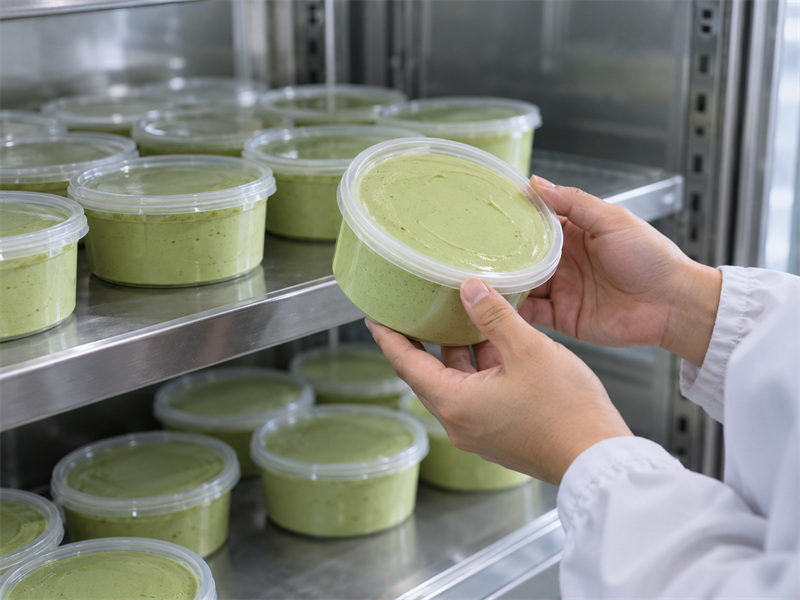
10. What belongs in the final supplier and product brief?
Link an approved dairy spread to an identified ingredient
Send the matcha supplier the dairy application, base characteristics, target green appearance and tea flavor, expected dose range, market, likely order pattern and desired ingredient pack. Request the exact offered SKU’s specification and relevant lot documents. Discuss sample identity, change notification, lead time and packing terms in the quotation. Any certification or destination testing requirement must be reviewed for the offered matcha product and scope. The supplier can support ingredient choice; it cannot approve an untested finished cream cheese.
Internally, keep the controlled dairy base, matcha sample code, sweetener, mixing order, batch size, fill weight, pack, sensory reference and release checks together. Assign owners for retesting when cream cheese, matcha or pack changes. If the business plans a label claim, route the final wording through its regulatory review using product-specific evidence. The practical next step is a coded pilot run with multi-point samples and a chilled pack trial, followed by a product-specific purchasing discussion with Matcha Village.
| Brief element | Owner | Evidence to retain |
|---|---|---|
| Finished application | Product team | Spread and filled-food reference |
| Dairy formula | Dairy operator | Controlled batch record |
| Matcha SKU | Purchasing and supplier | Sample code, specification, lot details |
| Pack and safety route | Packaging and food safety | Product-specific validation |
| Commercial terms | Purchasing and finance | Yield sheet and quotation |
FAQ
Q1: Can dry matcha color select the spread ingredient? No. Compare coded finished spread samples at the planned service point and dose.
Q2: Can a plant-based base use the same formula? Treat it as a separate application trial because texture, flavor and ingredient information may change.
Q3: Does “healthy” in a recipe title validate a label claim? No. The operator must review the final formula and market rules before using nutrition or health language.
Q4: Can a matcha powder specification establish cream cheese shelf life? No. The finished dairy product needs its own safety and quality validation.
Q5: What should a sample request include? Share the dairy base, intended use, target flavor and color, dose range, market, pack preference and likely buying pattern.