
Customers may ask for “matcha cold brew,” but matcha powder is already finely milled tea; it is normally suspended in water rather than steeped and removed like whole leaves. Japanese Green Tea Co.’s cold-brew discussion reflects the popularity of chilled preparation. A café can compare matcha samples before setting the cold recipe. The useful question is how to create a smooth drink, keep it consistent and hand it over before settling spoils it.
Contents
- 1. What does cold brew mean on this menu?
- 2. Which preparation method should be compared?
- 3. How much matcha belongs in the cup?
- 4. How can powder be dispersed without clumps?
- 5. What water and ice conditions change the taste?
- 6. Is a batch concentrate useful?
- 7. What storage decision is needed for prepared drinks?
- 8. How should settling be handled at service?
- 9. What does the final serving cost?
- 10. Which checks belong on the station card?
1. What does cold brew mean on this menu?
Name the method accurately
In ordinary coffee service, cold brew describes extraction over time from grounds. Matcha behaves differently because the powder remains in the drink. A café could offer cold-mixed matcha in water, a chilled matcha latte or matcha added to cold-brewed loose-leaf tea. Those options have different taste and handling. Choose one before printing a menu name, and give staff a plain explanation of how it is made. “Cold whisked matcha” may communicate the method more clearly than “cold brew” in some markets.
Define the intended texture and strength. A water-only drink exposes powder quality and mixing faults; milk and sweetener can hide them. If the drink is positioned as refreshing and unsweetened, taste that version first. Do not rely on unverified claims about cold water changing caffeine or health effects. The customer needs to know what is in the cup, whether it is sweetened and whether it contains dairy or another allergen.
2. Which preparation method should be compared?
Test service methods under real conditions
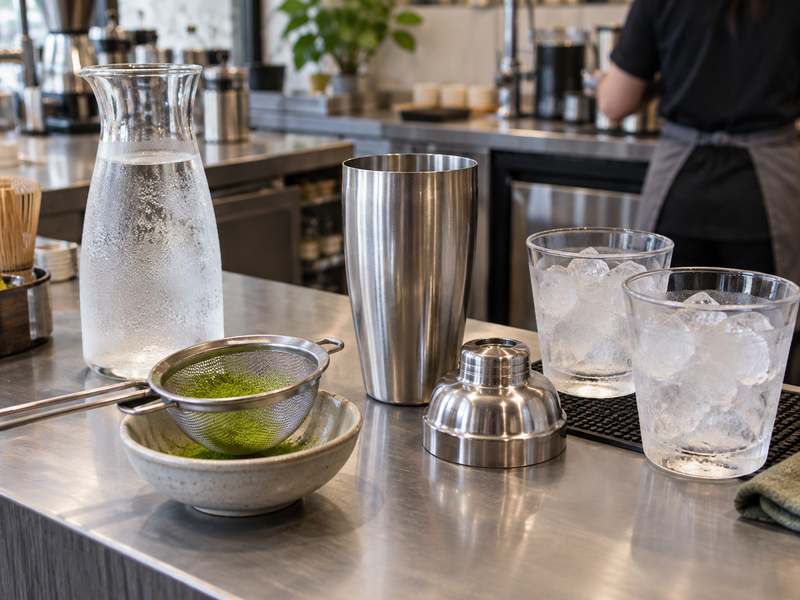
Three practical approaches are a small pre-dispersion followed by cold water, direct shaking with cold water, and brief blending. A whisked concentrate may show fewer clumps but adds a step. A shaker can be fast but may leave powder around the lid. A blender can make a uniform cup yet introduce foam and cleaning time. Compare methods with the same matcha lot, dose, water, ice and cup so the technique is the only meaningful difference.
Make several drinks in a row during a busy-service simulation. Record total preparation time, powder left on equipment, first-sip texture and appearance after the cup sits. Staff should be able to repeat the preferred method with the tools already at the station. A single photogenic sample prepared slowly at a test bench is weak evidence for a permanent menu item.
| Method | Possible benefit | Operational question |
|---|---|---|
| Pre-dispersion then dilution | Visible clump check | Is the extra vessel manageable? |
| Shaker | Fast mixing and foam | Does powder collect in the lid? |
| Brief blender mix | Even suspension | Is cleaning practical between orders? |
3. How much matcha belongs in the cup?
Weigh the tea before adjusting water
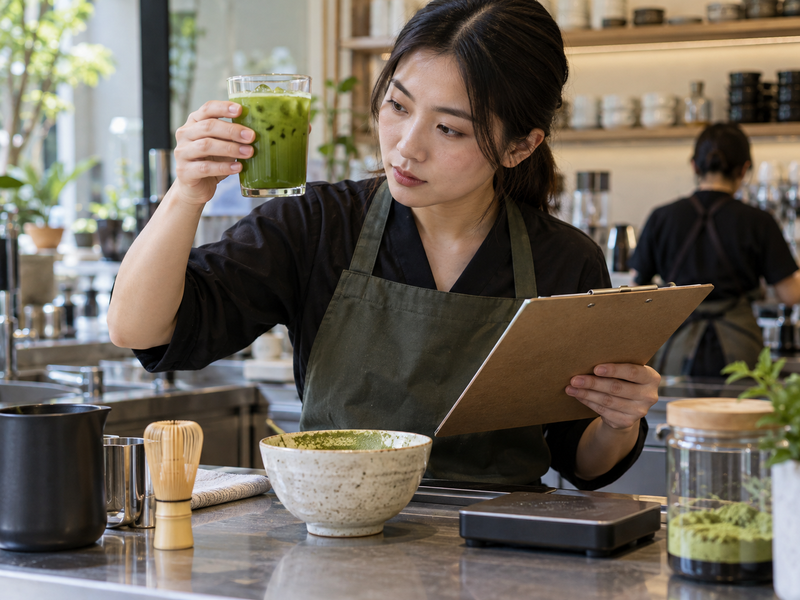
Choose a starting dose from the supplier’s preparation guidance, then test it in the café’s actual serving size. Record grams of matcha and final drink weight or volume. A nominal “large” cup may contain much less liquid once filled with ice, so powder per cup alone can mislead. Make one weaker and one stronger variation while keeping everything else fixed. Taste immediately and again after ice begins to melt.
Matcha selection matters in a water-forward drink. Compare samples for aroma, bitterness, color and mouthfeel in the intended cold water, not just as a warm tasting. Ask the supplier for current lot documentation and storage instructions. Matcha Village’s general company materials describe matcha supply, but any specific grade, origin or test claim should come from the current product documentation. Record the opened-package date during trials so an old sample is not compared unfairly with a fresh one.
4. How can powder be dispersed without clumps?
Control the first contact with water
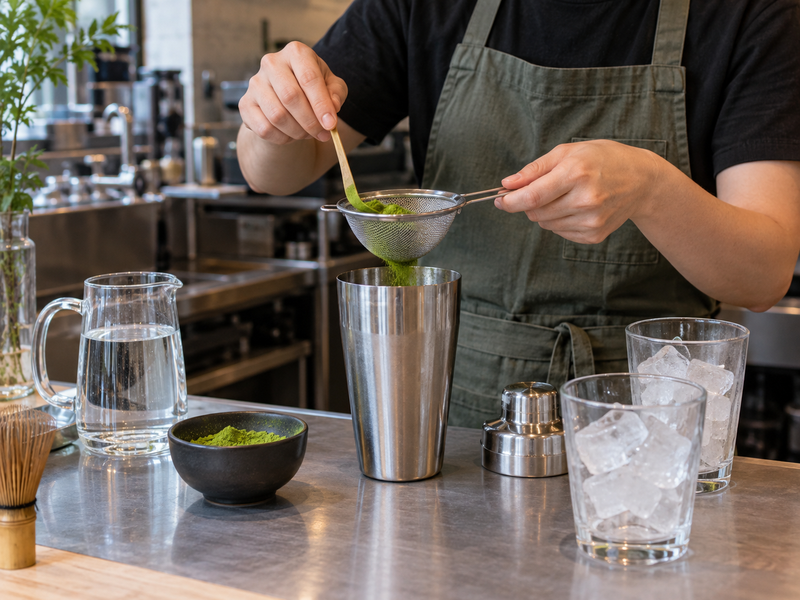
Matcha forms dry pockets when a large amount of water hits loose powder unevenly. Sift if the powder is clumpy, or make a small smooth paste before adding the rest of the water. If using a shaker, add ingredients in a tested order and close it securely. Compare fine strainers only if they do not remove a noticeable amount of the tea or slow service. The goal is an even suspension, not a perfectly clear liquid.
Clean and dry tools between uses. Water left in a scoop or sieve can make the next portion stick; powder caked in a shaker lid can create dark flecks. Measure any significant loss on the vessel walls by comparing what went in with what reached the cup. Train staff to inspect the bottom and sides of a clear sample glass after mixing. A recipe card should describe the visible endpoint, such as no dry islands and no heavy sediment immediately after pouring.
| Mixing fault | What to inspect first | Trial adjustment |
|---|---|---|
| Floating dry powder | Addition order | Pre-disperse or shake longer |
| Dark clumps | Sifting and tool dryness | Break powder before dilution |
| Excess foam | Mixing intensity | Shorten blending or shaking |
| Gritty bottom | Dose and method | Compare another powder or process |
5. What water and ice conditions change the taste?
Treat dilution as part of the formula
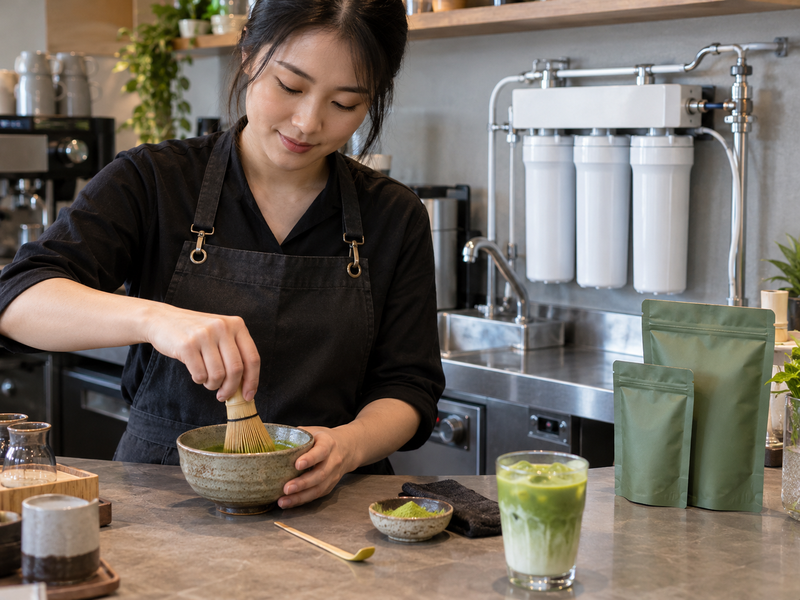
Water is the main ingredient in a plain cold matcha. Test with the water actually used at the café; a sample made elsewhere may taste different. Use clean equipment and ice from the normal service supply. Record ice weight or a consistent fill mark, then measure the final liquid. If a drink is made ahead and poured over ice later, compare it with one mixed directly in the serving cup. The two versions can differ in foam, temperature and dilution.
Cold temperature can mute aroma and sweetness. Taste the cup as delivered and after a few minutes, when customers are likely to take another sip. If the drink needs a sweetener or citrus addition to feel balanced, test and describe that as a separate recipe rather than silently changing the plain version. Do not add water to fix every bitter sample; a different matcha or better dispersion may address the defect more directly.
6. Is a batch concentrate useful?
Compare saved time with settling and waste
A small batch may speed up a lunch rush, but matcha can settle in a container. Trial a clearly labeled concentrate using the same equipment, batch size and time window intended for service. Measure one serving from the top, middle and end of the batch after the planned mixing procedure. If they differ visibly or in taste, the batch method needs revision. A container that cannot be mixed properly is a poor choice even if it fits the refrigerator neatly.
Log preparation time, portion yield, discarded concentrate and tool cleaning. The batch may save seconds per drink but create a larger waste cost at closing. Keep a made-to-order method as the reference sample during evaluation. A concentrate containing milk, sweetener or fruit needs its own ingredient and storage review; do not assume that a result from plain matcha and water applies to a richer drink.
| Batch check | Record | Reason |
|---|---|---|
| At mixing | Total weights and container | Reproducibility |
| Before first pour | Appearance after agitation | Suspension |
| Mid-service | Taste and dose per serving | Consistency |
| At close | Discarded volume | True cost |
7. What storage decision is needed for prepared drinks?
Separate quality limits from safety controls
Set a quality window by tasting and observing the product at timed intervals. Record color, aroma, sediment and ease of remixing. This does not establish a safe storage period. The café must apply its own approved food-safety plan and local rules to any prepared beverage, especially one with milk or other perishable components. The FDA Food Code is a model U.S. reference, not a universal license to hold a particular drink for a stated time.
Label any prepared container with identity and preparation information required by the operation. Use clean, food-contact equipment and keep it within the appropriate storage conditions. Avoid topping off an old batch with a new one because it defeats both traceability and sensory evaluation. If staff cannot monitor the batch reliably, make drinks on order. That may be the simpler route for a low-volume item.
8. How should settling be handled at service?
Give the customer a consistent first sip
Some settling is normal for a powder suspension. Decide how much is acceptable by looking at a finished cup after the typical handoff interval. A gentle stir or shake just before pouring may restore consistency. If a sealed takeaway cup is intended to be shaken by the customer, test the lid and headspace first; a leaking cup is a poor experience. A clear glass emphasizes visual separation, while an opaque cup can conceal a drink that still tastes uneven.
Train baristas to follow the same finishing step and inspect the cup before handoff. If customers frequently ask why there is sediment, the menu description may need a short explanation. Do not describe the powder as dissolved. For a layered milk drink, decide whether visual separation is part of the design or a preparation fault. Taste the first and last sips with a straw and without one; the preferred presentation should make sense in normal use.
| Observation | Customer effect | Possible response |
|---|---|---|
| Thin top, dense bottom | Uneven flavor | Mix immediately before handoff |
| Large dry specks | Rough texture | Improve initial dispersion |
| Foam vanishes quickly | Appearance changes | Photograph at realistic timing |
| Layered milk and tea | Different first sip | Stir instruction or revised build |
9. What does the final serving cost?
Include the ingredients that disappear
Calculate cost using weighed matcha, water, ice, cup, lid, sweetener if used and any waste from the mixing vessel. If a pre-dispersion step leaves tea in a bowl, that loss is part of the recipe. Batch concentrate needs a yield calculation after closing waste, not just ingredient cost divided by theoretical servings. Use the approved sensory formula as the starting point for pricing.
Count staff time and equipment cleaning during a trial with consecutive orders. A higher-cost powder that works at a lower dose may or may not be better value; compare the finished cup and actual dose. Keep water-only and milk versions as separate cost lines. If the café offers size changes, establish a recipe for each size rather than scaling blindly by cup label.
10. Which checks belong on the station card?
Make the method teachable
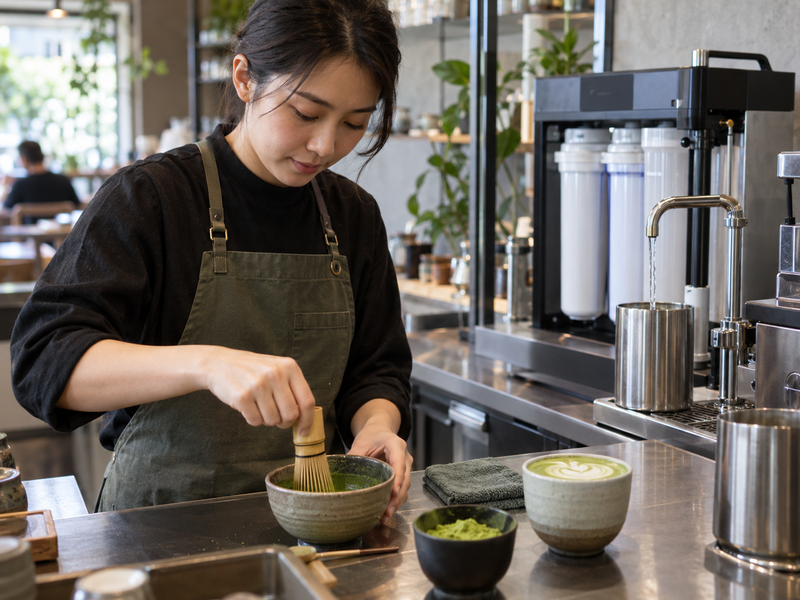
The final card should state matcha specification, dose, water amount, ice amount, mixing method, cup and visual endpoint. Include a photograph showing acceptable foam and sediment just after handoff. Have a second barista make three drinks and compare them with the reference. If an instruction depends on an unmeasured “quick shake,” define the motion or time and verify that it works with ordinary staff.
Review customer feedback during a limited sale. “Too earthy,” “powdery” and “watery” call for different tests. Keep the response narrow: compare powder, dispersion or dilution one at a time. If the drink stays consistent only when prepared immediately, keep made-to-order service in the SOP. The product is ready when the team can explain the cold-mixed method plainly, make it under pressure and show a clean ingredient and storage record.
| Decision | Evidence | Next move |
|---|---|---|
| Launch | Consistent cups across shifts | Train and monitor |
| Revise | Repeatable sensory fault | One-variable trial |
| Hold | Unresolved batch handling | Return to made-to-order |
FAQ
Q1. Does matcha dissolve in cold water? It disperses as a fine powder. Stirring or shaking helps keep it evenly suspended.
Q2. Must matcha cold brew sit overnight? No. A cold-mixed matcha can be prepared on order; define the method clearly on the menu.
Q3. Why is powder collecting at the bottom? Settling may occur, but large clumps point to poor initial dispersion or inconsistent mixing.
Q4. Can a café prepare a batch in advance? Yes, after testing portion consistency, quality and the operation’s storage controls.
Q5. Should ice be measured? Yes. Ice changes the amount of liquid in the cup and the flavor as it melts.
A useful first pilot is ten drinks made by two baristas, tasted at handoff and again after a short wait. The results will show whether the recipe belongs in made-to-order service or a controlled small-batch workflow.