
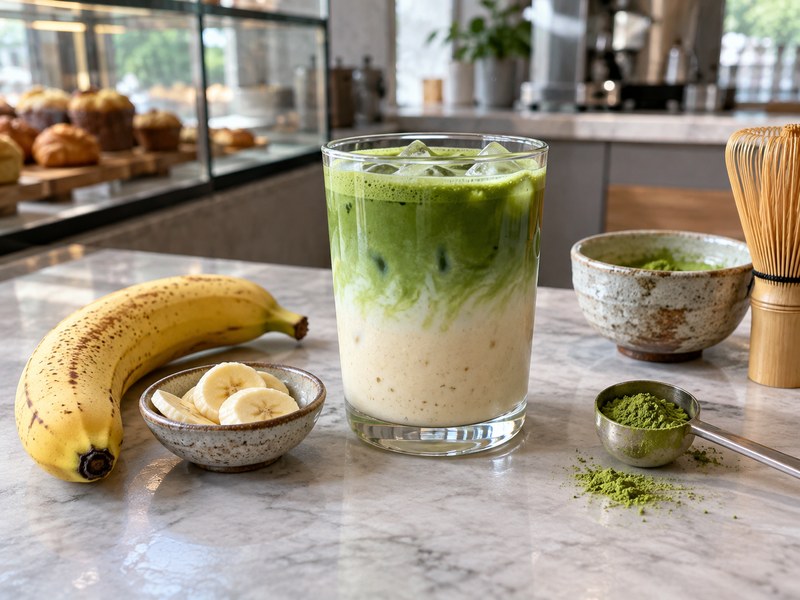
Banana matcha is a drink that pairs matcha’s grassy, savory edge with banana’s sweetness and creamy texture. For a café, the challenge is turning that appealing idea into a cup that tastes the same in every shift without brown fruit, gritty tea, or a sugary premix hiding both ingredients. Start with a measured fruit base and a separate matcha dispersion. Then test sweetness, texture, food handling, and service time in the cup customers will receive. The quantities below are pilot ranges, not a finished commercial formula.
1. What is banana matcha on a café menu?
Some recipes blend fresh banana into milk. Others use banana puree, syrup, or flavored cold foam beneath an iced matcha layer. All can reasonably carry the name, but they do different jobs. Fresh fruit brings pulp and body; syrup gives predictable sweetness but little fruit texture. A banana cream topping can make the drink look attractive while leaving the main beverage almost entirely plain matcha. Menu language should say which version customers will get. A “fresh banana matcha smoothie” promises something different from “iced matcha with banana syrup.”
What experience should the product brief describe?
Write the sensory target first. Decide whether tea or banana should lead, whether the drink should be sippable through a straw, and whether visible layers matter. Record cup volume and expected drinking time. A blend can taste balanced immediately yet become pulpy and uneven after ten minutes. A layered drink may be visually striking but give guests a sweet banana opening followed by a bitter tea finish. Test it both unstirred and stirred. For B2B buyers, the format determines whether the supplier should offer pure matcha, a matcha latte blend, or a more complete beverage solution.
| Format | Banana source | Main control point |
|---|---|---|
| Fresh smoothie | Weighed ripe fruit | Ripeness and texture |
| Iced layered latte | Puree or banana milk | Layer stability |
| Syrup latte | Banana-flavored syrup | Flavor authenticity and sugar |
| Banana cold foam | Puree or flavored cream | Separation and holding time |
2. Which banana ingredient should a business use?
Fresh bananas can make a distinctive house drink, but the fruit changes across shipments and as it ripens. A spotty banana usually brings more perceived sweetness and stronger aroma than a firm one. Commercial puree can improve consistency if its ingredient list and microbiological controls fit your operation. Powder offers storage convenience, but different products contain different amounts of actual banana and may include carriers or sweeteners. Syrup is easy to dose and easy to overuse. Compare candidates in the completed beverage at equal sweetness rather than equal spoonfuls.
How do you specify banana for purchasing?
For fresh fruit, define size or peeled weight, an acceptable ripeness band, washing and peeling practice, and how quickly cut fruit must be used. For puree, ask whether it is aseptic, frozen, or refrigerated; record the open-pack holding rule and the fruit percentage. For powder, request the complete ingredient declaration and dissolution method. If the menu calls the drink “real banana,” check the claim against the actual recipe and local labeling rules. Keep a reference taste from the approved build. The purchase choice should be driven by volume, labor, storage, and target flavor rather than a belief that one format is always superior.
3. What matcha profile suits banana?
Banana’s sweetness can soften tea bitterness, but it can also flatten delicate aroma. A powder with an assertive clean tea note often reads more clearly through fruit and milk than a very mild one. Test candidates with the exact banana ingredient, not plain water alone. Color matters in a layered drink; yet a vivid powder that tastes rough is a poor trade if guests stir before drinking. Watch for powder settling into the banana base, especially in smoothies with high pulp. A finer, well-dispersed powder may improve mouthfeel even if its dry appearance is similar.
How should the tasting panel compare lots?
Use the same recipe every time. Weigh banana, tea, milk, water, and ice, then code the powders before tasting. Score tea clarity, fruit aroma, bitterness, sweetness, color, and texture immediately and after a realistic wait. Record the matcha lot and product specification. Ask a supplier about particle size and application recommendations, but verify performance in your own equipment. A café may choose one powder for a plain bowl and another for banana drinks. Matcha Village’s bulk matcha options can be assessed against a written sensory brief and approved lot sample.
| Matcha check | Plain slurry | Finished banana drink |
|---|---|---|
| Aroma | Fresh tea or stale notes | Tea remains perceptible |
| Texture | Clumps or coarse particles | No chalky finish |
| Color | Consistent with sample | Attractive after mixing |
| Dose | Tea strength per gram | Sensory value per serving |
4. How can you build a first test recipe?
For a 350 mL iced pilot, start with 2 g matcha dispersed in 35–45 mL water, 55–75 g peeled banana or an equivalent tested puree dose, 130–160 mL unsweetened milk, and ice to the fill line. Blend the banana with milk separately if a two-layer look is desired; pour tea gently over ice. Sweetener may be unnecessary with ripe fruit, but a fixed small amount can help keep the product within a sensory band as fruit changes. Treat every figure as a starting point and adjust by weighing the finished cup, not guessing from visual volume.
Which changes should be tested separately?
Make three versions that vary only banana dose, then three that vary only matcha dose. After choosing those, compare milk and sweetener. Too much fruit can make the drink heavy and obscure tea; too much matcha can leave a dry finish that sugar will not fix cleanly. Check straw flow and whether pulp collects at the bottom. If using a layered version, show the team exactly how it should look at handoff. A photograph can guide visual presentation, while a tasting note tells staff whether the drink actually works. Record cost per cup at the same time, including fruit trimming loss.
5. How do you prevent browning and separation?
Cut banana browns after exposure to air, and blended fruit can darken during service. Use preparation timing and suitable closed containers to limit exposure. Avoid promising that a fresh-fruit base will remain pale through an entire service day without a validated process. Separation is another issue: fruit solids, tea particles, fat, and ice all behave differently as the glass sits. A drink intended for delivery needs a longer observation window than one handed to a guest at the counter. Food-safe acidulants or stabilizers may help in a manufactured product, but they also change flavor and labeling.
What should the holding trial include?
Run the clock under real conditions. Photograph and taste the drink at handoff, after ten minutes, and after the longest planned delivery interval. Note browning, pulp sediment, tea settlement, and loss of layers. For any prepared banana base, set a refrigerated holding procedure appropriate to its ingredients and local rules. The FDA Food Code is a model for US retail food practice, including controls for foods needing time and temperature management; other markets use their own requirements. A finished retail beverage needs a separate shelf-life and safety study rather than extrapolation from café testing.
| Failure | Likely cause | Test response |
|---|---|---|
| Brown banana base | Air exposure and holding | Shorter prep window, covered storage |
| Tea sediment | Weak dispersion or long wait | Mix method and handoff timing |
| Heavy pulp layer | Excess fruit or low blending | Rebalance recipe and equipment |
| Watery finish | Melted ice | Measure ice and delivery time |
6. Should the drink be blended or layered?
A blended banana matcha gives a consistent sip and can hide small ripeness differences, but it adds equipment time and cleaning. A layered drink highlights green tea against pale fruit and often photographs better. It can also separate as soon as a customer walks away. Choose the format based on your service channel. For dine-in, a layer with a clear stir instruction may be acceptable. For takeaway and delivery, a mixed drink may be more honest about the eventual experience. Neither format should rely on an unstable foam to carry all the banana flavor.
How do you compare service formats?
Prepare the same ingredient weights in both formats and measure production time, noise, wash-up, appearance at handoff, and flavor after stirring. A blender jar shared with nut-containing drinks requires careful allergen management. A layered build may need slower pouring that staff cannot sustain during a rush. For a multi-store chain, the best format is the one that passes training in ordinary equipment, not the one that wins a single studio photograph. Invite several baristas to make the formula from a written card; differences between their cups reveal where the standard needs more detail.
7. Which milk and sweetener choices keep banana clear?
Whole milk supports a dessert-like body, while unsweetened plant beverages can shift the profile. Oat drink may double down on grain sweetness; coconut drink contributes a recognizable aroma. Banana itself changes sweetness with ripeness, so build the formula around a target taste rather than a fixed syrup volume alone. Try the unsweetened base first. If the tea seems hidden, reduce sweetener before raising matcha dose. Vanilla, cinnamon, and caramel can fit as seasonal variants, but every addition makes it harder for customers to identify the core ingredients.
What must appear on the recipe card?
List the exact milk brand or approved specification, sweetener type, banana form and dose, matcha lot or approved product, and serving cup. Note the allergen information for the chosen milk, topping, and any premix. If a customer swaps milk, the flavor and layer behavior may change; define which substitutions the café supports. A controlled base recipe makes seasonal changes easier: add one spice or topping and retest, rather than rebuilding the entire drink. For packaged formats, review ingredient order and claims with the destination-market regulatory team before printing the label.
| Component | Default development choice | Reason to retest |
|---|---|---|
| Milk | Unsweetened, documented brand | Texture or allergen change |
| Banana | Weighed fruit or specified puree | Ripeness and sugar variation |
| Sweetener | Measured neutral syrup | Perceived sweetness |
| Matcha | Approved lot and dose | Tea clarity and color |
8. What food-safety controls matter at the counter?
Fresh banana, opened puree, milk, and any cream topping require ingredient-specific handling. Keep receiving, washing, refrigeration, date marking, and utensil cleaning in the operating procedure. A banana prep station next to espresso steam and uncovered tea powder invites mess and cross-contact. Do not use an attractive green color as evidence of freshness; powder can look green while a dairy component has been mishandled. Train staff to discard a batch outside its approved holding window. If a store uses frozen banana, thaw and hold it according to the supplier instructions and local food code.
What records make a pilot useful?
Track batch preparation time, temperature where required, open-pack date, and waste at close. Record guest complaints by reason: too sweet, too thick, dull green, banana absent, or tea too strong. These data tell the team whether the problem sits in fruit selection, mixing, or training. A pilot should include a busy hour because safe handling and consistency often fail when staff are rushed. Retail bottled banana matcha requires a distinct manufacturing process and validated shelf life; a café recipe alone cannot support a supermarket claim.
9. How should a buyer compare product costs?
Cost includes the edible banana yield, matcha dose, milk, syrup, ice, cup, labor, and spoilage. Fresh fruit may be inexpensive per kilogram but expensive after peeling, overripe waste, and blending time. Puree may cost more per kilogram while reducing preparation variation. Powder may be easy to ship but bring added carriers and a flavor the brand does not want. Run the same sensory and yield trial at the expected daily volume. Compare cost per acceptable cup rather than sticker price per ingredient pack.
What should the purchasing file retain?
Keep supplier specifications, lot samples, test recipes, tasting notes, allergen declarations, and a calculation showing cost at approved dose. If a puree supplier changes the fruit content or sugar level, the recipe needs a new trial. The same applies to a new matcha lot or milk substitute. For a private-label banana matcha mix, request a complete ingredient breakdown and a finished-product sample from the actual production process. Define acceptance criteria for color, aroma, mixing, and pack integrity before placing a volume order.
| Cost driver | Measure | Hidden consequence |
|---|---|---|
| Fresh fruit | Peeled yield and waste | Labor and daily variation |
| Puree | Usable weight after opening | Cold storage and pack size |
| Matcha | Grams per accepted cup | Flavor at commercial dose |
| Labor | Seconds per drink | Peak-hour throughput |
10. How can a café launch banana matcha reliably?
Choose one core format, one banana source, and one approved matcha before designing extensions. Test the recipe with staff who were not involved in development. A written card should let them make cups that look and taste alike without coaching. Photograph the target at handoff and after a short wait, then train staff on both states. Keep a substitute plan for banana ripeness or a delayed puree shipment, but do not silently swap in banana syrup while retaining a “fresh banana” claim. A short menu description should state the drink plainly.
What is the sensible next action?
Send suppliers a one-page brief with intended market, cup size, banana format, sweetness target, matcha dose range, expected volume, and required documents. Ask for samples and run a blind test in the final recipe. Matcha Village can discuss custom matcha blends against such a brief. Approve the formula only after taste, speed, storage, and unit economics all work in a live service trial. That gives a café a banana matcha customers can recognize and staff can actually make.
FAQs
Q1. Does banana matcha need added sugar? Not always. Test ripe fruit with unsweetened milk before adding a measured sweetener.
Q2. Can banana powder replace fresh banana? Yes for some formats, but compare flavor, texture, ingredient list, and cost in the finished cup.
Q3. Why does the banana layer turn brown? Cut or blended banana darkens after air exposure. Limit holding and validate any process used to slow it.
Q4. Is a layered drink better than a blended one? It depends on service time and channel. Taste both after a realistic wait, not only at assembly.
Q5. Can the café prepare banana base in advance? Only with a documented handling and holding procedure suited to its ingredients and local rules.