
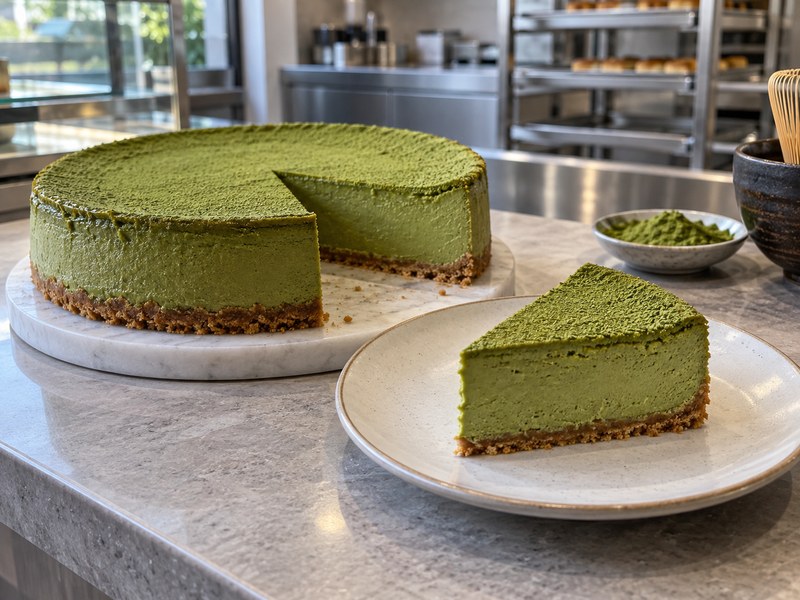
Matcha cheesecake is a cream cheese dessert flavored with powdered green tea. For a bakery, a good version needs a discernible tea flavor, an even green interior, a clean slice, and a food-safe production process. Stirring matcha into a standard vanilla filling can produce speckles, bitterness, or a dull color after baking. Start with a small, measured trial, then validate baking, cooling, storage, and portion economics in your own kitchen. The formula ranges here are development examples rather than a tested shelf-life or universal bake instruction.
1. Which style of matcha cheesecake should you make?
Baked, no-bake, and Basque-style cheesecakes deliver different matcha experiences. A classic baked cake offers a dense, smooth slice and a pale green cut surface. A chilled set cake can hold a fresher-looking color but depends on gelatin, another gelling system, or a carefully built dairy structure. A Basque-style cake brings a dark top and caramelized notes that can compete with tea. Decide on the intended selling format before choosing the powder: whole cake, chilled display slice, frozen portion, or packaged dessert each faces a different storage and handling path.
What should a product brief settle?
Name the slice you want. Record texture, tea intensity, crust or no crust, portion weight, target service temperature, and whether the top should remain green. A vivid exterior may require a topping while the baked center remains naturally muted. Avoid assuming that one base formula works across all three styles. For a chain, also specify how long the product can sit in its approved display conditions and what visual change triggers removal. Test with the actual packaging and display lighting; a beautiful bench sample can look gray under warm case lights.
| Style | Strength | Main development risk |
|---|---|---|
| Baked New York-style | Stable, dense portion | Cracks and muted color |
| Chilled set | Fresh tea appearance | Weak set or weeping |
| Basque-style | Caramelized contrast | Tea flavor lost under browning |
2. What matcha powder works in a cheesecake filling?
Cream cheese is rich and tangy, so a very mild powder may disappear. Strongly bitter tea can turn the finish dry after a full slice. Choose by tasting the finished cheesecake at service temperature. The powder should disperse smoothly, show acceptable color in the actual dairy base, and retain a recognizable tea note after processing. Supplier grade names do not provide an agreed measure for these results. Request current lot samples and test at equal percentages. A powder that excels in a plain bowl may cost more without improving a baked cake.
How can a bakery run a fair trial?
Make at least three small batches with identical cream cheese, sugar, eggs or setting system, mixing, pan, and cooling procedure. Code the powders. Evaluate the interior color, visible specks, aroma, bitterness, aftertaste, and mouthfeel after full chilling. Repeat a favored candidate at a lower and higher dose before changing the entire formula. Keep a slice from each approved trial under the intended display conditions to observe color shift. Ask the supplier for ingredient identity, origin, lot records, and relevant analytical documents. Matcha Village’s pure matcha options can be tested against that same bakery scorecard.
3. How much matcha belongs in a test batch?
A useful starting screen is roughly 1–2% matcha by total unbaked filling weight, followed by sensory adjustment. This is a trial range, not a standard that fits every powder or cheesecake style. Weigh the powder on a precise scale; teaspoons vary with packing and moisture. More tea can add color and flavor, but it also adds dry solids and may make bitterness more noticeable. Keep sugar fixed during the first dose trial. Otherwise, the team cannot tell whether guests prefer more tea or simply more sweetness.
What should the bench sheet show?
For a 1 kg development filling, test 10 g, 15 g, and 20 g matcha while adjusting another ingredient so total batch mass stays constant. Record the full recipe and yield, not only tea dose. Measure portion weight after cooling and trimming. A small cake can have a different edge-to-center ratio than a production pan, so move the selected dose into a full-size validation bake before setting the cost card. Tasting should include the crust and any topping; an isolated spoonful of filling does not represent the saleable slice.
| Trial | Matcha per 1 kg filling | Main question |
|---|---|---|
| A | 10 g | Is tea perceptible through dairy? |
| B | 15 g | Is flavor balanced in a full slice? |
| C | 20 g | Does bitterness or dryness appear? |
4. How do you disperse matcha without green specks?
Dry matcha added to a thick cream cheese mass can form small pockets that survive baking. Sift the weighed powder and make a smooth paste with a small, measured portion of the formula’s liquid ingredient. Then blend the paste into softened cream cheese before adding the rest of the mixture. This introduces tea more evenly without silently adding water. Keep all ingredient temperatures within the recipe’s tested range, since cold cream cheese can leave lumps that look like a tea problem. Scrape the bowl and check the batter against a pale spatula.
What mixing mistakes change texture?
High-speed mixing can incorporate excess air, which encourages rising and cracking in some baked styles. Under-mixing leaves cream cheese flecks and a mottled cut surface. Train operators on equipment speed, scrape points, and total mixing time. Add eggs according to the validated method, avoiding unnecessary whipping. For no-bake products, make sure the matcha paste does not introduce enough extra water to weaken the setting system. Run a cut test after the product reaches its intended serving temperature. A uniformly green batter is useful evidence, but the final slice is the actual specification.
5. How can a bakery protect color during baking?
Heat and oxygen can shift green tea color. A baked cheesecake will rarely match the bright powder in its bag, and the browned edges may look different from the center. Moderate, controlled baking and a suitable pan size help deliver a more even appearance, but safety and set must govern the process. Do not use an underbaked center merely to keep the color vivid. Covering or shielding a surface may alter browning, while an added matcha cream topping can provide a greener visual with its own storage requirements.
Which measurements belong in the bake record?
Follow the product, not a clock alone. Record pan dimensions, fill weight, oven setting, actual oven behavior, bake time, and the validated doneness criterion for your formulation. Compare the center and edge after complete cooling. Egg-containing desserts need a safe process appropriate to their ingredients and local rules; the FDA guidance on egg-containing menu items gives US foodservice context. A production kitchen should set its cooking standard through its food safety plan rather than copy a temperature from an unrelated recipe.
| Bake observation | Possible cause | Next controlled test |
|---|---|---|
| Dark top | High surface heat | Adjust oven profile or shielding |
| Pale center, dark edge | Uneven heating | Pan size and fill weight |
| Cracked surface | Excess air or rapid change | Mixing and cooling method |
| Speckled cut | Poor dispersion | Sifting and paste step |
6. What changes in a no-bake version?
A chilled matcha cheesecake depends on its setting system and cold chain. Gelatin, agar, starch, chocolate, or a commercial stabilizer all create different textures. Matcha adds fine particles and flavor but does not set the cake. Choose the gelling approach with the dietary claims and service format in mind. A vegan label, for example, needs every ingredient checked, including the crust and topping. An unbaked product with dairy still needs hygienic mixing, proper refrigeration, and a validated storage period.
How should a set be tested?
Test a full-size pan rather than only small cups. Measure set time, cutting resistance, weeping, edge collapse, and mouthfeel at the temperature customers will experience. A slice that stands after overnight chilling may slump after twenty minutes on a display plate. Repeat the trial after freezing and thawing if the distribution plan includes frozen inventory. Keep the matcha dose fixed while adjusting the setting system so the team can attribute any improvement. For a retail pack, consult a qualified food technologist on microbial and shelf-life validation before assigning a date code.
7. How should the crust and topping support tea flavor?
A plain biscuit crust gives a neutral base, while chocolate or toasted sesame can work if kept subordinate to matcha. Strong cocoa, caramel, or fruit sauce can make a weak tea filling taste absent. Compare each proposed crust with the same filling. If a topping supplies most of the green color, state it in the product specification and check that it survives display. A dusting of matcha can look appealing at assembly yet absorb moisture and darken before sale. Do a timed display trial rather than choosing from immediate photographs.
What should the finished-slice test include?
Taste the entire forkful. Include crust, filling, and topping in the same proportion guests will eat. Score sweetness, tang, tea clarity, finish, and textural contrast. Check how the topping behaves under packaging film or a clamshell lid. For a frozen portion, look for condensation after thawing. An inexpensive crust that breaks during cutting raises labor and waste costs; a glossy topping that transfers to the lid creates a poor retail impression. Final product approval belongs to the complete slice, not a bowl of filling.
| Component | Useful check | Common failure |
|---|---|---|
| Crust | Cuts cleanly with filling | Crumbles or dominates flavor |
| Filling | Tea and dairy remain balanced | Grainy or too tangy |
| Topping | Holds color during display | Damp, dark, or stuck to pack |
8. What cooling and storage controls matter?
Cheesecake combines dairy, often eggs, and a dense mass that does not cool instantly. The kitchen needs a validated cooling method and documented refrigeration, not a guess based on surface temperature. Avoid packing a warm cake tightly, which can trap condensation. Chill before portioning if the texture requires it, and keep utensils clean when moving between cakes. The FDA Food Code is a model for US retail handling; local law and the business food safety plan govern actual limits. Frozen distribution adds thaw control and packaging checks.
What evidence supports a shelf-life decision?
Record cooling curves, storage temperatures, appearance, texture, flavor, and any required microbiological results for the finished product and process. A dry matcha powder specification cannot establish the shelf life of a dairy dessert. Evaluate an unopened pack and a displayed or opened portion separately. Look for water release, crust softening, stale tea notes, and discoloration throughout the proposed period. Set a conservative date only after relevant validation. If the recipe, pan, packaging, or distribution temperature changes, revisit the study rather than carrying the old date forward automatically.
9. How do you cost and scale the recipe?
Cost the saleable slice after baking loss, trimming, cracked cakes, crust waste, topping, packaging, and labor. Matcha price per kilogram matters less than powder cost at the approved dose and its effect on sellable yield. A higher-dose powder might deliver good flavor but deepen cracks or require more sugar; those indirect costs belong in the comparison. Scale up with the same fill depth and a documented mixing path. A 10 kg mixer batch will not necessarily behave like a 1 kg bowl, especially if the matcha paste is added unevenly.
Which production checks catch scale problems?
Weigh pan fills, inspect batter for flecks, log oven position, and compare slice weights across a tray. Perform a sensory check from center and edge. If the product is outsourced, provide a sample of the approved slice plus written acceptance criteria. Ask the matcha supplier how the next lot will be compared with the current one. Store a sealed reference sample and retain the full recipe revision. This allows purchasing and production to discuss a real deviation instead of disagreeing over whether a cake “looks green enough.”
| Cost item | Unit to record | Why it moves margin |
|---|---|---|
| Matcha | Grams per batch and slice | Dose and lot price |
| Dairy and eggs | Saleable yield | Trim and process loss |
| Labor | Minutes per batch | Mixing, cutting, cleaning |
| Waste | Unsold or rejected slices | Shelf life and cracking |
10. How can a bakery approve a supplier and final slice?
Use the chosen cheesecake style and serving format to brief suppliers. Request a lot-linked matcha sample, specification, ingredient declaration, origin, and relevant test documents. Make the cake at pilot scale, then repeat at production scale under documented cooling and storage. Approve flavor, cut quality, color range, shelf-life evidence, packaging, and cost together. Matcha Village can discuss bulk tea powder for bakery use against that brief. Avoid promises about a grade until the actual powder has passed the full slice test.
What is the next practical step?
Give a baker three coded matcha samples and one fixed filling formula. Have the team bake, chill, and taste complete slices under the intended display conditions. Keep photographs and notes from each stage. The winning powder is the one that supports an appealing cheesecake with a controllable process and acceptable margin. A reliable product file then makes later lot approvals and menu descriptions much easier. It also helps the team explain why the product tastes like matcha rather than a vanilla cheesecake colored green.
FAQs
Q1. Can I add matcha to any cheesecake recipe? You can trial it, but powder changes solids and flavor. Validate texture, bake, and storage before sale.
Q2. Why is baked matcha cheesecake less green than the powder? Heat, dairy color, and exposure can mute the shade. Test the final slice under display lighting.
Q3. Does ceremonial grade guarantee a better cake? No. Compare lot-specific powders in the finished cheesecake at the intended dose.
Q4. Can a bakery freeze matcha cheesecake? Often, but test thawed texture, condensation, crust quality, and food handling for the exact product.
Q5. How long can matcha cheesecake be stored? Set a date through product-specific safety and quality validation under the intended packaging and temperature conditions.