
A matcha almond cake combines green tea powder with almond flour or ground almonds in a baked cake. For a bakery, the work lies in keeping a tender crumb, recognizable tea flavor, and reliable slice yield while nuts change moisture and browning. This guide provides a development formula and the checks needed before a wholesale or café launch. Search-intent reference: Matcha Almond Cake Recipe | Danielle Sepsy; the production guidance here is independently developed.
1. What should a matcha almond cake deliver to a bakery buyer?
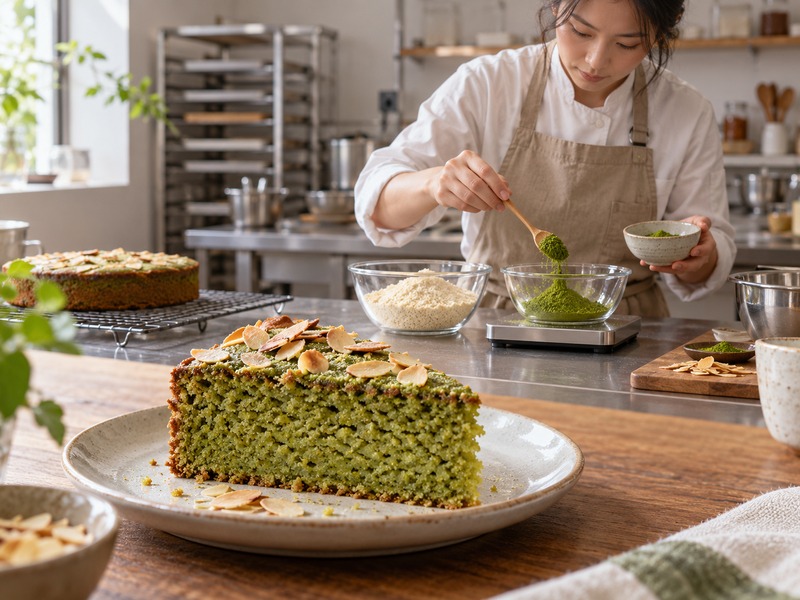
Set a finished-slice standard
A buyer needs more than a green cake with almond in the ingredient list. The finished slice should show a deliberate almond note, clean tea flavor, consistent crumb, and a shape that survives packing or plating. Decide whether the product will be a loaf, round layer, sheet, or individually wrapped portion. Each format changes bake time, cooling, and yield. A café slice can be finished on site; a wrapped retail portion must remain presentable through distribution. Write the intended serving weight and shelf-life target as development goals, then validate both under the final process.
Almond flour can make cake tender, but it can also raise fat content and reduce structural strength when used heavily. Matcha can darken at the edges during baking. Put these trade-offs in the product brief before choosing ingredients. Define acceptable color under normal shop lighting, a cut face without gummy patches, and an almond flavor that does not drown the tea. Taste the plain cake before testing icing. A sweet glaze can hide weak matcha or a dry crumb in a short tasting and make later customer complaints harder to diagnose.
2. What bench formula is suitable for matcha almond cake trials?
Begin with a measured small batch
For a trial loaf, use 120 g wheat flour, 80 g blanched almond flour, 8 g matcha, 6 g baking powder, 2 g salt, 120 g sugar, 120 g butter or a specified oil, 2 whole eggs, and 70 g milk. These are development quantities, not a finished commercial specification. Ingredient suppliers and pan sizes change the result. Weigh each component and record the exact pan fill. Compare a control made from the same lot of almond flour and matcha when testing a change. Without a control, a slight difference in oven load can be blamed on the wrong ingredient.
Make a small trial matrix around almond flour and matcha. For example, hold total flour weight steady while changing the almond share, then test tea dose within the acceptable crumb. Do not change fat, egg, sweetener, and oven setting in the same round. Measure batter weight and finished weight so moisture loss is visible. Note whether the cake slices cleanly after full cooling. A formula that tastes fine warm but collapses under a knife may fail a wholesale pack brief. Record the chosen batch by grams rather than cups for later scale-up.
| Ingredient | Trial amount | Primary function |
|---|---|---|
| Wheat flour | 120 g | Structure |
| Blanched almond flour | 80 g | Almond flavor and tenderness |
| Matcha | 8 g | Tea flavor and color |
| Sugar and fat | 120 g each | Sweetness and crumb |
| Eggs and milk | 2 eggs; 70 g milk | Binding and hydration |
3. How should almond ingredients be specified?
Compare usable flour, not a generic nut label
Blanched almond flour, natural almond meal, and coarse ground almonds behave differently. Skin particles darken the crumb and can make green tea color look muddy. A coarse grind may create a pleasant texture in a rustic loaf but leave weak slices in a thin retail portion. Ask suppliers for grind information, oil freshness controls, packaging, allergen statements, origin, and lot traceability. Smell each received lot for stale or rancid notes before it enters a full batch. Store it according to supplier directions, protected from heat and moisture.
Almond flour brings fat but little gluten structure. If you replace more wheat flour with almond flour, the cake may need a different egg or binder balance. That change requires a new trial rather than a straight percentage substitution. For a gluten-free concept, formulate separately with suitable starches and a cross-contact plan; almond flour alone does not solve texture or claim requirements. Include nut allergens in product and process review. If a bakery also handles other nuts, map those shared lines and tools before choosing a label statement. Supplier lot consistency matters because particle size affects batter flow.
4. Which matcha grade holds up in an almond cake?
Judge tea in the baked slice
Almond and butter carry flavor strongly, so a subtle matcha can disappear. A very bitter powder can turn the finish harsh once the sugar fades. Compare candidate grades at the same dose in the complete cake and bake them under identical conditions. Evaluate aroma, color at the cut face, bitterness, and visible powder specks after full cooling. Looking at loose powder beside a pan does not predict baked performance. Use a consistent slice thickness and serving temperature during tasting. If icing is planned, taste with and without it.
Ask for foodservice or baking-oriented samples, specifications, storage instructions, country of origin, and available lot-specific documents for the target market. Matcha Village can discuss ingredient grades for bakery use through its supplier site. Retain a sealed reference from the approved lot where practical. When a delivery looks duller, compare it with the reference in the cake before changing the recipe. Oven conditions, pan fill, and almond flour can also alter perceived color. Procurement should choose a grade that meets sensory and cost targets in the finished product, not the deepest green sample in the pouch.
| Check | Test method | Approval question |
|---|---|---|
| Color | Cut cooled center slice | Does the green meet the brief? |
| Flavor | Taste plain cake | Is tea clear beside almond? |
| Dispersion | Inspect cut face | Are dark powder spots absent? |
| Supply | Review lot and pack files | Can the grade be bought repeatedly? |
5. How should the batter be mixed to protect the crumb?
Keep a consistent order and endpoint
Sift or dry-blend matcha with wheat flour, raising agent, and salt so powder does not form dark pockets. Mix almond flour into the dry phase with the method selected during trials. Creaming butter and sugar can introduce air; an oil-based method gives a different crumb and should be treated as another formula. Add eggs at a controlled rate and scrape the bowl, then alternate dry mix and milk if that method gives even hydration. Do not keep mixing simply because the batter looks greener after another minute. Excess agitation can toughen the wheat portion and reduce air.
Write the mixer model, attachment, speed, batch size, and approximate endpoint into the batch sheet. At larger scale, bowl geometry changes how quickly powder disperses. Check the top, middle, and bottom of a mixed batch for uniform color before filling pans. Record batter temperature if it drifts during long production runs. A bakery with a small tabletop mixer may use a different time than a central kitchen’s planetary mixer. Set acceptance by batter appearance and finished cake, then attach the equipment settings that achieved it. Scrape and weigh residue so yield and cost stay accurate.
6. What baking controls preserve slice quality?
Measure pan fill and oven conditions
Use one pan material and size during development. Weigh batter into each pan, leaving a consistent headspace. Trial an oven setting that cooks the center without turning the surface dark brown. Record actual oven temperature, load size, rack position, bake time, and a validated doneness check under your food safety procedure. A skewer cue may help an operator but should be checked against texture after cooling. Almond-rich batters can appear moist even when properly baked, so appearance alone may mislead. Measure finished weight to track bake loss.
Rotate pans only if the oven trial shows it helps. Unplanned door openings can alter rise and create uneven tops. Let cakes cool according to a defined method before wrapping or slicing. A hot cake trapped in film can condense moisture and damage its surface. Compare loaves from different rack positions and from a full production load. If edge slices are dry while the center is gummy, review pan dimensions and heat transfer before increasing matcha or almond flour. A precise oven log lets the technical team separate process drift from ingredient drift.
| Variable | Record | Why it matters |
|---|---|---|
| Batter fill | Grams per pan | Rise and slice yield |
| Oven setting | Measured temperature and rack | Color and center bake |
| Time | Minutes and doneness check | Repeatability |
| Finished weight | Grams per loaf | Moisture loss and cost |
7. How should cakes be finished and packed?
Choose a finish that fits the selling channel
A thin almond glaze can support the concept, but it adds sweetness, moisture, labor, and another label component. A dusting of matcha may look vivid at packing yet absorb moisture or become bitter on the tongue. Trial the finish on the actual packed cake across the expected selling period. For café service, test a plated slice after a realistic display hold. For wholesale, assess cut-edge drying, frosting transfer, and crumbs in the container. Standardize slice weight and use a knife procedure that gives a clean face without crushing the tender almond crumb.
Packaging must protect the cake without trapping warm vapor. Review film, tray, or clamshell fit and test transport vibration if slices travel to stores. If a product is frozen, evaluate thawed texture, condensation, and the finish separately; a cake that tastes good fresh may become sticky after thawing. Shelf-life claims need microbiological and sensory work on the final formula and pack. Do not infer a date from a home-style recipe. Add lot and production-date fields to the pack plan so customer complaints can be traced to the correct batch.
8. What does a matcha almond cake cost per saleable slice?
Include nut price, trim, and yield
Almond flour and matcha both carry significant ingredient cost, but the finished slice count sets the margin. Use actual supplier quotes and measured batch quantities. Divide total production cost by saleable slices, not theoretical slices marked on a cutting guide. Add eggs, butter, milk, raising agent, glaze, pack, label, labor, oven time, and normal rejects. Weigh trim and broken pieces during a pilot. A richer cake may support a higher menu price, but purchasing should not assume that without testing the planned channel and portion.
Run a sensitivity check for almond flour price and slice weight using real quotes. A few extra grams per slice can change yield more than a small tea-price difference. Compare candidate matcha grades on cost per acceptable cake, not cost per kilogram alone. A lower-cost grade that requires a higher dose or tastes harsh may not save money. Pack size also affects waste: a large pouch of tea or almond flour may sit open too long at a small bakery. Keep turnover and storage losses in the unit-cost model.
| Input | Measurement | Source |
|---|---|---|
| Matcha and almond flour | Grams per batch | Approved formula |
| Saleable slices | Count and weight | Production trial |
| Trim and rejects | Grams per batch | Cutting log |
| Pack and labor | Cost per slice | Invoice and time study |
9. Which safety, allergen, and quality checks belong in the specification?
Make every material traceable
Almond is a tree nut and must be handled within the bakery’s allergen plan. Wheat, egg, milk, and any finishing component add further declaration needs in the starting formula. Check supplier specifications, receiving condition, lot codes, and storage rules for each material. Set a procedure for weighing matcha and almond flour without cross-contact to other products. At mixing, record formula version, material lots, equipment, and batter weight. At release, inspect the cut face, aroma, crumb, slice dimensions, and pack seal. Give operators a retained visual and sensory reference from an approved batch.
For retail or export, verify the final ingredient statement, nutrition panel, allergen language, and any organic or other claim under the destination market rules. Matcha from a certified supply chain does not make the entire cake organic. Shelf-life work belongs on the complete finished product, including glaze and pack. If an almond supplier changes grind or a bakery changes ovens, review whether the old specification and hold data still apply. Record deviations and who approved their disposition. That file is more useful than a general statement that the cake is “premium.”
10. What pilot establishes production readiness?
Make the cake on intended equipment
Move from the bench loaf to a pilot using the oven, mixer, pans, and packaging planned for sale. Have normal production staff follow the written batch sheet. Record mixing time, batter temperature, pan fill, bake loss, slice yield, and rejected units. Taste plain slices from several positions in the oven load. Check color and crumb after cooling, after the planned display or delivery interval, and after thawing if frozen distribution is proposed. Ask tasters about almond flavor, tea clarity, sweetness, and dryness separately. A single “good cake” vote will not tell a buyer what to change.
Lock the approved formula, material grades, lot documents, process settings, packaging, allergen statement, cost sheet, and release criteria together. If the result misses the brief, revise one defined variable and rerun the relevant trial. Ask a matcha supplier for a commercial sample lot and lead time once the bake target is set. The request should include product format, tea dose range, destination market, annual volume estimate, and document needs. A full launch follows when multiple operators can make saleable slices under a normal production load.
| Gate | Evidence | Owner |
|---|---|---|
| Crumb and flavor | Coded slice tasting | Product lead |
| Yield | Saleable slice count | Bakery lead |
| Allergens and label | Approved final pack copy | Quality lead |
A matcha almond cake needs a tea grade evaluated after baking, an almond flour with consistent grind and freshness, and a process that produces clean slices. Approve the plain cake before relying on a glaze. Use pilot yield and final-pack testing to set cost and shelf life.
FAQ
- Q1: Can almond flour replace all wheat flour?
- That requires a separate formula and binding trials. Almond flour changes structure, fat, moisture, and allergen handling.
- Q2: Why does the cake look brown at the edge?
- Heat and sugar drive surface browning. Judge the cooled center and edge against an achievable visual standard.
- Q3: Which matcha grade suits baking?
- Compare candidate grades in the finished cake for tea flavor, color, dispersion, documentation, and cost.
- Q4: Can the cake be sold as gluten-free?
- Only after a separate recipe, ingredient review, cross-contact plan, and market-specific claim verification.
- Q5: How should shelf life be set?
- Test the final formula, finish, process, pack, and storage conditions for sensory and microbiological quality.