
Matcha cannoli depend on a clean contrast between a dry pastry shell and a cool, creamy filling. A cafe can achieve that contrast with bought shells or its own fried pastry, but the filling station must be planned around service. Begin by deciding how long an assembled cannolo will wait before reaching the customer.
1. Which part of matcha cannoli should carry the tea? · 2. Should a cafe buy shells or fry them in house? · 3. How should ricotta be evaluated before adding matcha? · 4. What is a useful first filling experiment? · 5. What needs control when making the shells? · 6. How can staff fill the center without cracking the ends? · 7. When should the cannoli be assembled? · 8. Which garnishes and packages earn their place? · 9. How should buyers compare ingredient and labor costs? · 10. What should a launch specification contain?
1. Which part of matcha cannoli should carry the tea?
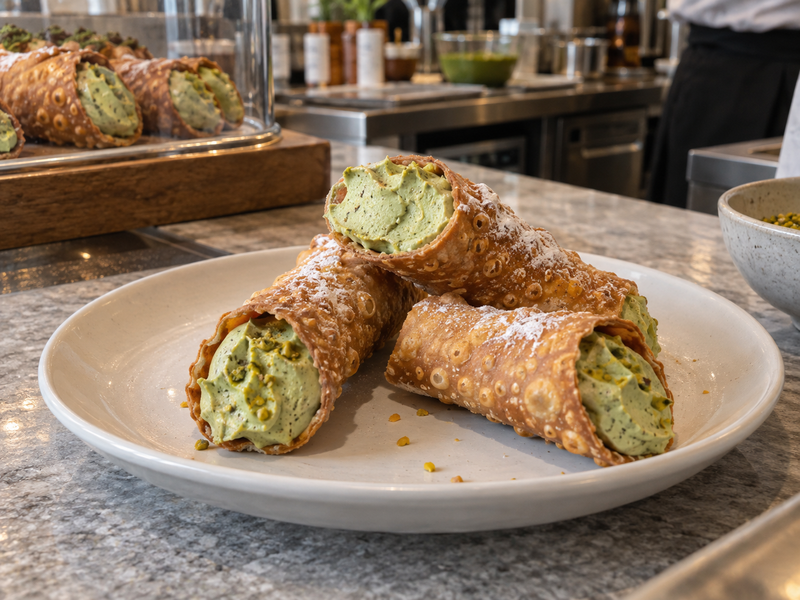
Let the filling define the first version
Putting matcha into the ricotta filling makes the tea visible at both ends and avoids developing a new fried dough at the same time. That gives a cafe a manageable first product: a familiar shell with a separately tested filling. A green shell can be studied later if it serves a clear menu purpose.
Healing The Aura’s matcha cannoli recipe uses matcha in a ricotta filling. Treat it as an example of the combination, rather than proof that its frying time or sugar level will suit your equipment and cheese.
Define how much shell and filling a customer should encounter in one bite. A very thick shell can dominate a delicate filling; a large open end may look generous while hiding an empty middle. Cut an assembled sample across its center to inspect the filling distribution.
Choose a serving format before buying trays. A plated dessert can have a side garnish, while a takeaway cannolo needs enough support to stop rolling and enough space to protect the exposed cream.
2. Should a cafe buy shells or fry them in house?
Compare the whole operation
Bought shells simplify the first filling trial. Request their dimensions, ingredient declaration, pack configuration and handling instructions. Inspect a sample case for broken ends and size variation before calculating cost from the listed piece count.
In-house shells give the bakery more control over shape and bite but add dough preparation, rolling, tube handling, frying and cleaning. The relevant comparison is cost per acceptable shell, including labor and oil management, rather than flour cost against a supplier’s selling price.
| Route | Work the cafe takes on | Evidence needed |
|---|---|---|
| Bought shell | Receiving and careful storage | Sample case yield |
| In-house shell | Dough, forming and frying | Repeatable pilot run |
| Central kitchen shell | Transfer and transport | Route damage check |
| Finished filled supply | Cold handling and service | Full product specification |
Keep the shell route fixed while choosing the filling. If the shell changes halfway through tasting, the team may attribute a different bite or sweetness to the matcha.
For a small launch, one approved shell size can be more useful than several decorative shapes. Staff can then standardize filling delivery and packaging around a single cavity.
3. How should ricotta be evaluated before adding matcha?
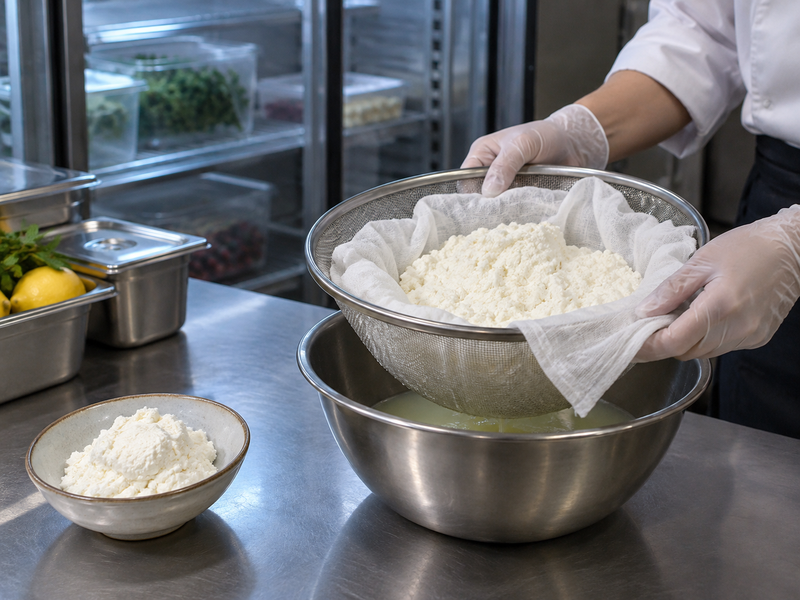
Weigh the cheese after preparation
Ricotta is not a uniform ingredient across suppliers. Compare its visible liquid, graininess, flavor and behavior under the preparation method you plan to use. If draining is part of that method, record the cheese weight before and after draining under controlled refrigerated conditions.
Cost and formulation should use the prepared cheese weight. Buying a cheaper container may not save money if more liquid is removed before the cheese reaches the mixing bowl. Keep the draining setup, container and procedure consistent during supplier comparisons.
The Ateliers & Saveurs cannoli teaching recipe provides another filling approach, combining ricotta with whipped cream. That is a separate product direction. Do not combine parts of several recipes casually and assume the mixture will have the same texture.
Spread a small amount of prepared ricotta on a plate and inspect it before adding sugar or tea. Once colored green, some differences are harder to see. Set a practical acceptance description with the chef, including any graininess that belongs in your chosen style. A perfectly smooth filling is a design decision, not the only acceptable cannoli texture.
4. What is a useful first filling experiment?
Make a small, clearly identified pilot
For an unvalidated starting trial, combine 300 grams of prepared ricotta with 45 grams of fine sugar and 3 grams of unsweetened matcha. This is a proposed development mixture, not a tested production recipe. Keep a small portion of plain sweetened ricotta aside as a control, and assess the tea version inside the selected shell.
Sift the tea before mixing and disperse it through part of the sugar or cheese. Scrape the bowl carefully. Avoid adding water merely to dissolve the powder; matcha disperses, and extra water changes the filling you are trying to evaluate.
| Pilot observation | How to inspect it | Possible next trial |
|---|---|---|
| Tea intensity | Taste with the shell | Adjust tea alone |
| Sweetness | Compare with plain control | Adjust sugar alone |
| Visible specks | Thin smear on plate | Improve dispersion |
| Piping behavior | Fill the chosen shell | Review cheese preparation |
If a flavor extract or citrus zest is desired, test it after choosing the basic tea level. Otherwise the first comparison becomes a contest between several flavor combinations instead of a useful measurement of matcha’s contribution.
5. What needs control when making the shells?
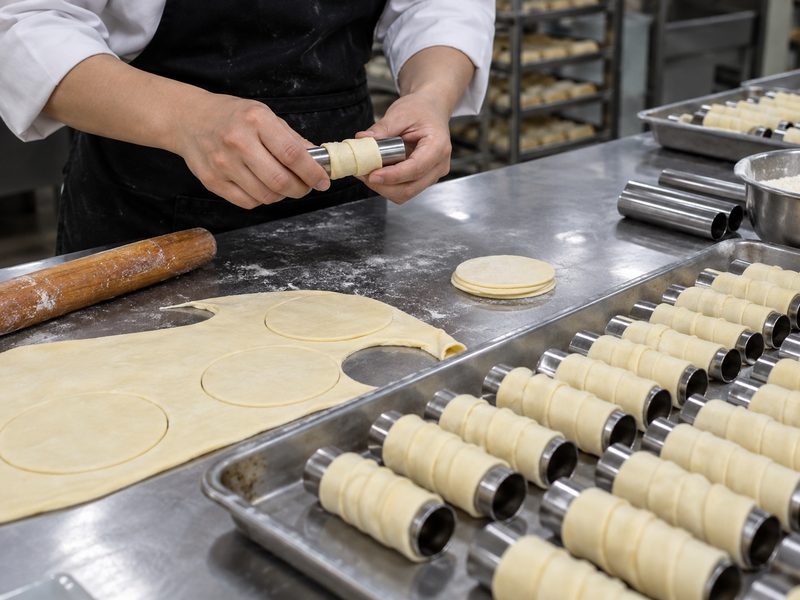
Keep forming and frying observations together
Use a complete shell recipe already established for your kitchen, with suitable cannoli tubes and the fryer manufacturer’s instructions. Record dough thickness, cutout size and seam overlap. A shell that repeatedly opens may need better forming control before any change to the dough.
Follow the selected recipe’s resting and rolling method. Inspect the sheet for uneven thickness, especially where dough has been rerolled. Make a few marked test shells from the edge and center of the sheet to see whether the rolling setup is consistent.
During frying, follow your approved cooking procedure and monitor the actual operation. Do not treat a short time printed on a home recipe as validation for every shell diameter, fryer load or starting temperature. Record load size and the finished shell’s condition.
Let the shell and equipment reach the safe handling stage defined by your procedure before removing tubes. Examine breakage during removal separately from frying failures. An operator who has to twist or squeeze a delicate shell may need a different handling method or tool arrangement.
Keep cooked shells away from wet filling preparation. A dry-shell station and a refrigerated filling station have different needs even when the final assembly happens between them.
6. How can staff fill the center without cracking the ends?
Check the hidden middle
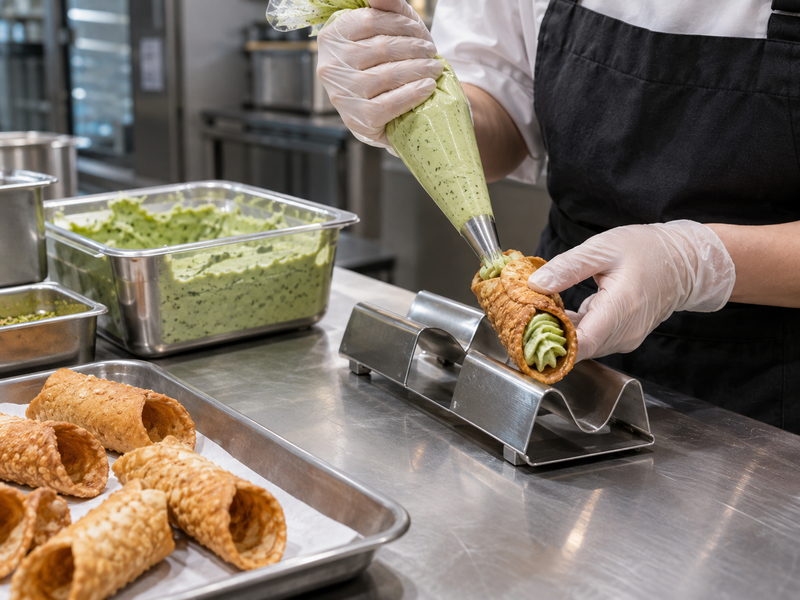
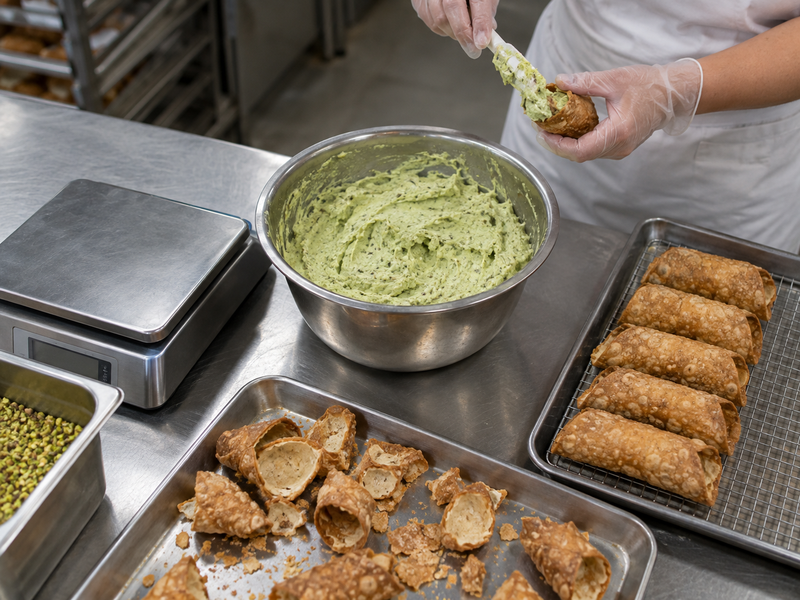
Fit a piping tip that enters the shell without forcing its rim. Fill from one end toward the center, then complete the other side as needed. The intended result is a continuous filling, not two attractive caps surrounding an empty cavity.
Weigh setup pieces before and after filling. Establish the working amount from the selected shell rather than borrowing a universal grams-per-cannolo rule. Cut several pilot samples through the middle and photograph the cross-section for staff training.
| Filling problem | Check first | Training aid |
|---|---|---|
| Empty center | Tip reach and filling path | Cut cross-section |
| Broken opening | Tip size and handling force | Intact shell sample |
| Uneven ends | Filling weight and sequence | Side-by-side examples |
| Loose filling | Cheese preparation and temperature | Approved filled sample |
Hold the shell where it can tolerate support without squeezing it. A cradle or suitable tray can help if hand pressure causes repeated failures.
Small piping bags may be easier to handle than overfilled ones, but test that choice with normal staff and the required cold-handling procedure. Count refilling time and product left in bags when estimating assembly cost.
7. When should the cannoli be assembled?
Test the real service delay
A made-to-order format lets the cafe keep shells and filling separate until a ticket arrives. It also places more work at the point of service. Time a normal order that includes drinks or other desserts, rather than testing filling speed in isolation.
For development, compare a cannolo served promptly with one assessed after the actual delay you expect between assembly and consumption. That comparison is a texture exercise conducted within approved food-safety controls. It does not establish how long a filled product may safely remain on display.
Listen and feel when biting the shell, then examine any softened contact area inside. Ask whether the customer can still hold the product comfortably. A shell might retain a crisp end while softening nearer the center, where it touches more filling.
If the planned delay is long, reconsider the service format before adding a protective coating or changing the filling. Those changes create new recipes and new costing work. A separate filling cup may suit a catering kit, while it would change the eating experience of a cafe dessert sold ready to eat.
8. Which garnishes and packages earn their place?
Keep the ends readable and protected
A small nut or chocolate garnish can identify a flavor, but it also changes allergen information, cost and handling. Compare an undecorated green end with the proposed garnish. If matcha disappears visually and in flavor, the decoration may be doing too much.
Test the actual box with a filled sample. The ends should not touch the walls, and the shell should not roll into another dessert. Close the lid before judging the fit; an open tray can hide a clearance problem.
| Detail | What to test | Commercial consequence |
|---|---|---|
| End garnish | Adhesion during transport | Loose material in the box |
| Powder dusting | Transfer to cream and packaging | Inconsistent appearance |
| Insert | Rolling and contact points | Broken or smeared product |
| Lid height | Clearance above the cannolo | Protected finish |
Keep a garnish-free reference sample during each comparison so the team can still assess the shell and tea filling.
Cold handling, shelf life and delivery conditions must be established for the finished product. A box that prevents breakage does not solve those requirements, and a successful short journey does not validate every delivery route.
9. How should buyers compare ingredient and labor costs?
Include prepared-cheese yield
Track the weight of usable ricotta after your preparation procedure, the number of intact shells received or made, and the amount of filling left in equipment. These losses can change unit cost more than a small difference in matcha price.
As a hypothetical calculation, a cheese purchase costing 10 currency units that yields 800 grams after preparation costs 0.0125 per usable gram. If another product at the same price yields 900 grams, its usable-gram cost is lower. The figures illustrate a method; the actual choice must also meet texture and flavor requirements.
Time assembly including garnish and boxing. A product that looks inexpensive in an ingredient spreadsheet can require several manual touches at a busy counter. Record where staff pause or repeat work.
For matcha procurement, use the site’s culinary-grade matcha discussion alongside your filling notes. Ask Matcha Village to compare Chinese matcha samples in the selected ricotta base. Include prepared-cheese identity and the trial dose so the supplier can relate a powder’s flavor to the product rather than to a plain cup of tea.
10. What should a launch specification contain?
Give the service team a complete sample
The approved specification should show the shell, both filled ends, a center cross-section and the closed package. Name the cheese product, preparation procedure, matcha lot and garnish. Keep the photograph current when any of those details changes.
Separate the recipe sheet from the service instruction. The person taking an order needs to know the available format and handling requirements, while the person preparing ricotta needs batch measurements and preparation controls.
| Launch document | Used by | Question it answers |
|---|---|---|
| Filling batch sheet | Preparation team | What gets weighed? |
| Assembly photograph | Counter team | What should each piece look like? |
| Pack specification | Purchasing | Which insert and box fit? |
| Handling plan | Quality and service leads | What conditions are permitted? |
Review the full ingredient declaration, including shell, filling and decoration. A dairy-free matcha powder does not make ricotta cannoli dairy-free. Wine or other recipe ingredients also need to be considered when making product claims.
Schedule a small service rehearsal using a normal order sequence, and record the time from ticket to closed box before accepting a larger catering order.
FAQ
Q1: Can a cafe use bought cannoli shells?
Yes. Evaluate their dimensions, ingredients, breakage and performance with the chosen filling before approving the supplier.
Q2: Why should ricotta be weighed after draining?
The prepared amount is what enters the recipe. It also reveals usable yield for purchasing and unit costing.
Q3: Can extra water help mix the matcha?
It changes filling composition. Start with controlled dispersion through existing ingredients and treat any added liquid as a new trial.
Q4: How can staff detect an empty middle?
Cut pilot samples across the center and compare them with the filling weight. Attractive ends alone do not prove an evenly filled shell.
Q5: Can filled cannoli use the shell supplier’s shelf life?
No. The assembled dairy-filled product needs its own handling and shelf-life assessment.