
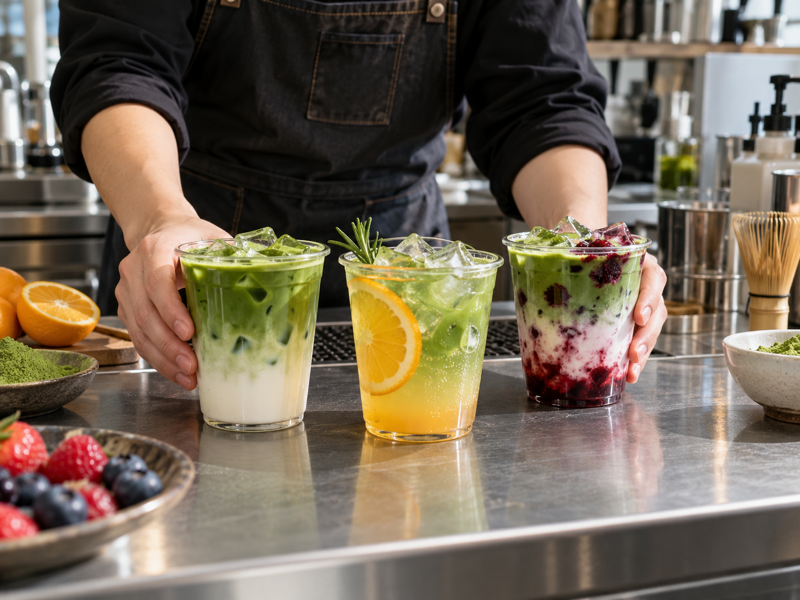
Matcha cafe drink ideas have to survive service, not just look good in a photograph. A new matcha drink is easy to sketch and harder to keep on a café menu. It has to taste good, share enough stock with other drinks, survive a busy shift, and justify its price. A bright layered cup may work for a photograph but separate before a customer reaches the table. Use drink ideas as test candidates rather than ready-made recipes. The practical method here starts with a dependable matcha base, then scores each variation for flavor, time, cost, and repeat orders.
Contents
- 1. What should a new drink idea accomplish?
- 2. Which matcha base should the cafe use?
- 3. Which flavor pairings deserve a pilot?
- 4. How should iced and hot ideas differ?
- 5. How can a cafe score concepts fairly?
- 6. What can be done with a plain latte?
- 7. Which seasonal ideas are worth the inventory?
- 8. How should modifiers be limited?
- 9. What should the menu say about each drink?
- 10. When should an idea become a permanent item?
1. What should a new drink idea accomplish?
Give each candidate one clear job. It might make a plain matcha latte easier for first-time customers, create a seasonal reason to visit, use an existing fruit preparation, or offer an unsweetened choice. A drink with no defined customer or menu role often becomes another line on a board that staff must memorize. Start with the person and occasion, then choose the flavor.
Write a one-sentence brief before mixing. “An iced afternoon drink with a clear matcha note and moderate sweetness, made in under the café's target ticket time” is testable. “Something viral” is not. The brief should include cup size, target price, ingredient restrictions, and whether the drink needs to travel. A concept that only looks good in a glass may fail in a lidded takeaway cup.
| Menu job | Candidate direction | Test |
|---|---|---|
| Core | Plain hot or iced latte | Repeat orders |
| Entry point | Lightly flavored latte | Matcha still recognizable |
| Seasonal | Fruit or spice variation | Shared stock and waste |
| Tea-forward | Straight or lightly sweetened | Sensory acceptance |
| Event | Fast-build signature | Peak service time |
2. Which matcha base should the cafe use?
A reliable base lets the team judge flavors fairly. Weigh the powder, water, milk, and sweetener in a plain drink first. If the base clumps or disappears under milk, fruit syrup will not solve the underlying problem. Compare candidate powders in the finished cup and at normal serving temperature. Record the dose that gives a recognizable tea note without excessive bitterness.
Use the same base across concept trials where possible, then change only one variable at a time. If one idea uses a sweetened premix and another uses pure matcha, they are not directly comparable on sweetness or cost. A base can be a fresh single-cup dispersion or a validated prepared concentrate. The latter needs a documented hold time and food safety check. The choice depends on capacity and service style, not on which method looks more traditional.
3. Which flavor pairings deserve a pilot?
Begin with pairings that create a clear sensory reason to exist: vanilla can soften edges, strawberry can add fruit acidity and color, citrus can make a cold drink feel lighter, and a roasted note can deepen the tea. Those are hypotheses, not guarantees. The exact fruit preparation, milk, and matcha dose decide whether the cup works. Taste each idea without a dramatic garnish first.
Choose ingredients the café already handles safely when possible. A fresh berry puree may taste better than syrup in one drink but raise prep, storage, and waste. Citrus can interact with milk and needs a stability test. A roasted powder blend may require a separate supplier specification. Limit the first pilot to a few distinct concepts. If every idea shares the same sweetness and milk base, customers may see five names but only one drink.
| Pairing | Sensory question | Operational check |
|---|---|---|
| Vanilla | Does tea remain visible? | Syrup dose |
| Strawberry | Is fruit balanced? | Prep and settling |
| Citrus | Is the finish clean? | Milk stability |
| Hojicha note | Is roast too strong? | Separate ingredient stock |
| Unsweetened | Is tea pleasant alone? | Powder quality |
4. How should iced and hot ideas differ?
Hot drinks release aroma quickly and allow different foam textures. Iced drinks bring dilution, visible layers, and a longer period in a clear cup. Test the same concept separately for each service format. A syrup that dissolves in hot milk may sit at the bottom of an iced cup. A hot recipe copied into a tall glass may taste thin after ice melts. Set ice weight and finished drink volume before adjusting matcha dose.
Decide whether a layered appearance is worth the customer having to stir. For a takeaway drink, a uniform mix may give a better first sip. Taste at pour, after a short wait, and after the expected travel period. Photograph the actual cup at each stage. If a layered drink turns muddy within minutes, do not market a studio image as its normal appearance. Describe the experience the customer will actually get.
5. How can a cafe score concepts fairly?
Use a simple scorecard with both sensory and operational measures. Have a small panel taste coded cups for tea presence, flavor balance, aftertaste, and likelihood of reorder. Then have regular staff make the shortlisted drinks during a mock rush. Time preparation, record errors and cleaning, and calculate ingredient cost. A favorite tasting cup can be a poor menu item if it blocks the bar.
Set minimum thresholds before the test. A new drink might need to use no more than two new ingredients, stay within a ticket-time range, and earn a repeat-interest score. The exact thresholds belong to the business; they should not be copied from another café. Record comments in plain language. “Too sweet after ice melts” points to a recipe change. “Interesting” tells you little about whether someone would buy it again.
| Criterion | Evidence | Action |
|---|---|---|
| Taste | Blind panel and customer trial | Revise or reject |
| Speed | Timed mock rush | Simplify steps |
| Cost | Weighed recipe and invoice | Price or portion |
| Stock | New SKU and shelf life | Limit or share |
| Repeat | Paid reorder or stated reason | Keep or revise |
6. What can be done with a plain latte?
The plain latte is a useful reference and often the most demanding recipe. Customers can taste the powder, milk, and any preparation fault directly. Offer a hot and iced version only after both pass their own tests. Consider a lighter and stronger option only if staff can dose each precisely and the menu explains the difference. Do not create a vague “premium” upgrade with no sensory distinction.
A plain latte also anchors flavored ideas. If a strawberry drink needs so much syrup that matcha disappears, the base may be too weak or the concept may be a fruit milk with a little green color. That may still have an audience, but the menu description should be honest. Keep the plain recipe card visible to staff and review it when any supplier or milk SKU changes. Consistency here protects every variation built on top.
7. Which seasonal ideas are worth the inventory?
A seasonal drink should earn its shelf space. Use produce with predictable quality and a preparation method staff can repeat. Model how much fruit or syrup the café will buy, how long it lasts, and what happens to unsold stock. If the ingredient appears in one low-volume drink, its waste can erase a good per-cup margin. Test a limited run before printing permanent menus.
Seasonality can also come from temperature or service format rather than a new flavor. A colder, more concentrated matcha drink may suit a summer menu without adding a new syrup. A warm spiced variation might use a spice already in desserts. Keep allergen and ingredient information current. A seasonal name is not a reason to skip recipe weights or stability tests.
| Seasonal choice | Benefit | Risk to test |
|---|---|---|
| Fresh fruit | Clear seasonal taste | Prep and waste |
| Shared syrup | Low extra stock | Repetitive menu |
| Cold tea-forward cup | Few new ingredients | Customer understanding |
| Warm spiced latte | Seasonal aroma | Spice settling |
| Dessert pairing | Larger basket | Production capacity |
8. How should modifiers be limited?
Every milk, syrup, sweetness level, and topping creates a new combination. Customers value choice, but an unlimited matrix slows ordering and makes quality harder to control. Offer modifiers the bar can explain and prepare consistently. Price them clearly. If a plant milk changes flavor or foam, test it as a real recipe rather than a casual substitution.
Watch ordering patterns during the pilot. If most customers request “less sweet,” the default may be wrong. If a topping is rarely chosen but often wasted, remove it. A menu can show a clear standard cup and a few useful changes. Staff should know which combinations do not work, such as an acidic fruit preparation in a milk that separates. Put those limits into point-of-sale options so the counter does not improvise under pressure.
9. What should the menu say about each drink?
Use names that distinguish the cup and a short description that tells customers what they will taste. State if the drink is sweetened, contains coffee, uses dairy by default, or includes a fruit puree. A poetic name can stay if the description does the work. Show sizes and prices. Avoid health claims drawn from the presence of matcha alone.
Test descriptions with unfamiliar customers. Ask what they expect and compare that expectation with the actual cup. A mismatch produces returns even when the recipe is well made. Photograph drinks in the cups and conditions used at service. If an iced drink must be stirred, tell customers. Clear menu language shortens questions at the register and gives staff a consistent answer.
| Menu line | What it should reveal | Example check |
|---|---|---|
| Name | Distinct flavor or format | Can staff say it? |
| Description | Matcha, milk, flavor | Is sweetness clear? |
| Size | Finished cup | Does photo match? |
| Modifier | Allowed swap | Has it been tested? |
| Price | Full cost to customer | Is upcharge visible? |
10. When should an idea become a permanent item?
A drink earns a place when paid customers reorder it, staff make it within service targets, the recipe holds up after a normal wait, and the ingredient cost fits the menu price. Run a limited launch with a start and end date. Capture sales by daypart, remakes, waste, and specific customer comments. Compare the new item with the menu item it may displace.
If a candidate sells because it is new but customers do not return, keep it seasonal or retire it. If it attracts repeat orders yet strains the bar, simplify assembly before permanent launch. If it shares stock with a dessert or another drink, account for that benefit. A matcha cafe menu should get sharper through measured decisions, not longer because every brainstorm reached the board.
FAQ
Q1: How many new drinks should a cafe test at once?
A few distinct candidates make feedback easier to interpret and stock easier to manage.
Q2: Should every matcha drink be sweet?
No. Offer a tea-forward choice if the target customers want it and the powder performs well.
Q3: Can a layered iced drink be prepared ahead?
Test appearance and flavor after the expected hold. Layers may mix or settle before handoff.
Q4: What is a useful launch metric besides sales?
Paid reorders, remakes, preparation time, and ingredient waste show whether a drink belongs on the menu.
Q5: Is a novel topping enough to justify a drink?
Only if the full cup tastes good and the topping's stock, cost, and service steps make sense.
Related reading: strawberry matcha latte and 11 Revitalizing Matcha Drink Recipes.