
Matcha oatmeal sounds like a small menu change: add green tea powder to porridge. The first trial often reveals more questions. Will the tea survive milk and toppings? Will the green color stay attractive in a hot pan? Can staff make five bowls in a breakfast rush without clumps or waste? A café needs a repeatable bowl rather than a pretty one-off photograph. These ten questions cover the ingredient choices, cooking sequence, and service details that determine whether matcha oatmeal earns a place on the menu.
1. What kind of oatmeal are you selling?
Define the breakfast occasion
A hot made-to-order bowl, chilled overnight oats, and a packaged ready-to-eat cup are different products. Hot porridge needs a short, reliable cook and an appealing serving temperature. Overnight oats depend on refrigeration and a texture guests enjoy cold. A packaged cup needs a validated formula, process, label, and shelf-life plan. Decide the format before testing tea or toppings. Otherwise, a recipe that succeeds in one format may be copied into another without the necessary checks.
The ranked creamy matcha oatmeal recipe uses oats, oat milk, matcha, maple syrup, and vanilla for a home breakfast. That combination can inspire a café tasting, but service needs fixed weights, timing, and a food safety procedure. Set a target bowl size and menu price. Specify whether the item should be lightly sweet, vegan, dairy-based, or customizable. A defined promise gives the team a fair way to judge trials.
| Format | Guest expectation | Development focus |
|---|---|---|
| Hot bowl | Comfort and warmth | Cook time and tea flavor |
| Overnight oats | Cold convenience | Texture and refrigeration |
| Takeaway cup | Easy transport | Lid, leakage, and label |
| Retail pack | Longer distribution | Validated process and shelf life |
2. Which oats give the texture you want?
Compare quick, rolled, and steel-cut oats
Quick oats soften rapidly and can produce a uniform, soft bowl. Rolled oats provide more visible texture with a manageable preparation time. Steel-cut oats offer chew but take longer and may suit advance batch cooking better than made-to-order service. Test them using the same final portion size, not the same dry volume. Oats absorb liquid differently. Record the water or milk amount needed to reach the target texture after the bowl has stood for the normal handoff time.
Make a small panel with the same matcha and sweetness in each oat base. A creamy quick-oat bowl may hide the tea; a chewy base may make the tea seem sharper. Check the bottom of the pot for scorching and the top for a dry skin. If you batch cook, evaluate the first and last serving from the batch. A bowl that tastes good after two minutes but becomes gluey after ten may not fit the breakfast rush.
3. How much matcha should go in each bowl?
Dose against the finished food
Start with a few measured tea levels while holding oats, liquid, and sweetener fixed. Taste the finished bowl rather than a spoonful of green powder. Oats and milk can soften tea aroma, while banana or syrup can cover it entirely. Choose a dose that gives a recognizable matcha flavor without a dry or bitter finish. The bowl should taste balanced even when the guest takes a bite without toppings. Record tea grams per serving and the cost of those grams.
Do not assume the most expensive powder gives the best oatmeal. A delicate tea that shines in a plain bowl may disappear under warm oats. An appropriate culinary-grade powder can perform well if it has clean flavor and consistent color at the chosen dose. Ask for current-lot samples, then compare blind. If the recipe needs so much powder that it tastes gritty or becomes costly, reconsider the oat and topping choices before simply adding more tea.
| Trial | Matcha dose | Question |
|---|---|---|
| Control | None | What does the oat base taste like? |
| Low | Small measured amount | Is tea identifiable? |
| Medium | Moderate amount | Is flavor balanced? |
| High | Upper trial | Does bitterness or cost rise too far? |
4. When should the matcha be added?
Keep powder out of dry clumps
Whisk matcha with a small amount of cool or warm liquid to form a smooth slurry. Add it to cooked or nearly cooked oats, then mix thoroughly. This offers control over lumps and lets the kitchen compare the tea flavor before and after heating. Another workable method is to blend powder into the cooking liquid before the oats go in, but it should be tested for color and flavor through the full cook. Avoid sprinkling dry powder into a thick finished pot and hoping it will disperse on its own.
Run both sequences with the same ingredients and cooking time. Note whether one leaves green dots or a powdery taste. Check the pot edges, where dry ingredients often collect. A few seconds saved during production are worthwhile only if the texture remains consistent. If the kitchen pre-mixes a matcha liquid for service, define its storage and discard rules. A pre-mix should not sit at room temperature simply because it is mostly water and tea.
5. What liquid works with the oats and tea?
Taste the base without toppings
Water gives a clean reference for the matcha and oats. Dairy milk adds body and its own sweetness. Oat milk reinforces cereal flavor, while other plant milks can introduce nuts, soy, or coconut notes. Use the brand and type that will be served; a different milk can change thickness and allergen information. Some sweetened milks add enough sugar that a recipe built with an unsweetened version becomes cloying when staff substitute a different carton.
Measure the final liquid-to-oat ratio by weight, and note how much evaporates during the normal cooking process. A bowl that leaves the pan loose may thicken while waiting at pickup. Taste after five minutes, when many guests will begin eating. Review the ingredient and allergen statements of all milks and toppings. Calling a bowl “plant-based” requires checking more than the cooking liquid if honey, dairy yogurt, or milk chocolate appears on top.
| Liquid | Likely effect | Check |
|---|---|---|
| Water | Clearer tea profile | Body and creaminess |
| Dairy milk | Creamy, familiar | Milk allergen |
| Oat milk | Cereal-forward | Sweetened vs unsweetened |
| Nut milk | Distinct nut flavor | Allergen and cross-contact |
6. Which toppings help matcha rather than bury it?
Build one restrained standard bowl
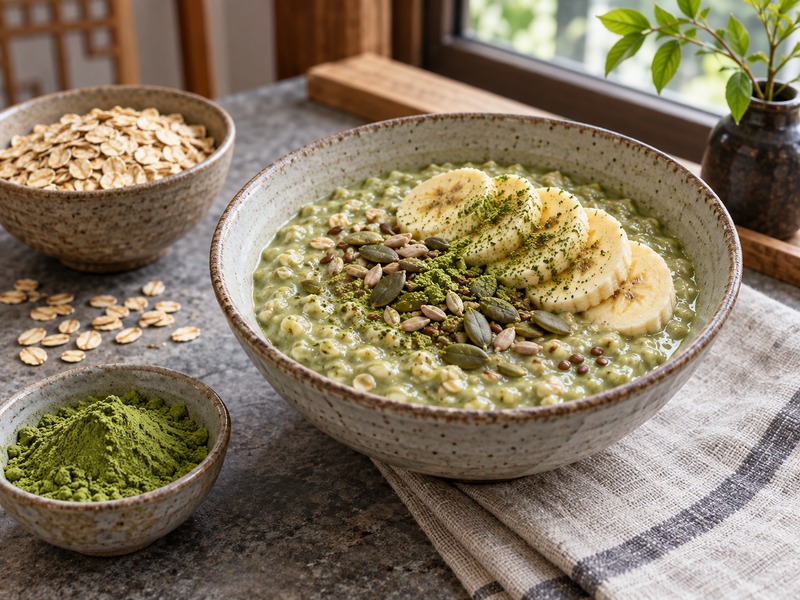
Banana, berries, seeds, toasted coconut, and nut butter can all work. Too many toppings create a breakfast sundae in which the matcha is merely a green background. Build a standard bowl with one fruit, one texture, and a measured sweet finish if needed. Taste a spoonful containing each topping and the oats together. Acidic fruit may make the tea seem sharper; a heavy nut butter may dominate. A light dusting of matcha can signal the flavor visually, but dry powder should not make the first bite harsh.
For cafés, toppings also affect speed, waste, and allergen handling. Pre-portioned seeds may make service easier, while cut fruit has its own freshness and storage needs. Keep optional toppings separate on the menu when they change allergens or sugar substantially. Photograph the approved bowl from the guest’s angle, then see whether staff can reproduce it. A menu photo is useful only when it describes the portion customers actually receive.
7. Is the bowl accurately described nutritionally?
Calculate from the full recipe
Oats, matcha, milk, syrup, fruit, and seeds all contribute to the finished nutrition profile. A generic claim that matcha oatmeal is “healthy” says little about a specific bowl. If a packaged product carries a nutrition panel, calculate or test the final formula according to the applicable rules. The USDA FoodData Central is a useful source for ingredient composition, while supplier labels should be used for branded ingredients. Document the exact oat and milk products used.
Do not borrow calorie or fiber numbers from a home recipe with different portions. Sweetener and topping choices can change sugar and energy significantly. If customers want less sweet, offer a controlled lower-syrup option instead of making vague wellness claims. Keep caffeine in mind as well: the matcha dose contributes caffeine, though the amount can vary by product. A breakfast bowl marketed to children or caffeine-sensitive customers should be described with care rather than treated as ordinary plain oats.
8. How should hot and overnight versions be stored?
Separate service recipes from shelf-life claims
A hot bowl served immediately and a chilled overnight cup have different handling needs. For the cold version, prepare with clean utensils, cover it, chill promptly, and keep it at the required refrigeration temperature. The FDA recommends refrigerating perishables promptly and following the two-hour rule for foods requiring refrigeration. That general guidance does not establish a specific shelf life for a café’s recipe. A packaged retail product requires its own validated plan.
If hot oats are batch-cooked, follow the operation’s approved hot holding, cooling, and reheating procedures. Do not cool a deep pot slowly and assume the green tea makes it safer. Date and label prepared components, and avoid mixing fresh portions into an older batch. Taste tests reveal quality, not microbiological safety. Ask a qualified food safety professional to review procedures when moving from a simple made-to-order bowl to bulk preparation or distribution.
| Product | Operational question | Record |
|---|---|---|
| Hot, made to order | Can staff meet serving time? | Cook and handoff times |
| Hot held | Does texture survive? | Holding procedure and quality |
| Overnight cup | Is refrigeration controlled? | Time and temperature log |
| Retail item | Is shelf life validated? | Product-specific evidence |
9. How should a buyer select the matcha?
Trial the tea in the real oatmeal
Request samples with lot and origin information, ingredient specifications, pack size, and price. Make the same oatmeal with each powder at an equal tea weight, then repeat if one needs a different dose to reach the same flavor. Record color immediately and after the normal service delay. A powder may look bright in water yet appear dull in oat milk. Aroma matters too; the bowl should smell like tea before toppings take over.
The Matcha Village site is one place to request a supplier sample, but the choice should follow the kitchen trial. Consider cost per finished bowl, not price per kilogram alone. Powder that needs more grams to be noticeable may cost more in practice. A stable supply and clear documentation matter if the menu will remain year-round. Keep a reference sample or tasting record so later deliveries can be checked against the approved product.
10. What should the service card contain?
Make the bowl repeatable on a busy morning
Write the oat type and dry weight, liquid type and weight, matcha grams, mixing sequence, cooking time, target texture, bowl size, topping weights, storage instructions, and allergen notes. Add a photo of the approved portion. Train staff with measured scoops and scales, then audit a few bowls during actual service. A recipe that only one developer can make is not ready for a multi-person breakfast line.
Test the bowl after normal pickup delay. If it becomes too thick, adjust the liquid or holding plan and retest. If the tea vanishes under toppings, reduce the topping load or revisit the powder rather than adding green color. Review the recipe whenever an oat, milk, or matcha supplier changes. The final standard should deliver a pleasant breakfast, clear tea flavor, and predictable cost with ordinary café equipment.
| Recipe card item | Specific measure | Why it matters |
|---|---|---|
| Oats and liquid | Grams | Controls texture |
| Matcha | Grams and lot | Controls flavor and cost |
| Cook | Tool and time | Controls throughput |
| Toppings | Weights and placement | Controls appearance and allergens |
FAQ
Can I put matcha directly into oatmeal?
Yes, but dry powder can clump in thick oats. A small liquid slurry mixed into the pot usually gives a more even result.
Which oats work best with matcha?
Rolled oats balance texture and service time for many cafés, while quick oats are softer and steel-cut oats take longer. Taste your finished recipe before deciding.
Can matcha oatmeal be made the night before?
A chilled overnight version is possible, but it needs its own texture and refrigeration tests. Do not assume the hot recipe or its shelf life transfers unchanged.
Does matcha oatmeal contain caffeine?
Matcha contributes caffeine. The amount depends on the powder and grams used, so a precise number needs product-specific information.
How do I keep the bowl from tasting too bitter?
Measure the tea dose, compare powder samples, and taste without toppings. A balanced milk and modest sweetener may help, but piling on sugar can hide the problem rather than solve it.