
A good test tray of matcha bread pudding can turn patchy when the bakery changes bread, the café fills a deeper pan or a second cook handles the custard. Buyers need a way to judge the finished dessert and the work required to repeat it. This guide sets out a practical trial for foodservice and packaged dessert teams. Matcha Village can provide matcha candidates for application testing; the buyer must approve the recipe, safety controls and purchase terms for its own operation.
Table of contents
- What finished bread pudding are you trying to sell?
- Which bread should go into the first trial?
- How should you prepare the bread for soaking?
- What custard ratio should the team test?
- How should matcha be dispersed through the custard?
- How can you compare matcha samples fairly?
- What changes when a test tray becomes a production batch?
- How do you cost a saleable portion?
- What should holding and display trials check?
- What belongs in the final buying brief?
1. What finished bread pudding are you trying to sell?
Set a product target before changing ingredients
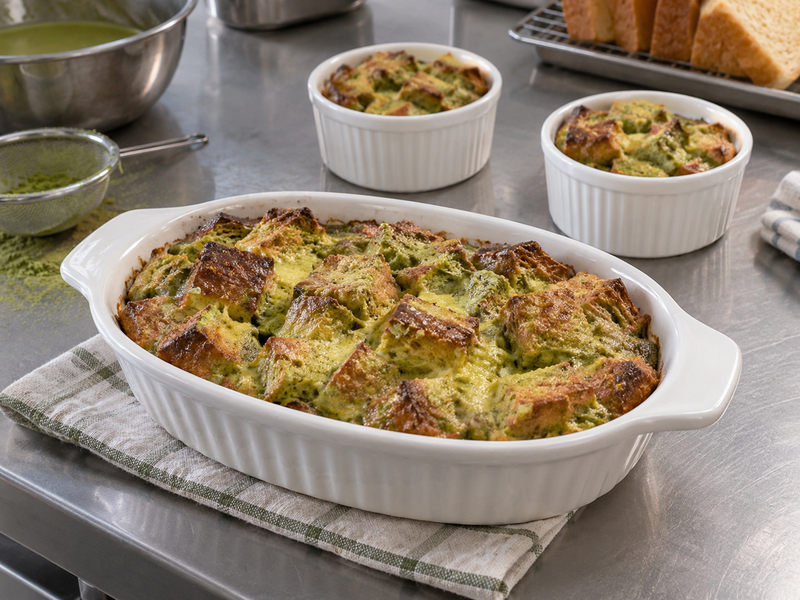
Decide whether customers will receive a warm plated square, a chilled grab-and-go cup or a dessert finished to order with sauce. Each format asks something different of the pudding. A warm square may need enough structure to lift from the pan; a chilled cup can remain softer, yet must still look appealing behind a lid. Describe the desired center, browned surface, matcha color and level of sweetness in terms a kitchen team can inspect. A picture of an approved slice and a short sensory note give more direction than “rich and green.”
Define the serving portion and presentation at the start. Sauce, fruit or ice cream can change the eating order and hide or accentuate tea bitterness. Compare the plain base before adding a topping, then taste the complete sale format. Record the time between finishing and service because the crust and custard continue to change. Evaluate matcha bread pudding at the point customers receive it. A tasting from the hot trial pan is one earlier checkpoint.
2. Which bread should go into the first trial?
Choose a repeatable bread input
Bread affects absorption, flavor and the way a portion cuts. A light sandwich loaf, enriched brioche and firm bakery roll will not behave alike in the same custard. Specify the bread by type, supplier or in-house formula, slice thickness and state when used. If the business hopes to use unsold bread, define which products qualify and the handling window under its food safety procedures. “Yesterday’s bread” is too broad when the rack may hold several formulas.
Run the first comparison with equal dry bread mass rather than equal pan volume. Cut pieces to the same size and keep crust treatment consistent. Note whether a candidate collapses, remains hard at the center or makes the pudding greasy. A plain bread gives a clear read on matcha; a sweet, spiced or flavored loaf may compete with it. Select bread for the approved finished dessert and its reliable availability. Waste reduction can be a useful operating aim, but it cannot excuse uncontrolled inputs.
| Bread option | What it may change | Trial question |
|---|---|---|
| Plain sandwich loaf | Rapid soaking, soft shape | Does a portion hold after service? |
| Enriched loaf | Butter and sweetness | Is matcha still clear in the finish? |
| Firmer roll | Slower liquid uptake | Does the center hydrate evenly? |
| Mixed leftover bread | Variable texture and flavor | Can eligible inputs be specified? |
3. How should you prepare the bread for soaking?
Standardize cut size and surface condition
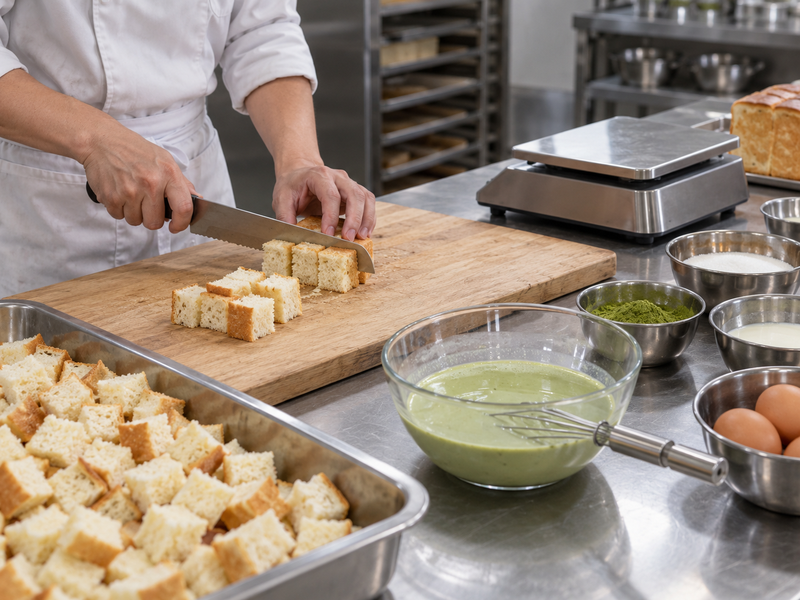
Bread cubes with different thicknesses absorb custard at different rates. Cut a trial batch to a defined range, weigh the pieces and photograph the tray before adding liquid. If the process uses a drying step, document its method and endpoint rather than relying on the appearance of one batch. Bread that is merely cool is not necessarily dry. Avoid holding prepared bread in an uncontrolled open container while other ingredients are weighed; the operator’s storage rules still apply.
Fold bread into the custard gently enough to keep recognizable pieces. Then compare the first and last pieces scooped into the pan. Are some floating while others are saturated? A short rest may help, but the best duration depends on the chosen bread and piece size. Record it as part of the formula. If the operation portions into individual ramekins, weigh bread and custard into each unit instead of assuming the mix will divide evenly. That small discipline makes later flavor and cost comparisons more useful.
4. What custard ratio should the team test?
Change one formula variable at a time
Start with a measured relationship among bread, liquid, egg or other binding system, sweetener and matcha. The team can establish a working range through trials, but should not copy a home recipe into a larger pan without checking heat transfer and portion weight. A custard that tastes balanced before baking may set too firmly, leave free liquid or dry at the corners. Test identical pan depth and bread mass when comparing liquids or binders. Otherwise the result does not isolate the formula change.
Document the mixing order and ingredient temperatures. Some plant beverages bring sugar, fat and stabilizers that change texture; dairy and plant-based versions therefore deserve separate evaluations. Taste the baked center and edge after the intended rest. If one is wet and the other dry, consider pan geometry or baking process before adding more liquid. This is a product development trial, not a universal ratio: the approved numbers should come from the actual bread, pan and service condition.
| Variable | Keep fixed during comparison | Observe after baking |
|---|---|---|
| Liquid base | Bread, pan, matcha dose | Set, flavor, free liquid |
| Binder amount | Bread and liquid | Center structure |
| Sweetener | Matcha and base | Tea balance, browning |
| Soak time | Cube size and formula | Dry cores or collapsed pieces |
5. How should matcha be dispersed through the custard?
Build a smooth tea phase before assembly
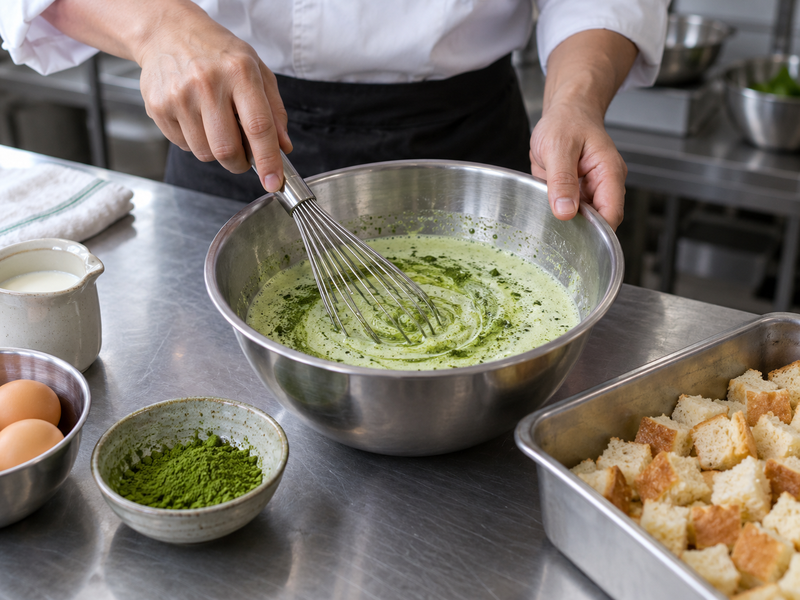
Fine matcha can clump when added straight to a large volume of cold custard. Weigh a sample dose, disperse it in a small measured amount of compatible liquid and whisk until visible dry pockets are gone. Then blend that phase with the remaining custard using a documented tool and mixing time. Scrape the vessel if needed. Check color at the top and bottom before bread goes in; uneven dispersion at this point will become hard to correct once the bread starts absorbing liquid.
Evaluate matcha quality in the baked product as well as the mixing bowl. The oven, dairy or plant base and sweetener all affect what customers see and taste. A powder that looks striking before baking might provide a weaker tea note at service; another may taste rough when the pudding cools. Keep the same dose for the initial comparison, then adjust only after tasting coded finished portions. Record the selected sample code and dispersion method together so a later operator can repeat the result.
6. How can you compare matcha samples fairly?
Use the same bread, pan and service point
Request samples against the actual use case: baked bread pudding, chosen liquid base, expected dose and intended serving format. Prepare at least two candidates on the same day with identical bread pieces, custard mass and pan depth. Code the pans so tasters do not start with a preferred grade label. Evaluate the plain pudding after the planned rest, then with the topping customers will receive. Note color, tea aroma, bitterness, sweetness balance and any gritty or astringent finish.
Use a decision sheet that separates preference from operational fit. A vibrant color may matter in a display case; a subtle but clean tea flavor may matter more under a sweet sauce. If one candidate needs a higher use rate to reach the same flavor target, cost that accepted version as well. Matcha Village’s culinary, premium or other product options can be discussed as candidates, but no grade name can decide this application for you. Keep an approved reference portion, photo and recipe revision.
| Evaluation point | Plain portion | Finished sale portion |
|---|---|---|
| Green appearance | Baked center and surface | Visibility beneath topping |
| Tea character | Aroma and taste | Does the pairing preserve it? |
| Texture | Bread, custard, any grit | Eating quality after service wait |
| Required dose | Matched starting level | Dose needed for approved result |
7. What changes when a test tray becomes a production batch?
Repeat the result with real equipment
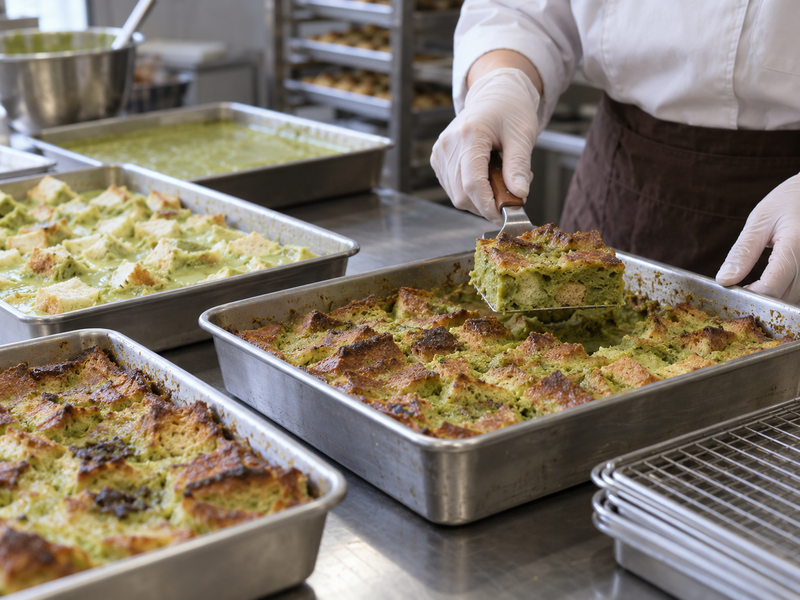
A hand-mixed ramekin offers little evidence about a full bakery tray. Scale in stages using the intended mixer, vessel, pan and oven. Record the custard’s mixing time, how long soaked bread waits before filling and the fill order across pans. Compare the first and last pans for liquid distribution, bread mass and color. If staff add toppings before baking, include that step in the trial rather than borrowing observations from a plain pan.
Measure actual pan depth and baked yield. A deeper load changes heating and can leave a center that looks set from above but differs from the edge. The kitchen’s food safety team must establish appropriate cooking and cooling controls for its formulation and equipment; no generic time can replace that validation. Write an operator instruction with visible checks at mixing, filling and release. A different trained cook should be able to follow it without relying on the developer’s memory.
8. How do you cost a saleable portion?
Count usable output from an approved run
Use actual inputs and the number of portions that meet the product specification. Bread, custard ingredients, matcha, sauces, packaging and labor belong in the worksheet according to the business’s costing policy. Divide by saleable portions, not theoretical squares cut from the pan. Edge trimming, broken portions, topping waste and rework can change the result materially. Where a tray serves several venues, include the packing and transport route required for that sale format.
Compare matcha choices at the dose that produces an acceptable dessert. A lower powder price may be offset by using more of it or discarding a larger share of visibly uneven portions. Record quotations with pack format and order terms so buyers do not compare incompatible offers. Menu price and margin require the business’s own channel costs; the ingredient worksheet is evidence for that decision, not a guaranteed commercial outcome. Keep trial costs separate from a repeat production estimate.
| Cost input | Record from the trial | Why it matters |
|---|---|---|
| Matcha | Dose and quoted price for offered SKU | Fair sample comparison |
| Bread and custard | Actual weights and purchase costs | Formula cost |
| Packaging and topping | Sale-format unit cost | Complete portion cost |
| Labor and losses | Time and rejected portions | Saleable yield |
| Distribution | Handling for the channel | Delivered economics |
9. What should holding and display trials check?
Observe the product through its real sale route
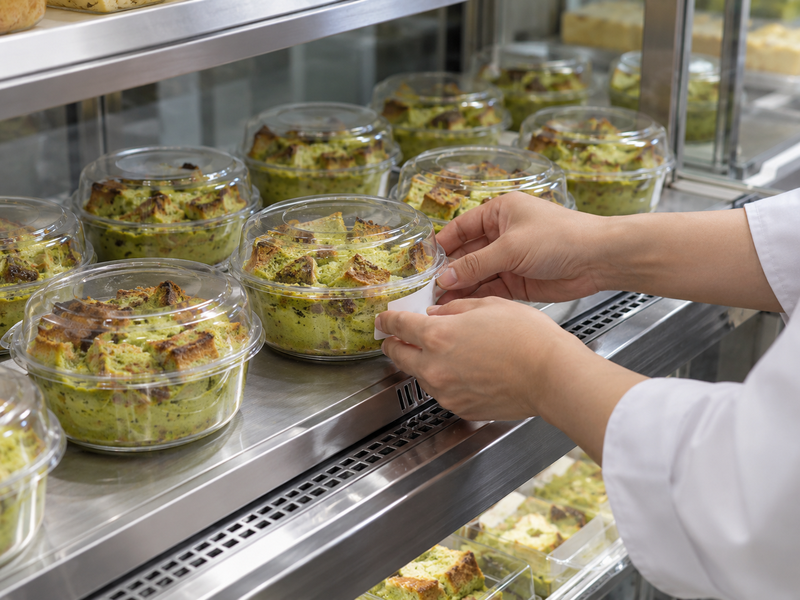
Test the finished portion under the conditions the business intends to use: warm service, chilled cabinet or packed delivery. At defined checkpoints, look for free liquid, drying, topping bleed, color changes, off aromas and a crust that becomes unpleasantly tough or soggy. Use the real container or serving plate. A good result on a stainless trial tray may look different under a clear lid or after travel between sites. Photograph checkpoints under similar light and record the sample’s actual handling history.
Quality observations cannot establish safe shelf life by themselves. The operator’s food safety plan, applicable local requirements and product-specific validation determine cooking, cooling, storage and date marking. Do not infer a claim from the shelf life of dry matcha or from another dessert. If the product is reheated, test that complete route for eating quality and approved controls. Staff need clear instructions for any portion that falls outside the defined process; a visually acceptable surface does not resolve an uncertain history.
10. What belongs in the final buying brief?
Link recipe approval to a specific matcha offer
Send the supplier a clear description of the baked application, base ingredients, target flavor and color, expected use rate, market, likely order pattern and preferred pack. Request the product specification and relevant lot documents for the exact matcha candidate. Ask what sample identity will carry through to commercial supply, how changes are communicated and which packing or lead-time terms the quotation covers. Any certification or destination testing requirement needs review against the offered SKU, document scope and target market.
Internally, archive the selected bread specification, custard formula, matcha sample code, mixing sequence, pan fill, service reference and release checks. Agree who owns retesting if bread, liquid or matcha supply changes. Matcha Village can help shortlist matcha grades and formats for this application, but purchasing should approve a product because it performs in the finished portion and fits the agreed terms. The next step is a coded line trial with a recorded saleable yield, followed by a product-specific quotation.
| Brief element | Owner | Evidence to retain |
|---|---|---|
| Finished product target | Product team | Approved photo and sensory notes |
| Bread and custard formula | Kitchen team | Controlled recipe and batch record |
| Matcha product | Purchasing and supplier | Sample code, specification, lot records |
| Safety and display route | Food safety team | Product-specific validation |
| Cost and repeat supply | Commercial and purchasing | Yield sheet and agreed quote |
FAQ
Q1: Can a bakery use any leftover bread? Set eligible bread types and handling rules first; mixed leftovers can change texture, flavor and food safety controls.
Q2: Should the brightest dry matcha sample win? Judge coded baked portions at the planned service point. Dry color alone does not predict a bread pudding’s finished appearance or taste.
Q3: Can dairy and plant-based custards share one approved formula? Test them separately. Their sugar, fat and stabilizer profiles may affect set and flavor.
Q4: Does a successful warm tasting establish chilled shelf life? No. Storage and safety decisions require the operator’s product-specific validation.
Q5: What should accompany a matcha sample request? Send the bread type, base formula, dose range, pan and service format, target market and expected buying pattern.