
A matcha brand activation can create a useful conversation around a product, but the bar must first serve a good drink at the pace the event requires. Long queues, unclear signage, and an understocked station can drown out the brand message. Start with one measurable objective, a short menu, and a realistic plan for venue, staff, equipment, and supplies. Our matcha beverage formulation guide helps frame the drink trial; the event still needs its own service rehearsal.
Contents
- 1. What outcome is the event meant to create?
- 2. What should be confirmed with the venue?
- 3. Which drinks belong on the event menu?
- 4. How many drinks can the bar serve?
- 5. How should the team be staffed?
- 6. What food-handling plan is needed?
- 7. How much inventory should be packed?
- 8. How should branding support the queue?
- 9. What should be measured on site?
- 10. How should the event be reviewed?
1. What outcome is the event meant to create?
Pick a primary result
An activation may aim to introduce a matcha product, collect qualified contacts, drive store visits, support a retail launch, or create content. Choose one primary outcome and a few supporting measures. A free cup can attract a crowd without telling you whether people understood the product. Conversely, a small event with useful conversations may serve a business objective well. State the audience and what action you hope they take after tasting.
The goal affects the bar. A sampling event needs small portions and quick explanation; a hospitality lounge may serve full drinks and invite longer discussion. The menu, staffing, and data collection should follow the objective. Write a brief that names the host brand, venue, date, expected foot traffic, service hours, and success measure. Share it with the bar lead and creative team. If they are working from different assumptions, the event can look polished while failing operationally.
2. What should be confirmed with the venue?
Survey the real space
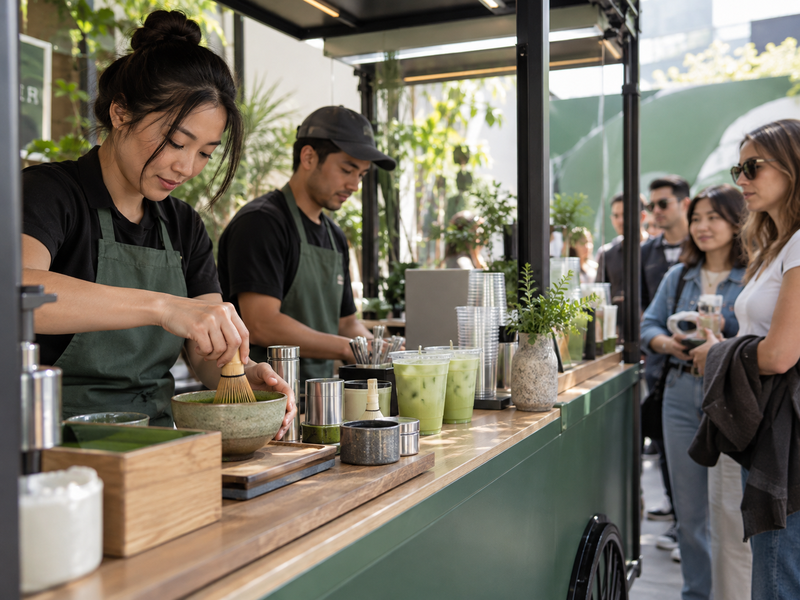
Confirm the station footprint, power, water, drainage, chilled storage, waste handling, loading route, setup access, and rules for food and beverage service. Ask where guests may queue and whether that line would block another exhibitor or an exit. The venue may have a preferred caterer, permits, insurance conditions, or equipment restrictions. Get the requirements in writing and have the responsible local professionals review compliance. Do not discover on opening morning that the bar cannot use its planned appliance.
Walk the site or request accurate photos and dimensions. Mark the guest approach, order point, pickup point, and back-of-house replenishment route. Test sightlines: can a guest understand the offer before joining the line? Is there room for two people to work without colliding? The event bar reference gives a vendor perspective, but your venue constraints determine the actual design. Build a contingency for an outdoor temperature change or a power interruption where relevant.
| Venue detail | Confirm with | Why it matters |
|---|---|---|
| Power and water | Venue operations | Equipment and cleaning |
| Queue footprint | Event manager | Guest flow and access |
| Loading and storage | Venue logistics | Setup and replenishment |
3. Which drinks belong on the event menu?
Make the menu small enough to execute
Choose one signature matcha drink and, if needed, one accessible variation. A straight tea can showcase the ingredient; a latte may be more familiar to a broad audience. The choice should suit the brand objective and service conditions. Test drinks in the cups, milk, water, and ice that will be available at the event. A recipe approved in a café may not behave the same way at a temporary bar with different equipment.
Write the ingredient list and modification policy. If plant-based milk is offered, plan its storage and handling. If a premixed latte powder contains sugar, do not promise an unsweetened version. Avoid unsupported wellness or caffeine claims in signage. A short menu speeds decisions and reduces inventory error. Staff can still have a clear answer for guests who ask what matcha is or how the drink tastes. The event is a good place for a focused first experience, not every possible menu variation.
4. How many drinks can the bar serve?
Time a complete transaction
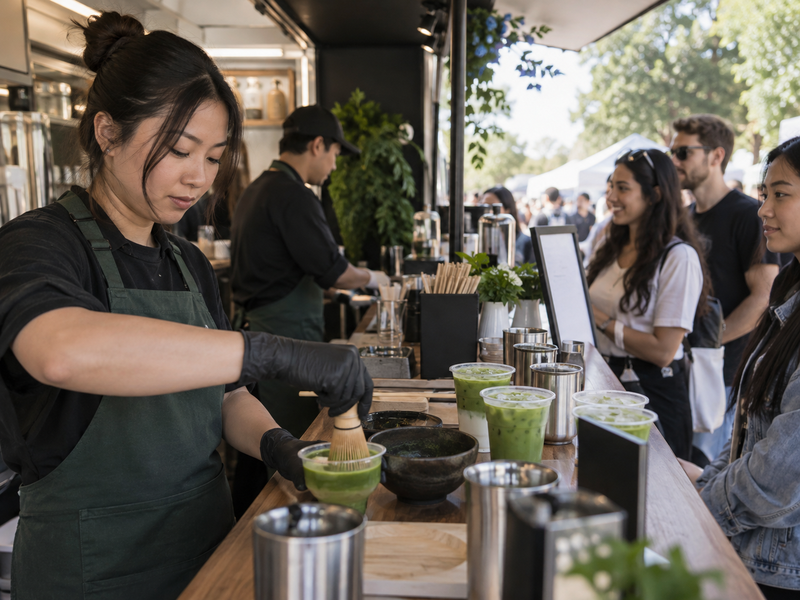
Make several drinks in sequence with the planned equipment and staff. Time the full cycle from guest order through portioning, mixing, milk or ice addition, lid, handoff, and station reset. If one drink takes a minute at an empty test station, that does not automatically mean sixty drinks per hour. Payment, questions, restocking, and uneven arrivals reduce capacity. Use a conservative throughput estimate and decide what happens if a queue grows beyond the available space.
Count the peak window separately from total event attendance. A conference break can bring many guests at once, while a retail opening may spread visits across hours. Consider pre-portioned ingredients or a simplified menu if the measured rate is too slow, but validate flavor after any change. Keep the queue within the agreed venue footprint. If the objective depends on conversation, include time for that conversation rather than treating every guest as a cup-per-minute statistic.
| Capacity input | Measure in rehearsal | Planning use |
|---|---|---|
| Drink build time | Full ticket cycle | Base service rate |
| Reset and restock | Minutes per interval | Capacity reduction |
| Peak arrivals | Guests per short window | Queue plan |
5. How should the team be staffed?
Give each person a clear role
At a small activation, one person may take orders and make drinks. At a busier one, separating greeting, drink preparation, and pickup can improve flow. Assign who answers ingredient questions, who restocks milk and cups, and who watches the queue. A brand ambassador can invite conversation while a trained bar worker protects drink quality. Do not assume extra people increase output when the station only has room for one worker at the mixing point.
Train the team with the actual event script and recipe. A brief should include how to describe matcha, what the signature drink contains, which modifications are available, and when to refer an allergen or health question to the responsible lead. Rehearse handoff language and a short response for “Is there caffeine?” that stays within the product information available. Schedule breaks and replenishment around expected peaks. The guest experience depends on a team that knows who owns each step.
6. What food-handling plan is needed?
Fit the procedure to the ingredients and site
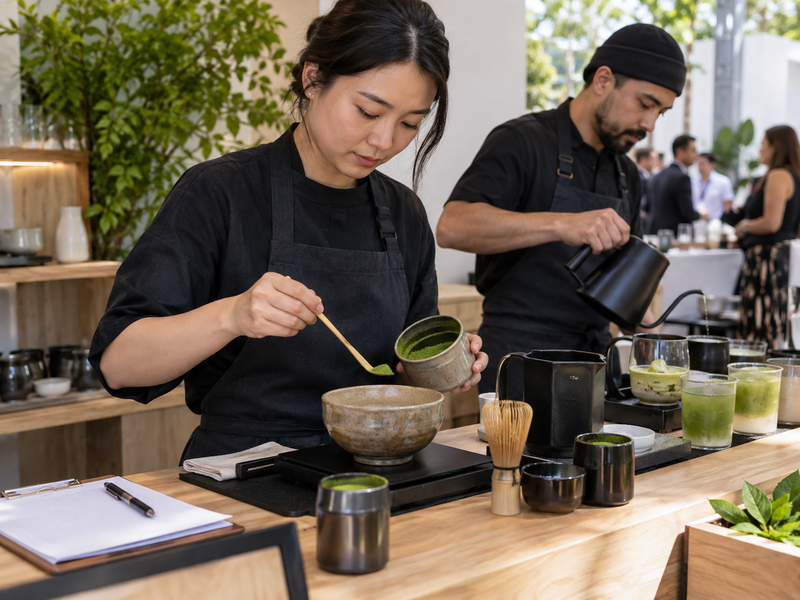
The handling plan should cover potable water, perishable milk or alternatives, ice, clean utensils, handwashing, waste, and any batch preparation. Venue and local authority rules may apply to temporary service. In the United States, the FDA Food Code is a model reference, while adopted local requirements govern the event. Have a qualified site lead confirm the procedure instead of copying a café’s practices into a venue with different facilities.
Label prepared containers and define who monitors chilled storage and discard decisions. Protect open matcha powder from moisture and traffic. Ensure a cleaning method exists when a frother or whisk is used repeatedly. If the event cannot support safe handling for a planned ingredient, simplify the menu or change the equipment. These decisions belong in the event plan before marketing materials promise a drink. A last-minute workaround under queue pressure is a poor way to protect both guests and brand.
| Handling point | Plan before event | On-site owner |
|---|---|---|
| Perishable ingredients | Storage and monitoring | Bar lead |
| Tools and water | Cleaning and supply | Preparation staff |
| Waste and leftovers | Removal and discard | Event lead |
7. How much inventory should be packed?
Build from expected saleable servings
Estimate the number of drinks from attendance, event hours, and realistic service capacity. Multiply the approved per-cup recipe by that number, then add a documented buffer for spills, remakes, and uncertain turnout. Include matcha, milk, sweetener, water, ice, cups, lids, napkins, and cleaning supplies. Pack according to the venue’s storage and handling possibilities. Extra milk has no value if the site cannot keep it under required conditions.
Use a pack list that separates opening stock from reserve stock. Staff should know where to find the next sleeves of cups without leaving the bar unattended. Label bins by item and count them at load-in and load-out. If the brand plans to give out retail samples or cards, count those separately from drinks. Inventory records make the post-event review credible: the team can calculate actual servings and waste rather than relying on photos of a busy queue.
8. How should branding support the queue?
Make the offer understandable from a distance
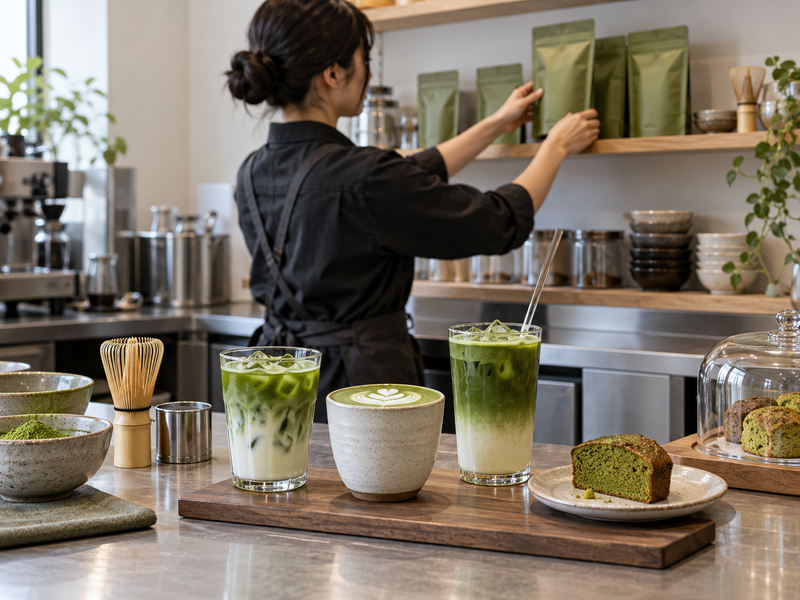
Signage should tell guests what is being served, whether it is free or paid, where to join the line, and where to collect a drink. A strong visual identity can attract attention, but small decorative copy will not answer those practical questions. Put the brand name and drink description where they are visible without blocking preparation. If a product is being introduced, show the actual pack and a short use message near the tasting point.
Design the photo moment around safe guest movement. A backdrop that sends people across the pickup lane can create confusion. A branded cup may travel through the event, but its artwork should not cover required ingredient or handling information where that information is needed. Review claims in creative copy against the exact product and market. The bar, signs, and staff script should tell the same story. If they do, guests can understand the brand while the team keeps serving.
| Touchpoint | Main job | Check |
|---|---|---|
| Overhead sign | Attract and identify | Read from approach |
| Menu panel | Explain drink and options | Match actual recipe |
| Pickup cue | Prevent crowding | Clear handoff route |
9. What should be measured on site?
Capture results without slowing service
Track cups served by drink, peak wait or queue length, stockouts, remakes, and common questions. If the objective includes qualified contacts, obtain them through the approved event process and privacy notice; do not assume a free drink is consent for marketing. A simple tally at regular intervals may be more reliable than asking bar staff to enter detailed notes while making drinks. Assign a separate person to observation if the budget allows.
Collect evidence tied to the original objective. For awareness, note meaningful conversations or pack scans rather than treating every passerby as engaged. For a retail launch, track where guests can buy the product and any measurable follow-on action. Photos can document the setup and traffic, but they cannot alone show whether guests liked the drink or remembered the offer. Keep measurement light enough that it does not make the bar feel transactional.
10. How should the event be reviewed?
Compare the plan with what happened
Soon after load-out, reconcile planned servings with cups used, ingredients consumed, and waste. Review service times, queue behavior, staff feedback, and guest comments. Did the menu fit the venue? Were the drinks consistent late in the event? Did the team have enough space, cold storage, and backup supplies? Separate problems caused by demand from problems caused by the design of the bar. A busy-looking event can still have poor handoff or low useful engagement.
Compare results with the primary objective set before the event. Record what should change next time: a smaller menu, different staffing split, clearer pickup sign, better power access, or a revised recipe. Keep the event plan, final inventory, and measurements together so another team can reuse the learning. The next activation should begin from observed facts, not a memory that the line felt long or the photographs looked good.
| Review item | Planned | Actual | Decision |
|---|---|---|---|
| Drinks served | Forecast | Cup and stock count | Revise inventory |
| Queue | Target window | Observed peak | Change capacity |
| Engagement | Objective | Recorded actions | Adjust experience |
FAQ
Q1. How many drinks should an activation offer? Start with a short menu that the team can prepare consistently. Add a variation only when it serves the audience and fits the measured capacity.
Q2. Can the café recipe be used unchanged? Test it with the event’s equipment, ingredients, cups, and workflow. Temporary bars often have different constraints.
Q3. What if the queue grows too long? Use a predefined response such as a simplified menu or clear wait communication, while keeping the line inside the approved venue footprint.
Q4. Who should answer allergen questions? Assign a trained lead with the current ingredient record and an approved handling explanation. Do not ask staff to guess.
Q5. What is the most useful success measure? The measure tied to the event’s primary objective, supported by service and inventory data that show what guests actually received.
Make the drink and the message work together
A matcha activation succeeds when the bar serves a consistent cup and the guest understands why the brand offered it. Set one objective, test the complete service cycle, confirm venue and handling details, and record results that can improve the next event.