
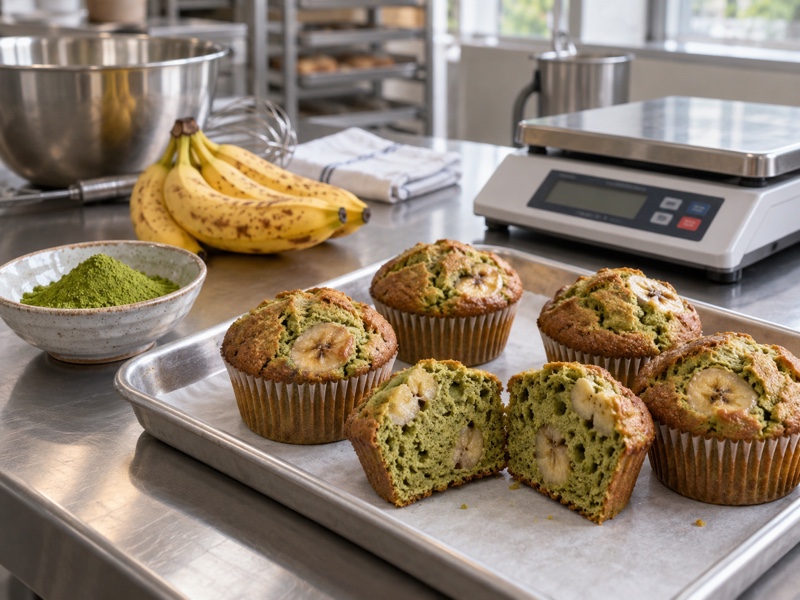
Matcha banana muffins solve a familiar menu problem: a bakery wants a recognizable fruit-led product with a clear tea flavor and an appealing green crumb. Banana introduces variability. Its ripeness changes sweetness, water content, and mixing behavior, while heat can dull matcha’s color. A sensible product trial controls the fruit before it tweaks the tea. This guide lays out the decisions an operator can test and document, from banana preparation to packaged yield. Any sample quantities should come from the bakery’s own formula and validation work.
1. What should a matcha banana muffin deliver to the customer?
Decide whether the muffin is primarily a banana bakery item with a tea note or a matcha-led item softened by banana. That decision affects powder level, sweetness, topping, and the language on the menu. A pale green muffin with almost no tea flavor disappoints a matcha buyer; a strongly bitter version can overwhelm a customer expecting banana bread. Taste prototypes blind after they have cooled and again at the expected sale time. The fresh-from-oven sample is rarely the customer’s experience.
Define the target crumb: tender enough to eat without butter, firm enough to survive a bag, and moist without feeling underbaked. Record dome height, crumb color under display light, aroma, and whether the liner releases cleanly. The target should be observable by bakers and counter staff. A vague instruction to make the product “premium” will not help the next shift reproduce it.
Set the eating target first. Formula changes then have a reason.
| Target attribute | What to observe | Trial decision |
|---|---|---|
| Matcha presence | Tea flavor after cooling | Increase, reduce, or change addition point |
| Banana presence | Aroma and sweetness | Adjust fruit standard or other sugar |
| Crumb | Tenderness and gumminess | Review fruit moisture and bake |
| Appearance | Dome, green shade, liner release | Review mixing, pan fill, and heat |
2. How should banana ripeness be specified?
Bananas that look similar in a box can behave differently in batter. A less ripe fruit brings more structure and less perceived sweetness; a very ripe fruit is soft, aromatic, and easier to mash, but it can push a muffin toward a wet or gummy center. Establish a receiving or preparation standard using observable peel and flesh condition. Weigh the usable pulp, not the whole banana. Discard fruit outside the bakery’s quality and safety criteria rather than hiding defects in a dark batter.
Mash or puree with a consistent method. Large banana pieces create pockets that can look underbaked, while an extremely smooth puree may distribute moisture more evenly and change the bite. Trial both only if the target product calls for it. Record the time between preparation and mixing; fruit browning can alter the batter’s color before matcha is added. If production uses frozen banana puree, test that ingredient as its own formula because thawed pulp is not the same as fresh mash.
Fruit is an ingredient specification. Treat ripeness and usable pulp mass as controls, not kitchen judgment.
| Banana condition | Likely contribution | What to compare |
|---|---|---|
| Firm and lightly spotted | Lower sweetness, more texture | Crumb tenderness |
| Ripe and aromatic | Strong banana note | Tea balance and moisture |
| Very soft pulp | More variable liquid release | Center set and liner release |
3. Which matcha belongs in the batter?
Choose matcha by tasting it in the finished muffin, not by reading a grade name alone. Baking changes color and aroma, and banana adds its own strong flavor. Request a traceable sample and specification from each supplier. Compare powders at the same dose in the same base batter, then evaluate a cut muffin after cooling. A powder that looks brilliant in a jar may be muted after baking; another may retain flavor but leave an unpleasant bitter finish.
Sift matcha with the dry ingredients to limit clumps. Do not add water merely to dissolve it unless the formula accounts for that added liquid. In a pilot, record powder lot, batch mass, and where the tea was added. If the bakery uses a glaze or crumble topping, taste that version separately. A matcha topping can improve first-bite aroma, but it can also make the total product too sweet or hide a weak crumb formula.
Judge the baked bite. Color in raw batter is only an intermediate observation.
4. How can the batter avoid a gummy center?
Banana pulp contributes moisture and sugars, so a formula that works as a plain muffin may not carry the same fruit load. Build the first trial from a known bakery base, then change one factor at a time: banana pulp, other liquid, fat, or flour structure. Avoid adding fruit until the batter looks appealing and calling that the final recipe. The cut center, after the muffin has fully cooled, is the useful evidence. A wet line below the topping, sticky crumb on the knife, or shrinkage after cooling can signal an imbalanced formula or bake.
Mixing also matters. Once the flour is hydrated, excessive agitation can toughen the crumb and reduce the intended muffin texture. Use a repeatable mixing sequence and inspect the batter for dry streaks before depositing. If inclusions such as chocolate chips are planned, add them in a separate trial; they affect deposit weight and may mask whether the base batter is working.
Change one cause per batch. That is the fastest route from an attractive sample to a reliable formula.
| Symptom | Investigate first | Controlled trial |
|---|---|---|
| Sticky center | Fruit load and bake endpoint | Keep deposit mass fixed; vary one factor |
| Tough crumb | Mixing time | Compare short and current mix |
| Dry edges | Pan, oven profile, portion size | Map positions across a tray |
| Uneven green specks | Matcha dispersion | Sift with dry blend |
5. What deposit and bake checks belong in the work instruction?
Set a batter deposit target using the pan and liner actually used for sale. Weigh samples from the beginning, middle, and end of a run; batter can change while it waits. An overfilled cup may produce an attractive dome but bake unevenly, while a low fill gives poor perceived value. Use the same rack position and oven loading pattern for comparisons. A small pilot in a nearly empty oven may not predict a full production run.
Record oven setting, measured bake time, pan position, and a verified endpoint established by the bakery. Do not rely on surface color alone: matcha and banana can darken differently from a plain vanilla muffin. Cut representative muffins only after cooling, including one from a hot spot and one from a cooler position. If the team uses a probe or weight-loss target, establish its relationship to a fully baked crumb with the actual formula.
A bake instruction needs a release check. Time alone does not describe a finished muffin.
| Production check | When to take it | Why it matters |
|---|---|---|
| Deposit mass | Start, middle, end | Controls size and bake variation |
| Dome and surface | After baking | Flags uneven fill or heat |
| Cut center | After full cooling | Detects gumminess or raw streaks |
| Finished mass | Before packing | Supports yield and costing |
6. How do color and flavor change after baking?
Expect the crumb color to be less vivid than raw batter. Matcha is exposed to heat, air, and light; banana and other ingredients also contribute color. Compare cut muffins under the intended display light at the same time after baking. A photo taken straight from the oven is a poor standard because the crumb has not settled and the camera may overstate green. Keep a physical or photographic reference that the team can use without chasing an unrealistic neon shade.
Evaluate aroma and aftertaste with the whole muffin, including any topping. A little acid, fat, or sweetness can change the way matcha is perceived, but each adjustment belongs in a controlled trial. If the tea flavor vanishes after a day in the intended package, the bakery may need a different matcha, addition point, or service window. Do not solve that issue only by raising the dose; bitterness and cost may rise faster than desirable flavor.
Taste at the moment of sale. The customer’s muffin has had time to cool and sit in its package.
7. Which toppings and inclusions are worth testing?
A sliced banana garnish may look clear in photography but can brown and add moisture during holding. A crumb topping can help with texture contrast, yet it may cover the green surface and shed in a bag. Chocolate chips, nuts, and glaze each create their own allergen, cost, and production questions. Choose additions because they serve the product target, not because every matcha recipe online has a decorative finish.
Test one plain baseline and one finished version. Keep the same batter and bake so the topping’s effect is visible. Check whether the garnish survives a realistic wrapper and transport simulation. For wholesale or multi-site supply, favor elements that can be applied consistently without slowing the depositor line. Document allergens and label wording for the finished version; a topping can change the label more than the base muffin does.
A garnish must survive service. Test it in the same package and route as the menu item.
| Addition | Benefit to test | Cost or handling question |
|---|---|---|
| Crumb topping | Texture contrast | Shedding and surface coverage |
| Chocolate pieces | Familiar sweetness | Deposit consistency and allergen label |
| Glaze | First-bite sweetness | Smearing and package adhesion |
| Fresh banana slice | Clear fruit cue | Browning and moisture migration |
8. How should muffins be cooled, packed and stored?
Cool muffins according to the bakery’s food-safety procedure before sealing them. Packing while warm can trap moisture and soften the surface; leaving them unprotected too long may dry the edges. Trial the actual liner and bag, clamshell, or box. Check how the liner peels away after the expected hold, because banana-rich batters can stick. A muffin that tastes good but tears apart at opening is not ready for a retail package.
Determine shelf life from the bakery’s own formulation, process, package, and storage conditions. This guide cannot assign a safe number of days. Evaluate flavor, crumb texture, visible mold, packaging condition, and any required microbiological criteria through the operation’s validation process. If frozen distribution is planned, assess thawing separately; a sample taken from a freezer and served immediately will not reveal moisture migration or condensation at the point of sale.
The package changes the product. Validate the muffin after the full route, not just on the cooling rack.
9. What makes the batch economical at scale?
Cost usable banana pulp, not whole-fruit purchase weight, and account for trimming and ripeness losses. Matcha should be costed by the amount in the saleable batch, including any topping. Record batter yield, deposit count, bake loss, rejects, packaging, and labor. A low ingredient cost may be offset by slow fruit preparation or frequent discard of overripe stock. If the bakery already uses bananas elsewhere, coordinate the specification; a convenient surplus is not a stable supply plan.
Run a full-tray pilot before quoting a wholesale price. The batter may thicken during a long deposit, and oven loading can change the baked result. Measure how much time is spent on mashing, mixing, depositing, cooling, and packing. Identify the bottleneck before buying equipment or adding a second flavor. Supplier conversations should cover lot consistency, lead time, specifications, and sample availability for production-sized tests.
Cost the saleable unit. A formula sheet without yield and labor is only a shopping list.
| Cost item | Record | Risk if omitted |
|---|---|---|
| Banana | Usable pulp yield | Understated trim loss |
| Matcha | Dose and lot price | Margin change at reorder |
| Production | Time by step | Hidden prep labor |
| Finished goods | Packed count and rejects | False unit cost |
10. What should the final bakery pilot approve?
The launch pilot should reproduce the intended batch size with the intended team, pan, oven, topping, and package. Approve the banana receiving standard, matcha identity and lot controls, batter sequence, deposit target, bake release check, cooling method, and sale window. Have someone from the sales side open and eat a packaged muffin after the expected hold. Their experience may expose liner, crumbling, or flavor issues that the production team has learned to work around.
Keep a retained sample record and photographs of the approved cut crumb. Define which changes require a new trial: banana format, matcha supplier, flour, sweetener, pan, oven profile, or package. A small change can shift water balance or perceived sweetness. If the pilot fails, write down the observed defect and the next single variable to test. That decision is more useful than a general instruction to make the muffin greener or moister.
Approve a repeatable version. Ask the matcha supplier for a sample and documentation that match the scale and consistency of your actual bakery trial.
Source article used for title and topic research: Matcha Chocolate Banana Muffins. This article presents an original bakery-development framework rather than reproducing the source recipe.
FAQ
What is the main quality check for matcha banana muffins?
Cut a fully cooled muffin and check center set, crumb tenderness, matcha flavor, and liner release after the intended hold.
How should a bakery select matcha for this product?
Compare traceable samples at the same dose in the same batter, then taste and inspect the baked muffins after cooling.
Can ripe bananas replace recipe sugar directly?
Do not assume a one-for-one replacement. Banana changes moisture, structure, and perceived sweetness; verify changes in controlled trials.
How long can matcha banana muffins be stored?
The safe and acceptable period depends on the actual formula, process, package, and storage conditions. Establish it through the bakery’s validation process.
What supplier information should a buyer request?
Request ingredient identity, lot traceability, specification, relevant food-safety documentation, lead time, and a sample sized for a realistic pilot.