
Matcha protein powder sounds straightforward: combine tea with whey or plant protein and call it a drink mix. In practice, protein can make matcha taste chalky, matcha can disappear behind vanilla, and a front-label protein number can fail if serving weight is poorly controlled. A dietitian’s matcha protein latte recipe in current search results uses a separate protein powder and matcha base. A packaged blend has a harder job because both ingredients must work together in one scoop. This guide is for product teams and wholesale buyers testing that blend, not for making health promises from an ingredient name.
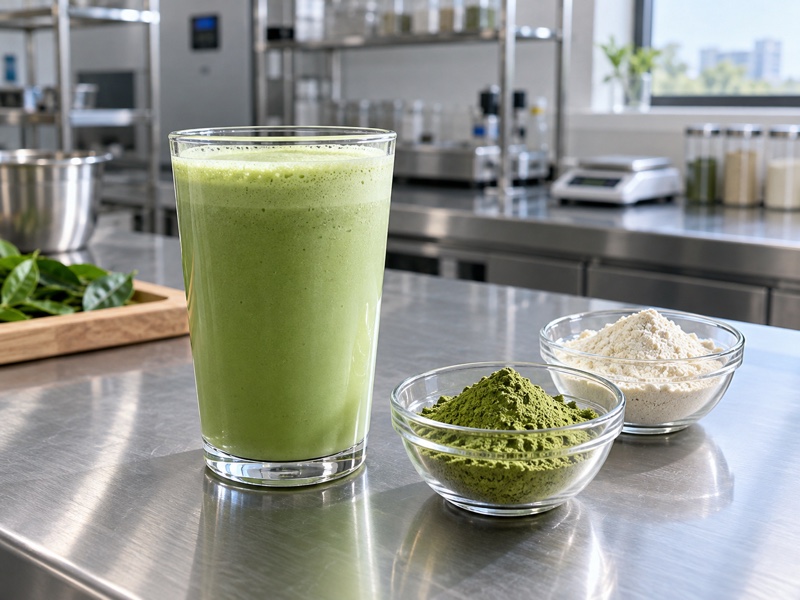
1. What should matcha protein powder do in a serving?
Start by deciding whether the product is pure matcha plus a separate protein ingredient, a flavored powdered mix, or a ready-to-drink beverage. They have different ingredient lists, serving sizes, texture problems, shelf-life tests, and regulatory work. A pure matcha powder is not a high-protein product merely because green tea contains some protein. If a label says “matcha protein powder,” customers may expect a meaningful amount of both tea and protein in the intended serving. The formulation must support that expectation. For the tea component, review Matcha Village’s pure matcha products against the blend brief.
Write down the use case before ordering samples. Will a customer shake the powder with cold water, blend it with milk, or stir it into yogurt? Does the brand want a tea-led flavor or a vanilla protein shake with a green note? What is the target protein per serving, and what cup size is realistic? A product that passes in a laboratory blender may fail in a shaker bottle at the gym. The standard preparation method belongs in the brief.
| Product format | Main test | Likely buyer question |
|---|---|---|
| Separate matcha and protein | Compatibility in one cup | Can staff prepare it quickly? |
| Instant powdered blend | Dispersion and flavor | Does one scoop deliver the claim? |
| Ready-to-drink bottle | Stability and safety | Does quality hold through shelf life? |
2. Which protein source fits the drink?
Whey, milk protein, pea, soy, and other sources bring different flavor, texture, solubility, and allergen issues. A brand may choose a source for dietary positioning, but the cup still has to taste good. Whey can have a dairy note and may foam; pea protein can bring earthy notes that intensify matcha’s vegetal character. These are formulation tendencies, not verdicts on every supplier. Ask for samples and specifications from the exact commercial grade under consideration. For matcha protein powder, compare those sources in the intended liquid rather than judging dry samples.
Prepare each candidate in the same liquid at the same protein contribution. Comparing one powder at 20 g with another at 30 g by total powder mass can be misleading if their protein concentrations differ. Evaluate grit, sediment after ten minutes, foam, sweetness, and the tea finish. If a plant-based position is essential, verify every component, including flavors and processing aids, before making a vegan claim. The FDA’s allergen guidance is a useful starting point for US labels, while other markets have their own rules.
3. How much matcha should go into a serving?
Set matcha by finished flavor and caffeine plan, not by color alone. A powdered protein mix may be mostly pale powder; even a small matcha addition can turn it green. Color does not tell customers how much tea they are getting. Trial several matcha doses around a realistic serving, keeping protein, sweetener, and liquid fixed. Taste the prepared drink after stirring, then after a normal drinking interval. Some formulations become more bitter as the drink warms and protein notes recede. This dose trial is the clearest way to decide whether a matcha protein powder still tastes like tea.
Weigh the tea separately during pilot production and record its lot. If the blend is packaged, calculate the matcha contribution per labeled scoop from the actual batch formula and serving weight. A poorly mixed batch can yield scoop-to-scoop variation even when the theoretical average is right. Product teams should validate homogeneity and quality controls at their actual mixing scale. A consumer recipe built with a spoon of tea cannot replace that work.
| Pilot | Protein contribution | Matcha dose | Question |
|---|---|---|---|
| A | Fixed | Low | Is tea detectable? |
| B | Fixed | Medium | Are tea and protein balanced? |
| C | Fixed | High | Does bitterness rise? |
4. Why does matcha protein powder taste chalky?
Chalkiness may come from protein particle behavior, insufficient hydration, a high solids load, or poor mixing. Matcha itself can add a fine suspended texture, especially if the powder is coarse or stale. Separate these causes with controls: make the protein base without tea, then the tea in liquid without protein, then the combined drink. If the protein base is chalky alone, adding more matcha will only hide it briefly. If the combination is worse than either control, examine interaction, acidity, sweetener, and preparation method.
Test the real consumer method. A high-speed blender can make almost anything appear smooth for a photograph. A shaker bottle with cold water is a stricter test. Watch the first sip, sediment at the bottom, and texture after ten minutes. Record liquid temperature and volume. A product that needs a specific water level should state it clearly. If the blend must be shaken again halfway through the cup, that may be acceptable for some users but should be understood before launch.
5. How should sweetness and flavoring be handled?
Protein powders often arrive flavored and sweetened. Adding matcha to a vanilla protein base can produce a pleasant drink, but it may leave the tea as a weak visual cue. Compare an unsweetened base, a lightly sweetened base, and the intended flavored base. Use a tasting panel that includes people who normally drink plain matcha and people who buy protein drinks. They may want different products; the team should choose the audience rather than trying to satisfy both by adding more flavor.
Check ingredient lists for sugar, high-intensity sweeteners, gums, flavors, and salt. Each can affect taste, label claims, and customer expectations. Do not use “clean” as a substitute for an ingredient declaration. If a front panel says “matcha” prominently, the final drink should have an honest tea flavor. If the target is primarily a vanilla protein drink, a smaller matcha note may be commercially valid, but the title and imagery should set that expectation accurately.
| Sensory defect | Control to prepare | Possible adjustment |
|---|---|---|
| Tea disappears | Matcha in the base without flavor | Lower vanilla or change tea |
| Bitter finish | Tea dose ladder | Reduce dose or change lot |
| Artificial sweetness | Protein base alone | Change sweetener system |
| Powdery mouthfeel | Protein and tea separately | Fix the source, then combine |
6. What protein claim can the product make?
The claim depends on the finished product, serving size, analytical basis, and destination market. A formulation worksheet can calculate expected grams, but formal labels may require specific testing, rounding, and rules for protein quality. In the US, terms such as “high” and “good source” are regulated nutrient content claims; the FDA describes how such claims work. Have a qualified regulatory professional review the final label. Do not copy a competitor’s “25 g protein” line into your blend simply because a consumer recipe with a different scoop reported that number.
Keep the evidence linked to the actual formula and manufacturing controls. If a brand changes from one protein supplier to another, the concentration may shift. If serving scoop size changes, the declaration may shift. If a drink is prepared with milk, separate the protein supplied by the powder from protein supplied by the milk when explaining the recipe. A package that says “add water” should not rely on milk to achieve its front-label number.
7. What other label details need checking?
Ingredient order, allergens, caffeine communication, preparation instructions, nutrition facts, and claims all need review for the selling market. Whey and milk proteins implicate milk allergens; soy protein implicates soy. Plant proteins can also have cross-contact considerations. If the formula includes a sweetener or flavor, that belongs in the declaration under the applicable rules. Caffeine from matcha varies with source and dose; do not publish a universal number without product-specific support.
Avoid broad health promises. Protein is a nutrient; matcha is a tea ingredient. Neither permits the brand to claim disease treatment or guaranteed energy effects on the basis of a pleasant drink. A short, accurate description of flavor and measured protein can be more useful to buyers. Review product photography too: if the image shows a bright green drink made with milk, the powder-in-water preparation should be tested to see whether it looks and tastes comparably appealing.
8. How should matcha protein powder stability be tested?
For a dry blend, test moisture pickup, caking, color, aroma, scoop flow, and dispersion through the intended shelf life in the actual package. Matcha is sensitive to light and oxygen; protein powders and flavorings may have their own storage needs. A high-barrier pack can help, but its performance depends on the full system and sealing process. Keep retained samples under normal and appropriate challenge conditions approved by the product team. A fresh pilot cup cannot prove long-term stability. A matcha protein powder should also be checked after the pack has been opened as customers will use it.
For a ready-to-drink product, the work expands: separation, sediment, microbial safety, process validation, package compatibility, and sensory life. This requires a qualified manufacturer and product-development plan. Do not assume that the dry-mix recipe can be poured into a bottle and given a date. A brand that wants a café drink first can use that pilot to learn flavor preferences, then develop the packaged format as a separate product.
| Stage | Sample to keep | Decision supported |
|---|---|---|
| Ingredient approval | Lot-linked tea and protein | Supplier comparison |
| Pilot blend | Packed dry mix | Caking and aroma review |
| Prepared drink | Standard water method | Flavor and texture |
| Scale-up | Beginning and end of run | Uniformity check |
9. How should matcha protein powder unit cost be compared?
Compare cost per finished serving, not per kilogram of matcha or protein alone. Include each component, flavor system, mixing loss, pack, scoop if supplied, testing, freight, and minimum order quantities. A cheap protein that requires more flavoring or produces greater customer rejection may be expensive in practice. A premium matcha with a lower effective dose may be economical if it stays clear through the base. Pilot results and actual ingredient costs should sit in one workbook.
For café service, include preparation time and cleaning. A drink that requires a blender for every order may struggle at peak volume, while a shaker method may fit. For retail, calculate the cost per labeled serving and compare it with the intended price point. Keep the formulation flexible enough to handle a supply change, but do not approve substitutions on price alone; every changed ingredient may alter taste, label text, or the protein result.
10. When is matcha protein powder ready for a larger pilot?
Advance only when the product brief, sensory result, preparation method, and label plan agree. Have someone outside the development team make it from the printed directions. Weigh several scoops or servings, taste cups from different points in a pilot batch, and inspect sediment after the normal drinking interval. Check allergen and claim drafts before ordering printed packs. Resolve any mismatch between the name “matcha protein powder” and what people taste.
Keep the next decision small. Pick one protein source and two matcha lots, then run a blind cup test at the target protein contribution. Save the worksheet, lot samples, and rejection notes. That evidence makes a supplier discussion concrete and prevents a promising laboratory cup from becoming a costly, chalky launch.
FAQs
Is matcha itself a protein powder? No. Matcha is ground tea; a meaningful protein-drink claim requires a separate formulated protein source and appropriate evidence.
Can whey and matcha be mixed? Yes. Test the exact whey product for flavor, foam, texture, and milk-allergen labeling.
Will a brighter green blend taste more like tea? Not necessarily. Color and matcha dose do not guarantee a balanced finished flavor.
Can a dry blend be used for bottled drinks? It is a starting ingredient system, not a validated ready-to-drink product. Develop processing and shelf life separately.
How should protein per serving be calculated? Use the approved formula and serving mass, then apply the testing and label rules for the selling market.