
“Culinary grade matcha” is a commercial description often used for powder sold for recipes. It is not a universal performance specification. One product may be strong enough for cookies but too rough for a latte; another may taste pleasant in cream yet lose color in a hot oven. Naoki Matcha’s grade explainer argues that ceremonial and culinary labels are not a formal Japanese grading system. A buyer should translate the label into application tests, measurable requirements and a lot-approval process.
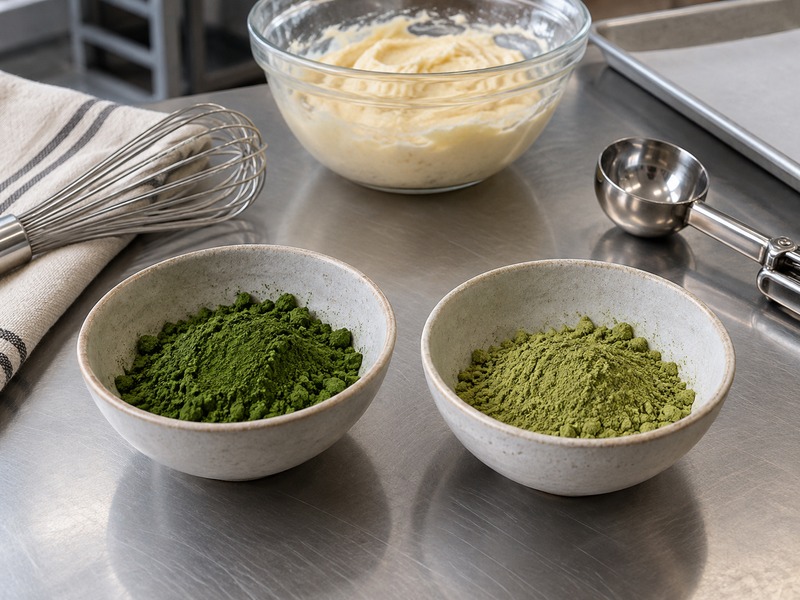
This guide is for bakery, beverage and ingredient teams. The goal is to purchase a powder that works in a specific finished product, not to win an argument about grade terminology.
1. What does “culinary grade” tell a buyer?
Treat the label as a starting description
It usually signals that the supplier expects the tea to be mixed with other ingredients rather than served plain. It does not state the powder’s bitterness, shade, particle behavior, origin, safety results or how it performs after heating. Suppliers may use the term differently. Ask for an actual specification and sample tied to the offered lot. If a sales page says “culinary,” request the applications it has been tested in and the sensory profile the supplier expects.
Write your own acceptance language. “Bright green after a pastry bake” or “noticeable tea flavor in a milk drink at the approved dose” is more useful than a grade adjective. The product brief should name the formula and process used for approval. If the powder is bought for both beverages and bakery items, test both; a single grade label cannot guarantee success in two very different applications. Keep the approved sample and records so future shipments are judged against the same target.
| Label or claim | What it may suggest | What still needs testing |
|---|---|---|
| Culinary grade | Recipe use | Flavor, color and process fit |
| Ceremonial grade | Plain-tea positioning | Performance in milk or heat |
| Premium | Marketing position | Measurable specification |
2. Which application should be tested first?
Choose the product that pays the bill
A powder bought for a bakery line should be tested in that line’s dough, cream or filling. A powder bought for café lattes should be tasted in the actual milk and sweetener. The same matcha can deliver different results because heat, fat, water and sugar change how tea is perceived. Start with the highest-volume or highest-value use. Specify serving dose and finished product size before comparing suppliers. A sample that looks dark in its pouch may still be the best value when its flavor survives a rich filling.
Keep one control formula. Change only the matcha candidate while holding other ingredients, equipment and process fixed. Evaluate color under consistent light and taste at the actual point of sale. If the product is shipped, include the relevant hold period. A water tasting is helpful for understanding the tea, but it cannot approve a powder for pastry cream or a canned drink. Record what changed and how that affects cost per accepted unit.
| Application | Key observation | Likely hidden failure |
|---|---|---|
| Bakery dough | Cooked color and flavor | Heat dulls shade |
| Cream filling | Smooth dispersion | Green specks |
| Café latte | Tea after milk and sugar | Flavor disappears |
| Dry blend | Powder flow | Caking or segregation |
3. How should flavor be specified?
Describe the finished bite or sip
Some culinary-positioned powders are more assertive, which can help them remain noticeable in sugar and fat. Too much roughness can also make a dessert unpleasant. Evaluate candidate doses in steps and write a sensory description: clear green-tea note, acceptable bitterness, no stale or fishy finish. The exact language should come from the brand’s trained tasting team and product, not a generic tea chart. A supplier’s “strong” may mean something different from a customer’s “strong.”
Taste plain and in use. A plain water sample can reveal off-notes that sweet cream hides temporarily. The finished product shows whether tea flavor survives. Taste after storage where relevant. A cake may develop a different note after a day in packaging than it has when warm. Retain both plain-tea and application references from the approved lot. If a new lot requires a substantially higher dose, the buyer should review its economics and whether the increased powder changes texture.
4. What should be done about color?
Judge the color after the actual process
Color is often a purchase driver, but dry powder shade is only the first checkpoint. A hot bake, acidic fruit filling or long display period can change the finished appearance. Photograph candidate products under the same light at comparable times. Do not ask the powder supplier to guarantee the color of a recipe it has never seen. Define an acceptable range for the specific product and determine whether color loss comes from powder, process, packaging or display.
Avoid the wrong fix. Raising matcha dose can make a product greener while adding bitterness and cost. Food color can alter the ingredient statement and customer expectation. A shorter heat exposure or a different point of matcha addition may be more appropriate, subject to food safety and process validation. Separate the color trial from the flavor trial so the team sees the tradeoff. A genuinely good buying decision may choose a less vivid powder that tastes better and behaves more consistently.
| Color issue | First check | Possible response |
|---|---|---|
| Dull baked crumb | Heat and recipe pH | Rework process trial |
| Uneven green spots | Dispersion | Premix or sieve |
| Rapid fading in pack | Light and oxygen exposure | Packaging study |
| Lot-to-lot shift | Supplier blend | Incoming reference check |
5. How does particle behavior affect production?
Watch mixing, dust and equipment loss
Matcha is a fine powder. It can clump in liquid, dust during scaling or stick to a mixing vessel. These behaviors affect both finished quality and cost. Test the powder on the planned equipment at a realistic batch size. For wet formulas, compare dry blending with a premix slurry. For dry mixes, check whether the tea distributes evenly and stays mixed after transport. An attractive small bench sample may not reveal a powder that bridges in a hopper or leaves residue in a production mixer.
Measure losses. Weigh matcha charged to the batch and estimate what remains in screens, vessels and transfer lines. If a fine screen removes many green lumps, determine whether those are supplier-related agglomerates or process-created pockets. A small change in humidity can affect flow, so storage and opened-pack handling belong in the procedure. Write a cleaning plan that prevents the next product from carrying unwanted green tea color or flavor.
6. Which safety and compliance records matter?
Match documentation to the destination market
Request a current product specification, lot-linked certificate of analysis, traceability data and safety testing required by the buyer’s program and market. If the supplier makes organic, origin or other claims, request the records supporting those claims for the exact lot. Grade terminology does not stand in for safety evidence. The quality team should set acceptance limits and decide what happens when a document is missing or a result is outside the agreed range.
Check the identity chain. A test report should name the supplied product and lot; a general brochure is not sufficient. If the powder is repacked or blended after initial certification, include those steps in the review. For branded finished goods, assess ingredient and caffeine-related claims under local rules. A buyer can describe matcha as a tea ingredient without adding unsupported health promises. Regulatory review should happen before labels are printed, not after a launch photo has been approved.
| Record | Decision it supports | Common gap |
|---|---|---|
| Specification | Product acceptance | Too broad for application |
| Lot analysis | Incoming release | Different lot number |
| Traceability | Recall and origin review | Missing repacker |
| Claim certificate | Label review | Wrong product or market |
7. What should the supplier agreement control?
Prevent a familiar name from masking a new powder
The contract should identify the approved specification, packaging, minimum lot information and change-notice rules. Tea blends can change with harvests; that may help maintain consistency, but the buyer should know when a material sensory or physical shift occurs. Agree on sample retention and the method for comparing new lots. If a supplier offers several culinary grades, put the exact product code on the purchase order. A familiar label is not enough to protect a bakery formula.
Define substitutions before a shortage. A replacement powder should be retested in the target application and approved by product and quality teams. Set a realistic lead time and reserve plan. Overbuying a large lot can create aging and storage loss; underbuying can force a rushed switch. A supply agreement that addresses both quality and continuity is more useful than a promise that the tea is “suitable for all recipes.”
8. How should the powder be stored and handled?
Protect usable quality after opening
Choose a pack size that fits production turnover. A very large bag can lower purchase price per kilogram while increasing open-pack exposure and waste. Follow the supplier’s storage instructions and validate handling within the actual facility. Keep lot labels legible after bags are opened. Control moisture, light and odors as relevant to the product and packaging. Powder that cakes may be hard to dose even if its flavor remains acceptable in a lab sample.
Check real staff behavior. Observe how a bag is resealed, measured and returned to storage during a normal shift. If the process requires staff to scoop from an open container for hours, evaluate whether the powder changes in flow or aroma. A pre-portioned system may cost more packaging but improve consistency and stock control. Test it on the line before changing the purchasing format. The best pack is the one that supplies acceptable powder through its actual use period.
9. How should the tea be costed?
Compare cost per accepted product
Use the approved matcha dose in a finished serving, plus losses during handling and rejected output. A cheaper powder that needs more grams or creates visible specks can be more costly than its quote suggests. A more expensive powder may be wasted if its subtle qualities vanish under chocolate or heavy sugar. Run a small cost matrix from the same product trial: dose, material price, yield and sensory score. Do not compare suppliers solely on bulk quote or on an untested “grade.”
Include change cost. A late powder substitution can require new pilot work, photography, labels or customer communication. Long-term value depends on stable supply and documentation as well as ingredient price. If the brand uses the same tea in several products, calculate cost separately for each application. A powder might be the best latte choice but a poor bakery choice, and splitting purchase specifications can be economically sensible.
| Cost line | Data source | What it reveals |
|---|---|---|
| Dose per unit | Accepted trial | True tea consumption |
| Process loss | Pilot mass balance | Hidden waste |
| Reject rate | Production samples | Quality cost |
| Lot changes | Retest records | Continuity cost |
10. What would an approval pilot look like?
Run the exact product with more than one lot
Shortlist two or three powders and test them at measured doses in the intended formula. Prepare products on the planned equipment, then evaluate taste, color, texture and yield at the point of sale. Include packaging and holding where relevant. Request the lot records before placing a commercial order. If repeat purchase is planned, test a second lot or define how each incoming lot will be released. An approval based on a single pouch and a water tasting is too thin for a production ingredient.
Write a useful specification. Name the application, accepted sensory profile, color range, physical behavior, required documents, pack and change triggers. Keep a retained sample and finished-product reference. If a candidate fails, adjust one variable and retest rather than treating the supplier’s grade description as proof. Place a limited first order against the approved standard, then expand after the line produces consistent saleable units.
Reference
Naoki Matcha, “Understanding the real difference between ceremonial and culinary grade matcha” discusses the limits of grade labels. The purchasing checks above are proposed application tests, not a formal grading standard from that article.
FAQ
Q1: Is culinary grade matcha officially standardized?
The term is not a universal formal grade; ask for a product specification and test the application.
Q2: Can it be used in lattes?
Yes, if the finished latte meets flavor, texture and color targets at an acceptable dose.
Q3: Does a brighter powder always bake greener?
No. Test the actual heating process and packed product before approving color.
Q4: What is the key buying document?
A lot-linked specification and analysis set, tied to an accepted finished-product sample.
Q5: Can one powder serve every recipe?
Possibly, but each materially different application should pass its own trial.