
A café can buy a fragrant loose leaf hojicha sample, brew one lovely pot, and still end up with a weak menu drink. Service introduces cup size, water quality, hold time, staff variation, and price. This guide shows how to turn roasted loose tea into a repeatable product without pretending that every leaf grade or roast behaves alike. It covers brewed tea and concentrate; a powdered latte has different handling needs and should be evaluated separately.
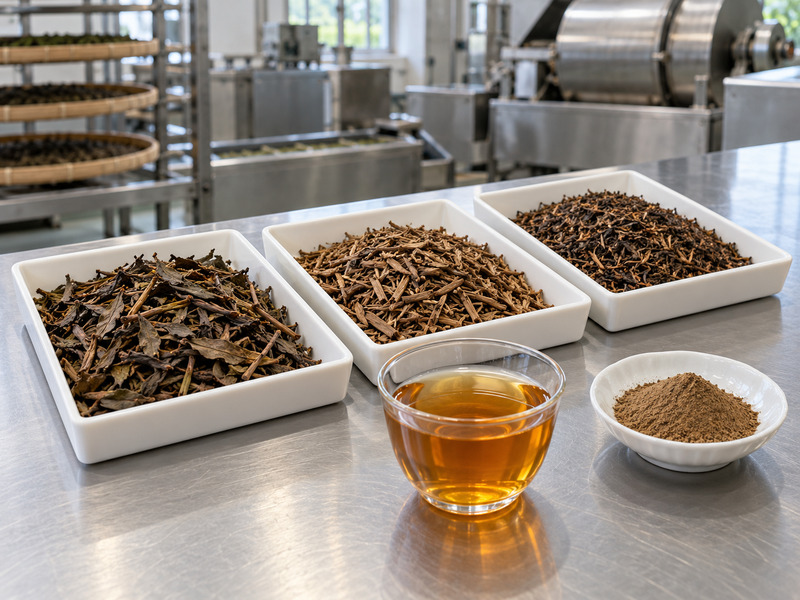
Contents: definition · leaf form · roast · brewing · water · iced service · holding · cost · supplier · launch
1. What counts as loose leaf hojicha?
Specify the material, not only the name
Hojicha is green tea that has been roasted. Loose leaf offers whole or broken leaves, stems, or a blend of both, and the exact material changes aroma, extraction, and bulk density. A photo of brown tea in a catalog will not tell you whether it will fill an infuser cleanly or throw fine particles into the cup. Ask for a lot-specific product description and a representative sample. Handle the dry leaf. Note the proportion of stems, the amount of dust, and whether pieces are uniform enough for the intended basket or filter. A business selling the tea in retail pouches must also consider how that leaf looks after shipping; a café using large brew baskets cares more about yield and flavor. Keep the approval sample beside the written specification. Japan’s agriculture ministry lists hojicha among traditional Japanese tea types, but commercial leaf form and roast level remain choices for the buyer and supplier to define.
| Leaf form | Operational upside | Watch item |
|---|---|---|
| Larger leaves | Clean presentation in a clear pot | Lower packing density |
| Mixed leaves and stems | Often a broad roasted aroma | Lot-to-lot proportion |
| Fine broken leaf | Faster extraction | Dust and filter loss |
2. Should a café prefer leaves, stems, or a blend?
Choose by the served cup
Stems can offer a distinct aromatic profile; leaf-heavy blends can supply more body. Neither composition wins without a tasting target. Compare coded samples at the same dry mass and water ratio, then repeat at the recipe each candidate actually needs to meet the target. A blend that looks expensive by kilogram may produce more sellable cups if it extracts cleanly at a lower dose. Conversely, a cheap fine cut can over-extract during a busy shift. Taste blind before pricing. Let staff describe roasted, sweet, woody, bitter, or stale notes without seeing the supplier label. Evaluate the liquor warm and as it cools. If a packaged tea is the goal, test the customer’s probable brewing setup, not only the café’s professional filter. A product that needs an unusually narrow time window may be a poor choice for a tea bag or home pouch even if a trained barista can make it shine.
3. How dark should the roast be?
Set a flavor range for procurement
Roast depth changes aroma and visual color, but the darkest cup is not necessarily the most satisfying. A light roast can preserve more of the original tea character; a deeper roast can push toasted notes forward. Japan’s MAFF description of Kaga bocha explains that darker roasting increases roasted aroma, an observation that is useful for tasting design but does not establish a single optimum for all hojicha. Ask the supplier how it controls roast endpoints and what variation it accepts between lots. Then define your own sensory boundaries with reference cups. Check the cooled liquor. Smoky or burnt defects may be hidden while the pot is steaming and become obvious later. For a menu that includes milk, taste the brewed concentrate in milk as well as plain water. For a standalone tea service, prioritize clarity and finish over sheer color. Record the approved range with words and a physical reference sample, since “medium roast” can mean different things to different sellers.
| Roast direction | Typical tasting question | Menu fit to test |
|---|---|---|
| Lighter | Is tea character still clear? | Plain hot service |
| Medium | Does toast balance body? | Hot or iced tea |
| Deeper | Does smoke cross into bitterness? | Milk concentrate |
4. What brew recipe should a team test first?
Use a fixed ratio as a starting experiment
Begin with a measured leaf mass, water mass, temperature, and contact time. For example, 5 g of tea in 250 g of hot water is a useful bench ratio for comparison, not a claim that every hojicha should be brewed that way. Make three cups that vary only contact time, perhaps two, three, and four minutes. Strain each completely at the target time. Ask tasters to assess aroma, body, bitterness, and finish without knowing which cup is which. Write down filtered yield. The tea retained by wet leaves affects cost and the volume actually served. Once a candidate passes, test it in the intended pot, basket, or brewer; an open tasting cup is not a service system. A recipe card should state how much leaf belongs in the vessel and when a timer starts. “Add hot water and wait a while” is not training. If the operation offers refills, develop those separately because a second infusion rarely duplicates the first.
5. Why does water matter?
Control the variable that fills most of the cup
Different mineral profiles and off-odors can shift tea flavor. A roasted profile may seem strong enough to hide poor water, yet chlorine or a very hard supply can dull the finish. Use the water treatment already present at the site during approval. If stores have different water systems, send the same leaf and recipe to more than one location. Don’t judge from headquarters alone. Compare a plain water control and brewed tea at each site; this helps separate water faults from leaf faults. Water temperature should be stated as a measurable range and checked at the pour, not inferred from a kettle setting. A kettle may lose heat while staff prepare several orders. If a vendor recommends a temperature, test it with the actual brewer and cup. For a retail pack, provide a clear home brewing range and a note that customers may adjust strength. Avoid highly precise claims that your own trial has not supported.
| Variable | Record in the trial | Reason |
|---|---|---|
| Water source | Site and treatment | Flavor comparability |
| Pour temperature | Measured at vessel | Extraction repeatability |
| Dry leaf mass | Grams, not spoonfuls | Cost and strength |
| Filtered yield | Served grams | Honest cup costing |
6. Can loose leaf hojicha become an iced tea?
Account for dilution before changing the leaf
An iced cup needs a different brew plan. One approach is a stronger hot brew poured over a measured mass of ice; another is a controlled cold infusion. They can taste quite different. For the hot route, specify leaf mass, water mass, filtered yield, ice mass, and final cup volume. Taste at handoff and after the ice has melted partway. Watch the end of the cup. A drink that opens with attractive roast aroma can finish thin and watery. For cold infusion, set a tested time and refrigeration procedure under the business’s food-safety program; do not imply that overnight counter storage is safe. If the iced tea will be sweetened or mixed with fruit, taste the plain tea first so flavor problems are not hidden under syrup. A clear, unsweetened iced hojicha can serve a different menu role from a sweet milk latte, reducing overlap between products.
7. How long can a brewed batch be held?
Validate the operation’s own holding rule
Brewing a large batch can improve speed, but holding changes aroma and introduces handling questions. A buyer should not borrow a universal number of hours from a blog post. Define batch size, vessel, cooling method, storage temperature, labeling, and discard point with the company’s food-safety team. Taste the brew at the start and at the planned end of hold. Compare the final cup. If the roasted note fades or an astringent edge grows, shorten the interval even if the batch remains within a safety procedure. For hot service, a fresh steep may be faster than maintaining a hot urn that gradually changes flavor. For cold service, use clean, food-safe containers and track lot and preparation time. When a batch fails the sensory standard, do not quietly dilute it or add syrup. A small, well-controlled batch is usually a better pilot than a full-day tank that nobody has evaluated.
8. What does a loose leaf serving cost?
Calculate from dry mass and sellable yield
Divide the landed cost of the leaf used in a batch by the number of cups that meet the approved fill. Include tea retained in the filter, discarded trial cups, packaging, and labor. If a premium whole-leaf tea supports a visible pot service, the presentation may justify a different price than a quick takeaway cup. That is a merchandising decision, not a claim about inherent quality. Count what gets served. A 250 g brew may yield less than 250 g after the leaf is strained. The difference matters when a margin target is tight. Compare refill policy, cup size, and whether the guest receives a pot or one poured cup. If retail pouches are part of the plan, test packaging cost and the number of home servings stated on pack. Avoid advertising an unrealistically high serving count based on a weak brew nobody would enjoy.
| Cost component | How to estimate | Common blind spot |
|---|---|---|
| Tea leaf | Dry grams × landed price/g | Dose drift |
| Brew loss | Input water minus filtered yield | Leaf absorption |
| Service | Pot, filter, cup, time | Reusable equipment cleaning |
| Waste | Unsold or failed batch | Overlarge preparation |
9. Which supplier checks protect consistency?
Ask for traceable leaf and a repeatable roast
Request the ingredient specification, origin and processing description, lot code, storage instructions, shelf life, and applicable quality records. Confirm whether a blend can change composition within the same product name. A buyer may tolerate natural variation, but a chain needs enough information to decide when a lot requires a new tasting. Retest the next shipment. Compare its dry appearance and brewed cup with the approved reference before distributing it to every store. If menu or pack copy says “Japanese,” verify the exact origin claim against current documentation. Do not assume that every product sold under a Japanese tea name was grown or roasted in one named prefecture. Ask how the supplier handles complaints or traceability requests. Matcha Village’s B2B tea catalog includes hojicha-related ingredients; confirm the loose leaf SKU and its records directly if it is under consideration.
10. What makes the menu launch credible?
Define a simple, repeatable promise
Customers need a clear description: roasted green tea, served plain or with a specified addition. Staff need a recipe and a quick way to explain why the drink looks brown yet remains tea. Avoid a blanket “caffeine-free” promise; hojicha is made from tea, and any exact caffeine statement needs product-specific support. Train on taste, not folklore. Give each store a reference cup, a timer, and a short list of faults: too weak, too bitter, smoky, or full of fines. Test the recipe with a new operator and a second leaf lot. Then review sales and remake notes after launch. If guests repeatedly add milk, consider a separate milk tea product instead of silently changing the plain tea recipe. For a buyer requesting samples, provide the proposed serving format, brew equipment, target price, and market; those details help the supplier send a useful comparison set.
One last check belongs at a second location. Send the approved leaf and recipe to another store with its normal water and brewer, then ask an operator to make the tea without coaching. Compare filtered yield and flavor with headquarters. If the result drifts, the company can adjust water treatment or training before customers encounter two different cups under one menu name.
| Final check | Pass evidence | If it fails |
|---|---|---|
| Brew ratio | Measured at both stores | Correct tools |
| Filtered yield | Within target | Review leaf or filter |
| Cup flavor | Matches reference | Adjust water or training |
Final recommendation
Choose loose leaf hojicha by the brewed cup and the service method. A compelling dry aroma matters, but a documented recipe, filtered yield, and repeatable roast make the tea commercially dependable.
FAQ
Q1: Is loose leaf hojicha the same as hojicha powder?
No. Loose leaf is steeped and strained; powder is dispersed in a drink or food. They require different tests.
Q2: Can hojicha be brewed twice?
It can, but a second infusion should be evaluated as its own cup. Do not promise that it matches the first.
Q3: Must loose leaf hojicha come from Kyoto?
No. Verify a particular origin claim from the supplier’s documents rather than assuming it from the tea name.
Q4: Can a café batch brew it?
Yes, with a measured recipe and a validated holding procedure. Check both safety and flavor at the end of hold.
Q5: How should staff explain the brown color?
Say that roasting changes the tea’s appearance and aroma. The drink remains tea made from green tea material.
Sources: Japan MAFF, Uji tea categories; Japan MAFF, Kaga bocha roasting.