
A black sesame hojicha latte pairs two toasted flavors that seem naturally compatible. In a cup, they can also blur into a thick, bitter drink with little tea identity. A café needs to control sesame form, tea strength, milk, sweetness, and texture. It also needs to treat sesame as a serious allergen rather than a decorative flavor. This guide turns the idea into a measured menu trial for hot or iced service.
Contents: product goal · sesame · tea · recipe · milk · texture · iced service · allergens · cost · launch
1. What should a black sesame hojicha latte taste like?
Make both ingredients recognizable
A successful drink gives black sesame’s nutty, slightly savory depth and hojicha’s roasted-tea aroma without becoming flat or ashy. Set a target before adding syrup: tea first, sesame first, or balanced. Ask blind tasters which ingredients they detect. Don’t trust the color. A gray-brown cup can look strongly flavored even when milk and sugar dominate the palate. Taste the drink immediately and again after ten minutes. Sesame oils and tea particles may change the texture as the cup stands. Consider the customer who has never heard of either ingredient; the menu should describe the flavor honestly, perhaps “roasted green tea with black sesame and milk.” If the sesame is only a dusting and the main base is a standard hojicha latte, name it as a topping, not a full black-sesame drink. The promise should match the amount and role of each ingredient.
| Flavor target | What tasters should identify | Likely risk |
|---|---|---|
| Tea-led | Hojicha aroma, sesame finish | Sesame disappears |
| Sesame-led | Nutty body, tea lift | Tea becomes invisible |
| Balanced | Both in each sip | Heavy, muddled finish |
2. Which black sesame ingredient should be used?
Compare paste, powder, and syrup honestly
Black sesame paste can give body and vivid flavor, but its oil may separate and it can be difficult to portion. Sesame powder may disperse more easily if its grind and fat content suit the drink. A syrup can be fast, though its sweetness may dominate. Read the whole specification. Some “black sesame” products contain sugar, oils, dairy, or stabilizers. Compare candidates at equal sesame flavor intensity, not equal spoonfuls. Note the amount needed to make sesame identifiable beside hojicha. Ask whether the product is roasted, how it is packaged, and how it should be stored after opening. A paste that is smooth in a jar may become grainy in cold milk; a powder may float before it hydrates. Test with the station’s actual whisk or blender. Choose the ingredient that produces the intended flavor with a repeatable portion and manageable cleanup.
3. Which hojicha profile complements sesame?
Avoid stacking two burnt notes
A very dark hojicha can push the combination toward smoke and bitterness, especially with heavily roasted sesame. A gentler tea may give the cup more separation between nutty and roasted notes. Compare at least two tea lots or roast profiles in the same milk and sesame formulation. Taste each base alone. A poor tea cannot be repaired by the sesame, and a stale sesame paste cannot be rescued by extra tea. Pure hojicha powder is useful for a strong milk drink, provided it disperses and does not leave excessive sediment. A brewed concentrate can make a lighter, cleaner cup, but may be too quiet under sesame paste. Record the tea mass and the final served volume. If a supplier suggests a specific dose, treat it as a starting point for the shop’s recipe rather than a guarantee. The accepted cup should still taste like roasted tea after the sesame has been stirred in.
| Tea choice | Possible benefit | Test condition |
|---|---|---|
| Lighter roast powder | Clear tea lift | Milk and sesame together |
| Deep roast powder | Strong color and aroma | Bitter finish after hold |
| Brewed concentrate | Cleaner texture | Flavor after dilution |
4. What recipe should a café trial first?
Separate tea and sesame preparation
A useful pilot starts with a familiar hojicha latte base, then adds a measured black sesame component. For a development cup, the team might trial 4 g pure hojicha powder dispersed in 40 g warm water, add around 180 mL milk, and compare two weighed sesame-paste doses. Those values are trial inputs and must be adjusted to the chosen ingredients and cup. Mix the sesame with a small portion of milk before combining it with the tea; dropping a spoonful of thick paste into a full cold cup can leave lumps. Keep a control cup. Taste the hojicha latte without sesame alongside each variant. This reveals whether the new ingredient creates a useful product or merely hides the base. Hold sugar constant while changing sesame dose. If the paste is sweetened, count that sugar before adding syrup. Document sequence as well as grams; two baristas can produce different cups from identical ingredients if one emulsifies the paste and the other does not.
5. Which milk best supports the pairing?
Check flavor and foam with exact brands
Dairy milk can soften roast and sesame bitterness. Oat drink can deepen cereal notes; soy may add body; almond can add another nutty flavor that competes with sesame. These are possibilities to test, not fixed rules. Use the actual carton and the shop’s normal steam or cold-pour method. Watch the finish. A milk may taste pleasant in the first sip and leave a heavy, oily impression after the sesame settles. Check whether the drink foams consistently for hot service and whether the cup separates over ice. If the menu permits substitutions, test each approved one; do not promise “any milk” without tasting. Review ingredient labels because a plant drink may contain additional allergens or sweeteners. Record whether the standard version is dairy or plant-based, and make menu photography reflect that standard. The milk choice is part of the product, not an afterthought.
6. How can the texture stay smooth?
Control particles and fat
Hojicha powder is a suspension, while sesame paste contains ground solids and oil. Together they can make a rich cup or a gritty one. Start by dispersing each ingredient separately. Use a warm tea slurry, soften sesame paste with a measured liquid portion, then combine and add the remaining milk. Inspect the glass. Look for black flecks, an oil ring, and sediment after several minutes. A high-speed blender may improve texture in a test kitchen, but a café may need a faster tool. Time the method with real staff. If texture cannot be made acceptable without extensive blending, consider another sesame ingredient or lower dose. Do not hide graininess under whipped cream. For a bottled or ready-to-drink product, stability becomes a separate formulation project requiring shelf-life and process validation; a café recipe cannot simply be poured into a bottle and sold later.
| Fault | Possible cause | Test next |
|---|---|---|
| Thick paste lump | Poor pre-dispersion | Warm measured slurry |
| Oil ring | Sesame emulsion breaks | Different paste or method |
| Bottom grit | Tea or sesame particles | Grind and mixing review |
7. Should the iced latte be layered?
Judge the stirred drink before the photograph
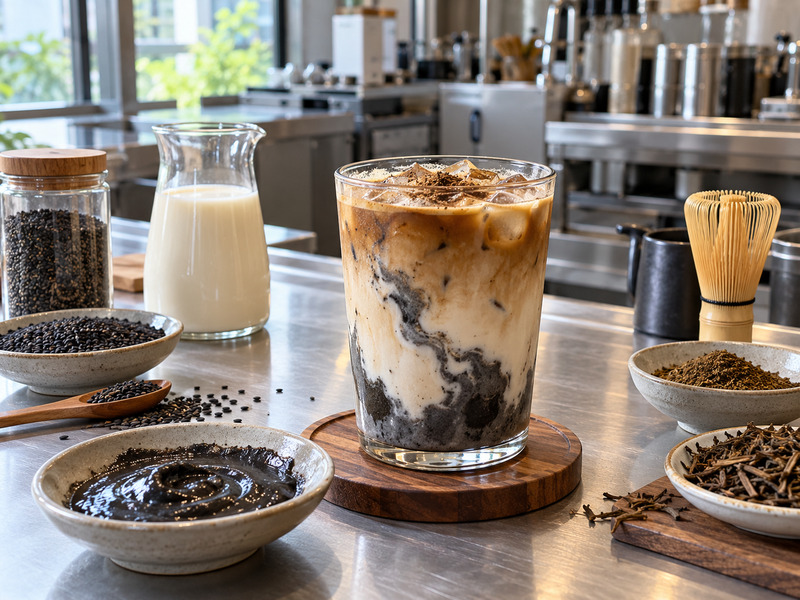
Layering black sesame, milk, and hojicha can create a striking cup, but each layer may taste incomplete until mixed. If the menu shows layers, specify pour order and liquid temperatures so staff can reproduce them. Stir and taste. The customer may shake a takeaway cup or drink through a straw, so the final mixture must be balanced. Weigh ice and assess the cup after partial melt. Sesame paste can settle below ice, making the bottom intensely flavored while the top remains pale milk. Check the inside of the lid and straw for residue. A layered cup may require more service time and have a higher remake rate; quantify that before setting the price. If delivery is offered, test the actual sealed cup after travel. A less theatrical but more stable presentation can be the better permanent menu item.
8. What allergen controls are required?
Treat sesame as an ingredient with operational consequences
Sesame is one of the nine major food allergens recognized by the U.S. FDA. Dairy milk adds another major allergen, and plant alternatives may add soy or tree nuts depending on the product. Review the entire station. A sesame paste spoon, blender jug, or syrup pump used for other drinks can create cross-contact risk. Work with the business’s food-safety team on storage, tool separation or cleaning, staff communication, and menu or label wording for the markets served. A customer who asks for a dairy-free version may still need to know about sesame. Do not use “allergen-free” as a shortcut for “made with oat milk.” For packaged products, confirm ingredient and allergen declarations against the approved formula and current supplier documents. A recipe sheet should name the exact paste and milk brands; substitutions can change allergen statements and flavor at the same time.
| Control point | Record | Staff action |
|---|---|---|
| Sesame ingredient | Supplier and lot | Use approved SKU |
| Shared tools | Cleaning or dedicated use | Follow written procedure |
| Milk choice | Exact carton | State standard recipe |
| Customer question | Menu disclosure | Escalate uncertain requests |
9. What should the shop cost per cup?
Count sesame waste and extra mixing
Black sesame paste can cling to jars, spoons, and blenders. Cost the amount purchased and the amount actually delivered into a sellable cup, not only the ideal recipe grams. Add tea, milk, sweetener, ice, cup, labor, and expected remake rate. Price the process. If the drink needs a blender cycle and cleaning, a premium menu price must cover that work. Compare a paste formulation with a powder or syrup option at equal sensory quality. The cheaper ingredient may require more grams or produce more waste. A limited special can tolerate complexity that a high-volume core menu item cannot. Track sales of the standard hojicha latte during the pilot to see whether the sesame version adds new demand or merely shifts existing orders. That effect matters more than a food-cost percentage in isolation.
10. When is the drink ready for launch?
Require flavor, texture, and allergen sign-off
Two operators should make the recipe from the same card and produce cups that taste and look close enough to serve under one name. Test the drink after ten minutes, not only at handoff. Review exact ingredient brands, storage, cleaning, allergen wording, and a price based on observed preparation time. Keep a retained reference. Save the recipe version, standard photograph, supplier lots, and sensory notes. If black sesame paste or tea roast changes, re-run the cup test. A sourcing request to Matcha Village should describe the sesame profile and milk the hojicha powder must work with; selecting tea from a dry sniff is insufficient. A well-made black sesame hojicha latte gives customers a clear pairing rather than a cup whose only distinctive feature is its color.
A final sign-off should include a cup made after the sesame container has been opened and used during normal service. Oil separation in the ingredient can change the portion even when the scoop looks identical. Stir or handle it according to the approved procedure, then recheck the first and last portions from the container. Keep that observation with the allergen and cleaning review.
| Final check | Pass evidence | If it fails |
|---|---|---|
| Paste consistency | First and last portions match | Revise handling |
| Tea presence | Blind cup after stirring | Adjust roast or dose |
| Allergen control | Documented tools and cleaning | Hold launch |
Final recommendation
Build this drink around two identifiable flavors and a smooth texture. Approve sesame handling as carefully as flavor, then price the time needed to make the cup consistently.
FAQ
Q1: Can black sesame powder replace paste?
Possibly. It may change body and dispersion, so test the finished drink rather than substituting by spoon volume.
Q2: Is black sesame hojicha latte always sweet?
No. Set sweetness after tasting the tea, sesame, and milk together.
Q3: Can it be made dairy-free?
A plant-based formulation is possible, but the exact ingredients and shared tools need review. It will still contain sesame.
Q4: Does layering improve flavor?
Layering changes appearance. Judge flavor after the customer stirs the cup.
Q5: What is the most common technical failure?
Poor dispersion of sesame paste or tea powder can create lumps, oil rings, or sediment.
Sources: Japan MAFF, Uji tea categories; FDA, food allergens; FDA, sesame added as a major allergen.