
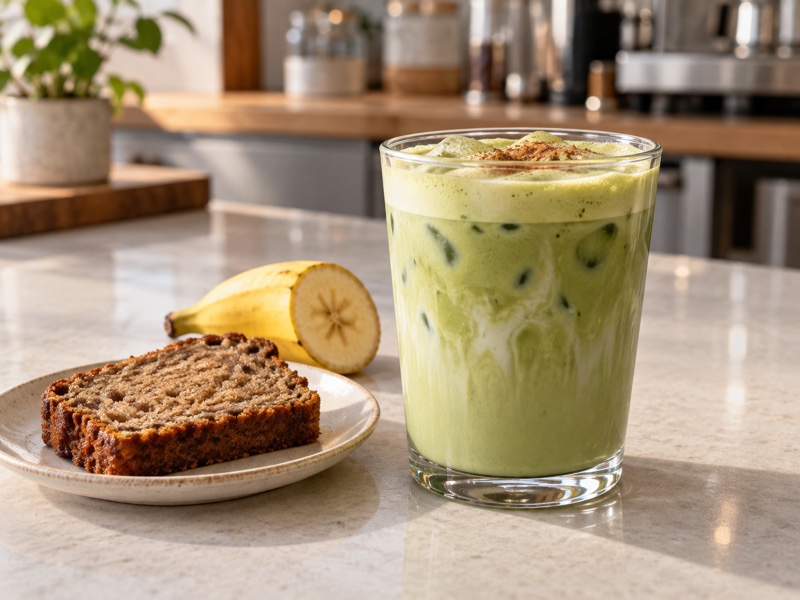
Banana bread matcha promises the comfort of a baked dessert in a glass. It can also become a sweet banana shake with barely a trace of tea. For a café, the useful question is whether customers can recognize banana, warm spice, and matcha after the drink is mixed, without a thick texture that stalls the bar. The Jade Leaf Banana Bread Matcha Latte in current search results blends banana with milk, vanilla, cinnamon, nutmeg, and sweetener before adding matcha. That is a good flavor map. Commercial service needs an exact ingredient format, a measured recipe, and a clear holding rule.
1. What makes a drink taste like banana bread?
Banana alone tastes like banana. The bread impression usually comes from the combination of ripe fruit, gentle vanilla, a small amount of spice, milk richness, and enough sweetness to suggest a baked crumb. Do not try to add every bakery ingredient to a glass. Flour and raw batter are unsuitable shortcuts for a café drink. A little cinnamon can cue the idea; too much covers the tea and leaves sediment at the bottom. Nutmeg can be especially forceful in a cold cup.
Write a sensory target that a team can test. “Ripe banana up front, restrained cinnamon and vanilla, clear matcha aftertaste” is actionable. “Tastes like a hug” cannot guide the next batch. Compare a plain banana matcha and a banana-bread version side by side. If tasters cannot identify the extra baked notes, the special name may be doing more work than the recipe. If they can identify only cinnamon, pull the spice back.
| Note | Ingredient that may supply it | Common excess |
|---|---|---|
| Ripe banana | Fruit or a verified banana base | Pasty texture |
| Baked warmth | Cinnamon, tiny nutmeg dose | Spiced-milk taste |
| Sweet crumb | Vanilla and sweetener | Dessert syrup dominance |
| Tea finish | Matcha powder | Bitter clash with spice |
2. Should a café use fresh banana or a prepared base?
Fresh banana brings a familiar taste and may look appealing in a menu description, but ripeness changes sugar, aroma, and texture. It also adds peeling, blending, utensil cleaning, and fruit waste. A prepared banana purée can improve consistency if its ingredient list fits the product brief. A flavored syrup is quick and stable but may taste more like candy than bread. Each format can be legitimate if the menu describes it honestly and the sensory result holds.
Test the format at the actual service pace. Weigh peeled banana before blending, record browning after the intended hold, and check whether a serving from the beginning of a batch tastes like one from the end. If fresh banana is used, set receiving and ripeness rules: visibly green fruit will not behave like speckled ripe fruit. If a purchased base contains sweetener or stabilizer, count those ingredients when balancing the rest of the formula. Ask the supplier for its handling instructions and use-by conditions.
3. How can a team build a trial recipe?
Start with one cup size. For a roughly 350 ml iced trial, blend 65 g ripe peeled banana with 110 g milk, a small measured dose of vanilla, a pinch of cinnamon, and ice as needed. Prepare 2 g matcha in 45–55 g water separately and pour it over the banana milk. These figures are bench trial points, not a finished commercial specification. If the banana is very ripe, test before adding syrup. If a purchased base is sweetened, do not copy the fresh-fruit recipe blindly.
Make one variable change at a time. Try a plain banana control, then a cinnamon version, then cinnamon plus vanilla. Blind-taste the drinks after stirring. That will tell you whether each addition improves the bread character or only makes the cup sweeter. Weigh all additions during development; “a dash” becomes inconsistent when five people work the same bar. Once a candidate wins, validate pump or spoon doses against the scale and record them on the recipe card.
| Cup | Banana base | Cinnamon | Vanilla | Purpose |
|---|---|---|---|---|
| A | Fixed | None | None | Plain banana control |
| B | Fixed | Small dose | None | Is spice useful? |
| C | Fixed | Small dose | Small dose | Does vanilla complete the note? |
4. How much matcha can survive the banana and spice?
The answer depends on the powder. A mild matcha may vanish in milk and ripe fruit; a rough one may leave a bitter edge that clashes with cinnamon. Test the tea in the finished drink at a fixed banana dose. A simple three-point trial around your normal latte dose gives a more useful answer than choosing the greenest powder by sight. Taste once immediately and again after the ice melts. A high dose that seems vivid at the first sip can become too sharp when the colder banana flavor recedes.
Record lot-linked powder samples, not only brand names. A café chain needs the flavor to repeat across deliveries. Ask for a specification, storage instructions, and lead times. If the powder changes, prepare the old and new lots in parallel with the approved recipe. This drink is a useful stress test for a supplier because sweetness and spice can hide some faults, but not all; a dusty mouthfeel or stale aroma still comes through in the finish. Set a rejection rule for those outcomes.
5. Why does the texture become too thick or grainy?
Banana solids, ice, and powder all add body. A drink that flows well from the blender may thicken as it sits, especially when a prepared base contains stabilizers. Decide whether this is a sippable latte or a smoothie. If the menu promises a latte, a straw should work and the drink should not require a spoon. If a smoothie texture is intentional, list it as a separate product with its own cup and service method.
Check banana weight, degree of ripeness, milk amount, and blending time. Overblending can add air, while underblending can leave fruit pieces and matcha specks. Sifting the powder and dispersing it in water before assembly prevents dry green pockets. Taste from the top and bottom after five minutes. A thick fruit layer may settle below a thin tea layer; the customer then receives two drinks in one cup. A short, repeatable blend and a defined ice amount are easier to train than a barista’s visual guess.
| Texture defect | First variable to check | Test |
|---|---|---|
| Pasty sip | Banana mass | Reduce fruit in measured steps |
| Green specks | Tea dispersion | Sift and whisk tea separately |
| Large foam cap | Blend time and speed | Shorten and compare |
| Dense bottom | Holding and pour order | Taste after five minutes |
6. Which milk and sweetener make sense?
Dairy and oat milk both add body; oat can also add sweetness that makes a banana-bread theme feel stronger without extra syrup. Coconut may pull the drink toward a tropical banana profile, which could be pleasant but less like bread. Choose specific milk products and taste them at equal weights. The bar should have an approved standard and one or two tested alternatives. A vague “milk of choice” instruction leaves sweetness and allergen handling to chance.
Sweetener is best treated as a correction after fruit and milk are chosen. Compare no added sugar with a small, measured addition. Maple or brown-sugar notes can support a baked impression, but their cost and flavor vary. If a café uses a commercial brown-sugar syrup, check whether it already contains flavorings that fight the tea. Avoid making an unsupported “no added sugar” claim when the banana base or milk contains sweetener. The recipe, ingredient labels, and menu language should agree.
7. How should a café handle ripe fruit safely?
Fresh banana prep needs a place in the food-safety plan. Wash hands and utensils, peel and portion in a clean area, protect prepared fruit from cross-contact, and date any batched base according to an approved local procedure. Browning is a quality signal, but its absence does not prove safety. Acid can slow visible browning while changing the drink’s taste. Do not add lemon merely to improve a photograph without testing its effect on milk, tea, and the ingredient statement.
If the drink is made to order, measure whether peeling and blending can fit the queue. A prepared banana base may help, but its batch size should match expected sales and its holding rule. Frozen fruit changes blending and temperature; test it as a different input. For multi-site rollout, send a preparation sheet with the same ripeness standard and equipment assumption to every location. A blender cup that holds two servings may process the fruit differently from a small single-serve jar.
8. What happens after five or ten minutes?
The fruit layer can thicken, tea color can dull, and ice can dilute the cup. Make a fresh control and hold matched samples for five and ten minutes in the actual takeaway cup. Evaluate appearance, straw flow, banana aroma, spice intensity, and tea finish. Stir one sample before tasting; the customer will. If a thick plug of fruit remains at the bottom, change the base viscosity or serve the drink fully blended rather than relying on a fragile layer.
Also test a warm version separately if it is under consideration. Heat releases banana and spice aromas differently and may make a thick fruit base seem more like purée than latte. An iced recipe cannot be converted by removing ice and steaming everything. Keep the hot item off the menu until it has its own sensory and handling approval.
| Service moment | Quality question | Decision |
|---|---|---|
| Immediate handoff | Can tea and banana be tasted? | Formula approval |
| Five minutes | Does it still sip through a straw? | Base viscosity |
| Ten minutes | Is the mixed flavor balanced? | Takeaway suitability |
| Delivery trial | Does packaging preserve texture? | Channel choice |
9. How should the recipe be costed?
Cost the peeled, saleable banana, not the gross fruit weight. Include fruit waste from overripening, milk, tea, sweetener, garnish, cup, straw, lid, cleaning, and blender labor. An attractive low ingredient cost can hide an expensive prep step. If service takes twice as long as a plain latte, consider that in the menu price and queue plan. Weigh at least five real cups to check that staff are not quietly adding another half banana for texture.
For a seasonal launch, forecast realistic sales against fruit and syrup pack sizes. A promotional garnish such as a brûléed banana slice may look good but add labor and safety work without improving the drink. Test whether customers notice or value it. A photograph and a cost sheet should represent the same cup. If the finance sheet excludes a garnish visible in every menu image, the margin is fictional.
10. When is banana bread matcha ready to sell?
Give the recipe card to another shift and ask for five cups. Compare fill, temperature, thickness, and flavor after stirring. Confirm that each cup clearly tastes of matcha as well as banana-bread notes. Use a small pilot with customers and collect specific feedback: “too thick,” “too sweet,” “cannot taste tea,” or “tastes like banana bread.” Each response points to a different adjustment. A general thumbs-up does not tell the developer what to fix.
Keep this item distinct from an ordinary banana matcha on the menu. The added vanilla-and-spice profile should justify its own name and price. If it does not, simplify the lineup. The next practical step is a three-cup tasting that isolates the bread notes from the banana base, followed by a timed service trial. Once both pass, a café can write a menu description that tells the truth about the drink in the glass.
FAQs
Can I use banana syrup instead of fruit? Yes, but taste it beside a fruit version and describe the ingredient honestly. Syrup may change texture, sweetness, and cost.
Does this drink need cinnamon? A small dose often supplies a baked note, but a cinnamon-free version may suit your tea better. Let blind tasting decide.
Can it be made without a blender? A smooth purchased base might allow that. Fresh banana generally needs processing for a drinkable texture.
Why can’t customers taste the matcha? Banana, spice, or sweetener may dominate. Fix those before increasing powder indiscriminately.
Can it be prepared in advance? Only under an approved handling and holding plan. Test the prepared base for quality and follow local food-safety requirements.