
“Is matcha bitter?” is a useful question only when the tasting conditions are clear. Matcha can have a pleasant, restrained bitterness; a harsh or lingering bite may come from the powder, a heavy dose, hot water, acidic ingredients or stale handling. A café that blames the tea too early may replace a good supplier while keeping the same faulty recipe. Bird & Blend Tea’s guide to bitter matcha reflects the common consumer concern. The following checks turn that concern into a controlled buying and formulation decision.
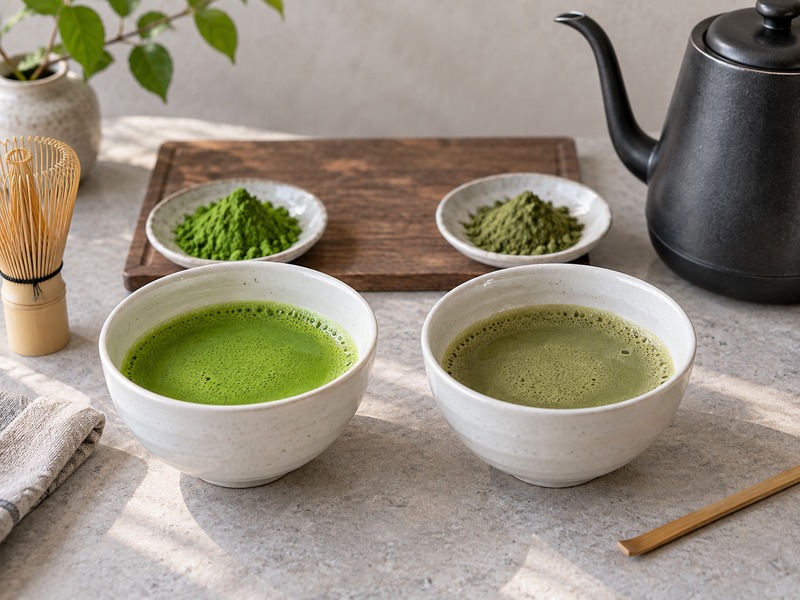
For: café operators, beverage developers, buyers and quality teams. Decision: whether the bitter taste comes from tea quality, preparation or the full recipe.
1. What kind of bitterness is the complaint describing?
Use precise tasting words
Tea has naturally bitter and astringent elements, but tasters often use “bitter” for several sensations. Sharp bitterness appears on the tongue; astringency feels drying; a burnt note recalls overheated ingredients; a sour finish may come from the drink base. Ask tasters when the defect appears and how long it lasts. Taste a measured plain matcha sample beside the finished beverage or dessert. If the plain tea is balanced but the latte is unpleasant, the full formula deserves inspection before the powder is rejected.
Record the context. Note sample temperature, dose, water, milk or other base, preparation time and lot. A casual tasting of yesterday’s cold cup against today’s hot whisked tea is not a comparison. Use the same cup size and a simple scoring sheet for tea presence, bitter intensity, dryness and off-notes. Specific notes give the team something to change.
| Reported sensation | Possible source | Useful comparison |
|---|---|---|
| Sharp first sip | Dose or tea lot | Equal-dose plain tea |
| Dry finish | Astringency or concentration | Lower-dose trial |
| Burnt aroma | Heat exposure | Cooler preparation |
| Sour edge | Acidic base | Tea without acid |
2. Is the matcha dose too high?
Weigh the powder
Scoop sizes vary, and a rounded scoop can deliver far more powder than a level one. Set grams per serving and prepare a short dose ladder with the same water volume and temperature. Taste the samples blind. A stronger cup may look attractive and still overwhelm the palate. In milk or a dessert, the acceptable dose may be higher because fat and sugar soften tea. Do not transfer the water dose directly to a latte without testing the complete drink.
Check the denominator. For a large iced beverage, the amount of ice and milk matters as much as the tea mass. A recipe that tastes harsh before the ice melts may become thin later. Record finished liquid volume and cup build. If reducing matcha fixes bitterness but removes tea character, compare another powder rather than hiding the issue with sweetener.
3. Does water temperature change the result?
Test the actual preparation route
Very hot water can make a cup seem harsher and can alter delicate aromas. Prepare equal-dose samples at several practical temperatures using the same water and mixing method. Taste at a common serving temperature so a hot sample is not favored or penalized merely because it is warm. In a café, also test how the chosen water temperature affects mixing time and service speed. A cooler method that leaves dry clumps is not a useful fix.
Watch heat after mixing. A pre-made concentrate may spend time near warm equipment before it enters milk. A hot latte may expose matcha to heat again during assembly. Record the full route rather than only the initial water temperature. If the bitter note appears only after a long hold, shorten that hold and review the service process before purchasing a new tea.
| Trial variable | Keep constant | Record |
|---|---|---|
| Water temperature | Powder and dose | Bitterness and mixing |
| Hold time | Finished concentrate | Aroma and sediment |
| Serving temperature | Final cup volume | Sensory comparison |
4. Is the water contributing an off-taste?
Compare a known clean source
Matcha prepared in plain water exposes the water’s own flavor. Chlorine, mineral load or an off-note from an unclean system can change the cup. Prepare side-by-side samples with the café’s usual filtered water and a known suitable alternative, keeping tea and method identical. Do not assume an expensive filter automatically improves the result; the comparison should be tasted. If a problem appears only at one store, water and equipment are practical first checks.
Inspect the tools. Old milk residue on a frother, detergent in a whisk bowl or a poorly cleaned holding vessel can be mistaken for tea bitterness. Prepare one sample with clean, dedicated tools. Document cleaning and rinse methods if the difference is clear. A supplier should not be penalized for a taste introduced after the powder leaves its pack.
5. Does the tea lot itself taste harsh?
Compare equal prepared samples
Use the same grams, water, temperature and mixing route for the suspect lot and a retained approved lot. Label cups with codes and have several people taste them blind. Look for consistent differences in bitterness, aroma and color. One taster’s preference is information, but a repeated pattern is stronger purchasing evidence. If the old lot was stored poorly, it is not a fair reference; compare against a properly held sample or another documented candidate.
Ask for traceability. Record the lot number, receipt date, pack condition and storage history. Send the supplier a concrete description and, where useful, a retained sample. Ask whether processing or sourcing changed and request the relevant specification. Avoid claiming that a tea is “low quality” from bitterness alone; some assertive flavor may be intentional, and the right fit depends on the recipe.
| Lot check | Evidence | Action |
|---|---|---|
| Blind taste | Coded score sheet | Confirm difference |
| Pack condition | Seal and date | Check handling |
| Supplier file | Specification and lot | Discuss variation |
| Finished recipe | Equal-dose application test | Decide suitability |
6. Is storage dulling aroma and exposing bitterness?
Review the opened pack
Matcha is sensitive to its handling environment. Repeated exposure to air, heat, humidity and light can change aroma and color. Compare a freshly opened identified pack with powder from the working container, prepared identically. If the latter tastes flat or harsh, the store’s decanting and holding method may be the issue. Label containers with opening and lot details. Buy a pack size the operation can use within its approved handling period.
Keep a practical standard. Store powder according to supplier guidance and the food-safety plan, with a clean tool for each use. Avoid a large transparent jar left near a warm service station simply because it looks good. A quality-control sample should be stored in a way that preserves it for comparison; otherwise the reference degrades alongside the working tea and can no longer explain a complaint.
7. Are the milk, acid or sweetener creating the bitter impression?
Isolate the base
Milk can soften tea, but some plant drinks bring cereal or mineral notes that change the finish. Citrus or fruit acid can make bitterness more prominent. Sweeteners can mask the first sip while leaving a dry aftertaste. Make a small matrix: plain tea, tea plus base, and finished drink. Hold tea dose constant. This isolates whether the objection starts with the powder or emerges after the full recipe is assembled.
Check ingredient changes. A new syrup, milk brand or fruit puree can alter sweetness and acid even when the recipe sheet is unchanged. Record supplier and lot for core components. If reducing acid fixes a harsh spritz, replacing matcha may be unnecessary. If adding sugar is the only apparent fix, assess whether the resulting drink still matches the menu and nutrition information.
| Drink result | Likely question | Trial |
|---|---|---|
| Plain tea balanced, latte harsh | Base interaction? | Compare milks |
| Only citrus drink harsh | Acid level? | Two-acid matrix |
| Sweet first, dry later | Masked bitterness? | Taste after pause |
8. Can poor dispersion make a cup taste uneven?
Sample the full cup
Matcha is suspended rather than dissolved. If powder clumps or settles, the first sip may be weak and the last sip sharply concentrated. Disperse a measured dose in a small amount of water before adding it to the main drink. Compare a whisk, frother and approved shaker using the same dose and cup. Look for dry specks, foam, sediment and whether gentle stirring restores an even taste.
Test the customer’s route. A layered drink taken through a straw may pull sweet base first and concentrated tea later. Taste with the intended lid and straw at handoff and after a short hold. If bitterness appears only at the bottom, the problem may be distribution and service instructions. Do not raise sugar across the whole cup to compensate for an unmixed final sip.
9. How should a buyer respond to repeated complaints?
Use a decision tree, not anecdotes
Collect dated complaint samples and prepare a standard reference drink with an identified tea lot. First check dose and preparation, then water and base, then tea lot. If the lot consistently fails the same controlled test, ask the supplier for investigation and a replacement sample. If only one store fails, audit its tools, water and storage. This approach is faster than changing every ingredient at once because each trial has a clear interpretation.
Price a replacement fairly. Compare candidate powders at the dose that meets flavor and bitterness targets in the actual product. A smoother powder may justify a higher kilogram price if it reduces wasted drinks or needs less powder. Keep evidence for origin or grade claims separate from tasting notes. “Better” should mean better for the chosen use and documented purchasing requirements.
| Finding | Likely owner | Next evidence |
|---|---|---|
| One store reports harshness | Store lead | Water, tools and dose audit |
| One lot fails across stores | Buyer and supplier | Coded lot comparison |
| Only citrus drink fails | Beverage developer | Acid-level matrix |
| Complaints start after opening | Operations | Pack storage record |
Keep the complaint log linked to dates, recipes and lots so the team can see whether the problem follows a shipment, a staff change or a new ingredient. Do not send a supplier a vague report that the tea “tastes bad.” Send the measured preparation and a specific sensory difference. Equally, do not change the approved matcha because of a single unrepeatable cup. A small, controlled trial provides a faster commercial decision than prolonged debate over preferred tea grades.
10. What test closes the issue?
Repeat the result on a normal shift
Write a standard preparation using grams, water volume, temperature range, mixing tool, base and service cup. Have several staff members prepare coded samples from the suspect and proposed tea. Taste at handoff and after the normal customer interval. Record bitterness, astringency, tea clarity, appearance and remake rate. If the proposed fix works only when a developer makes the drink slowly, it is not yet a service fix.
Approve one change at a time. Update the recipe or supplier approval only when the controlled comparison supports it. Keep the old and new specifications and a clear retraining note. The next practical action is a side-by-side standard-cup tasting with measured doses. It gives the team a defensible answer when a customer asks, “Is matcha bitter?” and a better drink when the answer is “this cup is.”
Reference: Why Your Matcha Tastes Bitter (and How to Fix It) discusses the consumer question. The diagnostic procedure here is an independent operating approach.
FAQ
Q1: Is matcha bitter by nature? It can have a modest bitter note, but harshness should be assessed against dose, preparation and the intended recipe.
Q2: Does more sugar fix bitter matcha? It may mask the first taste while leaving the cause unchanged; test tea, dose and base first.
Q3: Can hot water make the cup taste harsher? Preparation temperature can affect flavor. Compare controlled samples at a common tasting temperature.
Q4: Why is the last sip more bitter? Settled matcha or an uneven layered drink can concentrate tea near the bottom.
Q5: When should a café change suppliers? After a documented, equal-dose comparison shows the tea lot consistently misses the agreed finished-drink standard.