
High quality matcha is matcha that meets a defined sensory, process and supply standard for its intended use. A bright sample can impress in a tea bowl yet disappear in a milk latte, while an inexpensive powder can become costly if it needs more grams per cup. Serious Eats’ comparison of 24 matcha powders tested multiple preparations and found that grade labels alone did not predict performance. A professional buyer should set an application-specific specification and compare identified lots under equal conditions.
For: café buyers, beverage developers, distributors and private-label brands. Decision: which tea meets the chosen product standard repeatedly at an acceptable cost.
1. High quality for which product?
Name the application
A thin whisked tea exposes aroma, texture and aftertaste. A sweet oat latte can hide a delicate note. A baked cookie tests heat survival and color in a browned matrix. Buying one powder by a vague “premium” claim overlooks these differences. State the lead application, cup or portion size, target flavor, visual range, service time and pack format. If the same supplier product must serve several applications, qualify it in each one with a separate dose and acceptance sheet.
Define a pass. A useful standard might call for recognizable tea in the finished latte after a five-minute hold, no harsh finish, manageable sediment and stable supply by identified lot. The exact threshold belongs to the business. Write it before tasting supplier samples so the team does not move the goalposts toward the prettiest or cheapest candidate.
| Application | Main quality question | Trial sample |
|---|---|---|
| Whisked tea | Is the flavor balanced? | Plain measured tea |
| Café latte | Does tea show through milk? | Final sale cup |
| Baking | Does tea survive heat? | Baked, packed item |
| Powder resale | Does it meet stated claims? | Pack and documents |
2. What can color tell a buyer?
Use it as a clue, not a verdict
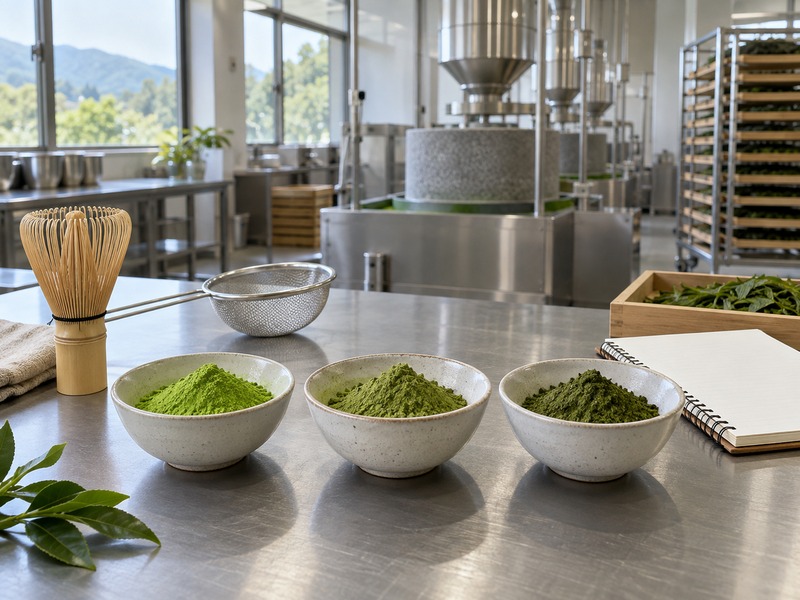
Bright green powder can suggest freshness and careful handling, while dull or brownish powder may prompt questions. Yet lighting, camera settings and the tea’s own cultivar or processing also affect shade. Inspect samples side by side under the same light and in equal amounts. Then prepare and taste them. The cited consumer comparison found color useful in its test, but a professional purchase still depends on the actual product and lot.
Look after processing. A powder that looks vivid dry may make a dull latte or fade in a pastry. Photograph finished samples under fixed light at handoff and after the intended hold. If color is a central selling point, add an agreed visual reference to the quality file. Do not buy by a supplier’s edited photograph or demand one exact shade across naturally varying lots without testing whether that shade matters to customers.
3. How should flavor be compared fairly?
Use coded, equal-dose samples
Weigh tea, set water volume and temperature, and use the same mixing tool. Have several tasters score aroma, umami or savory note, sweetness, bitterness, astringency, mouthfeel and finish. Let them add their own descriptors rather than forcing a single “smooth” score. Repeat the tasting in the lead application. A matcha can rank highly in plain water and poorly in a citrus drink or latte. Keep the samples coded until scoring is complete to reduce price and brand bias.
Retaste after time. A café cup is rarely consumed the instant it is made. Assess at handoff and after a realistic interval. For a packaged dessert, assess at the proposed sale age. A tea that has a strong first aroma but fades quickly may be less suitable than a quieter powder that remains identifiable through the product’s life.
| Sensory point | Record | Why it matters |
|---|---|---|
| First aroma | Tea and off-notes | Initial impression |
| Mid-palate | Body and clarity | Product identity |
| Finish | Bitter or dry length | Repeat purchase |
| Held sample | Flavor after time | Real use |
4. What do grade words actually establish?
Ask for the underlying specification
“Ceremonial” and “culinary” are common commercial labels, but their meaning can differ between sellers. They should prompt a question, not close the decision. Request the intended use, ingredient identity, production description and lot-specific documentation. If a supplier calls a tea ceremonial but it tastes rough in the business’s standard preparation, the name does not rescue it. If a culinary-labeled tea works well in a bakery application, the name does not disqualify it.
Keep marketing and purchasing aligned. Product pages can describe the grade language the supplier uses, but buyer approval should refer to a specific SKU and acceptance tests. Avoid writing origin, harvest or processing claims from a grade word alone. Get supporting evidence for the claims that will appear on a label or menu in the sale market.
5. What origin and process evidence should be requested?
Verify what will be claimed
Origin can matter to positioning and flavor, but a region name on a sample card is not a complete traceability system. Ask how the supplier identifies lots, what geography the statement covers, how blend changes are recorded and which documents support any planned origin claim. Also request the food-safety and contaminant documentation required by the buyer’s market and program. The exact file will differ by destination and product type.
Separate evidence from storytelling. A supplier may explain shading, harvest or milling in its general marketing. Ask which facts apply to the offered lot. Do not invent a garden, harvest date or mill method in article copy. A buyer can still make a confident choice using verified lot identity, sensory performance and reliable delivery without turning every production detail into a label claim.
| Claim or question | Evidence to seek | Use |
|---|---|---|
| Origin | Lot-linked supplier record | Label review |
| Ingredient identity | Specification | Purchase order |
| Food safety | Required program documents | Approval |
| Process story | Lot-applicable statement | Marketing review |
6. How should particle behavior and mixing be assessed?
Test in service equipment
Matcha is a suspended powder, so it can clump or settle. Prepare samples with the tools staff actually use: whisk, frother, shaker or machine. Record mixing time, visible specks, foam and sediment after a normal hold. A very fine powder can still behave poorly if it has compacted in a humid open pack. A powder that mixes quickly may save labor and remakes even if its kilogram price is slightly higher.
Do not overpromise solubility. “Fully dissolves” is inaccurate for ordinary matcha in water. Specify an acceptable dispersion and service window instead. Compare the first and final pour from any held concentrate. If they differ, the operation needs a re-mix rule or a shorter hold. This is a quality issue that dry tasting alone cannot detect.
7. How should opened packs be handled?
Match pack size to usage
Air, light, heat and moisture can change aroma, color and clumping. Ask for supplier storage guidance and choose a pack size the business can use within its approved handling period. Label working containers with lot and opening date. A large bag may have a better quoted price but create waste in a small café. Compare freshly opened powder with the working container in the same standard cup to see whether local handling is affecting quality.
Preserve a reference. Retained samples must be stored properly or they become poor comparisons. If every older reference tastes flat, the team may falsely accept a declining supplier lot. Build a simple sample-retention plan with controlled storage and a defined comparison interval. Use clean, dry tools and keep powder away from steamy service areas.
8. How much variation between lots is acceptable?
Agree on a usable range
Agricultural ingredients can vary. The goal is a customer experience within a defined sensory and process window, not impossible identity in every cup. Run a standard test with each incoming lot and compare it with an approved reference. Record color, flavor, mixing and performance in the lead recipe. If a lot falls outside the range, discuss it with the supplier before production. An unexplained shift can be costly when printed packaging promises a consistent flavor.
Define change notice. Ask how the supplier communicates blend, origin or process changes and how far ahead replacement material can be sampled. A second approved source may help continuity, but it must pass the same tests at its own dose. Substituting a tea at equal grams without tasting can change both cost and the customer experience.
| Lot result | Action | Record |
|---|---|---|
| Within standard | Release | Lot and test sheet |
| Borderline | Application trial | Finished-product result |
| Outside standard | Hold and discuss | Supplier response |
9. What is the real cost of quality?
Calculate cost at the accepted dose
Price per kilogram is only one input. Measure grams per cup or unit, powder lost through clumping or stale opened packs, labor for preparation and remakes. If a stronger matcha meets the target at a lower dose, it may cost less per sale unit. If a premium powder’s delicate notes disappear in milk, the buyer may be paying for an attribute customers cannot taste. Compare candidates in the format that generates the revenue.
Do not confuse expensive with suitable. An excellent tea for traditional preparation may be a poor economic fit for a sweet bakery filling. Conversely, a low-cost powder with harsh flavor can harm a premium menu. Record both sensory pass and unit economics, then make the decision. Keep a backup plan for lead time and minimum order.
| Cost factor | Measure | Buying effect |
|---|---|---|
| Dose | Grams at accepted flavor | True tea cost |
| Preparation | Seconds and tool cleaning | Labor |
| Open-pack loss | Discarded grams | Pack-size choice |
| Remakes | Failed sale units | Quality cost |
Work through a simple comparison with the finance or operations team. For each candidate, multiply its accepted grams per cup by the quoted unit price, then add the measured waste and any change in service labor. Repeat for a busy day and a quiet week, because pack size and opened-product loss differ. Do not attach false precision to a small tasting, but use it to see which candidate needs a larger pilot. This calculation also prevents the buyer from penalizing a more expensive tea that uses less powder and produces fewer remakes.
10. What final trial justifies approval?
Make the real product from multiple lots
Use the chosen cup, pastry or package, production equipment and staff method. Prepare coded samples from at least two candidate lots or suppliers when possible. Assess at release and after the normal service or sale interval. Record dose, flavor, color, dispersion, yield, waste and cost. Let staff follow written instructions without a developer correcting every motion. If results vary widely, the process needs work even if the powder itself is good.
Approve a named material. The final file should list supplier SKU, specification, lot acceptance method, pack size, storage, dose in each application and retest triggers. The useful next step is a small production pilot and a documented incoming-lot comparison. That turns “high quality matcha” into a practical standard a business can buy again. It also gives store teams a concrete basis for reporting an off-tasting cup instead of relying on memory, price or a grade printed on the front of a pouch.
Reference: I Tried 24 Matcha Powders—Most Were Good, but a Few Were Outstanding is a consumer comparison using several preparation methods. The purchasing framework here is independent.
FAQ
Q1: Does high quality matcha always have a ceremonial label? No. Grade words vary by seller; test the identified powder in the intended application.
Q2: Is brighter green always better? It is a useful clue, but finished flavor, process behavior and lot evidence decide suitability.
Q3: How should café samples be compared? Use equal measured doses, the same recipe and coded tasting at handoff and after a normal hold.
Q4: Should the cheapest powder be chosen if it tastes acceptable? Compare cost at the accepted dose, including waste, preparation and remakes.
Q5: What belongs in a buyer’s approval file? The SKU, specification, lot records, required safety documents, sensory standard, storage and retest rules.