
“Is matcha acidic?” is a reasonable question for a beverage team, but a single number cannot describe every powder, bowl or bottled drink. pH depends on water, matcha concentration and other ingredients, particularly citrus or fruit. For product development, measure the finished formula under defined conditions and keep acidity separate from personal health advice. This guide explains what pH can tell a buyer, how to build a basic measurement protocol and why a café recipe cannot establish the safety or shelf life of a packaged beverage.
1. What does acidic mean in a matcha drink?
In chemistry, pH below seven is acidic under the usual aqueous definition. The distance from seven and the drink’s buffering behavior matter; a label such as “acidic” by itself gives little guidance about flavor, processing or shelf life. Matcha is a suspension of powdered tea in liquid, so the measured result depends on how much powder is added and how it is mixed. A lab study that measures one water-to-tea ratio does not specify every retail drink. When a buyer asks for pH, define the exact product being tested: plain matcha in water, a milk latte or a fruit beverage.
Which question is the business actually asking?
An R&D team may need pH for process design, flavor balance or package compatibility. A café may want to understand why lemon matcha tastes sharper than a plain latte. A marketer may want to answer consumer questions, but should avoid turning a beverage pH into a health promise. Write the purpose at the top of the test plan. If the question concerns a person’s symptoms or diet, product developers should not infer an answer from a drink measurement. Clinical concerns belong with an appropriate health professional; the product team can describe ingredients and measured properties accurately.
| Business question | Relevant measurement | What it cannot establish |
|---|---|---|
| Does the recipe change with lemon? | Finished-drink pH and sensory test | Individual tolerance |
| Can a process be used? | Product-specific validation | Safety from pH alone |
| Does a lot match specification? | Controlled pH check | Complete quality |
2. Is plain matcha acidic by measurement?
Published measurements of matcha preparations have reported values below neutral under defined laboratory conditions. For example, a peer-reviewed study of matcha beverages describes an acidic reaction in its tested water suspensions. That is evidence for those samples and that preparation, not a universal pH for every powder or latte. Water composition, powder concentration and measurement method can change the result. A buyer should request measured data for the actual product if pH is relevant to a specification. Do not copy a number from a consumer article onto a new formula.
Why can two plain bowls differ?
They may use different tea lots, powder doses, water sources, temperatures or time between mixing and measurement. Because matcha contains dispersed particles, sampling and instrument handling also matter. A reliable comparison uses the same preparation, calibrated meter and measurement point. Record all conditions with the result. If a supplier gives a pH value without a method, ask how it was prepared and when it was tested. The number is useful only when it can be repeated and tied to a batch or formula.
3. How do milk, lemon and fruit change pH?
Every added ingredient changes the formulation. Milk and plant bases have their own composition and buffering behavior; lemon or fruit inputs bring acid, flavor and color. A sweetener can alter perceived tartness without necessarily making the same pH change. That is why a citrus matcha can taste sharp even when a product team started with a mild tea. Measure the complete drink rather than estimating from the plain matcha result. Test the exact ingredient SKUs because a new juice concentrate or plant milk can change more than pH: color, texture and separation may shift too.
What should a recipe comparison hold constant?
Fix matcha dose, water, cup size, temperature, mixing method and measurement timing while changing one ingredient. Run a control without the acid-containing addition. Record pH alongside taste, appearance and any separation. A drink with a lower pH is not automatically better or worse; it may fit a tart product target or clash with milk. Test whether the result remains stable through the planned service interval. If a chain substitutes a lemon base, repeat the whole drink test before assuming the published menu description still fits.
| Ingredient change | Test besides pH | Likely product decision |
|---|---|---|
| Lemon juice | Tartness and green appearance | Dose and menu balance |
| Fruit puree | Color and sediment | Ingredient form |
| Milk or plant base | Texture and tea visibility | SKU approval |
| Sweetener | Perceived sharpness | Flavor target |
4. How should a café measure a drink’s pH?
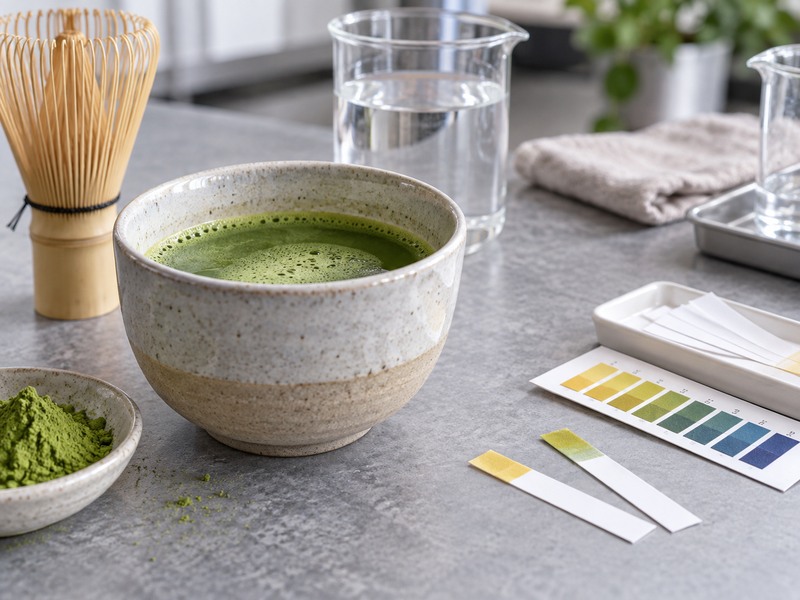
Use a suitable calibrated pH meter and a written sampling procedure. Prepare the drink at the exact recipe dose with the intended water and ingredient lots. Record temperature, time after mixing and whether the sample was stirred immediately before measurement. Clean and maintain the electrode according to the instrument maker’s instructions. Test replicate cups and note variation. A strip may be adequate for a rough demonstration but is weak evidence for a tight product specification. If the café lacks equipment or staff training, an accredited or qualified laboratory can measure a submitted sample under agreed conditions.
What belongs in the record?
Record product code, matcha and other ingredient lots, amounts, mixing sequence, cup or vessel, sample temperature, calibration information, replicate readings and the person who tested it. Store the result with sensory notes. If a supplier’s certificate says “pH” without describing preparation, the buyer cannot compare it fairly with an in-store drink. Define a reference recipe before looking for lot differences. Repeating the same method makes a small change meaningful; changing the method each time produces numbers that look precise but are hard to interpret.
| Record field | Reason |
|---|---|
| Ingredient lots and doses | Reproduce the exact cup |
| Water and temperature | Control preparation differences |
| Timing after mixing | Compare like with like |
| Meter calibration | Trust the measurement |
| Replicates | Identify random variation |
5. Does a low pH make a matcha drink safe to bottle?
No single pH result establishes a safe process or shelf life. A packaged beverage needs a product-specific food safety assessment covering formula, processing, packaging, storage and distribution. Other factors can include water activity, microbial hazards, ingredient handling and container integrity. The appropriate process depends on the whole product and applicable regulations. A café cup prepared for prompt consumption does not become a validated bottled drink because it contains lemon. Work with a qualified process authority or manufacturing partner for the proposed market and route.
What should a beverage manufacturer validate?
It should confirm the process for the actual recipe and equipment, then document microbiological safety, sensory stability, color, sediment and package performance through stated life. Retain coded pilot samples and track ingredient lots. If matcha, juice, sweetener or pack changes, review the effect before production. A “shake well” statement may help with visible tea sediment, but it does not solve an unsafe process. Regulatory and quality teams should agree on the finished specification before artwork and shelf-life claims are approved.
6. Can pH predict how the drink will taste?
pH is one measurement of the finished drink, not a flavor score. Two beverages can have similar pH and taste different because their acids, sugars, tea concentrations and aromas differ. A sharp lemon note, astringent tea and a sweet milk base interact in ways a meter cannot summarize. Build a sensory panel alongside the pH test. Ask tasters about sourness, bitterness, tea recognition and finish. If the product target is a refreshing lemonade, some tartness may be welcome. If it is a soft latte, the same flavor may signal a poor ingredient pairing.
Which comparisons help a formulation team?
Prepare coded samples with one variable changed at a time. Measure pH under the same protocol and taste at the same temperature. Compare fresh and held drinks. If a citrus dose improves flavor but makes the green color dull, document both effects and decide which target matters more. Avoid adjusting sweetness solely to hide an acid problem. A product can become cloying while retaining the same underlying sharpness. The team should approve a complete customer experience, not a number that fits an internal spreadsheet.
| Observation | Meter may show | Additional test needed |
|---|---|---|
| Drink tastes sour | Lower pH possible | Sensory panel |
| Drink looks dull | No direct diagnosis | Color and ingredient test |
| Milk separates | pH may be relevant | Formula and process trial |
| Tea tastes bitter | pH alone insufficient | Matcha and dose comparison |
7. Does acidity say anything about personal tolerance?
A product’s pH cannot predict how a particular person will feel after drinking it. Serving size, other ingredients, caffeine and individual circumstances differ. The question “is matcha acidic?” should not be answered with a claim that matcha causes or prevents reflux, protects teeth or is safe for everyone. A brand can provide the ingredient list, serving size and supported product measurements. It can also avoid medical-sounding language in menus. People seeking individual advice about symptoms should consult a qualified clinician. This keeps a food formulation question within the evidence the business actually has.
What can customer service say responsibly?
Staff can explain whether a drink contains matcha, lemon, milk, sweetener and other relevant ingredients. If the company has a verified caffeine value, they can provide it with the serving size. They should not diagnose discomfort or recommend the drink as a treatment. A packaged product’s Q&A can say that acidity varies by recipe and direct buyers to the ingredient and nutrition information. This is more useful than a sweeping statement about matcha being “alkaline” or “gentle on the stomach,” neither of which follows from one laboratory reading.
8. How should matcha suppliers support pH work?
Ask for a product specification, lot-specific quality data and a clear method for any reported pH value. A pure matcha supplier can provide the tea input, but the beverage maker must evaluate the finished recipe. If pH is a critical purchasing criterion, agree on a standardized suspension method with the supplier and confirm the buyer can reproduce it. Compare two lots to understand normal variation before setting a narrow acceptance limit. Keep sensory and color requirements alongside pH so one number does not drive a poor choice.
Which change notices matter?
Ask the supplier to notify material changes to leaf sourcing, processing, blending or packaging that could affect the application. Retest the finished drink when a change is material. A tea lot may meet its own specification yet shift flavor in a lemon or milk recipe. Procurement should send quality staff the lot code before substituting inventory. A retained reference sample and written method allow a fair comparison. If the pH difference is small and sensory results remain acceptable, the team can make a documented decision rather than assume any numerical drift is a defect.
9. How do pH tests fit a broader development plan?
Use pH only where it answers a defined question. Early prototypes need flavor and appearance screening. Later, a manufacturer may require pH within a product specification or process validation. Label and shelf-life decisions need separate evidence. Put each test in a plan with an owner and an acceptance rule. This prevents a team from collecting numbers without knowing what action they support. A drink’s pH is one entry beside sensory, microbiology, sediment, package performance and cost. Those other results may determine whether a concept is saleable.
What should be decided before a pilot?
Lock ingredient SKUs, target recipe, storage route, package and intended market. Agree on the pH method and how variation will be handled. Taste the pilot units immediately and at planned intervals. If the drink changes color or develops sediment, investigate even if pH remains stable. For a café-only drink, test the service window and staff preparation rather than borrowing packaged-product requirements wholesale. The scope of testing should match the route the customer actually experiences.
| Development stage | pH role | Other gate |
|---|---|---|
| Bench recipe | Compare controlled variants | Flavor and appearance |
| Café pilot | Monitor repeatability | Service and hold quality |
| Packaged pilot | Support process specification | Safety and shelf life |
| Routine supply | Check approved range | Lot and sensory conformity |
10. What is a defensible answer for buyers?
Plain matcha preparations can measure below neutral under particular conditions, but the pH of a finished drink must be measured from its actual formula. That is the useful answer to “is matcha acidic?” for procurement and product teams. Specify the preparation method, test the complete beverage and avoid turning the result into personal health advice. A lemon matcha and a milk latte may differ substantially, so they should not share one quoted number. Product claims and process decisions need their own evidence beyond a pH reading.
What should the team do next?
Choose the real recipe, obtain two representative ingredient lots and run a controlled pH and sensory trial. If the drink will be packaged, involve the processor and quality team before choosing a shelf-life statement. Keep the method and result with the product specification. A measured, application-specific answer helps teams formulate and communicate accurately; a universal answer about “matcha” would obscure the product they are actually selling.
Frequently asked questions
Q1: Is every matcha drink equally acidic? No. Water, powder dose, milk, fruit and other ingredients change the finished measurement.
Q2: Can a supplier’s pH number be used for my latte? Only if the method and formula match; usually the finished latte should be tested separately.
Q3: Does a lower pH guarantee a safe bottled drink? No. Safety and shelf life require product-specific process validation.
Q4: Does pH tell me whether matcha will affect reflux? No. Beverage pH does not predict an individual’s symptoms.
Q5: What is the best first test? Prepare the intended drink consistently, then measure pH and taste coded samples under the same conditions.