
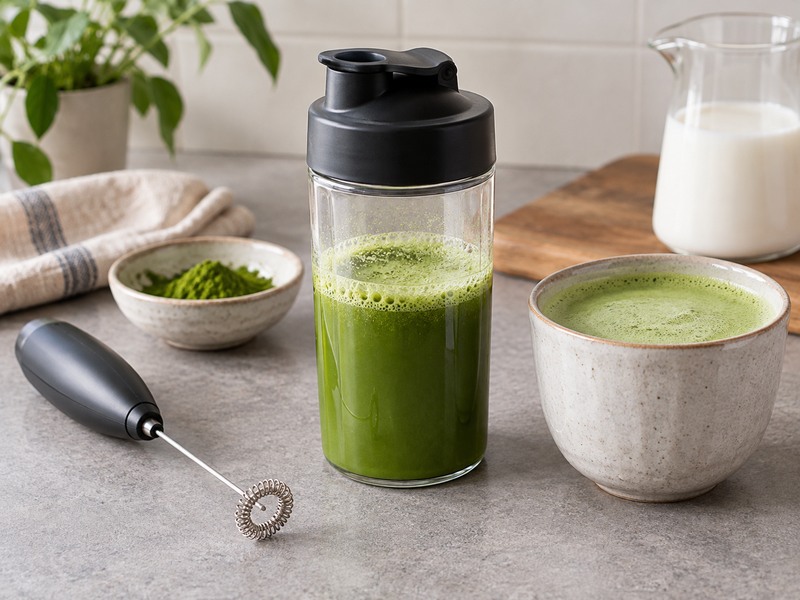
How to make matcha without a whisk is a practical question for a café opening many stores, a hotel breakfast line, or a beverage brand testing a powder. A bamboo whisk can make an excellent bowl, but other tools may fit the volume, cleaning rules, and drink format better. The method must disperse powder without clumps and make a repeatable serving. This guide compares a sealed shaker, handheld frother, blender, controlled premix, and production mixer. It also explains how to test each method in the actual recipe, because a smooth bench sample is not enough evidence for a high-volume menu or packaged drink.
1. What job does a whisk perform in matcha preparation?
A whisk breaks up wetted powder and distributes it through liquid. It can create foam in a plain bowl, but foam is not the only goal for a latte or bottled drink. In commercial service, the relevant outcomes are even flavor, manageable sediment, acceptable texture, speed, and cleanability. Any alternate tool should be judged against those outcomes rather than against the look of a traditional whisk. Powder remains finely milled leaf material, so some settling may occur even after good mixing. Set a realistic standard for the first and last sip.
How should a team define a fair comparison?
Use one powder lot, dose, liquid, vessel, temperature, and serving delay for every tool. Start with the same cup. Record clumps, foam, sediment, noise, prep time, cleaning time, spills, and staff errors. A method that looks fast may require extra cleanup or produce more remakes. For a plain-water offering, guests may value the visual preparation; for a sweetened iced latte, consistent mixing may carry more weight. Keep a reference sample and select the tool that meets the product’s needs and the site’s food safety plan.
| Outcome | Test | Why it matters |
|---|---|---|
| Dispersion | Inspect bottom and surface | Clumps |
| Flavor | First and last sip | Consistency |
| Speed | Time full workflow | Queue performance |
| Hygiene | Cleaning trial | Repeat use |
2. Can a sealed shaker make a consistent matcha drink?
A shaker can work for cold drinks when powder, liquid volume, and shaking method are controlled. Add a measured amount of liquid first or use the sequence that the trial shows prevents dry powder from lodging in corners. Close securely and shake for a defined time. The container must be food-contact suitable, easy to clean, and correctly sized for the batch. A shaker can trap powder in the lid or seal; inspect it after use. A clear drink photograph does not show whether the final sip carries concentrated sediment.
What should a café test before choosing a shaker?
Have several staff members prepare consecutive cups with the same card. Check the lid after the rush. Record leaks, clumps, time, and how thoroughly the gasket can be cleaned. Taste a drink immediately and after the expected wait. If a shaker is shared between dairy, nut, and plain-water recipes, review allergen controls and cleaning under the site’s procedures. Preportioned powder can reduce dosing errors, but the pack cost and waste belong in the comparison. For a high-volume service, confirm whether enough clean shakers are available when orders arrive together.
3. When does a handheld frother work well?
A small electric frother can mix a single serving quickly, particularly after matcha has been wetted in a suitable vessel. It can also splash, leave unmixed powder at the rim, or introduce too much air for a product intended to look smooth. Battery condition, head shape, and vessel depth influence results. A single impressive foam sample is not proof of repeatability across stores. The frother must be approved for food contact and cleaned according to its maker and the café’s hygiene plan.
How should operators use and maintain it?
Specify powder, wetting liquid, vessel size, immersion depth, and mixing time. Keep the head submerged. A method that sprays matcha onto the counter wastes ingredient and slows service. Inspect the motor housing and tool head under the maker’s care instructions; do not submerge parts not designed for water. Test several units and track failure rate in daily service. If a chain uses the frother for flavored or allergen-containing drinks, set cross-contact controls and consider dedicated heads. The chosen method should make an acceptable cup even when a new employee follows the card literally.
| Frother variable | Standard | Failure if missed |
|---|---|---|
| Vessel depth | Named cup or jug | Splashing |
| Wetting | Measured first liquid | Dry pockets |
| Mix time | Trial-approved range | Uneven cup |
| Cleaning | Maker and site method | Residue |
4. Is a blender better for matcha lattes or batches?
A blender can disperse larger volumes and combine matcha with milk, ice, or other ingredients. It also changes texture through air incorporation and may heat the product during prolonged mixing. A countertop blender’s blade, cup, lid, and gasket need a practical cleaning procedure between recipes. For a blended frappé, that may be normal workflow. For a plain bowl, the texture may be unlike what guests expect. Test the blender in the intended drink rather than declaring it a universal substitute for a whisk.
Which batch questions matter most?
Measure batch yield, mixing time, ingredient loss on vessel walls, temperature, and whether early and late portions match. Sample the last pour. If powder settles while a batch waits, the first cup and last cup can differ. A hotel breakfast line may benefit from a small validated batch; a specialty café may prefer single-serve mixing. Cost blender cleaning, noise, electrical needs, and staff capacity. If the product contains dairy or fruit, apply the site’s food safety and holding rules to the entire mixed drink, not only to the matcha powder.
5. Can a jar, bottle, or spoon be a backup method?
A tight-lidded jar can act like a shaker for occasional use if it is food-contact suitable and cleaned properly. A spoon may break up a few small clumps in a pre-wetted paste but often leaves a less uniform drink. These methods can be useful for emergency service or retail consumer instructions, yet a chain should validate them before printing them on a station card. Glass containers bring breakage considerations; narrow bottles can be hard to inspect and clean. A backup method should maintain an acceptable product, not merely make something green enough to sell.
How should a backup procedure be written?
Name the exact container, powder dose, liquid, mixing motion and time, inspection step, and products for which it is allowed. Practice before equipment fails. A substitute that staff have never used adds confusion during a rush. Keep a separate customer-facing instruction for retail packs if home preparation is part of the brand’s promise. A method that works for an iced latte may not produce the mouthfeel expected from a plain bowl. If an alternate cannot reach the approved target, pause that menu item rather than serving an inconsistent replacement.
| Backup tool | Suitable use | Caution |
|---|---|---|
| Sealed jar | Small cold drink | Seal and breakage |
| Bottle | Portable mix | Narrow cleaning access |
| Spoon | Pre-wetted paste | Variable dispersion |
| Premeasured mix | Standard service | Ingredient and shelf life |
6. Does sifting still matter without a whisk?
Sifting can break powder agglomerates before wetting, which may reduce visible lumps in several methods. It is not a cure for poor mixing order or a clumpy powder exposed to moisture. Test with and without sifting under the same recipe to see whether it earns its labor and cleaning cost. A fine sieve can trap powder and needs a defined cleaning and drying procedure. In a factory, a dry preblend or screened ingredient may be more relevant than a handheld sifter at every serving.
What should a sifting trial record?
Measure powder before and after the sieve, retained residue, clump rate in the cup, time, and equipment cleaning. Count the trapped powder. If a café loses a meaningful amount in the sieve, cost per drink increases and the effective dose falls. For a premix, ask the supplier about particle handling and storage before adding another station step. A pure matcha powder should be stored dry and closed according to its specification; repeated exposure at an open sifting station can undermine that care. Train staff to inspect tools for foreign material or damaged mesh.
7. How do premixes change the problem?
A matcha latte premix can reduce the number of ingredients and steps, but it does not eliminate the need for a measured recipe. The sachet or scoop may contain sugar, creamer, flavoring, or other ingredients. Read the declaration and test the product in the intended milk or water. Compare pure matcha with a premix by cost per completed drink, preparation time, waste, flavor, and allergen controls. A blend that mixes easily but tastes too sweet may not fit the menu even if it improves speed.
What should an operations trial compare?
Have ordinary staff make a run of drinks from both methods at a typical rush pace. Include the cleanup. Measure remakes, order time, ingredient variance, and customer taste response. Verify whether a less-sweet option is possible without changing the whole premix. The matcha latte powder and matcha blends ranges can frame options, but approve a specific identified formulation. A supplier change to sweetener or creamer can affect label, allergy information, and the cup’s balance.
8. What does a manufacturer use instead of a handheld whisk?
Beverage and food plants use controlled mixers, high-shear systems, preblends, and defined addition sequences suited to the formula. The equipment choice depends on batch size, liquid properties, powder wetting, process temperature, and cleaning design. Pilot work should establish a range that the production line can maintain. A bench blender may create a smooth prototype while the plant tank leaves floating powder or excessive air. Sample the start, middle, and end of filling to see whether the batch stays uniform.
What should the line trial document?
Record powder addition rate, pre-wetting step, mixer setting, time, batch temperature, hold, transfer, fill order, and cleaning result. Inspect the tank after emptying. Powder left on walls or at the bottom affects both cost and formula accuracy. Test finished packs for settling and sensory change over the proposed shelf life. Quality should set safety and release checks appropriate to the product. A controlled process is more valuable than a claim that one piece of equipment is “best” for every matcha beverage.
| Scale | Practical tool | Proof needed |
|---|---|---|
| Single cup | Shaker or frother | Repeatable serving |
| Café batch | Blender or premix | Uniform early/late pours |
| Factory tank | Defined mixer system | Uniform fill and shelf life |
9. How should powder choice affect tool choice?
Different powders can wet and disperse differently. Screen the powder in the intended tool and liquid, not in a demonstration bowl alone. A smoother plain-drinking powder may cost more but provide no operational advantage in a sweetened drink; a cheaper powder may require a longer mix or leave more sediment. Ask for lot-identified samples, specifications, and storage instructions. If a new supplier is proposed, repeat the tool trial and compare the last sip. Equipment settings should not drift silently to compensate for a changed ingredient.
What belongs in change control?
Keep the approved powder sample, recipe, tool, mixing time, visual reference, and sensory notes. Recheck the new lot. If a replacement powder meets the same finished-drink target under the existing method, document approval. If it needs a new dose or mixer setting, review cost, service speed, and customer-facing claims. For a chain, update every station card together. For a manufacturer, revise the production instruction and assess whether shelf-life evidence remains applicable. A supply contract should require notice of material powder or blend changes.
| Change | Repeat this check | Update if needed |
|---|---|---|
| New powder lot | Reference cup | Receiving approval |
| New supplier | Full tool trial | Recipe and cost |
| New mixer | Dispersion and cleaning | Station card |
10. Which whisk-free method should a business approve?
Choose the method that makes the desired drink safely, consistently, and at the required pace. A plain bowl, iced latte, blended dessert drink, and bottled beverage can have different answers. Run a practical trial with normal operators, not only R&D staff. Score finished-cup quality, last-sip texture, time, cleaning, equipment reliability, and total cost. Keep a backup method for equipment failure only if it meets the acceptable product range. The final procedure should specify powder and equipment together.
What should the rollout file contain?
Include the recipe by weight, tool model, mixing sequence, training instructions, cleaning procedure, inspection standard, powder specification, and change trigger. Make a cup from the card. If a person unfamiliar with development cannot reproduce the reference drink, fix the instruction before rollout. A whisk-free method succeeds when guests receive the same matcha drink across shifts and locations, not when the tool looks clever in a demonstration video.
FAQs
Q1. Can matcha be made without a bamboo whisk? Yes. A validated shaker, frother, blender, or production mixer can suit the drink format.
Q2. Is a spoon enough for a café? It may help with a pre-wetted paste, but test whether it meets the café’s texture and speed target.
Q3. Why does shaker-made matcha settle? Matcha contains fine leaf particles; dose, mixing, liquid, and hold time affect the last sip.
Q4. Is a premix the same as pure matcha? No. Review its full ingredients, matcha content where relevant, sweetness, allergens, and cost per drink.
Q5. Which method is best for a factory? Choose through a production trial with the actual formula, equipment, fill sequence, and shelf-life checks.