
Hojicha tiramisu replaces some or all of a traditional coffee soak with roasted tea. That simple change gives a dessert producer several real decisions: how much liquid a ladyfinger can absorb, whether tea belongs in the cream too, and how an assembled portion survives chilled distribution. A consumer recipe can demonstrate the flavor idea. This commercial guide develops a repeatable soak and assembly plan while leaving egg handling, cooling, and shelf life to validated site procedures.
1. What should a hojicha tiramisu taste like?
Define the complete spoonful
Hojicha is roasted tea, and Japan’s agriculture ministry identifies roasting as the process behind its name. In tiramisu, that toasted note should be recognizable beside mascarpone-style cream and sponge. It need not imitate espresso exactly. Describe the target in one sentence. For example, a team might seek a rounded tea aroma at the start, a clean dairy middle, and a mild roasted finish without a wet or bitter aftertaste.
The sentence is a trial target, not a promise about untested powder. Taste a complete spoonful that includes top, cream, and soaked biscuit. Separate tasting of each component helps diagnose failure, but customers do not eat the layers one at a time. Include a coffee version and a no-tea control in the blind panel. Ask tasters whether they can name the roasted-tea character without being coached, since brown color alone cannot carry the product identity.
2. Where should roasted tea enter the layers?
Compare soak and cream as separate routes
A published hojicha tiramisu recipe uses tea in place of the coffee soak. For a production dessert, that is one design, not the only design. Tea in the soaking liquid gives flavor to the ladyfinger; tea powder in cream can deliver aroma closer to the nose; a dusting may add color but little flavor per portion. Run three small builds. Keep the biscuit and cream formula fixed while trialing tea in soak only, cream only, and both.
Record powder or leaf grams rather than saying “strong tea.” A double-tea version may sound richer but turn harsh or create a sandy cream. The soak-only version may lose aroma beneath a thick dairy layer. Choose the route that survives the intended hold and gives a clear full-spoon result. This choice also changes purchasing format: a filtered infusion calls for leaves or extract, while a cream addition calls for powder with acceptable particle feel.
| Prototype | Tea location | Main question |
|---|---|---|
| A | Soak only | Does tea survive cream? |
| B | Cream only | Is texture smooth? |
| C | Soak and cream | Is roast balanced? |
3. Which hojicha ingredient suits the chosen route?
Specify format before evaluating price
Loose roasted tea can produce a filtered soak with little suspended material. Pure powder adds the full tea solids, which may support a cream layer but requires dispersion testing. A formulated latte mix introduces sweetener or creamer into a recipe that already has both. Read the ingredient statement. Ask for the material description, country of cultivation and processing, roast target, lot code, and storage conditions.
If a powder supplier offers several grinds, test them inside the cream after chilling; dry-powder aroma says little about final mouthfeel. If leaves are used, record brewing mass, temperature, time, filtration, and usable yield.
A production team should compare at least two lots of the selected format before approving long-term supply. A geographic name on a pack deserves traceable evidence. “Hojicha” itself identifies the roasted-tea style and does not prove Japanese origin for a separately sourced commercial ingredient.
Ask the supplier to identify whether a powder is pure tea or a sweetened blend. A blend can alter both cream sweetness and allergen review, while an extract can add liquid to a carefully balanced soak. Keep these formats under separate trial codes so a successful sample cannot be confused with a later substitute.
4. How can the ladyfinger soak be controlled?
Measure pickup by weight
A tiramisu layer can fail through a soggy edge, dry center, or uneven tea dose even when the tea tastes good in a cup. Weigh a group of dry ladyfingers, apply a measured tea soak, then weigh again after a defined drain time. Track absorption. Record pickup as grams of liquid per gram of dry biscuit for each test, along with visual structure and flavor after chilling.
Keep tea strength separate from soak volume: a stronger liquid at the same pickup is a different experiment from a wetter biscuit at the same concentration. For a tray format, sample center and edge portions because assembly movement can distribute soak unevenly. A single-serve cup may tolerate more liquid than a cut slice, but the business should prove that with the intended pack. Use a standard dipping or dosing tool only after the target pickup is known. This makes assembly less dependent on individual judgment.
| Field | Unit | Reason |
|---|---|---|
| Dry biscuit mass | g | Defines starting portion |
| Soak applied | g | Controls tea delivery |
| Post-drain mass | g | Shows absorbed liquid |
| Chilled texture | Panel note | Confirms structure |
5. What should the cream contribute?
Balance dairy richness without hiding the tea
Mascarpone-style cream gives tiramisu its characteristic rich layer, but fat and sweetness can mute a delicate roasted-tea soak. Begin with an established cream formula and vary tea placement before altering sugar or cheese. Watch the interface. The first bite should not taste only of plain cream followed by an abruptly bitter biscuit. If the cream itself carries powder, prepare a small smooth slurry and incorporate it at a defined mixing point.
Check for specks, graininess, and color streaks after chilling. If the cream contains eggs, decide whether the formula uses a validated cooked process or pasteurized egg ingredients as appropriate. FDA guidance identifies raw egg-containing tiramisu as a food-safety concern and recommends safer egg handling practices. Do not import a home recipe’s egg method into a commercial line without qualified review. Record cream deposit mass per portion so the tea-to-cream balance stays stable.
6. Which assembly method scales to service?
Choose cup, tray, or cut slice early
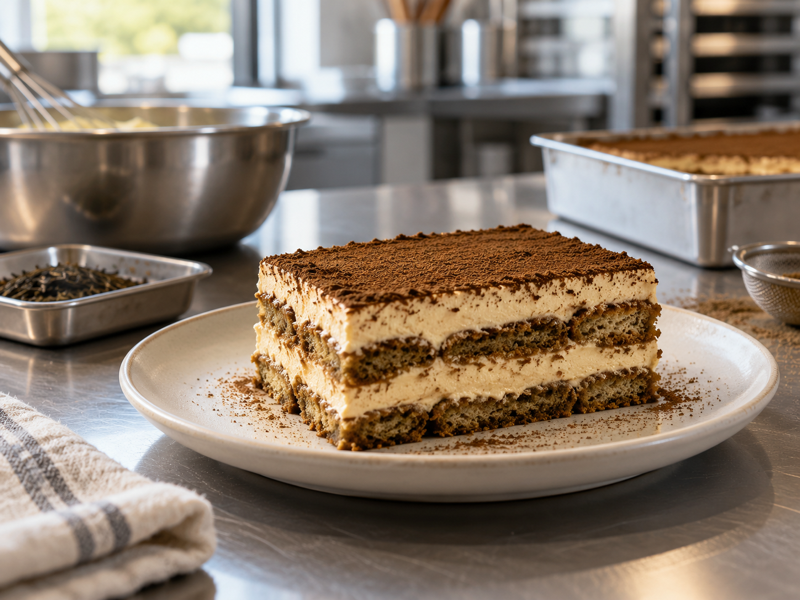
A glass pot can display layers and protect a soft structure, while a tray-cut slice must hold shape after portioning. These formats cannot share every assembly tolerance. Build in the sales pack. Record layer count, biscuit orientation, cream mass, soak pickup, top dusting, and final fill weight. Run the sequence with an operator who did not design the dessert. If cups show variable layer heights, a depositor or simple weighed portion may help.
If a tray gives crushed edges, examine cooling and cutting before changing the tea formula. A garnish placed on top may draw moisture during distribution; assess the dessert at sale, not only at assembly. Include a transport simulation for central kitchens serving stores. An attractive reference photograph should depict the portion customers will actually receive. Store one accepted physical sample or detailed photo with the production specification and revision code.
| Format | Quality focus | Operational check |
|---|---|---|
| Single cup | Layer visibility | Fill-weight spread |
| Tray cut | Clean geometry | Cut loss |
| Plated portion | Service speed | Holding procedure |
7. How should a chilled tasting be run?
Sample after the real hold interval
Tiramisu is eaten cold, and its sponge continues interacting with the cream after assembly. A warm or freshly filled taste can overstate tea aroma and understate sogginess. Schedule checkpoints. Taste soon after setting, at the planned sale interval, and near the proposed end of life under the site’s approved storage program. Score roasted-tea recognition, cream texture, layer definition, liquid pooling, and spoon resistance. Sample several locations from a tray, including center and edge.
For individual pots, compare top and bottom so one attractive surface does not hide an over-wet base. Photograph accepted and rejected portions under the same light. If tea fades, evaluate a different roast or placement instead of adding more soak and destroying structure. The date on a consumer recipe is not shelf-life evidence for a commercial dessert; finished-product life depends on formula, process, pack, and distribution.
8. What safety and labeling checks are specific to tiramisu?
Review egg, dairy, wheat, and cold handling
Traditional components commonly involve dairy and wheat, and some cream methods involve eggs. The exact ingredient bill determines allergen declarations. FDA’s food-allergen guidance lists milk, egg, and wheat among major US allergens; other markets require their own review. Check the egg route. If a formulation would use raw shell eggs without a lethality step, qualified food-safety staff should evaluate a pasteurized-egg or validated cooked alternative.
Cooling and cold holding of a time/temperature control food should follow the site’s applicable food code and documented controls. Do not set a generic “safe for three days” instruction from a blog post. A packaged product needs product-specific shelf-life support and an approved label for its market. Record ingredient lots, assembly date, cold-chain handoffs, and any alcohol if the design includes it. A “coffee free” statement also needs a full formula check, including cocoa and flavor additions.
| Item | Evidence | Owner |
|---|---|---|
| Egg process | Approved ingredient or process | Quality |
| Allergens | Full bill of materials | Regulatory |
| Cold chain | Recorded control plan | Operations |
| Life date | Product-specific study | Quality |
9. How should a buyer cost hojicha tiramisu?
Use the sellable portion as the denominator
Tea may be a small cost compared with mascarpone-style cream, packaging, labor, and lost tray edges. Price per kilogram of hojicha cannot answer whether the dessert makes financial sense. Count the cuts. Record ingredient mass, soak left in the vessel, cream left in the depositor, trimmed edges, rejected layers, and sellable portions. A cup format may reduce cut loss but increase packaging cost; a tray may fill quickly but need skilled portioning.
Include chilled transport and short-life waste where relevant. Compare a tea-only soak with a tea-in-cream version using their actual approved doses. If a stronger powder allows a smaller cream addition, test flavor and texture before booking the saving. Ask suppliers for launch and repeat-volume quotations, pack sizes, and lead times. Keep sensory acceptance as a gate: a cheap tea that vanishes under cream has little commercial value.
| Input | Source |
|---|---|
| Tea and base ingredients | Measured batch |
| Usable portions | Pilot yield |
| Pack and cold transport | Actual route |
| Labor and rejects | Line observation |
10. What proves the recipe is ready for a limited launch?
Repeat the assembly under ordinary conditions
Freeze one formula and one tea specification, then ask a normal production team to make a pilot without the developer correcting every move. Compare several finished portions with the accepted sensory reference. Run a second lot. A different tea lot or another production day should give similar roasted flavor and layer structure within agreed tolerances. Quality signs off egg handling, chilled process, and shelf-life evidence; regulatory signs off ingredient and origin wording; purchasing confirms that the same tea can be reordered.
Run a limited sale with an explicit feedback window, recording paid orders, rejects, service complaints, and portion waste. If customers taste only cream or stores report soggy bases, revise the soak and assembly before widening distribution. Ask Matcha Village for a traceable hojicha powder sample if a cream application is planned, or a suitable roasted tea for a filtered soak. A launch decision should point to the specific formula and pack that passed.
At the first store trial, compare two trained shifts using the same dated assembly card. Have each shift serve ten portions during normal traffic. Count lid failures, missed garnishes, cream smears, and cups remade before handoff. Ask staff whether a spoon reaches the bottom layer cleanly and whether the dessert still looks presentable after a short queue delay. Record product temperatures under the site’s approved monitoring plan; quality staff should decide how to handle any deviation. If the two shifts produce different soak or layer results, revise the dosing and assembly instructions before expanding the menu.
Q1: Can hojicha replace coffee in the soak?
Yes, as a flavor design. Measure infusion strength and biscuit pickup before scaling.
Q2: Must tea also go in the cream?
No. Compare soak-only, cream-only, and combined prototypes in a complete spoonful.
Q3: Can a raw-egg home method be scaled directly?
No. Use a qualified safety review and approved egg process for the commercial product.
Q4: Does a consumer recipe establish shelf life?
No. Finished-product life depends on the exact formula, process, pack, and route.
Q5: What supplier detail matters most?
Ask for traceable material with a roast profile that repeats in the chosen layer.