
Hojicha pudding places roasted tea in a spoonable base. A single saucepan can produce a pleasing sample, yet a retail cup must set evenly, retain a clear tea aroma, and survive filling, sealing, chilled storage, and delivery. This guide focuses on powder or infusion choice, thickening systems, cup geometry, and production controls. It treats a published home pudding as an application clue; no home method establishes a commercial shelf life or safe process.
1. What should one spoon of hojicha pudding deliver?
Define flavor and texture together
A customer should encounter a clear toasted-tea note in a smooth, coherent spoonful. Sweetness may soften the roast, but an overly sweet base can make the tea name feel decorative. Write a sensory brief. State how firm the set should be, whether the surface may show small tea flecks, how strong the roasted aroma should read when chilled, and what aftertaste is acceptable. Use the existing plain pudding as a no-tea control.
The team can then compare three coded tea levels in the same base. Record both flavor and texture because adding powder changes solids, while adding brewed tea changes water. Neither route is a neutral flavor addition. Taste from the top and bottom of the cup; sediment can hide below a polished surface. The target is a finished retail portion with tea character throughout, not a saucepan sample that smells impressive before cooling.
2. Which sales format should lead development?
Single cup, bulk pan, and filling require different controls
A sealed individual cup has a visible surface, a measured fill weight, and a lid that may touch the product during transport. A foodservice pan may be portioned later, while a pastry filling must hold shape inside another product. Choose the sales unit. Develop against one container and serving size before comparing several packaging shapes. Cup diameter and depth can influence cooling and how a layer of settled tea appears.
In a bakery filling, spreadability and interaction with the shell matter more than a pristine pudding surface. Ask the sales team whether the dessert will travel chilled, sit in a display, or be spooned directly at service. Keep a separate specification for any ambient or shelf-stable ambition; it needs a different validated process. A trial designed for refrigerated cups does not qualify an unrefrigerated pouch. Format decisions belong before ingredient optimization because the same base can pass one channel and fail another.
| Route | Product focus | Distinct test |
|---|---|---|
| Sealed cup | Surface and fill | Transport appearance |
| Foodservice pan | Portionability | Set across depth |
| Pastry filling | Pipe or spread behavior | Interaction with shell |
3. Should the tea enter as powder or infusion?
Compare solids against added water
Pure hojicha powder gives direct roasted-tea flavor and the tea’s natural brown color, but coarse particles may feel grainy or settle. A filtered infusion removes most particles and can make a smoother surface, yet it contributes water that affects thickness. Hold the base constant. Trial both forms in the same milk or plant base, adjusting total liquid deliberately and documenting each change.
Do not compare one sweetened premix with one pure powder and attribute the difference entirely to tea. Request ingredient statement, roast description, origin, lot code, and available particle data from powder suppliers. Brewed leaves need their own mass, water, time, and filtered-yield record.
A toasted aroma in the dry bag may fade after heating and chilling. Taste each candidate in the final cup, and ask for another supplier lot before approving artwork or a long purchase forecast. The preferred tea format should match the selected thickener and line equipment.
If an extract is offered as a third option, request its carrier and concentration before treating it as equivalent to leaf liquor. A concentrated flavor can reduce added water yet may change the ingredient declaration. Keep each format on a separate worksheet and compare at an accepted finished-cup flavor level, not equal ingredient weight.
4. How should the thickening system be trialed?
Change tea before changing the whole base
A home recipe may use tapioca starch; other pudding bases may rely on different starches, egg, gelatin, or other permitted ingredients. Each system has its own process and label implications. Begin with a known control. Use the company’s approved plain pudding base, then introduce three measured tea levels while keeping thickener, sugar, batch size, and heating program fixed. This isolates what the roasted tea changes. Record viscosity or a repeatable practical measure before filling, then spoon texture after full chilling.
If a higher tea dose makes the pudding dry or muddy, test a different powder or roast before rebuilding the entire thickening system. For an infusion version, replace part of the recipe’s water with measured tea liquor rather than adding unaccounted liquid. Once the preferred tea level is chosen, a separate test can refine sugar or thickener. A published home ratio is a bench idea, not a scale-up specification.
| Sample | Tea change | Constant |
|---|---|---|
| Control | No tea | Base and pack |
| Low | Measured low dose | Process |
| Mid | Measured middle dose | Process |
| High | Measured high dose | Process |
5. What mixing sequence protects smoothness?
Disperse powder before the base becomes thick
Adding dry tea late can leave dark specks or undispersed pockets. If the pudding uses starch, the starch itself also needs an appropriate dispersion step under the plant’s approved process. Log the addition order. Record when tea enters, the liquid used for its slurry, mixer speed or method, batch temperature, and the point where thickening begins. Compare top and bottom samples from the kettle to see whether solids remain evenly distributed. A laboratory whisk can behave differently from a production agitator; test the actual equipment and batch depth before writing the SOP.
If a powder repeatedly forms lumps, ask the supplier for a different grind or handling recommendation rather than compensating with uncontrolled longer mixing. Avoid creating foam that leaves holes after setting. The target is a process ordinary operators can repeat while meeting the site’s existing hygiene and thermal controls. Have an operator who did not attend development read the procedure aloud and perform it once. Any phrase that requires interpretation, such as “mix well” or “heat gently,” should be replaced with a measurable endpoint under the approved process.
6. How should pudding be filled and cooled?
Use the final cup, lid, and line
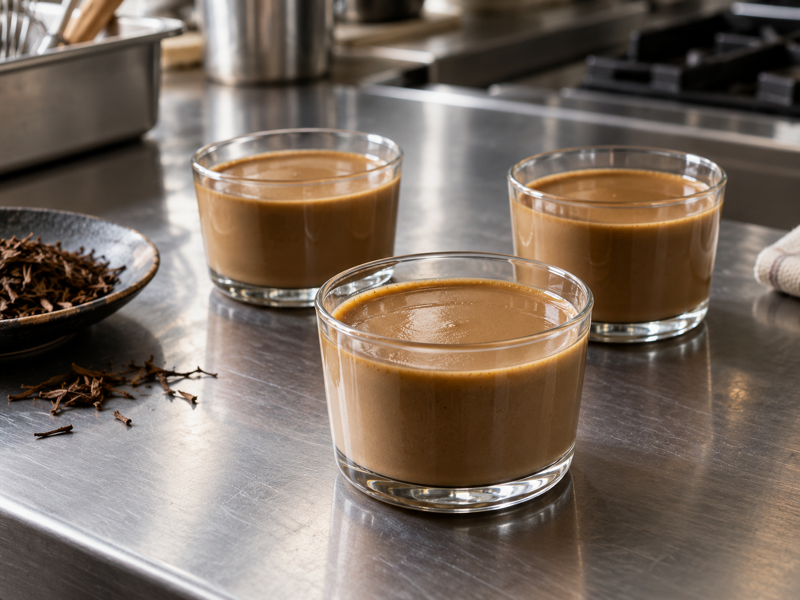
A pudding can look uniform in the kettle and still show fill-to-fill variation. Weigh early, middle, and late cups from a pilot, then inspect the surface and set after cooling. Check the last cup. Tea particles may settle in the holding vessel, making late cups darker or grittier. A defined agitation method can help, but it must be tested against foam and line behavior. Record deposit temperature and time using the site’s validated process; do not borrow a temperature from a home recipe.
Cooling a deep pan and cooling a shallow retail cup are different tasks. FDA Food Code material gives a regulatory model for time and temperature control in retail foodservice, while a manufacturer must follow the rules and validation applicable to its product and market. Seal cups under the approved procedure, then run a transport trial to see whether the lid, headspace, and surface remain acceptable.
| Point | Measure | Why |
|---|---|---|
| Start | Fill mass and color | Baseline |
| Middle | Set and particle spread | Process drift |
| End | Fill mass and sediment | Settling risk |
| After transit | Lid and surface | Pack fit |
7. Which defects should the tasting panel diagnose?
Separate tea problems from base problems
Graininess might come from a coarse powder, poor dispersion, or the thickening system. Weeping may relate to set or process; weak roasted flavor may come from masking by dairy and sugar. Keep a control cup. If a defect occurs in both plain and tea versions, investigate the base before blaming tea. Taste several cups across the fill run at the intended chilled serving temperature. Record top and bottom texture, aroma, aftertaste, visible sediment, and whether liquid gathers at the surface.
Run a second check near the proposed end of life under controlled storage. A cup with a smooth top but a sandy final spoonful is not ready for retail. If a tea flavor disappears after a few days, compare roast choice and packaging before doubling dose. The diagnostic record should state the exact sample, lot, process time, and storage point so a supplier can help resolve a repeatable defect.
8. What safety and label evidence does a retail cup need?
Validate the actual formula and route
Milk, egg, soy, and tree nuts may appear depending on the base; the actual bill of materials decides which allergens require declaration. FDA identifies these among major US allergens and provides current guidance for regulated products. Review every component. Tea powder blends may contain carriers or creamer, while a plant drink may add soy or nuts. The product needs an approved manufacturing process, storage conditions, and a finished-product life supported by suitable studies.
A consumer recipe cannot establish a date code for a filled cup. Retail cold-chain handoffs should be documented from packing through display. Do not call a dessert “dairy free” because the tea powder is pure if the base or shared process introduces dairy. Have regulatory staff review nutrition, ingredient, allergen, and origin wording for each destination. A sample supplier certificate is useful, but it cannot replace validation of the final pudding.
| Record | Purpose |
|---|---|
| Final formula | Ingredient and nutrition basis |
| Allergen review | Label and process control |
| Process record | Repeatable manufacture |
| Life study | Defensible date code |
9. How should a pudding cup be costed?
Count filled, sellable cups
Calculate tea, base, sweetener, thickener, cup, lid, label, labor, line loss, and chilled distribution per sellable unit. A low-cost tea powder can be expensive if its coarse particles cause rejects or rework. Use actual yield. Record filled cups, underweight cups, damaged lids, cleaning loss, and retained quality samples during the pilot. Compare a pure-powder formula with an infusion formula after each has passed sensory and process checks.
An infusion may use cheaper leaf per kilogram yet lose liquor in filtration and require more handling. A smoother powder may cost more per kilogram but save labor or reduce sediment complaints. Model minimum order quantities and shelf-life waste, especially during a small launch. The contribution margin should use the retailer’s actual selling terms rather than a guessed shelf price. Keep economics and product quality together in the go/no-go meeting.
| Cost line | Input |
|---|---|
| Ingredients | Measured grams per cup |
| Packaging | Cup, lid, label |
| Line loss | Pilot rejects and leftovers |
| Cold route | Actual storage and freight |
10. What should be signed off before release?
Repeat the cup across production days
Freeze the tea SKU, base formula, cup, process, and sensory target. Produce a normal pilot without the developer coaching each step. Compare beginning and end cups after the intended hold. Ask for a second tea lot. The chosen supplier should show that color, flavor, and grind can repeat within the agreed range. Quality approves process and product-life data; regulatory approves claims and allergens; purchasing confirms pack and lead time; sales confirms a credible price and channel.
Retain an approved cup image and reference powder sample under appropriate conditions. If the target includes a plant-based version, treat it as a separate formula rather than a last-minute milk swap. Matcha Village can supply hojicha powder for an application trial; request the exact product specification and lot documents. Release only the finished pudding that passed, not an extrapolated format.
Q1: Is hojicha pudding automatically low in calories?
No. Calculate the complete serving from the actual base, sugar, and tea ingredients.
Q2: Can tea infusion replace powder directly?
No. An infusion adds water and changes the thickening balance.
Q3: Why does powder settle in some cups?
Particle behavior, viscosity, mixing, and fill hold can all contribute; test the line.
Q4: Can a home recipe set a retail date code?
No. Use a finished-product study on the selected formula, process, pack, and route.
Q5: Which sample should a supplier provide?
A traceable production lot with composition and grind information for the intended base.