
A hojicha recipe can be savory. Brewed roasted tea can replace part of the liquid in mushroom risotto and add a dry, toasty finish. Restaurant teams can use the measured two-portion trial below to test where the tea enters the pan and whether the dish earns a place on the menu.
1. Why does hojicha work in a savory recipe?
Hojicha is roasted Japanese tea, so its aroma can bridge browned mushrooms, butter, and toasted rice without adding another sweet ingredient. Sugimoto Tea Company’s hojicha risotto combines brewed tea, mushrooms, cooked rice, butter, and cheese, with a little powder as a finish. A restaurant using dry rice will need different liquid amounts and timing. The question for a chef is whether the tea improves the dish enough to justify a dedicated brew step.
Set the target before cooking: rice creamy but not soupy, mushroom flavor identifiable, and a roasted-tea finish noticeable after the cheese. Make a control with the same ingredients but plain hot water in place of tea. Plate the two versions in coded bowls and ask tasters which has a cleaner finish, not simply which is darker. If the tea loses against the water control, adjust infusion or cheese before adding powder. A savory application should demonstrate a distinct flavor contribution; the tea name alone does not make a menu item more compelling.
| Question | Evidence | Failure signal |
|---|---|---|
| Is tea detectable? | Blind comparison with water control | Only color differs |
| Is rice texture right? | Two-minute plate check | Stiff mound or watery ring |
| Can service repeat it? | Three timed pickup trials | Uneven liquid absorption |
2. Should the kitchen use loose leaf, powder, or both?
Loose-leaf hojicha is suited to a strained cooking liquid. It lets the chef add roasted aroma through measured moisture while keeping particles out of the rice. Powder behaves differently: it adds tea solids and can concentrate flavor, but a heavy spoonful may make the finish dusty or bitter. Sugimoto’s risotto uses both leaf and powder. In a first restaurant trial, brew the leaves and omit the powder garnish. This shows whether the infusion does real work. Add a measured trace of powder only after the base dish succeeds, and compare it blind with an ungarnished bowl.
Ask suppliers for tea identity, roast profile, leaf cut, ingredient purity, lot code, and enough sample for repeated cooking. A strongly roasted leaf may make a cleaner mushroom pairing than a smoky, ashy lot. Powder sold for lattes may contain sugar or other ingredients, so check its declaration before using it in a savory kitchen. Japan’s agriculture ministry lists hojicha among Uji tea types; a menu should claim a particular origin only when the purchased tea’s documents support it. Keep tea and stock choices fixed while screening lots.
3. What is a measured two-portion starter formula?
For two small main-course portions, try 160 g dry risotto rice, 180 g mixed mushrooms, 60 g onion, 12 g butter, 10 g olive oil, 30 g finely grated hard cheese, 6 g loose-leaf hojicha, and 700 g water for the tea. Hold additional hot water nearby because rice absorption varies. Season near the end after the cheese is incorporated. A 160 g dry-rice batch is large enough to reveal liquid management while small enough for a quick comparison with a plain-water control. Record the rice variety, pan diameter, heat, and finished yield.
Prepare every component before the rice enters the pan. Slice mushrooms to a repeatable thickness, mince onion, brew and strain the tea, and warm the serving bowls. Split the mushrooms into a cooked-in portion and a topping portion if the chef wants a clear visual cue. The dish should not rely on an unweighed last spoon of powder for its identity. If a restaurant plans a vegetarian menu description, verify the cheese choice and the kitchen’s own ingredient standard. The first trial is about texture and aroma; claim and allergen review follows the actual approved formula.
| Ingredient | Starting mass | Purpose |
|---|---|---|
| Dry risotto rice | 160 g | Starch and structure |
| Mixed mushrooms | 180 g | Umami and browned aroma |
| Onion, butter, oil | 60 g, 12 g, 10 g | Base and richness |
| Hojicha and water | 6 g leaf, 700 g water | Cooking liquid trial |
| Hard cheese | 30 g | Finish after rice cooks |
4. How should hojicha be brewed for the pan?
Brew the weighed tea in the measured hot water, then strain it into a heat-safe vessel. Sugimoto’s published risotto uses loose leaf infused in water near 200°F for three minutes; that is a useful reference point, not a compulsory specification for another leaf lot. Start there, then taste the strained liquid. It should smell pleasantly roasted without an ash or stale note. Weigh the filtered yield; leaf absorption can make it lower than 700 g. Keep it hot during cooking so adding it does not repeatedly stall the pan. If the dish needs more liquid, use a measured addition of hot water.
Run a side trial with a slightly lighter or stronger infusion rather than raising leaf mass and steep time simultaneously. Record water temperature, contact time, leaf grams, filtered grams, and the volume used by the rice. Taste the risotto, not just the tea. A fragrant cup of hojicha can become muted behind mushrooms and cheese, while a strong bitter infusion can dominate the final bites. Keep the spent leaves out of the pan unless a separate culinary test shows they improve texture. They are a variable, not a free garnish.
5. What is the best way to handle the mushrooms?
Cook mushrooms in a pan with enough space for moisture to leave. Crowded pieces steam and lose the browned notes that help the tea read as savory. Use the same mushroom mix and cut in the tea trial and water control. Cook half for the risotto base and reserve half as a visible topping if desired. Record cooked yield, because 180 g raw mushrooms will weigh less after browning and that loss changes per-portion cost. If the team switches from shiitake to another mushroom, retaste; each brings a different earthy intensity.
Keep seasoning modest during the first pass. Soy sauce, truffle oil, or a strong garlic load can bury the hojicha, making the tea step expensive decoration. Sugimoto pairs shiitake and bunashimeji with the tea. A local kitchen can adapt the mushroom mix, but it should preserve a clear comparison and document the change. Taste the browned mushrooms separately before adding them to rice. A burnt pan note is easy to misattribute to a heavily roasted tea. Clean cooking and good tea selection are separate controls.
6. How should the risotto be cooked with tea?
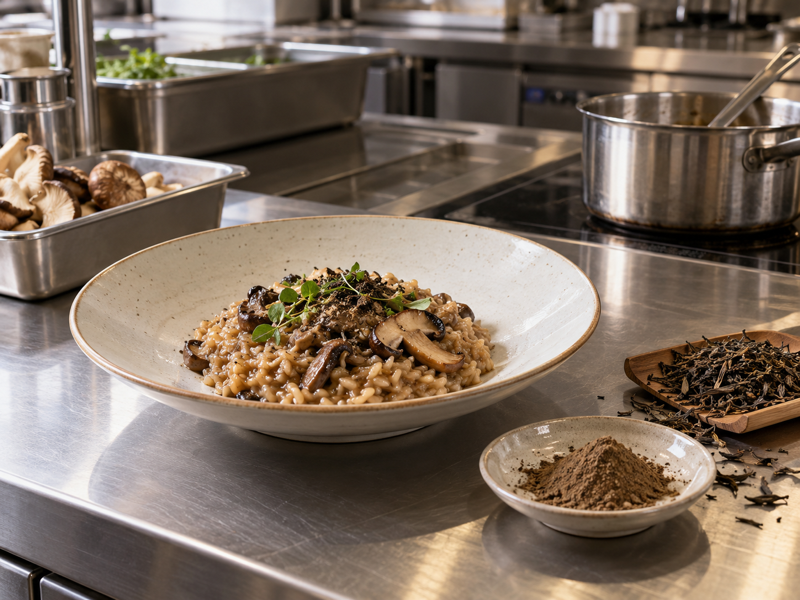
Sweat onion in butter and oil without deep browning. Add rice and stir until coated, then add the hot strained hojicha in portions, stirring and allowing each addition to absorb before the next. Do not pour all the tea in at once and assume the rice will produce the same creamy texture. Add the cooked mushrooms partway through or near the finish according to the desired bite. Check rice texture by eating a grain; the target is tender with a slight center, not a clock time borrowed from another stove. Note the total tea liquid used and any added hot water.
Compare the water control at the same rice variety, heat, pan, and finishing fat. If the tea version takes longer, check whether its liquid cooled before use or its amount differed. Sugimoto’s version starts with cooked rice. A dry-rice trial needs its own yield and pickup-time measurements. A high-volume kitchen may later develop a safe partial-cook method, but that requires separate handling validation. First confirm that a fresh-cooked version merits a menu place.
| Point | Record | Decision |
|---|---|---|
| Rice start | Dry mass and pan | Comparable control |
| Liquid additions | Tea and extra water grams | Set repeatable pickup |
| Rice endpoint | Texture description | Stop before mushy |
| Finished yield | Cooked grams | Portion and cost |
7. When should cheese, butter, and tea powder be added?
Once the rice is nearly cooked, reduce or remove the heat, then fold in cheese and any reserved finishing butter. Add salt after tasting because cheese varies. The risotto should flow gently when the pan is tilted; a stiff pile may need a small measured splash of hot water or tea. Plate immediately in warm shallow bowls. Reserve browned mushrooms for the top so the customer recognizes the savory ingredients before tasting. If a powder garnish is being evaluated, weigh a very small amount and distribute it evenly; a freehand dusting can create one bitter bite and one bland bite.
Run a garnish comparison: no powder, low measured powder, and a visibly heavy amount kept only as a negative reference. Taste each with cheese and mushrooms. The strongest-looking bowl may not be the best tasting. Record whether powder adds a clean roast or a chalky surface. If the infusion already gives a distinct finish, omit powder and simplify service. A small dish with one deliberate tea technique is more reliable than a complex plate that needs both a special brew and precision dusting to be identifiable.
8. How can a chef tell whether the tea improves the recipe?
Use a small blind panel of kitchen staff and potential buyers. Serve tea and water-control risottos at the same temperature and portion mass in coded bowls. Ask for free descriptions first, then score mushroom identity, roasted aroma, rice texture, salt balance, richness, and aftertaste. Repeat after two minutes on the plate because risotto thickens quickly. A taster who likes the tea sample because it has more cheese is not judging the tea. Keep all other quantities equal and weigh the finish. The outcome should be a clear culinary reason to pay for hojicha and the extra brewing step.
Test the winning version on a second day with another operator. If the flavor disappears when the original chef is absent, the method is underspecified. Compare a dish with tea solely in the cooking liquid against one with tea only as a powder garnish; that reveals which intervention provides value. Ask panelists whether they would order the dish under the name “hojicha mushroom risotto” after tasting it without a label. The menu name should match a perceptible roast note, not a clever concept discussed only in the development meeting.
| Attribute | Prompt | Pass condition |
|---|---|---|
| Roast | Can tasters describe tea? | Clear difference from water control |
| Rice | How does it eat after two minutes? | Creamy, not stiff |
| Mushroom | Is the ingredient distinct? | Not hidden by garnish |
9. What food-safety and allergen checks affect service?
Cooked rice, mushrooms, cheese, butter, and prepared tea each enter the restaurant’s food-safety process. The FDA Food Code is a model for retail and food service; the applicable local rules and the restaurant’s approved plan determine handling. Do not infer a safe cooled-rice holding time from a fresh-cook recipe. If the kitchen chooses to pre-cook rice for rapid pickup, its food-safety lead must validate cooling, storage, reheating, and discard steps for that process. Record who prepares and labels the brewed tea so an unidentified overnight jug does not become an ingredient.
Dairy butter and cheese make the trial contain milk. A vegetarian or vegan version needs an intentional cheese and fat substitution, followed by another sensory test. FDA’s allergen guidance identifies milk among the major U.S. allergens and describes cross-contact management. Check every purchased ingredient, including any stock or topping added later. A menu team should not infer caffeine-free status from roasting; hojicha is a tea ingredient and any numerical caffeine statement would need evidence for the final serving.
10. How should a restaurant cost and launch the dish?
Cost the finished two-portion batch using actual cooked yield. Include tea leaf, rice, mushrooms after trim, dairy, oil, garnish, and labor for brewing and straining. Divide by sellable plated portions, not theoretical dry-rice weight. If the kitchen discards brewed tea at the end of each service, include that loss. Compare the cost of a lower tea dose with the blind sensory result; a cheap dish that no longer tastes of hojicha has failed the concept. Decide whether the dish is a main, a side, or a tasting portion before choosing its price and portion mass.
Release a recipe card with supplier lots, brew parameters, filtered tea yield, rice type, mushroom cut, pan size, liquid-addition sequence, finished weight, plating photo, and service timing. Have another cook prepare three consecutive portions from the card during a realistic shift. Record pickup time and the number of bowls that pass the two-minute texture test. Revisit the formula whenever the rice, tea roast, mushroom mix, or cheese changes. The final menu copy can mention roasted Japanese tea once the kitchen can reproduce a dish that customers actually taste.
| Item | Measured input | Owner |
|---|---|---|
| Tea brew | Leaf, water, filtered yield | Prep cook |
| Food cost | Saleable portion grams | Chef and buyer |
| Pickup method | Pan and time record | Line lead |
| Handling plan | Rice and tea controls | Food-safety lead |
Frequently asked questions
Q1: Is hojicha risotto sweet?
It need not be. This trial uses unsweetened brewed tea with mushrooms, rice, butter, and cheese. Its target is a savory roasted finish.
Q2: Can powder replace the brewed tea?
That creates a different formula. Powder adds solids but does not replace cooking liquid; trial its dose and texture separately.
Q3: Can precooked rice shorten service time?
It can, but the liquid amounts and cooking sequence in this dry-rice trial will not transfer unchanged. Develop a separate pickup method and have the food-safety lead approve cooling, storage, and reheating.
Q4: Can cooked rice be prepared ahead for service?
Only within an approved process for cooling, storage, and pickup. Have the restaurant’s food-safety lead review it.
Q5: What is the simplest proof that hojicha belongs in the dish?
Compare the tea version with a plain-water control, keeping every other ingredient and finish equal. The tea version should earn a blind sensory preference or clear distinctiveness.
References: Sugimoto Tea Company’s hojicha risotto; MAFF tea classification; FDA Food Code 2026; and FDA allergen guidance. Validate the two-portion trial against the chosen rice, tea, and service process.