
Hojicha panna cotta should wobble gently, release a clean roasted-tea aroma, and hold its shape through service. Those requirements interact: tea leaves retain some infused milk, changing the liquid-to-gelatin ratio, while excess gelatin can make the dessert rubbery. Restaurant and prepared-dessert teams need a weighed formula, a gel test, and a service checklist.
1. What does a successful hojicha panna cotta need to deliver?
Panna cotta is a chilled, softly set cream dessert. In a hojicha version, the roasted tea must be apparent before a sauce or garnish takes over. Set the serving format first: a dessert unmolded onto a plate needs a firmer structure than one presented in a glass. Define a target portion mass, temperature, wobble, sweetness, and tea intensity. The French recipe “Panna Cotta au Thé Hojicha” uses tea-infused milk with cream, sugar, and gelatin. For foodservice, set portion size, gel strength, and holding limits for the actual presentation.
Make a plain dairy control alongside the tea version. If the tea sample is merely darker but tasters cannot identify a roasted note, the infusion may be weak or the topping too strong. Photograph an unmolded portion ten minutes after plating, because a dessert that looks neat as soon as it leaves the ring can slump at the table. Record whether the gel cuts cleanly with a spoon and melts pleasantly in the mouth. A formula can be technically stable yet too stiff to eat with pleasure; sensory and handling standards need separate pass criteria.
| Format | Required test | Likely tradeoff |
|---|---|---|
| Glass or jar | Spoon texture | Less visual wobble |
| Unmolded plate | Ten-minute shape hold | May need firmer set |
| Packaged single serve | Transport and label review | Different validation |
2. Should the dessert use loose-leaf tea or hojicha powder?
Loose-leaf hojicha makes an infusion that can be strained before gelatin is added. It can give a cleaner surface and fewer particles, but the milk extraction yield must be measured. Powder puts the roasted tea into the dessert directly and may increase flavor at a lower liquid addition, yet it can create specks or a dusty finish. Start with the presentation goal. For a smooth, pale brown molded panna cotta, a filtered infusion is a sensible first trial. For a visibly tea-rich cup dessert, powder may be worth screening as a separate formulation. Do not substitute equal grams between them; extraction and retained solids differ.
Ask suppliers for leaf cut or powder grind, roast profile, ingredient declaration, lot code, and package conditions. Brew small samples in the exact milk and cream system planned for the dessert. A tea that smells rich in dry form may be faint after cream is added. Compare the finished cold dessert rather than hot infused milk alone; cold serving changes aroma perception. Keep the tea lot fixed during the first gelatin trial, then test an alternate lot to check consistency. A single appealing sample is not enough to specify an ingredient for recurring menu service.
3. What is a workable first bench formula?
For about six small portions, begin with 300 g whole milk, 250 g cream, 45 g sugar, 7 g powdered gelatin, 35 g cold water for blooming, and 9 g loose-leaf hojicha. The target is a screening batch, not an approved commercial recipe. Some infused milk will remain in the spent leaves, so weigh the strained milk and add clean milk back to 300 g before combining with cream. This restores a defined total dairy mass. Divide the finished mixture by weight rather than eyeing equal levels in cups. If the team chooses a different gelatin brand or strength, the set must be retested.
Run two adjacent trials: one at 7 g gelatin and one slightly lower, with identical dairy, tea, sugar, portion mass, mold, and cooling conditions. The French recipe uses 8 g gelatin with 550 ml milk and cream plus bloom water; gel strength and service format still determine the right dose for a new product. Record mix temperature when poured and the time at which each sample becomes spoonable. Leave a plain dairy control in the same mold. If the tea batch sets differently, investigate the added or lost liquid before assuming hojicha itself caused the change.
| Ingredient | Starting mass | Control point |
|---|---|---|
| Whole milk | 300 g after filtration | Replace leaf absorption loss |
| Cream | 250 g | Same brand in every trial |
| Sugar | 45 g | Adjust after cold tasting |
| Gelatin and bloom water | 7 g + 35 g | Record grade and bloom |
| Hojicha leaf | 9 g | Record lot and cut |
4. How should hojicha be infused into the dairy?
Weigh milk and leaf separately. Heat the milk under controlled conditions, add the tea, steep with a timer, then strain through the selected sieve before adding cream. Compare a shorter infusion, a middle trial, and a longer one at the same temperature and tea dose. Note roast aroma, bitterness, leaf particles, and filtered yield. Avoid a rolling boil that changes the milk through evaporation or scorching. The French recipe warms milk with hojicha, then strains it; a pastry team should specify an exact procedure based on its vessel and batch size.
Weigh the strained milk. Leaf can hold back liquid, and that changes the gelatin-to-liquid ratio. Replace the loss with fresh milk or incorporate the actual yield into a revised formula; do not let the loss vary unnoticed between cooks. Taste a spoonful of the infusion with a little cream to anticipate the final dessert. If roast disappears, raising leaf mass may work better than extending the steep until bitterness appears. Set a target filtered yield and keep a small sieve sample to show staff what an acceptable particle level looks like.
5. When should gelatin enter the hojicha mixture?
Bloom the measured gelatin in its measured cold water according to the supplier’s instructions, then add it to a warm base that can dissolve it completely. Do not drop dry gelatin onto the surface of hot tea milk and hope whisking will erase every lump. Once the tea has been filtered and the milk yield corrected, dissolve sugar and bloomed gelatin, then incorporate cream gently. Pass the mixture through a fine sieve if needed before portioning. King Arthur Baking’s gelatin guide explains the importance of gelatin handling and the difference between soft and firm sets; the exact trial still depends on this formula.
Record the gelatin type and strength. A vegetarian substitute is not a direct one-for-one swap: agar and other gelling systems set and melt differently and need their own process. Avoid whipping in bubbles, which can leave a foamy cap on an otherwise smooth dessert. Stir while pouring so tea concentration does not vary between the first and last cups. If gelatin strands remain, stop and correct the mixing procedure before scaling the batch. Reheating a failed mix repeatedly can change dairy flavor and does not prove the underlying method is robust.
| Step | Record | Defect to watch |
|---|---|---|
| Bloom | Gelatin and water masses | Dry centers |
| Dissolve | Base temperature and time | Visible strands |
| Portion | Fill mass and bubbles | Uneven servings |
| Chill | Approved process log | Soft center |
6. How can a pastry team measure the right wobble?
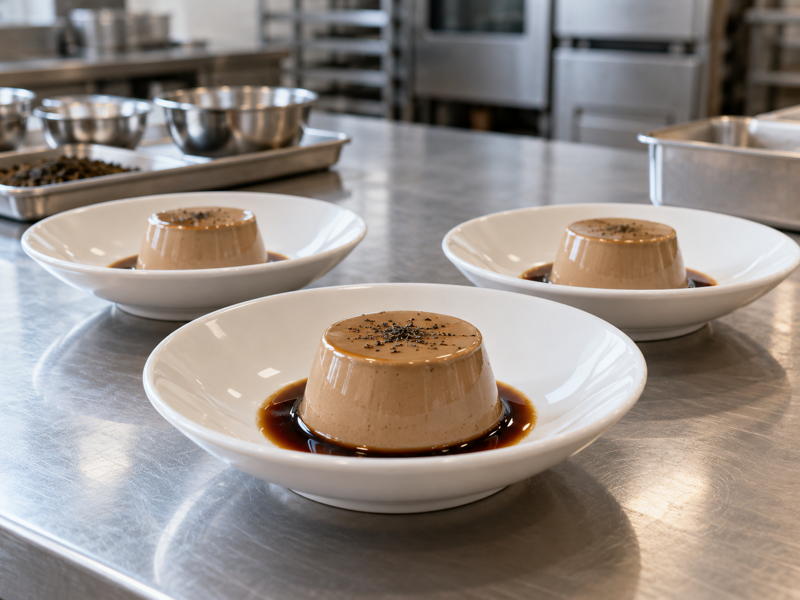
Set samples in the actual service cup or mold and test them at the intended holding and serving temperatures. A glass dessert may be judged by a spoonful lifted from the center; an unmolded one must stand after release. Define a simple test: photograph the portion at release and ten minutes later, press the top lightly with a spoon, and record whether it springs back, slumps, or fractures. Taste without sauce first. A rubbery gel can look beautifully neat but obscure the cream and roasted-tea aroma. A very soft gel can be delightful in a jar but fail on a plate.
Test more than one batch position. Desserts portioned early and late from the same kettle should have similar color and set. If they differ, powder or gelatin may have settled, or the kettle was not mixed during filling. Check the mold-release technique separately from gel strength; tearing caused by a rough unmolding method does not always mean more gelatin is needed. Decide whether the menu can use a cup presentation if a softer set tastes better. The sensory target should drive that choice rather than a photograph of a tall unmolded dessert.
7. Which topping keeps hojicha in the foreground?
The French recipe offers kuromitsu, a dark sugar syrup, as an optional topping. It pairs naturally with roast, but its intense sweetness can make every tea trial taste similar. Serve a control portion plain, one with a measured small amount of syrup, and one with another proposed garnish. Put the same topping mass on every sample; a freehand pour makes panel results hard to interpret. Taste the complete bite, not the sauce and panna cotta separately. If the tea disappears under the topping, lower the sauce dose before increasing tea or changing gelatin.
Crunchy elements can add contrast, but they introduce a new ingredient specification and possibly allergens. Ask whether a topping will be added at the pass or packaged with the dessert. A sauce held in contact with the gel may alter appearance or create surface liquid during storage. For a takeout cup, test movement and a short realistic holding period with the topping in place. Photograph the served portion under the lighting where it will be sold. A garnish that requires precise tweezers at a busy service station is a poor standard unless the price and staffing support it.
8. What must be checked in chilled service?
Build a service map from hot infusion through mixing, portioning, chilling, storage, transport to the pass, and disposal of unsold portions. Dairy desserts require a food-safety plan appropriate to the site and jurisdiction. The FDA Food Code is a model for retail and food service, and its adoption varies locally. A household recipe’s one-to-two-hour setting instruction is not a validated holding life for a restaurant or packaged product. Ask the responsible food-safety lead to approve cooling, cold storage, batch identification, and maximum service period for the exact process.
Run a practical service test with trays loaded as they would be on a busy day. Check whether the center portions chill at the same rate as edge portions, whether lids trap condensation, and whether unmolding causes staff to leave desserts at room temperature while they assemble plates. Record the time and temperature of the actual product as the site’s program requires. A packaged retail dessert needs additional process, microbiological, and label review. Do not extend a restaurant holding decision to a sealed retail cup without new evidence.
9. Which allergens and ingredient claims need review?
The standard dairy and gelatin trial contains milk and an animal-derived gelling agent. A vegan or dairy-free version requires a new formulation, not a quiet substitution on the recipe card. If nuts, sesame, or soy enter through a topping or plant-based variant, the ingredient and cross-contact review expands. FDA’s allergen guidance identifies the major U.S. allergens and discusses labeling and manufacturing controls. The pastry team should keep supplier specifications for milk, cream, tea, gelatin, and toppings together with the finished ingredient list.
A “Japanese hojicha” description should refer to the tea ingredient accurately; a regional origin claim needs traceable records. Avoid health claims drawn from general tea articles. This dessert also contains sugar and cream, so nutrient or “light” wording would need finished-product calculation and regulatory review. If the menu advertises a vegetarian option, confirm the actual gelling ingredient and any shared-tool handling. Test the replacement gel for wobble, flavor release, and serving stability as a separate product. Honest naming is easier when the formulation file is complete before the menu copy is written.
| Input | Question | Record |
|---|---|---|
| Milk and cream | Allergen and fat profile? | Supplier specification |
| Gelatin | Animal source and strength? | Lot and grade |
| Tea | Origin and ingredient purity? | Lot declaration |
| Sauce | Extra allergens or sweetness? | Measured serving dose |
10. How should the dessert be costed and released?
Calculate cost from the actual weighed batch and the number of saleable portions. Include milk, cream, sugar, gelatin, hojicha, bloom water where relevant, topping, container or plate handling, and losses from straining or failed unmolding. A six-portion bench formula is not six saleable portions if staff overfill cups or several molds tear. Record yield in grams and the range of individual portion weights. Compare leaf-tea cost on filtered milk yield, not only dry grams. A slightly higher-cost tea that gives a clear roast at a lower dose may be economical.
Release a dated formula with leaf lot, infusion conditions, filtered-milk replacement step, gelatin specification, fill weight, cooling procedure, presentation, topping mass, sensory reference, and approved holding rule. Let a pastry cook who did not develop it make two batches from the card. Evaluate both plain and topped samples at service temperature, including a ten-minute plated hold. If the result drifts, revise the instruction rather than relying on one experienced cook to adjust by eye. Supplier substitutions and changes in cup shape should trigger a focused retest before the dessert returns to the menu.
| Line | Use measured value | Common loss |
|---|---|---|
| Infused dairy | Filtered grams | Tea absorption |
| Gel and sugar | Batch grams | Mix left in kettle |
| Serving pack | Cup or plate service | Broken unmolds |
| Topping | Grams per portion | Freehand overpour |
Frequently asked questions
Q1: Can hojicha powder replace infused leaves?
Yes, as a separate trial. Powder changes color, particle texture, and solids in the gel; an equal-weight substitution is not reliable.
Q2: Why is my panna cotta too firm?
Check gelatin grade and mass, actual filtered dairy yield, and serving temperature. Reducing gelatin may help, but test the desired format again.
Q3: Must the dessert be unmolded?
No. A cup presentation can support a softer, more delicate set and faster service. Choose the format before approving gel strength.
Q4: Can kuromitsu be added before storage?
Test the exact sauce and package. Contact time can change appearance and sweetness balance; adding it at service may work better.
Q5: Does the household setting time define restaurant shelf life?
No. Set time is a texture observation. The site’s food-safety lead must approve cooling and holding for the actual product.
References: Panna Cotta au Thé Hojicha; King Arthur Baking’s gelatin guide; FDA Food Code 2026; and FDA allergen guidance. Validate the weighed trial against the chosen gelatin and the site’s cooling and holding procedures.