
Hojicha pronunciation can trip up staff on a new menu when they hesitate over the name and customers point at the board instead of ordering aloud. The fix is a short, consistent hojicha pronunciation guide and a clear product description. Hojicha is commonly rendered in English as “hoh-jee-chah,” with a long opening vowel. That approximation helps service teams; a native Japanese recording is better for training. This guide connects pronunciation, spelling, menus, and export materials for B2B operators.
1. What hojicha pronunciation works on English menus?
A useful approximation is “hoh-jee-chah”
For an English-speaking café team, “hoh-jee-chah” is a practical approximation. Give the opening “hoh” an extended vowel, say “jee” smoothly, and finish with “chah.” It is more helpful in service than reading each letter as if the word were English. Avoid an exaggerated accent or a claim that one phonetic spelling perfectly captures Japanese sound. English vowels differ across regions, so a simple guide plus an audio example is clearer than a page of phonetic symbols. The product name should remain “hojicha” in customer-facing English copy even when a training card supplies a pronunciation cue.
Try it in a sentence. Staff can practice “Our hojicha latte uses roasted green tea” rather than repeating the isolated word. That sentence gives customers both the name and a description. When someone says the name differently, respond naturally and focus on the drink; correcting a customer in front of a queue adds friction without helping the sale. A consistent staff pronunciation still matters for phone orders, wholesale calls, and training videos. Record a short approved audio file and put it in the same place as recipe and allergen information.
| Training item | Suggested content | Purpose |
|---|---|---|
| English cue | hoh-jee-chah | Quick staff reference |
| Product line | Roasted green tea | Explains unfamiliar name |
| Audio | Native Japanese speaker recording | Sound reference |
2. What does the Japanese writing tell us?
The word is usually written ほうじ茶 or 焙じ茶
Japanese materials commonly write the tea as ほうじ茶 and also use 焙じ茶. The hiragana portion gives a reading close to houji, while 茶 means tea and is read cha here. Japan’s MAFF tea overview uses ほうじ茶, and the Japanese Tea Association brochure shows 焙じ茶 beside an English form. These spellings refer to roasted tea, not different product grades. A buyer should separate writing system from product specification: Japanese characters alone do not reveal roast level, leaf-stem blend, or powder fineness.
Keep the scripts accurate. If a brand uses Japanese characters in artwork, have a competent reviewer inspect the final high-resolution proof rather than relying on machine-generated text in an image. The same check applies to imported cartons and café boards. Use a proper text layer in the design file so characters do not deform when artwork is resized. A cultural cue is only useful if it is legible and attached to the right material. The quality team should still check the ingredient identity in the supplier documents, since a beautifully printed name cannot validate what is inside the bag.
3. Why are hojicha, houjicha, and hōjicha all seen?
Romanization handles a long vowel in different ways
The Japanese spelling ほう includes an extended vowel. An English product name often drops the marker and writes hojicha. A spelling that follows the kana more closely may write houjicha. In formal romanization, a macron can mark the long vowel as hōjicha. The Library of Congress Japanese romanization table explains macron treatment for long vowels. Different spellings can therefore point to the same word. A business should choose one customer-facing style and treat the others as search or catalog variants, not as separate ingredients.
Choose an anchor spelling. For an English café menu, “hojicha” is brief and familiar in many product listings. Include the Japanese form and an approved pronunciation where space allows. If an importer’s technical documents use “houjicha,” add an internal alias so stock control does not create two item masters. Preserve the supplier’s exact legal product name in compliance records where required. Do not change spelling across a website, menu, and printed bag without reason; customers and staff may assume the terms indicate different drinks.
| Form | Use case | Watchpoint |
|---|---|---|
| Hojicha | English menu or SKU name | Keep consistent |
| Houjicha | Kana-oriented transliteration | Map to same product |
| Hōjicha | Formal romanized context | Preserve the macron in fonts |
| ほうじ茶 / 焙じ茶 | Japanese text | Proofread characters |
4. How should café teams teach the name?
Pair pronunciation with a one-line explanation
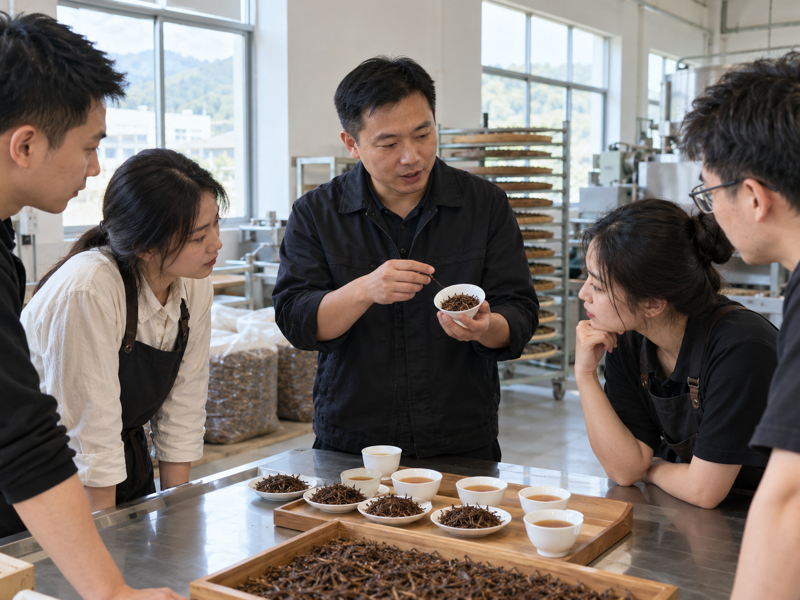
A staff member needs a phrase they can use during service, not a linguistics lecture. Put the product name, simple sound cue, and a plain description on one training card: “Hojicha (hoh-jee-chah), roasted green tea.” Add the actual drink recipe and allergy information elsewhere on the same card. Practice with a customer question: “What is hojicha?” An effective reply describes the roasted tea and the drink’s flavor without inventing a health effect or promising it is caffeine free. This makes pronunciation useful because it leads naturally to an accurate sale.
Train by hearing. Use a short native-speaker audio reference, then let staff repeat a sentence while preparing the drink. New hires can compare their recording with the reference privately. Do not grade a regional English accent as a product failure; seek intelligibility and consistency. During a trial week, listen for hesitation at the counter and ask staff which explanation customers understand. Update the card if customers repeatedly confuse hojicha with matcha or roasted barley tea. A menu name works only when the team can connect it to the right ingredient.
5. What should a customer-facing menu say?
Explain the tea before listing adjectives
Many customers have never seen the word, so put a concise descriptor next to it. “Hojicha latte — roasted green tea with milk” states both product category and preparation. A more detailed note can describe a toasted, nutty profile after the core identification. Avoid printing only “Japanese tea latte” if the tea was sourced or processed elsewhere and an origin claim has not been checked. Likewise, avoid suggesting that hojicha is a coffee or cacao ingredient merely because it looks brown. A clear description saves staff time during a busy service period.
Read it aloud. A menu board should work for customers who ask by name and those who point to the item. Check that type size, line breaks, and price remain legible from normal queue distance. If the brand uses a phonetic cue, keep it unobtrusive; the main job is selling the drink, not displaying a language lesson. Trial the wording in a few stores and record questions. If customers ask about caffeine, staff should say it contains tea caffeine and refer to approved product information. Pronunciation should help access, while the ingredient statement protects accuracy.
| Menu line | Customer takeaway | Review |
|---|---|---|
| Hojicha | Name only | May need context |
| Hojicha, roasted green tea | Name plus identity | Good basic description |
| Hojicha latte with milk | Format and major ingredient | Check actual recipe |
6. When is an audio guide worth making?
Use audio where staff or customers will hear it
Audio is useful for a chain with many stores, a wholesale sales team, voice ordering, training videos, or a product page that customers use before visiting. Record a native Japanese speaker saying the standalone word and a short sentence at ordinary speed. Ask for permission to use the recording in the intended channels. Capture clean audio in a quiet room; heavy music can obscure the long opening vowel. Keep an English explanation beside the player so users who cannot play sound still understand the product.
Version it like a recipe. If the menu name changes or a regional sales team adopts another written form, update the training link and archive the old clip. A distributor should not have one pronunciation in a video and another on a sell sheet without explanation. Test playback on a phone in normal store noise. If automated ordering systems are involved, add reasonable spelling and speech variants to the search vocabulary while keeping one displayed product name. This is a practical accessibility and operations measure, not a claim that every customer must pronounce a Japanese loanword identically.
7. Does pronunciation say anything about product quality?
No; evaluate the material separately
A fluent product name can make a brand sound prepared, but it cannot tell a buyer what was roasted. Hojicha can be made from different leaves or stems and sold as loose tea, ground powder, or a blend. Japan’s MAFF tea guide defines the category through roasting, not through one universal grade. For procurement, ask for the exact form, base tea, roast profile, ingredient list, lot code, specifications, and relevant market documents. A well-pronounced SKU still needs a finished-product trial.
Keep two checklists. The marketing checklist covers pronunciation, spelling, description, and artwork. The technical checklist covers sensory quality, dispersion or extraction, safety documents, supply, and cost. Connect them at approval: a product described as a creamy roasted-tea latte must actually taste of roasted tea in its saleable recipe. If a new lot changes roast profile, revise the material or the menu copy rather than relying on the familiar name to hide a quality difference. Language consistency supports trust only when the delivered product matches it.
| Workstream | Approval evidence | Owner |
|---|---|---|
| Name and sound | Proofed copy and audio | Brand/training |
| Ingredient identity | Specification and lot sample | Quality/procurement |
| Finished drink | Approved recipe and tasting | Product team |
8. How should exporters handle the name across markets?
Maintain one product identity with local copy
An exporter may encounter “hojicha,” “houjicha,” “hōjicha,” and Japanese characters in requests from different customers. Treat these as naming variants only after confirming that each inquiry refers to roasted tea and the same material form. A buyer asking for “hojicha powder” might want milled roasted tea, while another expects a sweetened latte mix. The sound of the word cannot settle that difference. Use a stable internal product code, then connect every language or spelling variant to the correct technical specification.
Localize the descriptor. Keep customer-facing copy simple and have qualified reviewers check the local language, ingredient terms, and mandatory label elements. Use phonetic help where it benefits the audience, but do not force it onto every package. If the origin is part of the product story, verify the actual cultivation and processing chain before printing it. A global brand can keep “Hojicha” as the product name while changing the accompanying explanation by market. That is clearer than allowing each distributor to improvise a different definition.
9. What mistakes should product copy avoid?
Good spelling cannot rescue a false claim
Common errors include calling hojicha caffeine free, describing it as black tea, equating it with matcha, or saying its roasted taste comes from coffee. Hojicha is roasted green tea and can contain caffeine. When a packaged product includes other ingredients, the full formula matters more than the headline name. If a brand uses Japanese script, avoid generating it as part of an image; type and proof it separately. A misplaced character or distorted stroke can make otherwise careful packaging look careless to readers who know the language.
Proof every channel. Compare menu board, point-of-sale listing, online ordering, staff card, carton, and retail label. Check the product name, ingredient identity, pronunciation cue, claims, and serving size. Marketing reviewers should read the total impression, including images and context. The U.S. Federal Trade Commission requires evidence for objective health-related messages, including implied ones. A warm evening photograph beside a “no caffeine” line cannot be defended by accurate romanization. Use plain flavor language and evidence that belongs to the actual product.
| Copy issue | Why it fails | Fix |
|---|---|---|
| “Caffeine free” | Tea naturally contains caffeine | Use tested serving information |
| “Black tea” | Wrong process category | Say roasted green tea |
| Changing spellings | Creates SKU confusion | Choose one public form |
| Image-generated Japanese | Characters may distort | Typeset and proofread |
10. What should a brand do before rollout?
Approve sound, copy, and substance together
Choose the public spelling, write a short pronunciation cue, record a native-speaker example if useful, and agree on a plain product description. Then connect that description to the supplier’s specification and the approved recipe. Have a qualified reviewer inspect any Japanese text. Train staff to answer a basic question about flavor and caffeine without making a medical claim. Test the menu in normal service and gather the phrases customers actually use. Keep stock-control aliases so alternate romanizations point to the same internal product record.
Keep the name useful. Matcha Village supplies hojicha powder for B2B development; its contact page can receive a brief specifying form, application, target market, and required documents. A clear product identity makes supplier conversations more efficient, but the buyer must still approve a representative production sample. A good rollout lets staff pronounce the name comfortably and lets customers understand what they are buying before the first sip.
FAQ
Q1: What is a simple English pronunciation of hojicha?
“Hoh-jee-chah” is a practical cue; a native Japanese recording provides a better sound reference.
Q2: Are hojicha and houjicha different teas?
No. They are common romanized forms of the same Japanese tea name.
Q3: Why does hōjicha have a line over the o?
The macron marks a long vowel in formal romanization.
Q4: How is hojicha written in Japanese?
Common forms include ほうじ茶 and 焙じ茶.
Q5: Should a menu include a pronunciation cue?
Use one if it helps your customers, and pair the name with the clearer descriptor “roasted green tea.”
Give teams one spelling, one audio reference, and one accurate description. The Library of Congress romanization guide explains the long vowel; product approval still depends on the tea you source.