
A promising hojicha sample can fail when the next lot tastes darker, clumps in a premix, or arrives without the import documents. Hojicha powder wholesale buying calls for a written application, an approved reference, a way to compare later lots, and a packing and delivery plan. This guide follows the purchase from inquiry through the first production order for café chains, drink brands, bakeries, and ingredient distributors.
Contents: application · sample · roast · documents · capacity · pack · pricing · trial · contract · approval
1. What will the powder actually do in your product?
Name the finished application before asking for a grade
The same roasted tea powder may taste clean in water and disappear in a sweet oat latte. A bakery can want a stronger roast than a bottled milk drink, while a frozen dessert may need a fine grind that avoids a sandy finish. Tell a prospective supplier exactly where the powder will go: hot drinks, iced drinks, a dry latte blend, cake batter, ice cream, or several of these. Include the expected tea dose, serving size, dairy or plant base, sweetness, and preparation equipment. If the recipe is still in development, give a trial range and say which variables remain open.
Begin with the served product. Buyers often ask for a generic “premium hojicha” sample, then discover that their team and supplier meant different things by premium. A clear brief can say, for example, that the tea should remain recognizable in a cold milk drink after ice melt, without a harsh burnt finish. That is a testable target. It also lets the supplier propose more than one roast or grind. Avoid asking one powder to cover incompatible products by default; two application-specific grades may make a small range more consistent than a single compromise grade.
2. How should a buyer compare the first samples?
Keep dose and preparation fixed
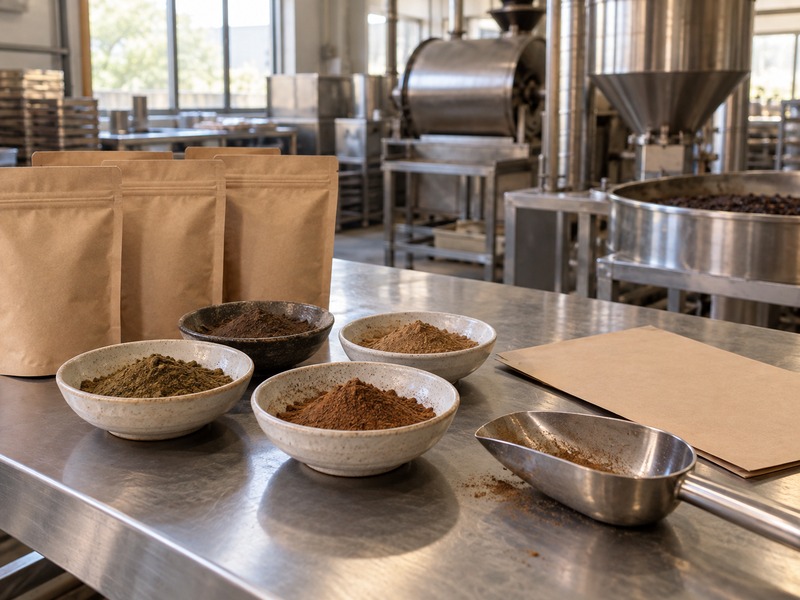
Request enough coded sample for repeated trials. Ask which sample represents ordinary production and whether a matching retained lot can be supplied later. Prepare candidates at the same powder mass, liquid mass, temperature, mixing time, and serving delay. Taste them plain, then in the finished product. A blind comparison reduces the influence of sales materials or price. Record roast character, bitterness, sweetness, visible particles, foam behavior, and finish.
Taste after the recipe sits. A powder that tastes smooth at the counter may settle at the bottom of a bottled drink or collect in the last sip of a latte. Check the drink at the actual service interval. In bakery testing, taste a slice after cooling and again the next day; freshly baked aroma can hide weak tea flavor. Keep a control sample from the current supplier if a replacement decision is underway. Do not approve a new source because its dry powder smells strong. The purchase is for performance in the product customers receive.
| Sample test | Hold constant | Record |
|---|---|---|
| Plain tea | Powder, water, time | Roast, bitterness, residue |
| Milk drink | Milk, sugar, ice | Tea clarity after dilution |
| Bakery item | Batter, pan, bake | Color and next-day flavor |
| Dry blend | Mixing method | Flow and cup uniformity |
3. What does a consistent roast look and taste like?
Use a reference, not one adjective
“Dark roast” and “nutty” can describe very different cups. Ask for the tea form used before roasting, a description of the process, and a practical specification for the finished powder. Roast changes both aroma and color, yet color alone cannot prove a clean flavor. Compare a lighter and darker candidate at equal dose. A useful acceptance card names desirable notes, such as toasted grain or caramel, and rejection notes, such as smoke, ash, stale oil, or a sharp burnt edge. These are sensory observations, not claims about a chemical constituent.
Keep the reference pack. Seal part of the approved production lot and record its preparation method. When a new shipment arrives, the team can prepare old and new samples side by side. Storage can change the old sample too, so replace the reference under a documented schedule. A buyer should also ask how the factory handles blend changes and roast drift between seasons. If the supplier proposes a substitution, evaluate it as a new candidate rather than assuming that a similar color means the same cup. The goal is repeatable flavor in the final recipe, not a fixed shade in a dry bowl.
4. Which quality documents belong in the first review?
Request documents for the actual item and lot
A supplier’s certification brochure is a starting point. Before import or packaging claims, ask for the current product specification, ingredient statement, allergen information, production site details, and sample certificate of analysis for the exact product offered. The buyer’s own market determines which pesticide, heavy-metal, microbiological, or other tests are needed. Matcha Village’s pretraining materials describe support for these checks, but a particular claim must rest on the relevant certificate and current lot record. Do not assume every product carries every certification shown in a company profile.
Read the scope line. An organic certificate may apply to one site, product, or handling activity; a food safety certificate may cover a particular facility. Ask the supplier to connect each document to the item code and packaging format you plan to buy. Check names, dates, issuing body, and whether a translation or importer-specific document is needed. Put open questions in one written list. If a required result is pending, hold the purchase decision rather than filling the gap with a broad assurance that the factory “has all certificates.” A disciplined file speeds customs review and protects future label changes.
| Document | Buyer question | Hold point |
|---|---|---|
| Product specification | Does it describe this powder? | Item code mismatch |
| Lot COA | Is the tested lot traceable? | Missing lot ID |
| Certification | Is the scope relevant? | Expired or unrelated scope |
| Allergen statement | Does it cover the supplied pack? | Unclear shared handling |
| Packing record | Can cartons be traced? | No batch link |
5. Can the supplier handle your volume pattern?
Ask about the path from pilot to repeat orders
Wholesale buying is rarely a single number. A brand may need small development bags, a first commercial run, then monthly replenishment. Give the supplier a forecast with realistic ranges and seasonality. Ask for minimum order quantity by product and pack format, production lead time, sample turnaround, and what happens if demand doubles. Capacity statements need an operational explanation: what work is done in-house, what part depends on harvest or third-party packaging, and how the next order is reserved. A large plant can still miss a deadline if the specific grind or pack format has a bottleneck.
Ask about the slow week too. Supply reliability includes response when demand drops or a container is delayed. Clarify whether orders can be split, whether bulk and retail packs draw from the same lot, and how much notice a specification change requires. Matcha Village’s company materials describe large-scale production and OEM options, but buyers should request a quotation and schedule for their own volume. Keep the first forecast honest. Inflated numbers can win a lower quoted price that the brand cannot sustain, while an overly small estimate can hide the unit economics needed for a real launch.
6. Which pack protects powder through shipping and use?
Test the pack your operators will open
Bulk powder may move through freight, a distributor warehouse, a café storeroom, and a busy service station before anyone drinks it. Ask for the proposed food-contact pack material, net weight, closure, outer carton, pallet arrangement, and lot marking. A large bag can lower packaging cost but may stay open too long at a small café. Multiple smaller sealed packs can reduce exposure after opening and simplify stock rotation. The right choice depends on actual weekly use, not merely the lowest price per kilogram.
Open a test pack. Check whether staff can scoop cleanly, reseal it, find the lot code, and avoid cross-contact at the intended station. Inspect powder after a realistic transport trial for clumping and aroma loss. If a private-label consumer pack is planned, review the printed claims separately from bulk ingredient documentation. A supplier can propose bags, cans, or stick packs, but shelf life and label content require validation for the exact formula and pack. Keep packaging decisions connected to the application test: a fine powder that performs well in a lab bottle must still pour and disperse after shipping.
| Packing choice | Potential benefit | Practical check |
|---|---|---|
| Large foodservice bag | Lower pack cost | Open-use period |
| Smaller sealed pouches | Less exposure per opening | Added handling and cost |
| Retail can | Shelf presentation | Closure and label review |
| Single-serve sachet | Consistent dose | Blend uniformity and waste |
7. How should quotes be compared?
Calculate cost in the finished product
The cheapest kilogram can make the most expensive cup if it needs a higher dose or creates more waste. Compare quotes with the same Incoterms, currency, pack size, payment terms, testing obligations, and lead time. Separate tea cost from freight, customs, storage, labor, and rejected stock. For drinks, calculate grams per sellable cup at the approved dose. For baked goods, count sellable pieces after rejects. Bench estimates need confirmation in a production run.
Price the actual recipe. A stronger powder may cost more per kilogram but less per cup if the dose can be lower without sacrificing flavor. The opposite can also happen: a concentrated roast may turn harsh at the level needed for color. Run a small sensitivity table for tea dose, freight, and waste. Compare suppliers using the same recipe constraints and quality gate. Do not trade away a required document or acceptable sensory result to reach a price target; a rejected shipment, label correction, or menu inconsistency is part of the real cost.
8. What should happen before the first large order?
Run a pilot under ordinary conditions
Move from laboratory samples to a purchase-sized pilot lot. Prepare drinks or food with regular staff, equipment, and operating delays. Record batch numbers, mixing time, powder residue, customer-facing appearance, and flavor after the planned hold. Test the beginning and end of a shift. If the product is a dry blend, sample the beginning and end of a blending or filling run to check uniformity. If it is a café drink, compare cups made by different operators. A powder that requires the most experienced developer to rescue every cup is not ready for rollout.
Treat a failed pilot as useful evidence. Keep the candidate powder fixed while changing one recipe variable at a time, or keep the recipe fixed while trying the second supplier sample. That shows which component caused the problem. Ask the supplier for troubleshooting support with measured observations: grams, temperatures, photos, and the exact lot. “It tastes weak” is less actionable than “the roast disappears after 150 g of oat milk and a normal ice hold.” Agree in advance which defects trigger reformulation, another sample, or rejection. A pilot should finish with a signed formula and acceptance record.
| Pilot measure | What to record | Decision |
|---|---|---|
| Cup or product flavor | Blind comparison to reference | Accept or revise |
| Dispersion | Residue after service interval | Change grind or mixing |
| Batch consistency | Early and late units | Review production |
| Operator time | Ordinary shift preparation | Simplify method |
9. What belongs in the purchase agreement?
Make the approved sample operational
A purchase order should identify the product code, approved specification, pack size, quantity, delivery terms, documents, and lot marking. If sensory acceptance matters, attach a reference procedure and retained sample policy rather than a vague promise that each shipment will be “premium.” Define what happens when a lot falls outside the agreed checks: who investigates, how quickly evidence is shared, and whether replacement or credit is available. The legal terms belong with the buyer’s procurement and counsel teams; the operational checks should still be clear enough for receiving staff to follow.
Plan the change notice. Tea inputs, roasting, milling, packaging, and production site can change during a long relationship. Ask which changes require advance notice and a new trial. Do the same on your side when a recipe, milk base, or printed claim changes. Keep the supplier’s technical contact and the buyer’s quality owner in the loop. A sales email alone is a poor place for an approved specification to live. The agreement should help ordinary teams handle the next shipment, not merely document that the first sample tasted good.
10. When is a wholesale supplier approved?
Sign off the product, documents, and delivery plan together
Approval requires three results. The powder passes the application; the item and lot can be documented for the destination market; and the supplier can deliver the chosen pack on schedule. A flavor test cannot replace missing import paperwork. Paperwork cannot rescue a gritty cup. Record who approved each part, the date, the sample, and what triggers a new review. Set a receiving check for lot code, seal, count, and sensory comparison.
Keep the next lot in view. Ask for a retained production sample and plan the first repeat order early enough to test it before stock runs out. If a new lot changes flavor, hold the affected material, prepare it beside the reference, and document the difference before adjusting the menu. The supplier may be able to correct a process or offer an alternate roast. Buyers can ask Matcha Village for application samples, specifications, and packing options suited to the intended drink or food. Share the recipe and volume range so the discussion begins with a real use case.
| Approval gate | Evidence to keep | Owner |
|---|---|---|
| Application | Signed formula and sensory result | Product team |
| Quality | Current product and lot file | Quality team |
| Supply | Confirmed pack and schedule | Procurement |
| Receiving | Lot and seal check | Warehouse |
Final recommendation
Buy the powder that passes your finished-product test and comes with a repeatable lot and delivery process. Keep one approved reference and a written acceptance method. Those two items make the next wholesale order easier to judge than the first.
FAQ
Q1: What is the first question to ask a hojicha powder wholesale supplier?
Ask which powder and roast they recommend for your exact application, then request enough material for a controlled trial.
Q2: Is a supplier certificate enough to approve a powder?
No. Check document scope and the actual item, then test the powder in the finished product.
Q3: Should a café buy the largest bag for a lower unit price?
Only if it can use the powder within a validated open-pack period without losing aroma or creating waste.
Q4: How can buyers compare two prices fairly?
Use the same pack, delivery terms, testing requirements, and approved recipe dose, then calculate cost per sellable unit.
Q5: When should a new lot be tested?
At receiving or before production, following the acceptance procedure written for the approved reference lot.