
“Toasty and smooth” can describe many roasted teas, yet it gives a receiving team little help when a new lot tastes smoky. A B2B hojicha flavor profile should connect sensory words to a sample, preparation method, acceptable range, and intended application. This guide shows product teams how to write that working specification. It is not a claim that every hojicha tastes the same. Leaf input, roast, grind, storage, and serving method can all change the cup. The aim is to make flavor language useful when buying, formulating, and checking the next shipment.
Contents: purpose · terms · reference · brewing · applications · off-notes · panel · lot · documents · approval
1. Why does a business need a flavor profile?
Turn a preference into a repeatable decision
A buyer might prefer one tea because it smells warm and sweet. A café developer may choose another because it survives oat milk. Both can be valid, but a purchase needs a shared standard. Write which product is being evaluated, who will use it, and at what stage it is tasted. A plain leaf tea and a powder for ice cream deserve different profiles. The spec should help ordinary staff decide whether a delivery matches the approved product without relying on the memory of one expert.
Name the application. “Strong roast” can be desirable in a sweet latte and harsh in a plain infusion. State the target cup or food, dose, and serving point before listing adjectives. A brand may keep one core sensory description for the ingredient and an application-specific acceptance note. This is more precise than using a single glamorous paragraph for every SKU. The profile should guide procurement and R&D, not merely decorate a product page.
2. Which words describe hojicha usefully?
Use concrete, limited descriptors
Roasted grain, toast, caramel-like sweetness, nuts, cocoa-like warmth, and smoke are possible sensory descriptions, not ingredients. Choose a short set that a trained panel can recognize in the actual sample. Define each term with a reference where practical. “Rich” and “premium” are too broad to distinguish lots. Include intensity levels in a simple scale if the team can apply it consistently. Record body, astringency, bitterness, and finish separately from aroma.
Write what should not appear. Burnt ash, stale oil, papery storage note, damp odor, and an unexpectedly sharp finish can be more useful reject signals than a long list of positive words. Do not make every slight difference a failure; agricultural inputs vary. Set an acceptable range around the approved reference. A panel should know when to release, when to retest, and when to hold a lot for supplier discussion. The descriptors need to be teachable to the people who will actually use them.
| Attribute | Plain question | Example record |
|---|---|---|
| Roast aroma | What kind of toast? | Gentle or dark |
| Sweet note | Is it clean? | Caramel-like |
| Bitterness | Does it linger? | Low to high |
| Body | Thin or full? | Application-specific |
| Off-note | Any smoke or staleness? | Describe and hold |
3. What should the reference sample be?
Keep a traceable approved lot
Select a production-representative lot that passed the intended application, then retain sealed samples under controlled conditions. Record product code, lot, roast, pack, approval date, and how long the reference remains valid. A reference can age, so it should be replaced under a documented plan. Avoid comparing a fresh delivery with an old open jar whose aroma has faded. If several grades are approved, keep them separate and clearly named.
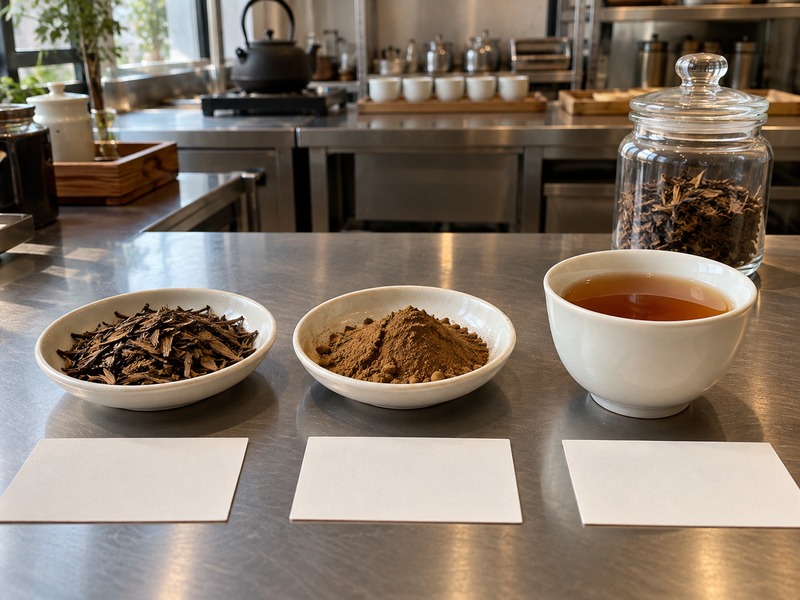
Pair the powder with a cup. A sealed bag is not enough if staff prepare it differently each time. Attach a written method for a plain tasting and the primary application. Photograph appearance under consistent lighting as supporting evidence, but let taste and product tests lead. If a supplier changes roasting or milling, request a new sample and evaluate it openly rather than silently redefining the old reference. A good reference file prevents “I remember it being darker” from becoming a purchasing argument.
4. How should a tasting cup be prepared?
Fix dose, liquid, vessel, and time
For loose leaf, record tea mass, water mass, water temperature, steep time, filter, and filtered yield. For powder, record grams, liquid, mixing tool, time, and the delay before tasting. Use the same vessel and service temperature. A cup prepared differently can appear to have a different roast even when the lot is unchanged. If a business sells an iced product, include an iced application trial rather than relying solely on a hot plain cup.
Taste side by side. Prepare the new lot and reference within the same session, ideally with coded cups. Ask panelists to note aroma before sipping, then body and finish. A second tasting after the beverage cools can reveal harshness or weak aroma. Clean water and equipment matter; a dirty frother can create its own off-note. Store the preparation method where receiving or R&D teams can find it, not in one person’s notebook.
| Preparation field | Why fix it |
|---|---|
| Tea mass | Controls strength |
| Water or milk | Changes perception |
| Temperature | Changes extraction and aroma |
| Mixing or steep time | Changes cup |
| Tasting delay | Matches service |
5. Why test the tea in the final application?
Milk, sugar, heat, and cold can change the result
Plain tea tasting is useful for spotting defects, but it may not predict a latte, cake, or frozen dessert. Milk can soften roast; chocolate can cover it; freezing can mute aroma; baking can change the top note. Keep the main formula constant and compare the candidate and reference tea at equal dose. Taste at the customer’s sale point. A powder can pass the plain cup and fail in milk because it settles or loses identity.
Keep two acceptance lines. The ingredient may need to pass a plain cup for clean roast and a finished application for performance. A bakery might accept a powder with a bold dry aroma only if it survives the next-day cookie. A café might reject a gritty powder even if flavor is excellent. These are product decisions, not contradictions. The spec should say which application is primary and which tests are informational.
6. Which off-notes require investigation?
Separate roast character from defects
A pronounced roast can be pleasant; an ashy or charred finish may not be. Stale, damp, or foreign odors raise different questions about storage, packing, or contamination. If the sample differs from reference, first repeat the preparation with clean tools and fresh water. Then inspect the lot, pack, and receiving route. Do not solve an off-note by adding syrup or mixing the lot with a better one. Hold it under the quality procedure until the cause and disposition are clear.
Describe the defect precisely. “Bad tea” gives a supplier little to work with. “Smoky aftertaste in the plain cup, still present after 150 g milk” is actionable. Record intensity, sample code, method, and panel agreement. A single taster may be unusually sensitive; a small trained panel can help distinguish a consistent defect from an individual preference. Quality investigation should also review objective records, not only sensory impressions.
| Observation | First check | Possible next step |
|---|---|---|
| Smoke | Roast comparison | Supplier review |
| Stale note | Pack and dates | Storage investigation |
| Grit | Powder and mixing | Grind trial |
| Weakness | Dose and milk | Roast or recipe trial |
7. How should a small sensory panel work?
Make the test simple enough to repeat
Use a few trained staff who understand the product and can describe it in plain words. Code samples when possible, keep serving conditions equal, and ask for independent notes before discussion. A short form can capture aroma, roast, bitterness, body, finish, off-notes, and application result. Avoid a single overall number that hides a serious defect. A lot with excellent aroma and obvious grit should not average into approval.
Calibrate with examples. Taste the approved reference, a lighter roast, and a deliberately different but safe sample during training so panelists understand the range. Do not create fake defects or use unsafe material. Keep the group small and the method consistent. If two panelists disagree, repeat the test or involve the product owner rather than deciding by seniority. The aim is a reliable release decision, not a performance of expertise.
8. How can the profile control later lots?
Build it into receiving
At receiving, reconcile product code, lot, pack, and documents before tasting. Then prepare the reference and new lot by the approved method. Record whether each sensory attribute falls within the accepted range and whether the application cup passes. If it does, release under the quality process. If it differs, hold affected stock and ask the supplier for process and lot information. A menu change should not be the first response to a drifting ingredient.
Watch seasonal transition. Tea input can change between production periods. A supplier may manage this through blending or roast adjustments. Ask for notice when an input or process changes materially. Keep a second source only after it has passed the same application test; “backup supplier” is not a synonym for interchangeable tea. The flavor profile can make a future substitution easier to evaluate without pretending two different products are identical.
| Receiving gate | Evidence |
|---|---|
| Identity | Item and lot match |
| Documents | Current product file |
| Plain cup | Clean roast |
| Application | Intended product pass |
| Decision | Release or hold record |
9. How should sensory notes meet specifications?
Connect words to measurable controls
A specification can include particle size, moisture, microbiological or contaminant limits, and other measures appropriate to the product and market. Those figures support quality and safety work, but they do not replace tasting. A powder can meet a grind range and still taste too dark for a café’s milk. Conversely, a pleasant cup does not prove a lot meets food-safety requirements. Keep analytical and sensory approval as separate but linked gates.
Use the correct product file. A supplier’s certification must cover the relevant item and site. The COA should connect to the delivered lot. If the brand makes an origin or organic claim, retain its supporting evidence alongside the flavor record. Do not infer a health property from a roasted note. A complete file lets procurement, R&D, and regulatory teams answer different questions about the same material without mixing them up.
10. What does a useful final profile contain?
Keep it short, specific, and versioned
Write the approved item and use, a reference sample, preparation method, five or fewer useful positive attributes, clear off-note triggers, application pass criteria, and the owner of the decision. Add a revision date and the conditions that require retesting. If the brand sells several roasts, give each its own card. A large essay of vague adjectives is harder to use than a page that tells staff exactly how to prepare and judge a cup.
Try it without the author. Give the profile to someone who did not help write it and ask them to compare a new sample with the reference. If they cannot make a decision or explain the uncertainty, refine the method. Matcha Village can supply candidate hojicha powder and product documents for application tests; the buyer should describe the target cup or food and keep the accepted flavor profile as the reorder standard.
| Final card field | Example purpose |
|---|---|
| Product and lot | Exact identity |
| Preparation | Fair comparison |
| Descriptors | Target range |
| Off-notes | Hold triggers |
| Application | Customer result |
| Revision | Change control |
Final recommendation
Make the hojicha flavor profile a test people can repeat. A named roast, standard cup, application trial, and clear hold rule are more useful than a long paragraph of flattering adjectives.
FAQ
Q1: Does all hojicha taste the same?
No. Input tea, roast, grind, storage, and preparation change the cup.
Q2: Is “toasty” enough for a specification?
No. Define intensity, reference, preparation method, and reject notes.
Q3: Why taste in milk if the plain tea passes?
Milk can hide or change the roasted note and expose texture problems.
Q4: Can a laboratory number replace tasting?
No. Analytical and sensory checks answer different questions.
Q5: What should happen when a lot drifts?
Hold it, repeat the controlled test, record the difference, and investigate with the supplier before use.