
Hojicha smells persuasive in a dry bowl, yet a baked cake can taste mostly of sugar and butter. A larger dose may darken the crumb before it fixes the flavor. Bakeries using hojicha powder for baking need a short trial plan that separates roast intensity, particle texture, and recipe effects. This article sets out that plan for cookies, sponge cakes, and filled desserts. The examples are development settings, not fixed formulas. A production recipe should be approved after the product has cooled, been packed, and reached the customer’s normal eating point.
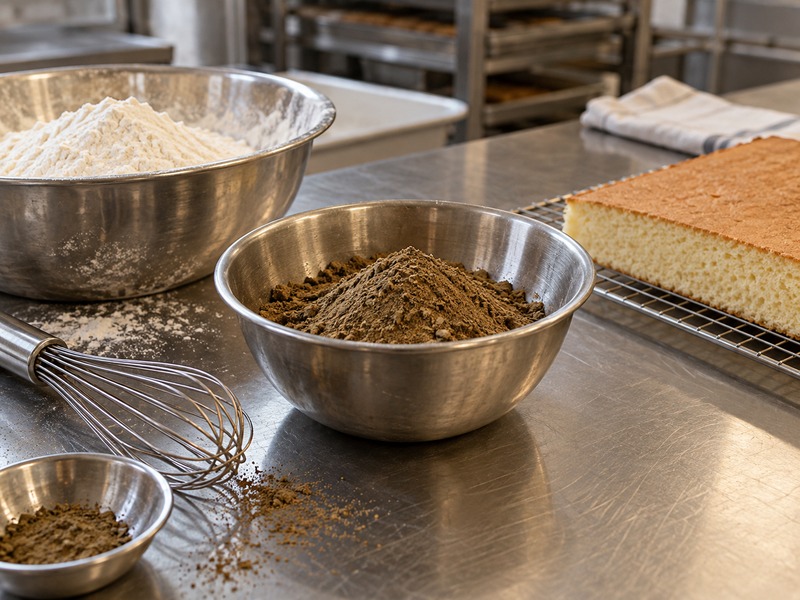
Contents: purpose · powder · dose · mixing · bake · flavor · texture · holding · cost · approval
1. What role should hojicha play in the baked product?
Decide whether tea is the lead flavor or a supporting note
A hojicha cookie with chocolate can use tea as a warm background. A plain tea sponge must put roasted flavor in the foreground. Those are different briefs. Write the desired taste before weighing powder: toasted grain, gentle caramel, or a darker roast, along with notes that would cause rejection, such as ash or stale oil. Note how sweet the finished item should be and whether the product includes cocoa, sesame, coffee, or spice. Strong partners can overwhelm tea, even when the dry dough smells promising.
Name the bite that matters. A bakery may choose the first warm bite for a dine-in dessert, the next-day slice for a packaged cake, or the final bite after a cream filling has softened the sponge. Test at that moment. Avoid using a label claim such as “rich hojicha flavor” until blind tasters can identify a roasted tea note in the real product. The roast should support the eating experience, not only provide a brown crumb for a photograph. If a brand wants color without much tea taste, say so openly during formulation rather than buying a strong powder and underdosing it.
2. Which powder characteristics matter before formulation?
Compare roast and grind separately
Ask a supplier for the intended food application, roast profile, grind information, ingredient statement, and lot documentation. A fine grind can disperse through batter more evenly than a coarse one, but the bakery should test what customers feel on the tongue after baking. A darker roast can remain clearer under butter and sugar, while an overly dark one may bring a burnt finish. Try samples at the same dose before changing the formula. That isolates ingredient differences from recipe differences.
Use the commercial sample. A small lab-ground jar can behave differently from a normal production lot. Request the powder that will actually be supplied, in enough quantity to run several bakes. Check for clumps before opening a mixer and observe whether the powder disperses with the planned method. Review the actual lot COA and any certification needed for the selling market; a supplier profile does not substitute for those records. Keep one sealed reference pack after approval. When a new lot arrives, bake against it rather than judging the new dry powder by color alone.
| Ingredient check | Why it matters | Bakery test |
|---|---|---|
| Roast | Flavor after heat | Blind slice comparison |
| Grind | Texture in crumb | Mouthfeel after cooling |
| Clumping | Mixing uniformity | Observe batter and cut pieces |
| Lot file | Traceability | Match pack to COA |
3. How should the first dosage trial be set?
Weigh against a fixed base recipe
Choose one existing bakery formula that already works, then hold its flour, fat, sugar, liquid, pan, and bake schedule constant. Replace or add a small set of measured hojicha doses, recording the powder as a percentage of total batter or flour weight. The correct range depends on roast and recipe; a universal spoon count would mislead. Weigh powder in grams with the same scale used for other dry ingredients. Photograph raw batter and finished crumb under the same light, but do not let the darker sample win by appearance alone.
Taste more than one slice. A low dose may disappear; a high dose may make the product dry or bitter. Ask tasters to compare sweetness, tea clarity, and aftertaste without seeing the dose codes. Include the control recipe without tea. If the high dose gives better aroma but worse texture, try a different powder or a separate tea component rather than automatically adding more liquid and changing several variables at once. The first screen should tell the bakery whether the ingredient can perform in this base at all.
4. When should the powder enter the mixing process?
Test dispersion in the equipment you use
Adding dry tea powder directly to a large batter can create dark flecks or small clumps, especially when the recipe has limited free liquid. Sifting it with other dry ingredients may help some formulas; pre-dispersing it in part of the recipe liquid may help others. Either method changes the order of operations, so test it with normal staff and the normal mixer. Do not assume a smooth hand-whisked bench bowl predicts a production mixer. Record the sequence, speed, time, and batter appearance.
Cut the first and last pieces. Uneven distribution may show up at the start or end of deposit rather than in the center of a bowl. A cookie dough can look uniform but produce some pieces with heavy tea flecks. A liquid batter may settle while waiting to be panned. If the line includes a hold between mixing and baking, check batter from both ends of that hold. Build the mixing instruction around the method that gives repeatable pieces, not around whichever method felt fastest in one small trial.
| Mixing route | Potential benefit | Failure signal |
|---|---|---|
| Dry sift | Simple added step | Dusting or specks |
| Liquid slurry | Fast wetting | Lumps or extra water |
| Direct addition | Fewest steps | Uneven color |
| Premix with sugar | Better distribution in some doughs | Segregation in storage |
5. What changes during baking?
Check the finished crumb rather than raw aroma
Oven heat changes the volatile aroma of tea and the color of a sweet dough. Hojicha powder also contributes dry solids, so the highest dose may alter spread or moisture. Compare baked products at a fixed endpoint: internal result or the bakery’s ordinary visual and texture standard, not merely a set number of minutes. A darker tea crumb can make visual doneness harder to judge. Record pan position and piece size, especially in a production oven where edge trays can run differently from the center.
Keep the process comparison fair. If one sample has a higher tea dose and a different bake time, the panel cannot tell which variable caused a harsher finish. Start with the same bake, inspect the result, then adjust only the promising formula. For a cookie, measure spread and weight after cooling. For a sponge, cut both center and edge slices. For a filled pastry, taste the tea layer with the actual cream or fruit component. A recipe that works as a plain test square may lose its tea identity once assembled.
6. Which ingredients can hide or sharpen the roast?
Taste the complete product
Butter, milk powder, vanilla, cocoa, brown sugar, and chocolate each change how roasted tea reads. Some pairings make it taste rounded; others cover it. A sharp fruit filling can make the tea seem thin, while heavy chocolate can make it hard to identify. Set the tea dose before adding multiple flavor accents. Then change one supporting ingredient at a time. The objective is a baked item whose name describes its actual flavor, not a long ingredient list designed to make a weak tea sample seem interesting.
Leave room for the tea. In a hojicha chocolate-chip cookie, compare a lower and higher chocolate load at the same tea dose. In a sponge with cream, taste the naked cake and the filled slice. If tea appears only in the naked version, adjust the filling or the powder. Sugar level needs the same discipline: more sugar can soften bitterness but also bury a gentle roast. Record whether tasters prefer the finished product or merely prefer the sweetest sample. A blind panel and a short comment sheet can keep that distinction visible.
| Partner | What it may do | Trial question |
|---|---|---|
| Cocoa or dark chocolate | Compete with tea roast | Can tasters name tea? |
| Brown sugar | Add caramel notes | Is finish too sweet? |
| Dairy cream | Round bitterness | Does tea survive filling? |
| Citrus or fruit | Add contrast | Does roast become thin? |
7. How can mouthfeel stay clean?
Inspect powder particles and baked structure
A fine powder is not automatically smooth in every product. Cookie dough, cake batter, and custard distribute solids differently. Taste the finished item after cooling, when rough particles may be easier to notice. Check whether the powder creates dry pockets, visible specks, or a gritty afterfeel. If it does, first verify the mixing sequence and powder condition. A larger dose of the same powder is unlikely to cure a dispersion defect. A different grind or route may be needed.
Do not sacrifice the base product. The bakery’s ordinary cookie should still snap or chew as intended; its cake should still slice cleanly. Tea is an ingredient, not an excuse for a dry crumb. Weigh finished pieces and measure loss during baking if the process is sensitive. If a higher tea dose consistently changes spread or moisture, revise the formula deliberately and rerun the comparison. For a retailer, include packaging and transport in the texture check. A fragile product that tastes excellent on the test bench may break before it reaches a shelf.
8. What should be checked after packing and holding?
Test at the planned sale point
Warm bakery aroma can flatter a hojicha sample. Pack it in the real film, box, or display case and taste it after the intended holding period. Tea aroma may fade; a cream can migrate into sponge; a cookie can soften. Record storage conditions and the time between bake and tasting. If the product is sold chilled or frozen, test it at the actual serving temperature. Do not borrow a shelf-life number from another recipe just because the same tea powder is used.
Open the package like a customer. Note aroma on opening, then taste the first and last bites. Inspect whether the tea color looks even and whether a filling hides the roasted note. If a pack loses aroma earlier than expected, examine both recipe and barrier properties before extending the printed life. Shelf-life and safety decisions need the bakery’s validated process, not a sensory tasting alone. Keep the approval file with formulation version, pack, storage conditions, and review date so later ingredient changes trigger another check.
| Holding check | Evidence | If it fails |
|---|---|---|
| Aroma on opening | Blind comparison to fresh control | Review pack and roast |
| Texture | Same saleable bite | Review moisture and storage |
| Appearance | Even tea color | Review mixing |
| Safety and life | Validated process | Hold commercial claim |
9. How should the bakery calculate cost?
Count sellable units, not only powder grams
Calculate ingredient cost per batch, powder dose per piece, energy, labor, packaging, and the number of sellable pieces after trimming or rejects. A fine tea powder with a higher unit price can still be economical if it works at a lower dose and gives a clearer flavor. The opposite is also possible. Compare candidates on the same finished product and pack. Record waste from stale aroma, dough spread, broken slices, and pieces outside the display standard.
Price the next-day piece. If the product sells over two days, evaluate cost and quality at that point. A formula that only works within an hour of baking may need a different channel or a shorter sale window. When a supplier quotes a lower bulk price, ask about minimum order quantity and whether the bakery can use the powder before flavor declines after opening. Unit economics must include the real inventory cycle. Do not order a large pack for a small trial because its price per kilogram looks attractive on paper.
10. What does a launch-ready bakery formula require?
Approve a repeatable process and a saleable product
Run a final batch with ordinary staff, the planned oven load, packaging, and holding time. Cut or sample pieces from different positions in the batch. Check tea flavor, texture, appearance, and yield against the signed standard. Keep a retained powder sample and a product photograph made under normal light. Review ingredients and allergens for the complete formula. A tea supplier can describe its powder; it cannot certify the bakery’s entire finished food without seeing the full recipe and process.
Make the next lot easy to test. The recipe card should list powder item code, dose, addition stage, mixing time, bake endpoint, pack, and holding condition. If a new tea lot arrives, prepare a small control bake before a large run. If it drifts, compare the powder and the process separately. Ask Matcha Village for application samples with the target cake or cookie described, including dose and desired roast. The most useful supplier conversation starts with the baked item customers will actually buy.
| Launch gate | Evidence | Owner |
|---|---|---|
| Powder lot | Approved sample and file | Purchasing |
| Mixing | Even early and late pieces | Production |
| Served flavor | Tea clear at sale point | Product team |
| Holding | Validated pack and process | Quality |
Final recommendation
Choose hojicha powder through controlled bakes, then approve the next-day product in its real pack. The best dry aroma is not a substitute for a clear tea note in a sellable slice or cookie.
FAQ
Q1: Can hojicha powder replace cocoa one for one?
No. It has different flavor and dry-solid behavior. Start with a measured trial in a working base recipe.
Q2: Should the bakery use a darker roast for every dessert?
No. Darker roast may survive rich ingredients but can turn harsh in a plain sponge.
Q3: Why are there specks in the finished crumb?
Check powder condition, grind, and mixing sequence before increasing the dose.
Q4: When should the bakery taste test?
Taste after cooling and at the actual sale point, using the planned pack or display method.
Q5: What should a supplier receive in the brief?
Share the product type, base ingredients, trial dose, bake and holding conditions, and desired roasted-tea profile.