
A Basque cheesecake can leave the oven with a convincing toasted surface while its hojicha flavor is barely visible beneath cream cheese. Adding more tea may darken the center or bring bitterness before it fixes that problem. A bakery needs to test the tea, batter, bake, chill, and slice as one product. This hojicha Basque cheesecake guide is built around those decisions. It aims at a saleable cake made by normal staff, with a creamy center and a roasted-tea note that survives refrigeration. Trial doses and times must come from the bakery’s own ingredients and equipment.
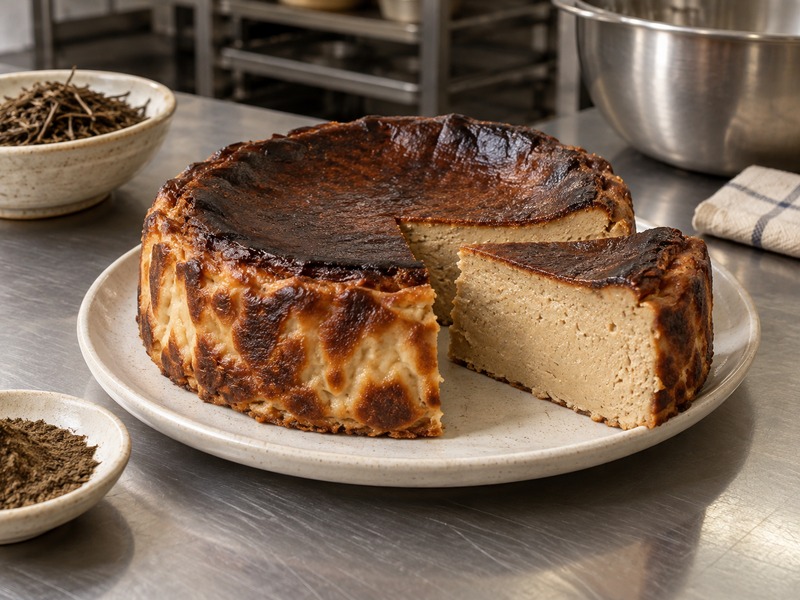
Contents: brief · powder · batter · dose · bake · center · chill · slice · cost · launch
1. What should make this cheesecake distinct?
Write a sensory target before baking
Basque cheesecake already has a browned top and a rich, slightly tangy center. Hojicha should add a recognizable roasted-tea note rather than merely deepen that brown. Ask the product team to describe the target in a sentence: perhaps a creamy slice with warm toast aroma and a clean tea finish. List rejection notes too, such as ash, strong tannic bitterness, grainy batter, or a center that tastes only of sweet cheese. This brief gives tasters a common standard when the first trial cakes differ.
Taste the plain cake first. A bakery’s existing Basque formula is the control. Its cheese, sugar, and bake endpoint determine how much room tea has. A sweet vanilla-heavy formula can hide a gentle roast; a sharp cheese can make a dark roast feel harsher. Compare the tea version with the control at the same serving temperature and slice size. Do not introduce sauces or garnishes until the core cake works. A drizzle can rescue a weak photograph but cannot solve a product that fails when served plain.
2. Which hojicha powder should be sampled?
Choose for a creamy, chilled application
Ask for a food-grade powder that can be dispersed smoothly in a high-fat batter. Request the ingredient statement, grind information, roast description, and a production-representative sample. A powder selected for hot lattes may behave differently when chilled into dense cheesecake. Compare candidate roasts at equal mass in a small base batter, then bake and chill them before tasting. Dry aroma alone is a poor predictor of the finished cake. Check whether the powder leaves fine specks or a sandy afterfeel.
Keep the lot connected. Once a supplier sample passes, record its item and lot number with the recipe. A later tea shipment may look equally brown but taste different after a long bake. Request current product and lot documents needed for the selling market. The buyer should not assume a company-wide certification covers every powder variant. If the tea supplier proposes a different roast for cost or availability, treat it as a reformulation trigger. A cheesecakes’s cream and chill can mute small flavor differences until the slice has warmed slightly on a plate.
| Powder choice | Trial question | Reject signal |
|---|---|---|
| Gentle roast | Does tea remain after chilling? | Disappears under cheese |
| Dark roast | Is the finish clean? | Burnt or ashy |
| Fine grind | Is texture smooth? | Sandiness |
| Production lot | Does it match reference? | Flavor drift |
3. How should the powder enter the batter?
Avoid clumps without changing the formula blindly
Hojicha powder can form dark specks if it is tipped into a large cold mixture and mixed briefly. A bakery can test sifting with dry sugar, making a small slurry with a measured portion of recipe liquid, or blending it into a portion of batter before returning it to the main bowl. These routes are not interchangeable: extra liquid and extended mixing can change the cake’s set. Use only ingredients already in the formula for the first comparison and hold mixer speed and time constant.
Cut every test cake. An apparently uniform surface may conceal a concentrated pocket in the center. Inspect slices from the middle and outer ring. If one route gives smooth color but introduces too much air, the cake may puff and collapse differently. Record batter temperature and time from mixing to oven. A busy bakery may hold pans while other orders bake; test whether tea particles settle during that wait. The final method must work at the intended batch size, not only in a small bowl worked patiently by a developer.
4. How much tea should go into a trial cake?
Use a small stepped series
Keep the bakery’s base recipe and pan size fixed, then test several weighed powder levels. Express the dose against total batter weight so it can scale. Do not start with an online spoon measure, because roast strength, grind, and spoon packing vary. Bake the trial cakes to the same defined endpoint, chill them the same way, and serve equal slices. A lower dose may preserve creaminess but vanish; a higher one may bring color and bitterness. The best point is where tea stays clear without disturbing the cheesecake.
Score the cold slice, not the batter. Tea powder tastes concentrated in raw batter and changes during baking and chilling. Ask tasters to note aroma, tea recognition, cheese balance, sweetness, and texture. A blind tasting can prevent the darkest cake from winning simply because it looks most like a tea dessert. If no dose works, change the powder or base formula one variable at a time. More powder should not be the automatic answer to a weak tea note; it may make a grainy cake stronger but worse.
| Trial variable | Keep fixed | Record |
|---|---|---|
| Powder dose | Base batter and pan | Tea clarity |
| Roast sample | Powder mass | Bitterness and aroma |
| Dispersion route | Ingredient totals | Specks and aeration |
| Serve temperature | Chill time | Center texture |
5. What does the dark surface tell the baker?
Separate surface browning from center doneness
The deeply browned top is part of the Basque style. Tea in the batter can make the cake look darker before it is baked enough, so color alone may mislead. Use the bakery’s established endpoint measures, such as center movement, measured temperature where appropriate, and the result after cooling. Record oven setting, load, shelf position, pan fill, and paper height. A tea trial baked in an otherwise empty oven can differ from a full production load.
Watch the edges and center together. A cake with a beautiful top can have an overbaked outer ring and an under-set center. Compare slices from several positions, especially when changing pan size. If tea makes the surface appear nearly black, photograph it under normal display light and ask whether customers will read it as intentional browning or damage. Do not reduce bake time merely to protect color without checking the chilled set and food-safety process. The result is judged after the full bake and chill, not at the oven door.
6. How can the center stay creamy?
Test texture after the planned chill
Basque cheesecake depends on a particular relationship between set edges and creamy center. Powder adds solids, while mixing changes air and structure. Compare the tea cake with the control after the same chilling interval. Cut a slice with the same tool and observe whether the center holds, smears, or leaks. Taste at the serving temperature, because a slice straight from a cold case may seem firmer and less aromatic than one rested briefly before service.
Do not hide a structural problem with plating. A sauce can make a dry center feel moist for a bite, but it does not restore the intended cheesecake texture. If a higher tea dose firms the center, test a different powder or formula adjustment in a controlled trial. Keep one change per bake so the team can identify cause. If a cake must be transported, include a normal delivery test; vibration and temperature change can expose weakness in a center that looked perfect on the bench.
| Texture check | Pass evidence | If it fails |
|---|---|---|
| Chilled cut | Clean saleable slice | Review set or chill |
| Center | Creamy without leakage | Adjust bake or formula |
| Outer ring | No dry band | Review pan and oven |
| Served bite | Tea and cheese balanced | Revise roast or dose |
7. How should the cake be cooled and held?
Validate the bakery’s own food-safety process
Cheesecake contains perishable ingredients, often including dairy and eggs. Use the bakery’s established cooling, refrigeration, sanitation, and shelf-life procedures, and have qualified staff validate changes. A sensory panel can approve flavor but cannot set a safe chilled life by taste. Record cooling start, transfer into refrigeration, covered or uncovered handling, pack type, and service temperature. If the tea powder, cheese, or pan size changes, revisit the process as needed.
Taste at the late sale point. The roasted note may soften or blend with cheese after a day in the case. That may be pleasant, but the product description should match the slice actually sold. Compare opening-day and last-approved-day samples under the same serving conditions. Check condensation on the top and whether a paper wrap sticks to the browned surface. Packaging that protects the cake but ruins the top is not finished. Keep a dated recipe and process record with the approved tea lot and pack.
8. Can staff cut and present it consistently?
Test the whole cake in a normal shift
Yield is a commercial question. Give a finished cake to the display team and ask them to portion it without the developer’s help. Count slices that meet the standard, record average piece weight, and inspect the spiral of dark top, edge, and creamy center in each. A cake that gives eight attractive slices in a photoshoot but only six under service pressure has a different cost. Decide whether the final slice is served plain, dusted, or paired with a separate garnish.
Keep garnishes restrained. A heavy chocolate sauce or sweet cream can erase the tea. If a topping is needed, run a blind comparison of plain and garnished bites. A visible tea color in the filling may be useful, but do not use extra powder on top solely for color if it tastes dry. Check takeaway packaging with a real trip and opening. If the top rubs against a lid or the center shifts, change the box or portion format before printing a menu photograph.
| Service measure | Record | Decision |
|---|---|---|
| Saleable slices | Count per cake | Set price |
| Piece weight | Normal range | Train cut |
| Case appearance | Opening and late day | Set display window |
| Takeaway condition | After travel | Change pack |
9. What is the cost of a sellable slice?
Include rejects and the tea dose
Calculate cream cheese, eggs, sugar, tea powder, pan liner, energy, labor, packaging, and expected slice yield. If a stronger powder works at a lower dose, its higher price per kilogram may be acceptable. If the cake needs a large dose and still tastes mostly of cheese, the ingredient is not earning its place. Include trim and unsold slices in the pilot economics. A bakery should compare the contribution per cake against its existing dessert range rather than guessing from raw ingredient cost.
Cost the holding window. A short approved sale period may create waste in a slow store. Test realistic daily demand and whether a smaller cake or rotating special fits better. If the tea powder comes in a large bag, calculate how long that bag stays open at expected production volume. The quote is only part of the price. Ask the supplier about smaller sealed packs if they reduce aroma loss or inventory risk. Keep cost work tied to the cake that passed quality, not a hypothetical version with cheaper ingredients.
10. When is hojicha Basque cheesecake ready to sell?
Sign off a repeatable cake, not the best test slice
Run a production pilot with normal operators, oven load, pan, cooling system, case, and packaging. Sample cakes from the beginning and end of a run. Compare center texture, tea flavor, top appearance, and slice yield with the approved reference. Confirm the full ingredient and allergen statement for the market and channel. A supplier’s tea documentation supports only the tea ingredient; the bakery owns the complete finished-food label and shelf-life decision.
Keep one practical reference. Save the recipe card, tea item code, batch record, photograph, slice weight, and serving temperature. If a later powder lot changes the roast, bake a small comparison before the full shift. Matcha Village can supply hojicha powder samples for application trials; send the intended cheese formula, trial dose, and desired roast profile rather than a request for “best hojicha.” The bakery should be able to make the approved cake again when the developer is not present.
| Launch gate | Evidence |
|---|---|
| Flavor | Tea clear in chilled slice |
| Texture | Creamy center, saleable edges |
| Yield | Repeatable slice count |
| Safety | Approved cooling and life |
| Supply | Traceable powder lot |
Final recommendation
Approve the cake only after it has been baked, chilled, sliced, packed, and tasted at the planned sale point. The browned top should draw attention; the roasted tea must carry the slice.
FAQ
Q1: Can a standard cheesecake recipe become a Basque version by adding hojicha?
No. Start with a working Basque formula, then test tea dose and mixing without losing its intended bake and center.
Q2: Why does the batter taste stronger than the finished cake?
Baking and chilled dairy change how aroma is perceived. Judge the served slice.
Q3: Should the darkest powder always be chosen?
No. Compare roast cleanliness and finished flavor at equal dose.
Q4: Can a sensory panel set refrigerated shelf life?
No. The bakery needs its own validated process and safety review.
Q5: What belongs on the recipe card?
Tea item and dose, mixing route, pan fill, bake endpoint, cooling, pack, serving temperature, and slice standard.