
Hojicha chocolate succeeds when the tea survives the cocoa, the molded pieces release cleanly, and every batch tastes like the approved sample. A home recipe demonstrates the pairing; a confectionery line needs a defined chocolate base, a weighed powder dose, temper control, and a shelf-life study. Food brands and pastry teams can screen the flavor in a small trial before committing to production.
1. What product should “hojicha chocolate” mean for your buyer?
The phrase can describe a molded bar, a filled bonbon, a coating, or a small confection. Choose the format before buying tea powder. A bar exposes the full chocolate-and-tea flavor; a filled bonbon can hide a weak tea note under its shell; a coating is judged partly by flow and snap. In its Easy Hojicha Chocolate Recipe, heymatcha mixes hojicha powder into melted dark or white chocolate. A confectionery line also needs tempering, repeatable molding, and shelf-life controls.
Write a one-sentence sensory target for the finished piece: cocoa first with a clear roasted-tea finish, or tea first with mild sweetness. Those are different products. Decide piece mass, price point, channel, and whether the item will sit in a display case, a gift box, or ambient distribution. Make a plain chocolate control in the same mold. If blind tasters cannot distinguish the hojicha sample from it, more packaging language will not solve the problem. The best first pilot is usually one simple molded square that makes tea and processing faults easy to detect.
| Format | Primary test | Likely complication |
|---|---|---|
| Solid square | Roast recognition and snap | Powder grit |
| Filled bonbon | Tea in center after shell | Moisture and multiple components |
| Coating | Flow and adhesion | Thickness variation |
2. Should the first trial use dark, milk, or white chocolate?
Start with two contrasting bases rather than assuming one will carry the tea. White chocolate exposes the brown roast color and can make the tea easy to identify, but sweetness and dairy flavor may dominate. Dark chocolate can echo the roast, yet intense cocoa can bury it. Milk chocolate occupies the middle and brings its own dairy note. The heymatcha recipe offers dark and white examples; its stated quantities are recipe examples, not a claim that every chocolate behaves alike. Choose a commercially sourced base with a documented ingredient list and use the same lot for each tea-dose comparison.
Screen the bases at identical finished piece mass and controlled tea percentage. Taste them blind at room service temperature, then again after a few days in intended packaging. Note whether the tea reads as toasted cereal, burnt bitterness, or simply darker cocoa. Powder color can shift the appearance of white chocolate, so photograph cut faces under neutral light. If the intended product is sold as “chocolate” in the United States, product naming may depend on its composition; FDA’s chocolate-labeling guidance is a starting point for regulatory review, not a substitute for checking the final formula.
3. Which hojicha powder is suitable for a molded confection?
Ask for pure, finely ground roasted tea and a lot specification before sampling. Check the ingredient declaration, grind, moisture specification, pack barrier, lot code, and recommended use. Powder that disperses in hot milk may still feel gritty in a fat-rich chocolate matrix. Sift a weighed sample through the screen the production line can actually use, then examine retained agglomerates. Smell the powder next to the plain chocolate control; a stale or ashy odor will not improve after mixing. Japan’s agriculture ministry lists hojicha among Uji tea types, but “Uji” should appear in product copy only when the supplier can document the relevant origin and processing claim.
Evaluate two lots, not just two suppliers, when a program will require steady availability. Record the powder’s dose needed to reach the sensory target and its effect on melt viscosity. A cheaper powder may need more grams and create a sandy finish. A powder with a darker roast may perform well in white chocolate but turn harsh in dark chocolate. Keep lot samples sealed as references, and request the same information from any backup source. A confectionery buyer needs a traceable ingredient and repeatable flavor from batch to batch, not only an attractive sample photograph.
| Check | Record | Reason |
|---|---|---|
| Identity | Pure tea or premix | Controls dose and label |
| Particle feel | Dry rub and finished-piece grit | Predicts texture risk |
| Aroma | Roast, stale, ash notes | Sets acceptance reference |
| Traceability | Lot and specification | Enables repeat orders |
4. What is a useful small-batch hojicha chocolate formula?
For a simple screening run, divide a 600 g lot of the selected chocolate into three 200 g portions. Leave one plain. Add 4 g hojicha powder to the second and 8 g to the third, producing approximate additions of 2% and 4% relative to the chocolate base. These are starting test levels; approve a commercial formula only after process and storage checks. Use a scale, keep the same chocolate lot, and mold identical piece weights. Record the actual total mass of each bowl after additions. A small matrix exposes whether a stronger tea dose helps recognition or merely thickens the chocolate.
Do not introduce water while trying to “dissolve” the powder. Chocolate work is sensitive to water contamination, as heymatcha’s recipe also cautions. Pre-sift the dry tea, then blend it into a small portion of melted chocolate before returning that paste to the bowl. This gives the powder a better chance of even distribution. Record bowl temperature, mixing time, visible lumps, mold fill mass, and number of reject pieces. If the 4% sample has stronger aroma but poorer release, a higher percentage on the package will not fix the processing fault.
| Sample | Chocolate | Tea powder | Decision |
|---|---|---|---|
| Control | 200 g | 0 g | Baseline snap and sweetness |
| Low tea | 200 g | 4 g | Can tasters name roast? |
| High tea | 200 g | 8 g | Does grit or viscosity rise? |
5. How should tea powder be mixed without visible specks?
Sifting removes clumps but does not guarantee a smooth mouthfeel. First blend the powder into a small amount of melted chocolate, using a flexible spatula to press agglomerates against the bowl. Then combine that paste with the rest of the tempered or pre-temper chocolate according to the selected process. Document the order of addition. Adding dry powder directly to a full kettle can create islands that a gentle mixer never breaks. Conversely, aggressive mixing can add air that appears as pinholes in molded pieces. A transparent sample mold makes distribution faults easy to see before the full batch sets.
Take several pieces from the beginning, middle, and end of the mold run. Break them and inspect the cut surface for brown streaks, dense powder pockets, and air. Taste those pieces blind; visual evenness does not always mean even flavor. If the line uses an enrober or depositor, measure whether the chosen powder dose changes flow enough to require process adjustment. Avoid treating an extra fat addition as a casual fix because it changes composition, label, cost, and the product’s legal name. A pilot should separate tea-distribution problems from equipment and formulation problems.
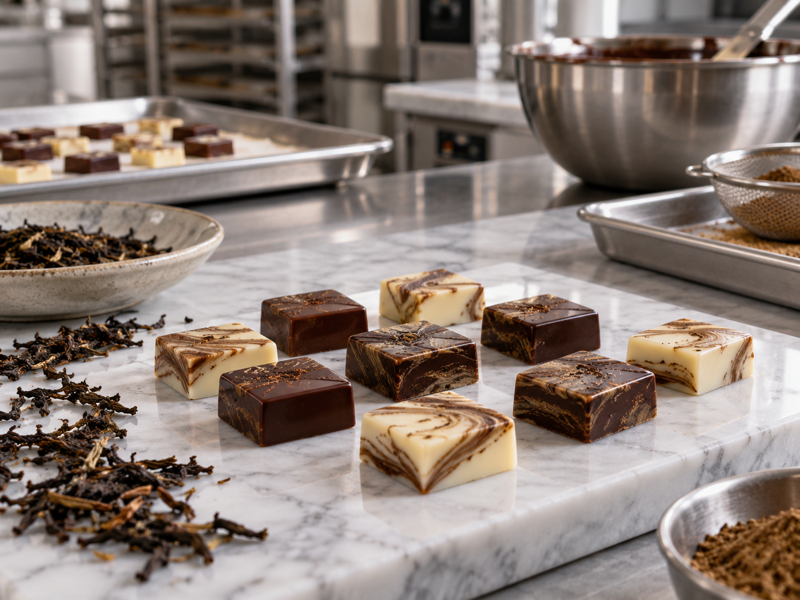
6. Why does tempering still matter after hojicha is added?
Hojicha contributes flavor and solids; it does not replace cocoa butter crystal control. A piece that looks glossy on production day can dull or bloom in distribution if the chocolate base was poorly tempered or cooled. Follow the chosen chocolate supplier’s temper instructions for its exact product rather than copying a generic temperature from a blog. The tea may change viscosity and cooling behavior, so check temper after incorporation and before depositing. Mold a small test piece, observe release and surface gloss, then continue the run only when the result meets the factory’s standard.
Document room conditions, chocolate temperature at deposit, cooling conditions, demold time, and pack temperature. Compare the tea chocolate with the plain control made on the same line and day. If both bloom, investigate the chocolate process; if only the tea version changes, review powder moisture, mixing, and dose. Keep a retention sample from each pilot lot. The home recipe sets chocolate in a freezer, but a commercial team needs to verify the cooling route for its own chocolate and package. The desired output is repeatable snap and appearance through the intended selling period, not a perfect piece at the end of a single demonstration.
| Stage | Evidence to keep | Failure signal |
|---|---|---|
| Before deposit | Supplier temper check | Unstable test piece |
| After cooling | Release and gloss photo | Sticking or dull surface |
| After packing | Retention sample | Bloom or odor change |
7. How should the finished chocolate be tasted?
Taste a plain control and tea samples in randomized order, using pieces of the same mass and temperature. Ask panelists first what they notice without naming hojicha; then ask them to score cocoa intensity, roasted-tea recognition, sweetness, bitterness, grit, and aftertaste. The tea should remain identifiable after the chocolate melts, because a strong aroma from the unwrapped piece can disappear in the mouth. A dark base may need a different tea target than a white base. Record each panelist’s words, not only an average score, to distinguish “pleasant roast” from “burnt” or “dusty.”
Repeat tasting in the final wrapper after a short storage interval. Packaging can absorb or carry odors, and a tea note that was clear at molding may fade. Test pieces from different points in a production run to catch uneven dosing. Do not use an antioxidant or “calming” claim to compensate for weak flavor; those statements would require separate substantiation and may change the product’s regulatory review. A buyer should approve one sensory reference piece and a realistic acceptable range. If only the developer recognizes the tea, the product name is ahead of the formulation.
8. What shelf-life problems should be tested before launch?
Set up stability testing in the package and conditions the product will face: the planned warehouse, shipping route, and retail display. Check gloss, bloom, snap, aroma, flavor, visible powder spots, and packaging odor at defined intervals. Chocolate and tea powder both respond to moisture and odors; a loose paper wrap is not equivalent to the final barrier pack. Use a retained plain control to distinguish a general chocolate failure from a tea-specific one. Establish the acceptance criteria before seeing the samples, or the team may excuse a slow flavor fade because the launch date is close.
Filled chocolates introduce additional moisture and microbial considerations, so do not transfer a solid-bar shelf life to a ganache-filled version. A food-safety specialist should choose the appropriate tests for the actual formula and distribution plan. If the tea powder is bought in bulk, measure how quickly an opened pack loses the desired roast aroma under factory handling conditions and specify resealing practices. Lot documentation should connect every finished batch to chocolate and tea inputs. A shelf-life statement is an outcome of product-specific evidence, not a number borrowed from the plain chocolate supplier.
9. Which allergen and naming checks belong on the label?
Read the chocolate base specification before drafting a label. Milk chocolate and white chocolate normally bring milk ingredients; inclusions, flavor systems, and shared manufacturing lines may add other allergen considerations. The FDA allergen resource identifies the nine major U.S. food allergens and explains labeling and cross-contact controls. Review the actual tea powder too, especially if it is a blended premix rather than pure hojicha. Keep the ingredient list in descending order according to the final formula and have regulatory staff review any “dairy-free” or origin claim.
The word “chocolate” can have a specific meaning in the target market. FDA guidance distinguishes products that contain standardized chocolate ingredients from some products merely flavored with cocoa. A confectioner changing fat content or using a compound coating should confirm the permitted name before printing cartons. Likewise, “hojicha” tells customers the tea is roasted Japanese green tea, but it should not imply a particular farm or region without supplier records. Keep sensory, sourcing, and regulatory approval separate; a delicious sample does not settle the label.
10. What should a production-ready specification include?
Approve the formula only after a repeat run with the intended equipment. Record chocolate and hojicha supplier, lot acceptance limits, powder percentage by finished mass, sifting screen, addition order, mixing time, temper check, deposit mass, cooling route, and packaging material. Include photographs of an accepted surface and cut face. Cost the actual sellable pieces after rejects, not the theoretical batch weight. A powder that reduces mold release by a few points can erase the apparent saving from a lower purchase price. Track the percentage of pieces that meet weight and visual standards.
Train an operator who did not develop the product to make a pilot using the specification. Compare the result with the approved sensory reference, then repeat on another day with a new tea lot if possible. Keep retained samples for stability and traceability. Before a purchase commitment, ask the tea supplier about lead time, minimum order, backup supply, and lot-to-lot roast variation. The launch decision should have three signatures: quality confirms handling and labeling, production confirms a stable process, and commercial confirms the piece can be sold at its target margin.
| Record | Purpose | Owner |
|---|---|---|
| Formula and lots | Trace exact inputs | R&D |
| Temper and mold log | Repeat appearance | Production |
| Allergen and name review | Approve packaging | Quality |
| Retention samples | Confirm shelf life | Quality |
Frequently asked questions
Q1: Can I add hojicha powder to any melted chocolate?
You can run a trial, but the final result depends on the chocolate base, powder grind, dose, and temper process. Test a small control and tea-dose series before a production run.
Q2: Is white chocolate always better for hojicha?
No. It can reveal tea color and flavor, but its sweetness may mask the roast. Compare it blind with a dark or milk base at a controlled dose.
Q3: Can brewed hojicha replace powder in a solid bar?
Adding brewed liquid changes the chocolate system and can cause processing problems. Develop a separate filling or ganache if an infusion is required.
Q4: Does a higher powder percentage guarantee stronger flavor?
No. It can add grit or bitterness. Test roast recognition and texture together in the finished piece.
Q5: When can the confectioner set a shelf-life date?
After product-specific stability and safety review in the intended package and distribution conditions. A home recipe or plain-chocolate date is insufficient.
References: heymatcha’s chocolate recipe; MAFF tea classification; FDA chocolate naming guidance; and FDA allergen guidance. Validate the test quantities against the chosen chocolate, tea powder, process, and package.