
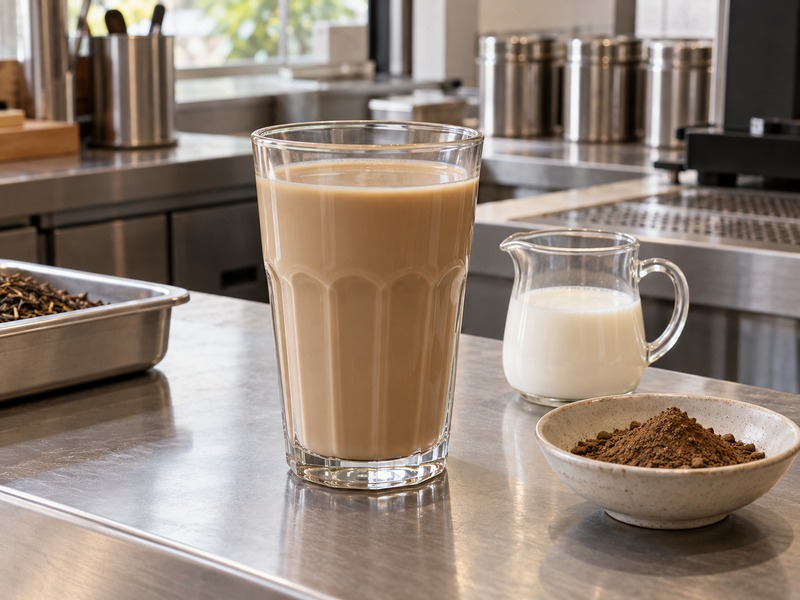
Hojicha milk needs very few ingredients, which makes each one visible. Weak tea disappears, a sweet milk hides the roast, and a rushed powder mix leaves residue. A café can build a better cup by choosing one tea form, one milk, and a measured method before adding toppings. This guide focuses on a simple hojicha milk drink for hot or iced service. It is distinct from a boba milk tea or a manufactured latte mix: the café prepares the tea and milk at the station and should be able to repeat the result during a normal shift.
Contents: definition · tea · milk · ratio · sweetness · hot · iced · service · cost · launch
1. What should hojicha milk taste like?
Keep roasted tea at the center
The menu promise is direct: tea and milk. Decide whether the roasted note should be light and comforting or pronounced enough to stand through a rich milk. Write desirable notes such as clean toast and a gentle finish, along with reject notes such as smoke, ash, or chalkiness. Taste a plain tea control and a milk-only control before developing the combined cup. This helps the team identify whether an off-note comes from tea, milk, or mixing.
Leave the garnish off. A brown-sugar wall, whipped topping, or boba can make a prototype photogenic while hiding a weak base. Develop the plain drink first. Once it passes, a café can decide whether any variation deserves its own menu item. Staff should be able to describe the tea without inventing a health effect or saying that roasting removes caffeine. If the product is sold to children or caffeine-sensitive customers, provide accurate ingredient information rather than a blanket safety assurance.
2. Should the tea come from leaf or powder?
Compare texture and preparation time
Brewed hojicha leaf can make a clean tea concentrate with no suspended powder, but a weak infusion may vanish in milk. Pure hojicha powder can add stronger flavor and color while creating sediment if it is not dispersed. A sweetened premix is a separate formula with sugar and possibly dairy already included. Choose the form that suits the station and the desired mouthfeel. Record tea mass or brew yield; “one scoop” is not enough for a chain recipe.
Use a fixed milk test. Compare leaf concentrate and powder in the same milk at a matched finished cup size. Taste immediately and after the time it takes a guest to receive the drink. If powder leaves residue, check grind and mixing before increasing dose. If leaf tea tastes thin, review brew strength and filtered yield. The supplier’s recommended preparation is a starting point; the café must approve the cup made on its own equipment.
| Tea form | Benefit | Check |
|---|---|---|
| Leaf concentrate | Clean liquid | Strength in milk |
| Pure powder | Strong color and body | Sediment |
| Sweetened mix | Fast service | Sugar and allergens |
| Ready base | Measured pour | Holding and cost |
3. Which milk should be the default?
Choose the actual commercial product
Dairy, oat, soy, and coconut bases change flavor and texture. Pick the milk the café intends to sell as standard and test it with the selected tea. Compare unsweetened and sweetened versions where relevant. A naturally sweet base may need little added syrup; a strong-flavored plant base may compete with tea. Avoid writing one recipe with “any milk” if different choices produce noticeably different cups.
Taste a plain milk sample. If it already tastes of vanilla or cereal, that flavor will join the roast. Decide whether that is welcome. Check how it steams if the drink is hot and whether it separates in an iced cup. Review ingredients and allergens for the complete recipe. A dairy-free version is not automatically allergen-free, and a supplier’s tea statement cannot cover the chosen milk or shared café equipment.
4. How should the tea-to-milk balance be built?
Measure the full serving
Fix cup size and finished mass, then test several tea concentrations at one milk level. For powder, weigh tea and any dispersion water. For leaf concentrate, record tea mass, water, brewing time, and filtered yield. Keep sweetener fixed or absent during the first comparison. Taste blind for tea recognition, mouthfeel, and aftertaste. A stronger base may taste harsh plain and balanced with milk; a mild one may disappear. The served cup decides.
Check after a carry. A drink made at the counter can settle or cool before it reaches a table. Stir and taste it at that realistic point. If a customer must stir, the menu or service should make that natural. Do not compensate for variable ice or milk top-up by constantly changing powder dose. Write the full ratio so each barista knows how much of every component belongs in the cup.
| Component | Development measure |
|---|---|
| Tea | Grams or concentrate yield |
| Dispersion liquid | Grams |
| Milk | Grams |
| Sweetener | Grams |
| Ice | Grams for iced version |
5. How much sweetness is useful?
Let tea remain recognizable
Some customers expect a sweet milk drink; others want a lightly sweet roasted tea. Choose a standard level through a measured tasting ladder. Brown sugar, vanilla, honey, and caramel can complement roast but also mask it. Begin with a plain sweetener so the team can assess tea quality. If the café wants flavored versions, formulate and price them separately rather than treating extra syrup as a fix for a weak base.
Calibrate the pump. A “half pump” or “two pumps” can vary with viscosity and equipment. Weigh trial syrup portions and check normal station delivery. If the menu offers reduced sweetness, decide whether tea and milk stay fixed. Nutrition information or sugar claims must reflect the actual cup and size. A drink that only tastes balanced at the sweetest level may need a different tea roast or milk, not a louder marketing description.
6. What makes the hot version repeatable?
Measure preparation at the station
A hot hojicha milk drink needs a tea base that remains smooth when warm milk is added. Test the actual whisk, frother, or brewer. Record tea dose, liquid temperature, milk mass, mixing order, and cup. A thin foam cap may be attractive, but it should not hide an underfilled drink or block tea aroma. Taste immediately and after a short delay. The café must follow its own safe milk handling and equipment cleaning procedures.
Watch several operators. Have normal staff prepare the drink during a mixed queue. Weigh finished cups and compare flavor blind. If one person makes a clean cup and others leave clumps, simplify the method or change the portioning tool. A prebatched tea concentrate can help speed, but it needs a documented safe hold and a quality check. A method that works only during a quiet training session is not yet a menu recipe.
| Hot-cup step | Standard |
|---|---|
| Tea dose | Weighed or calibrated |
| Mix | Defined tool and time |
| Milk | Measured and handled safely |
| Handoff | Tea clear, no clumps |
7. What changes in an iced cup?
Account for ice melt and sediment
Cold milk can make powder harder to disperse. A small warm slurry may help if the menu process allows it. Set ice mass, tea base, milk, sweetness, and final fill. Taste at handoff and after a normal customer wait. A drink that looks well layered can become thin once stirred; a powder cup can develop sediment under the ice. The iced version should have its own card rather than using the hot recipe with a scoop of ice added.
Use normal café ice. A development kitchen’s perfect cubes may melt differently from a busy store bin. Ask staff to make several cups with the actual station setup. If the last sip loses the roast, compare tea concentration and ice variation before raising powder indiscriminately. If the drink is delivered, test the travel time and temperature separately. A dine-in iced cup may pass while a takeaway version needs a different construction.
8. How should it be named and sold?
Set customer expectations plainly
“Hojicha milk” can signal a simple roasted tea and milk drink. If the formula uses a sweetened powder blend, disclose that through accurate ingredients and menu communication. If it contains boba, cream, coffee, or a strong syrup, the name should help customers understand the change. Staff should know whether the tea is brewed leaf or powder and which milk is standard. Claims about origin, organic status, caffeine, or nutrition need evidence for the actual product.
Keep the menu short. A concise description of roast, milk, and sweetness is more helpful than a paragraph of lifestyle copy. Let customers choose hot or iced if both are approved, and offer substitutions the team has tested. A drink with many untested customizations can become inconsistent despite a good base recipe. If the café runs several locations, send the same sample and method to each before printing national menu boards.
| Menu detail | Customer question |
|---|---|
| Tea form | What is in the cup? |
| Milk default | Dairy or plant? |
| Sweetness | Is it sweetened? |
| Hot or iced | Same flavor standard? |
9. What is the cost of a sellable cup?
Include ingredients and labor
Calculate tea dose, milk, syrup, cup, lid, ice, labor, cleaning, and waste. A leaf concentrate may be inexpensive per gram but lose material during filtration or at the end of a hold. Powder may have a higher price per kilogram and lower preparation loss. Compare cost at the dose that passes the served-cup test. Do not price a weak version merely because it produces the best theoretical margin.
Audit a busy shift. Overpour, inconsistent scoops, and abandoned concentrate change real cost. Weigh a sample of normal cups and record preparation time. A simple drink should be relatively easy to repeat; if it needs several separate utensils, the station layout may be the problem. Ask the supplier about pack size aligned with use rate so opened tea does not lose aroma before it is finished.
For a small café, compare the first ten cups on a quiet morning with ten cups from the busiest hour. The same written recipe can drift when ice bins empty, milk cartons warm at the counter, or a concentrate bottle reaches its last serving. Record the adjustment staff make on their own. If they add extra tea to rescue weak cups, the recipe card or holding method needs work before launch.
10. When is the drink ready to launch?
Approve the plain cup across a normal shift
Keep a recipe card for each hot and iced version with tea item, dose, milk, sweetener, ice, method, and sensory reference. Test consecutive cups made by ordinary staff, including one near the end of an opened pack or concentrate batch. Check allergens and claims for the whole cup. A new tea lot or milk brand should trigger a quick comparison before the recipe is changed in every store.
Ask for the last sip. If it tastes of tea and milk rather than diluted sugar or settled powder, the method is close. Matcha Village can provide hojicha powder samples; tell the supplier the milk, cup size, target sweetness, and preparation tool. A tea sample cannot set the entire recipe, but it can be selected against the finished drink the café intends to sell.
| Launch gate | Pass evidence |
|---|---|
| Flavor | Roast recognizable |
| Texture | Smooth to last sip |
| Service | Staff repeat method |
| Label | Ingredients reviewed |
| Cost | Normal-shift cup works |
Final recommendation
Keep hojicha milk simple enough that the roasted tea is clear. Measure the tea, milk, sweetness, and ice, then approve the cup after ordinary service delay.
FAQ
Q1: Is hojicha milk the same as milk tea?
It is a tea-and-milk drink; some milk teas include pearls or other additions. Name the actual recipe clearly.
Q2: Can brewed leaf be used instead of powder?
Yes, if the concentrate stays flavorful in milk and the brew method is repeatable.
Q3: Should it be sweet?
Choose a measured standard from customer trials. Keep tea recognizable.
Q4: Can one card cover hot and iced?
Use separate tested methods because ice and temperature change the drink.
Q5: What should staff check before serving?
Confirm measured portion, smooth texture, correct milk, and a tea flavor that remains through the last sip.