
A menu can carry more than one hojicha drink, but five brown cups with minor syrup changes are hard for guests to understand and hard for staff to execute. A useful range gives each item a job: a plain tea, a milk drink, perhaps a refreshing iced format, and one indulgent special. This is a menu planning guide for operators. It does not replace the detailed recipe pages for individual drinks; it helps decide which concepts deserve development time.
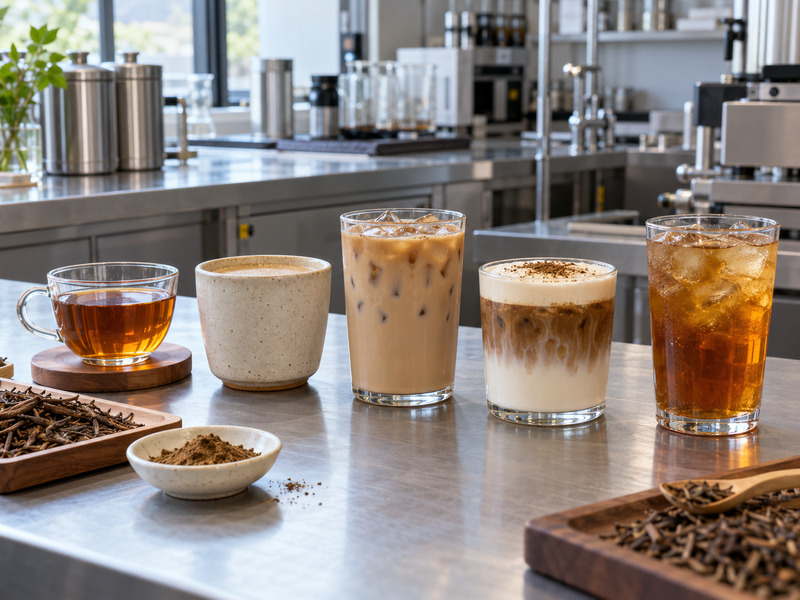
Contents: range · tea forms · plain tea · milk drinks · fruit · dessert · operations · cost · menu copy · pilot
1. How many hojicha drinks should a café offer?
Give each item a distinct reason to exist
Start with the customer decision rather than a recipe count. Someone seeking an unsweetened afternoon tea is unlikely to see a whipped-cream special as a substitute. Someone ordering a dessert drink may not be satisfied by a plain brewed cup. A small range can serve both without clutter. Map the role. Write one sentence for each proposed item: “hot roasted tea without milk,” “everyday milk latte,” or “cold dessert with a cream cap.” If two concepts answer the same need at a similar price, choose the stronger one or give them different seasonal slots. Compare preparation tools and ingredients before launch. Four drinks that share a tea base may be easier than two that require separate grinders, syrups, and toppings. Keep the range readable at the counter; guests should understand differences without asking staff to deliver a long speech. Menu architecture can be a competitive advantage when each cup has a recognizable purpose.
| Guest need | Candidate | Main test |
|---|---|---|
| Plain tea | Brewed hojicha | Aroma and extraction |
| Familiar milk drink | Hojicha latte | Tea survives milk |
| Refreshing cold cup | Iced tea or fruit blend | Dilution and balance |
| Treat | Frappe or cream-topped drink | Texture and cost |
2. Which tea forms support the range?
Match leaves, powder, and premix to the job
Loose leaf suits a clear brewed cup and can become a concentrate. Pure powder offers body and color in milk or blended drinks but needs dispersion testing. A sweetened premix can speed up service at the cost of less control over sugar and flavor. Avoid one-size-fits-all buying. A powder selected for a rich latte may leave sediment in an iced clear tea. A delicate leaf that makes a beautiful hot cup may be too weak for cream. Build a small matrix of candidate ingredients against every proposed menu format. Measure dose and preparation time for each. If one ingredient performs acceptably in several drinks, that can simplify inventory, but do not keep a poor cup merely to reduce SKU count. Ask suppliers for current specifications and lot identifiers. The final menu should be based on the actual material purchased rather than an unspecified “hojicha” flavor that changes when purchasing switches vendors.
3. What belongs in the plain-tea position?
Let roast be visible without sugar or milk
A hot loose-leaf service gives customers the clearest view of the tea. It can also teach staff what a good roast tastes like before they build more elaborate beverages. Develop a measured leaf-to-water recipe and a serving format: poured cup, pot, or takeaway. An iced unsweetened version needs separate dilution testing. Taste the cooled cup. Roast defects or harsh extraction can become more apparent as the drink cools. The menu description can say “roasted green tea” and describe a specific flavor note confirmed by tasting. Avoid unsupported blanket caffeine claims. Hojicha comes from tea material, and caffeine depends on the ingredient and serving method. If the business wants a numeric claim, obtain appropriate product evidence and review the finished drink. A plain tea should not be a token “healthy” option that receives no recipe care; it may be the benchmark against which customers judge every flavored version.
| Plain-tea decision | Option A | Option B |
|---|---|---|
| Service | Fresh steep | Controlled batch |
| Hot vessel | Cup | Pot |
| Cold format | Hot brew over ice | Cold infusion |
| Quality check | Brew time | Holding and dilution |
4. How should a milk drink differ from plain tea?
Build body without hiding roast
A milk-based hojicha drink has a different sensory target. Dairy or plant drinks soften a tea's edges and add body, but can drown a mild roast. A powder slurry often gives stronger tea presence than a weak brewed liquor, though its texture needs checking. Begin with unsweetened milk trials and add measured syrup only after the tea is recognizable. Test the exact carton. Oat, dairy, soy, and almond products vary across brands and can change foam, sweetness, and allergens. Decide whether the menu needs both a simple latte and a sweet signature latte. If both are offered, the signature should have a concrete difference such as fruit, sesame, or cream rather than a vague “premium” label. Train staff on how to explain the base drink in one sentence. A menu range is clearer when a customer can see which drink contains milk, which contains coffee, and which is naturally unsweetened.
5. Can fruit work with roasted tea?
Balance acidity rather than adding color
Strawberry, citrus, and banana can create distinct drinks, but each changes the tea differently. Strawberry brings acidity and can make milk split if the components or process are poorly chosen. Banana brings body and sweetness but can oxidize or settle. Citrus may lift a cold brewed tea yet clash with a smoky roast. Build a control. Taste the fruit with water, with tea, and with the full milk or ice format. Keep fruit dose measured and record whether it is fresh, frozen, puree, or syrup. Those forms have different cost, handling, and labeling implications. The question is whether the fruit and tea still read as two intentional flavors after a normal drinking interval. A layered photograph is useful for marketing only if the stirred drink remains balanced. Do not add three fruit formats to one menu merely because they look different; each should fill a separate customer need and survive service.
| Fruit format | Likely benefit | Operational watch item |
|---|---|---|
| Fresh fruit | Immediate aroma | Preparation and variation |
| Puree | Repeatable dosing | Storage and settling |
| Syrup | Speed | Tea may disappear under sugar |
6. Which dessert drinks deserve a premium price?
Charge for a distinct experience
A frappe, affogato, boba drink, or cream-topped einspänner can turn hojicha into a treat. Each has a different service burden. A frappe needs a blender and produces cleanup. Boba pearls need a defined preparation and hold. Affogato is best eaten or drunk quickly, while a cream cap may collapse during delivery. Price the actual work. Calculate ingredient and packaging cost, time per order, waste, and the likelihood of a remake. Taste each concept after its normal service delay. A striking special that cannot survive a fifteen-minute walk from the counter may belong only in dine-in service. Avoid giving every special the same sweet tea base; a deep roast may suit vanilla ice cream while a gentler tea can work better with fruit. Premium is a result of flavor, execution, and presentation, not simply a longer ingredient list.
7. What can the station realistically support?
Count tools and motions
Before approving a range, walk through the busiest hour. Where is tea measured? Which drinks need warm water for a slurry? How many blender rinses or topping refills occur? A new item can be profitable on paper and still slow every order behind it. Run a short queue simulation. Have ordinary staff make a mixed sequence of existing and proposed drinks. Time preparation, note collisions at sinks and steam wands, and identify ingredients that are easy to confuse. A shared tea base can help, but only if its holding procedure and flavor are sound. Recipe cards should show exact weights and the order of operations. Cross-contact matters when a drink adds milk, sesame, nuts, or wheat-containing toppings. The U.S. FDA identifies sesame among major food allergens, so a black-sesame special requires more than a decorative note on the menu. Review the actual ingredients and equipment with the food-safety team.
8. How should the range be costed?
Compare contribution, not just food cost percentage
Put every proposed cup into the same costing sheet: ingredient grams, delivered prices, packaging, measured labor, waste, and expected selling price. Include the tea dose that passed tasting, not an optimistic lower dose. A plain tea may have low ingredient cost but a slow steep; a sweet latte may use expensive milk and syrup but sell at a higher price. Look at the portfolio. A high-margin hot tea that sells rarely and a popular but labor-heavy frappe can affect the station differently. Forecast a modest and a busy-day mix, then test whether the shop can replenish the ingredients without tying up too much cash. For private-label packaged drinks, add manufacturing, filling, shelf-life, and distribution costs rather than using café economics. Keep customer willingness to pay tied to a specific cup; a neat spreadsheet cannot rescue a flavor that tasters cannot identify as hojicha.
| Cost line | Measure | Why it changes |
|---|---|---|
| Tea | Approved dose per cup | Roast and format |
| Additions | Milk, fruit, topping | Drink role |
| Labor | Seconds and cleanup | Station process |
| Waste | Unsold prep and remakes | Holding and complexity |
9. How should the menu describe each drink?
Say what is in the cup
“Hojicha” may be unfamiliar to some guests. A short description can say “roasted green tea” and name the milk, fruit, or cream. Avoid calling a tea-only latte “coffee” simply because it is brown; if espresso is present, state it. Make differences visible. Use the same naming pattern and clear icons or text for hot, iced, dairy, and sweetened options. Do not rely on a photograph alone to convey ingredients. If a drink can be made with several milks, state the standard version and train staff on approved substitutions. Caffeine, calorie, and health wording should match the actual formula and the destination market. A menu can be appealing without unsupported promises such as “caffeine free” or “guilt free.” Make sure the displayed photograph is a normal serving, not a styled prototype with extra garnish that ordinary customers will never receive.
10. What proves the menu is ready to launch?
Pilot a small range with explicit decisions
Choose a few drinks that serve distinct needs and run them during normal service. Define success before the trial: repeat orders, remake rate, preparation time, waste, and customer comments about flavor clarity. Keep tasting notes specific. “Too sweet after stirring” is actionable; “interesting” is not. Remove weak items. A concept that only looks good online may be better as a limited photo feature than a permanent SKU. Review the portfolio together, because one drink can steal orders from an existing latte without adding sales. If a second tea lot or milk brand changes the result, revise the recipe before scaling. For B2B sampling, tell Matcha Village which menu roles you are testing, what tools are available, and the expected purchase volume. That allows a supplier discussion around actual drinks instead of a generic request for hojicha.
At the end of the menu pilot, review the drinks together rather than allowing each developer to defend one favorite. Use the same period of sales and service data, and compare which customer need each item fills. A concept that does not add a new occasion or revenue may still be delicious, but it may belong in a rotating special rather than a permanent, crowded range.
| Final check | Pass evidence | If it fails |
|---|---|---|
| Distinct role | Guest can explain difference | Rename or remove |
| Service load | Mixed queue stays workable | Simplify range |
| Demand | Repeat orders observed | Keep or rotate |
Final recommendation
A strong hojicha drinks menu is small enough to run well and varied enough that customers understand why each cup exists. Start with one plain tea and one milk drink, then add a special only when its taste and service earn the space.
FAQ
Q1: How many hojicha drinks should a new café launch?
Start with a small set serving different needs. Add formats only after staff can execute the base drinks reliably.
Q2: Can one tea ingredient support every format?
Sometimes, but test it in each final cup. A good brewed tea may not make a strong frappe.
Q3: Does a hojicha latte contain coffee?
Not unless the recipe includes coffee. Describe the roasted-tea base clearly.
Q4: Which drink is best for an unsweetened option?
A measured brewed tea is a clear starting point; taste both hot and iced versions separately.
Q5: What should be removed after a pilot?
Remove items with weak flavor, poor repeat demand, excessive remakes, or an operational burden the price cannot support.
Sources: Japan MAFF, Uji tea categories; FDA, food allergens.